معرفی
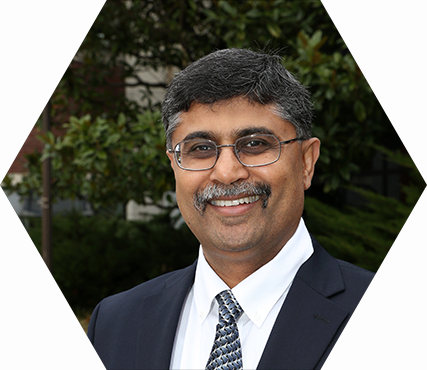
Nader Sadegh is a Professor in the Woodruff School of Mechanical Engineering at the Georgia Institute of Technology's College of Engineering, where he also serves as Associate Director and Education Director of the Robotics Ph.D. Program. His research spans robotics, control theory, and artificial intelligence with applications in industrial automation and public health.
Dr. Sadegh's educational background includes:
- B.S. from University of California, Santa Barbara (1982)
- M.S. from University of California, Berkeley (1984)
- Ph.D. from University of California, Berkeley (1987)
His research evolved from pioneering work on adaptive learning controllers for robotic manipulators—which enable robots to learn repetitive tasks without precise models—to neural network applications and nonlinear system identification. Current work focuses on barrier state theory for safety-critical control systems, safe trajectory optimization in robotics, and epidemiological modeling for disease transmission control. His methodologies consistently bridge theoretical control frameworks with industrial implementations to enhance system accuracy and autonomy while reducing hardware complexity.
Analysis of his recent publications reveals a dominant trend toward safety-critical control architectures using barrier states and functions, with expanding applications in quadrotor navigation, agricultural robotics, and pandemic response systems. The interdisciplinary nature of his work connects control theory with machine learning, epidemiology, and industrial automation.
Scientific distinctions include:
- Associate Editor, Journal of Dynamic Systems, Measurement, and Control (1993-1997)
- Registered Professional Engineer in Georgia
- U.S. Patent 5,946,449 for precision apparatus with non-rigid structures
Dr. Sadegh has secured significant industry-sponsored research including Xerox Corporation projects on photoreceptor speed regulation, Ford Motor Company collaborations on assembly operations and continuously variable transmissions, and Visteon-funded work on high-precision manufacturing systems. His grants consistently target practical implementations where theoretical control methods solve real-world problems in automotive systems, electro-hydraulic valves, and glass forming processes.
Based at the Georgia Tech Manufacturing Institute (GTMI), his lab develops integrated control solutions for complex mechanical systems, with recent emphasis on safety-guaranteed autonomous operations in unstructured environments and data-driven modeling for biological processes.