Barbara Guerraمشاهده پروفایل
دانشیار
- Protein Kinases
- Cancer Biology
- Cell Signaling
- +۷ مورد دیگر
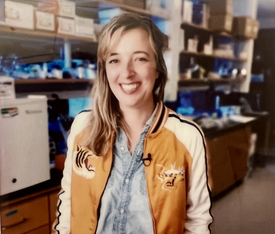
Barbara Guerra is an Associate Professor in the Department of Biochemistry and Molecular Biology at the University of Southern Denmark, Faculty of Science. She leads the Barbara Guerra Lab, which is part of the Translational Biology research section, focusing on the role of protein kinases in human disease, particularly cancer. She also serves as Head of the PhD School at the Faculty of Science since 2020, demonstrating strong leadership in academic training and research supervision. Her research expertise lies in protein kinase CK2, a key regulator of cell survival, growth, and differentiation. Her laboratory investigates CK2-mediated signaling pathways in cancer, DNA damage response, lipid metabolism, and cell cycle regulation. She has contributed extensively to understanding CK2's role in oncogenesis and its potential as a therapeutic target. Her recent publications reveal a consistent focus on CK2 in cancer metabolism, hypoxia signaling (e.g., HIF-1α), autophagy, and the development of kinase inhibitors. Themes include pharmacological targeting of CK2, regulation of metabolic enzymes like SCD-1, and modulation of tumor suppressors such as p27KIP1. She frequently collaborates on interdisciplinary studies involving drug delivery systems and natural product-based inhibitors. Barbara Guerra has received recognition for her teaching excellence, including a Faculty of Natural Science teaching prize in 2006. She serves on the editorial boards of Oncology Reports and Pharmaceuticals , contributing to scientific peer review and dissemination. She has supervised over 100 undergraduate, Master’s, and PhD students, as well as six postdoctoral researchers, indicating a strong commitment to mentoring the next generation of scientists. Her research is supported by numerous projects and she plays a central role in PhD education at the university level. Her lab is actively involved in translational research, bridging basic molecular mechanisms with potential clinical applications in oncology and metabolic disorders.