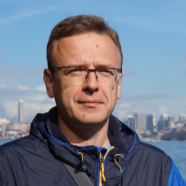
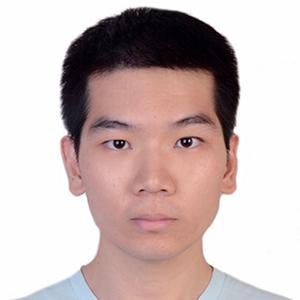
Dr William Salter is a Lecturer in Crop Physiology at the University of Sydney's School of Life and Environmental Sciences, based at the Narrabri Plant Breeding Institute. His research focuses on enhancing crop productivity and resilience through innovations in plant physiology, phenotyping technologies, and open-source agricultural tools. He leads a research group developing low-cost sensors and data pipelines for measuring plant traits like light use efficiency, canopy architecture, and weed detection. Education: BSc (Edinburgh) and PhD (Sydney) Research interests include optimizing photosynthesis for food security, improving water/nutrient efficiency in crops, and adapting farming systems to climate change. His work prioritizes accessible, open-source solutions to democratize scientific tools. Recent grants include studies on wheat heat tolerance and drought resilience. He advises students like Edward David on crop stress physiology projects. Collaborations involve the Sydney Institute of Agriculture and international partners. Labs/Teams: Narrabri Plant Breeding Institute research group, International Centre of Crop and Digital Agriculture team.
David Connolly is a Professor of Practice at the University of Warwick, specializing in evidence-based policy for international peacebuilding and development. His work focuses on evaluating interventions in conflict-affected regions, with over 15 years of field experience across multiple countries. He currently leads the Learning, Evaluation, and Research Programme at the United States Institute of Peace (USIP) in Washington D.C., having previously directed postgraduate programs at the University of York including the MSc in International Humanitarian Affairs. His research has been funded by organizations including the Netherlands Scientific Research Council, UNICEF, and the U.S. Department of State. Publications appear in journals like Comparative Education and Civil Wars , alongside commentaries on platforms like openSecurity. His work bridges academic research with practical implementation in post-war recovery, education in conflict zones, and humanitarian policy design. Key Collaborators: UNICEF, USAID, Education Above All, British Council Labs/Teams: USIP Research Division, York International Development Group Grants: Over £5M secured from international development agencies
Dr. Sehrish Shahid is a Lecturer in Management at RMIT University's School of Management (since 2023) and previously held roles at the Australian Institute of Business and University of Central Punjab. Her research focuses on leadership dynamics, organizational behavior, and workplace well-being, with a particular emphasis on expatriate management, gender roles, and sustainable development goals. She has secured grants including the ECR Grant (2023) and contributed to projects like the SAFE initiative funded by the Victorian Government. Shahid actively publishes in ABDC-ranked journals and presents at conferences like the Academy of Management. She coordinates leadership courses and advocates for student-centered, work-integrated learning approaches. Her work aligns with UN SDGs such as Gender Equality and Decent Work. Education: PhD in Management from RMIT University (IPRS Scholar) Grants: Multiple research awards including 2023 ECR Grant and 2018 RMIT Publication Grant Teaching: Leadership course coordination and MBA programs Research highlights include frameworks addressing expatriate mental health post-pandemic, HRM in emerging markets, and virtual leadership effectiveness. She reviews for journals and participates in ethics advisory networks. Shahid’s interdisciplinary approach bridges psychology, management, and education to enhance professional practices.
Kim Hoque is Professor of Human Resource Management and Vice Dean (People and Culture) at King's Business School, King's College London. He previously held professorial positions at Warwick Business School, the University of Nottingham, and Birkbeck, University of London. He is a leading scholar in human resource management, employment relations, and equality, diversity, and inclusion (EDI), with a specific focus on disability employment. King's College London (2022–present) Warwick Business School (prior to 2022) University of Nottingham Birkbeck, University of London His research centers on human resource management, employment relations, and EDI, with a strong emphasis on disability inclusion in the workplace. He investigates how organizational practices, trade unions, and public policy affect disabled workers’ employment outcomes. His work explores topics such as flexible work arrangements (e.g., Flex Plus), high-performance work practices, agency work, and the role of union representation in promoting equity. Recent publications reflect a consistent focus on disability inclusion, workplace flexibility, job quality, and the intersection of financialization and HRM. His research often analyzes large-scale datasets and policy interventions, contributing to both academic discourse and real-world reforms. He frequently collaborates with colleagues such as Nick Bacon, Ian Kirkpatrick, and others on long-standing research projects. Kim Hoque is actively engaged in policy impact. He co-founded the Disability@Work research group (2013) and the Disability Employment Charter (2021), which has been endorsed by over 100 organizations. His research has influenced government policy, including revisions to the Disability Confident scheme and the inclusion of disabled apprenticeship targets in the Industrial Strategy. He advises governmental and non-governmental bodies, including NHS Scotland and the All-Party Parliamentary Group on Disability. He serves on the editorial boards of Human Relations , Journal of Management , and Industrial Relations Journal , and has previously advised the UK Commission for Employment and Skills and the Chartered Institute of Personnel and Development. He is the Principal Investigator on an active ESRC-funded project (2024–2025) focused on new government funding mechanisms. Kim Hoque leads and co-leads several research initiatives, including the Disability@Work group and King's Business School’s role in the secretariat of the All-Party Parliamentary Group on Disability. He collaborates extensively with trade unions, charities, and public sector organizations to co-produce research with practical impact.
João Matos is an Assistant Professor at Católica Lisbon School of Business and Economics, where he has been teaching since 1995. His academic and professional focus lies in negotiation, conflict management, interpersonal communication, and persuasion. He is actively involved in executive education, delivering both face-to-face and online training programs for national and international organizations. Scientific Area: Strategy, Organizations and Entrepreneurship Teaching Since: 1995 Executive Education Coordinator: Specialization Program in Negotiation (22 editions completed) João Matos holds a Degree in Management and an MBA from Católica Lisbon School of Business and Economics. He has pursued advanced certifications from globally recognized institutions, including: Dispute Resolution Research Center at the Kellogg School of Management – Certified in Negotiation Research & Teaching American Management Association – Certified in Business Communication Program on Negotiation at Harvard Law School Negotiations & Influence Program at Haas School of Business, University of California, Berkeley His research and professional interests center on negotiation dynamics, conflict resolution, and persuasive communication. He frequently contributes to public discourse through articles in the online newspaper Observador and participates as a speaker in CATÓLICA-LISBON webinars. His work bridges academic theory and practical application in organizational and executive contexts. The 15 most recent articles reflect a consistent focus on negotiation, leadership, communication, and organizational behavior. These publications span topics such as crisis negotiation, hybrid work environments, ethical influence, and cross-cultural leadership. The overarching themes include emotional intelligence, decision-making under pressure, and the psychological aspects of persuasion and conflict. His work demonstrates a strong integration of academic research with real-world business challenges. João Matos has been recognized multiple times with the Distinguished Teaching Award by Católica Lisbon School of Business and Economics for excellence in executive education programs: Executive Education – 2022 Executive Master in Leadership Development – 2021/2022 Executive Master in Digital Innovation – 2021/2022 Executive Master – 2020/2021 He has extensive experience advising and delivering training programs for executives across diverse economic sectors. While formal student advisees are not listed, his role as coordinator and professor of the 'Specialization Program in Negotiation' indicates significant mentorship and leadership in professional development. He has not disclosed specific research grants, but his work is supported through executive education initiatives and institutional platforms. João Matos is associated with the 'Specialization Program in Negotiation', which he coordinates, having completed 22 editions. This program functions as a key training and outreach initiative within Católica Lisbon, serving professionals seeking advanced skills in negotiation and conflict resolution. While no formal research lab is mentioned, this program represents a structured team-based educational effort with broad industry engagement.
Dr Duncan Hodges is a Senior Lecturer in Cyberspace Operations at Cranfield University, affiliated with the Centre for Electronic Warfare Information and Cyber within Cranfield Defence and Security. His research spans cybersecurity, digital identity, offensive cyber operations, and natural language processing applications in security. His research interests include: Identity in cyber and natural spaces Offensive cyber activity and information warfare Natural Language Processing in cybersecurity Insider threat detection Smart home and IoT security Hodges' recent publications (2015–2022) reflect a strong focus on behavioral biometrics, identity cues, privacy, and cyber-enabled crime. His work combines technical innovation with social science insights, especially in understanding human factors in cybersecurity. Key themes include keystroke dynamics, smart home vulnerabilities, and personality inference from digital behavior. Scientific Awards and Fellowships: ESRC NCRM Fellow on Digital Identity Visitor at the Alan Turing Institute Research Leadership and Grants: Lead PI on EPSRC project: 'People Powered for Desirable Social Outcomes' CO-I on EPSRC project: enabling sensitive disclosures via conversational agents Two projects funded by the Centre for Research and Evidence in Security Threats (CREST) Collaborations with EPSRC, ESRC, Innovate UK, and Defence Science and Technology Labs (DSTL) Labs and Research Groups: He is part of the Information Operations Group at Cranfield and collaborates with the Cyber Security Centre at the University of Oxford and the Alan Turing Institute .
Cristian Román-Palacios is an Assistant Professor in the Department of Ecology and Evolutionary Biology at the University of Arizona, where he also serves as Coordinator and Advisor for the Master of Science in Data Science (MSDS) and Master of Science in Information Systems (MSIS) programs. He is a core faculty member in Artificial Intelligence and Machine Learning, Data Management, Analysis and Visualization, and Environmental, Health and Biological Sciences. Education: PhD in Ecology and Evolutionary Biology, University of Arizona (2020) BS in Biology, Universidad del Valle, Colombia (2015) His research lies at the intersection of phylogenetics, biodiversity modeling, and machine learning, focusing on large-scale biodiversity patterns, the impacts of climate change on species survival, and the development of statistical tools for paleoclimatic reconstructions. He employs computational and data-intensive methods to explore evolutionary and ecological questions across diverse taxa. His recent publications (2024–2025) demonstrate a strong trend toward interdisciplinary research, combining computational biology, geochemistry, climate science, and open-source software development. Key themes include biodiversity informatics (e.g., Animal Culture Database), paleoclimatic modeling (e.g., clumped isotope thermometry), reproducibility in science, and tools for collaborative research (e.g., LabOps, SSARP). His work increasingly integrates data science with biological and environmental applications. Scientific Contributions: Published over 25 peer-reviewed papers, many as first author Research featured in Science News, Popular Science, CNN, USA Today Developed open-source tools: phruta , treedata.table , SSARP , LabOps Cristian advises graduate students through the infosci-msadvise@arizona.edu email and Calendly appointments. He was previously a staff researcher at UCLA’s Tripati Lab. He leads initiatives such as the Southwest Center on Resilience for Climate Change and Health and promotes inclusive, collaborative science through online toolkits and leadership ecosystems aimed at addressing climate and social inequities. His lab, the Román-Palacios Lab, and involvement with the Data Diversity Lab reflect his commitment to open, reproducible, and equitable research practices in data-intensive biology.
Anthony Illingworth is a Professor in the Department of Meteorology at the University of Reading, UK, where he leads research in atmospheric remote sensing, radar and lidar technologies, and weather forecasting. His work is central to major satellite missions such as EarthCARE and WIVERN, and he collaborates extensively with European and international meteorological agencies. Education and Background: While specific degrees are not listed in the provided text, his long-standing academic career and leadership in advanced meteorological research suggest a PhD in atmospheric physics or a related field, likely from a UK institution. His research interests span radar meteorology , cloud physics , satellite remote sensing , precipitation measurement , boundary layer dynamics , and numerical weather prediction . He focuses on improving observational techniques using ground- and space-based sensors to enhance forecast accuracy. His work integrates physics-based models with real-world data from instruments such as Doppler radars, lidars, and polarimetric sensors. The publication trends from 2015 to 2025 reveal a consistent focus on satellite-based wind and cloud observations (e.g., WIVERN and EarthCARE), calibration of remote sensing instruments, and data assimilation for weather models. His articles frequently address technical challenges in radar signal interpretation, wind profiling in extreme weather, and the use of ground networks to validate and improve forecasts. A recurring theme is the development and validation of new methodologies for extracting atmospheric parameters from remote sensing data. Scientific Awards: Advising and Grants: While no students or grants are explicitly listed, his frequent senior authorship and leadership in large collaborative projects (e.g., FRANC, EarthCARE) suggest active supervision of PhD students and postdoctoral researchers, as well as success in securing major research funding from agencies such as the UK Met Office, ESA, and NERC. Labs and Teams: Illingworth is closely associated with the atmospheric remote sensing group at the University of Reading, which operates advanced radar and lidar systems. He collaborates with the European Centre for Medium-Range Weather Forecasts (ECMWF), CNRS in France, and the CloudSat science team, indicating strong institutional partnerships and team-based research in operational and satellite meteorology.
Scot M. Miller is an Associate Professor in the Department of Environmental Health and Engineering at the Whiting School of Engineering, Johns Hopkins University. He leads the Greenhouse Gas Research Group, focusing on quantifying emissions of greenhouse gases and air pollutants using satellite, aircraft, and tower observations. His research spans global scales, from Arctic ecosystems to urban and industrial sources in the U.S. and China. His research interests include atmospheric science, greenhouse gas emissions, inverse modeling, big data analytics, and climate policy. He integrates tools from statistics, high-performance computing, and satellite remote sensing to improve emission estimates and inform environmental regulations. Recent publications highlight trends in methane, ethane, and sulfuryl fluoride emissions, carbon cycle dynamics, and innovative methods for analyzing massive satellite datasets. His work increasingly leverages OCO-2 and OCO-3 satellite data to study carbon dioxide and methane fluxes across diverse ecosystems. Scientific awards include the NSF CAREER Award, JHU Catalyst Award, and the Carnegie Distinguished Postdoctoral Fellowship. He was also recognized with Harvard’s Certificate of Excellence in Teaching. Miller advises multiple PhD students, including Mingyang Zhang, Dylan Gaeta, and Leyang Feng, and has secured grants from NASA, NSF, NOAA, and JHU. He is a member of the NASA OCO Science Team and collaborates with institutions such as Northern Arizona University, Carnegie Institution, and NOAA. His lab is involved in urban environmental monitoring in Baltimore and interdisciplinary climate policy research.
Thomas Aubry is an Associate Professor in the Department of Earth Sciences at the University of Oxford and a Tutorial Fellow at St Hugh's College. His research bridges climate science and physical volcanology, focusing on volcanic eruptions' societal impacts, climate interactions, and climate change effects on volcanic processes. He coordinates volcanic forcing datasets for IPCC assessments and co-chairs the IAVCEI Tephra Hazard Modelling Commission. Education: BSc in Physics, École Normale Supérieure de Paris-Saclay, France MSc in Climate Dynamics, Université Pierre et Marie Curie / École Normale Supérieure Paris PhD in Geophysics, University of British Columbia, Canada Postdoctoral Research Fellow, University of Cambridge (2019–2022) Research Interests: Volcanic ash and gas dispersion hazards Volcanic impacts on historical and future climates Climate change feedback on volcanic processes His interdisciplinary methods include numerical modeling, laboratory experiments, satellite remote sensing, and field studies. Current projects explore volcanic aerosol life cycles under climate change and the modulation of volcanic column heights by atmospheric conditions. Funded by the European Union, Royal Society, and Sidney Sussex College, his work informs climate models and hazard mitigation strategies. Academic Contributions: Key publications on volcanic plume dynamics and climate-eruption interactions Development of volcanic forcing datasets for IPCC's 7th Assessment Report Opportunities: Offers postdoctoral and PhD supervision in volcanology and climate science, with fellowship application support.
Summary Adam Szymkiewicz is a full Professor and Vice-Dean for Scientific Research at the Faculty of Civil and Environmental Engineering, Gdańsk University of Technology. He leads the Department of Geotechnics and Water Engineering and holds academic positions since 2021. His research focuses on groundwater flow, contaminant transport, and numerical modeling in porous media. Key roles include Head of Department (2022–present) and Vice-Dean (2024–present). Education includes a PhD from Joseph Fourier University (2004) and habilitation from Gdańsk University of Technology (2013). Research Interests: Hydraulic properties of porous media, multiphase fluid flow, climate change impacts, and integrated hydrological modeling. Notable projects include AQUIGROW (HORIZON EUROPE) and SOILPROM. Publications: Over 50 peer-reviewed articles on topics like PFAS migration, groundwater recharge, and MODFLOW coupling. Recent work emphasizes climate change effects on aquifers and coastal hydrogeology. Awards: Multiple Rector awards (2012–2022) and Polish Academy of Sciences Award (2013). Membership: AGU, EGU, InterPore, and Polish Hydrogeologists Society. Editorial roles include Associate Editor of Acta Geophysica .
Eunice Han is an Associate Professor in the Department of Economics at the University of Utah, where she has been a faculty member since 2016, first as an Assistant Professor and promoted to Associate Professor in 2024. Her research lies at the intersection of labor economics, industrial relations, and education policy, with a strong focus on unions, inequality, and gender dynamics in the labor market. She earned her BA in Economics from the University of California, Los Angeles (UCLA), and her MA and PhD in Economics from Harvard University. Prior to joining the University of Utah, she taught econometrics and principles of economics at Harvard University and Wellesley College. Her research investigates how institutions like labor unions shape labor market outcomes, particularly in education. She has extensively studied the impact of teacher unions on compensation, job security, attrition, stress, student achievement, and gender equity. Her recent work, especially during the COVID-19 pandemic, has demonstrated the protective role of unions for workers in terms of employment stability and wage maintenance. She employs rigorous empirical methods, including difference-in-differences and propensity score matching, using nationally representative datasets. Her scholarly output is prolific, with numerous publications in high-impact journals such as the British Journal of Industrial Relations , Industrial Relations: A Journal of Economy and Society , Eastern Economic Journal , and Feminist Economics . The consistent themes across her recent articles include the resilience of union benefits during crises, the positive association between unionization and student outcomes, and the disproportionate impact of anti-union policies on women, minorities, and STEM educators. She is actively involved in the broader academic community, serving on the Academic Advisory Board of the Economic Policy Institute and as a Fellow at the National Educational Policy Center. She has also secured external research funding, including a grant from the Department of Agriculture focused on school food service workers. Eunice Han teaches courses in labor economics, econometrics, and principles of microeconomics at the University of Utah. She advises PhD students, as evidenced by her involvement in thesis research supervision. Her work continues to contribute significantly to understanding the role of collective bargaining and labor institutions in promoting economic well-being and educational equity.
Keith Morrison is a Professor at the University of Reading, affiliated with the School of Mathematical, Physical and Computational Sciences and the Department of Meteorology. His research focuses on advanced remote sensing techniques, particularly synthetic aperture radar (SAR), for environmental monitoring and subsurface imaging. Institution: University of Reading School: School of Mathematical, Physical and Computational Sciences Department: Department of Meteorology Research Focus: Radar Remote Sensing, Soil Moisture, Peatlands, Subsurface Scattering His research interests lie in the development and application of radar systems for Earth observation. He specializes in SAR-based methods such as tomographic profiling, interferometry, and virtual bandwidth SAR (VB-SAR) to study soil moisture dynamics, peatland hydrology, forest structure, and subsurface features. His work bridges physics, signal processing, and environmental science, enabling improved understanding of ecosystem processes through microwave remote sensing. The analysis of his recent publications reveals a strong focus on C-band and S-band SAR applications, particularly in explaining anomalous backscatter due to subsurface scattering in dry soils and peatlands. He has pioneered techniques like VB-SAR for centimeter-scale vertical profiling from space, contributing significantly to the accuracy of soil moisture and vegetation parameter retrievals. His work increasingly integrates laboratory experiments, field studies, and satellite data for robust validation. Although no formal awards are listed in the provided text, his sustained contributions to high-impact journals such as IEEE TGRS, Remote Sensing of Environment, and International Journal of Remote Sensing suggest recognition within the scientific community. Morrison has supervised and collaborated with numerous researchers, including Edwards-Smith, Zwieback, Andre, and Bennett. While formal student advising is not detailed, his role as a senior author and frequent collaborator indicates mentorship responsibilities. He has been involved in projects related to peatland monitoring, forest biophysical retrieval, and SAR-based change detection, likely supported by research grants from UK and European funding bodies. He contributes to major international conferences such as IGARSS, EUSAR, and IEEE RadarCon, demonstrating active engagement in the global radar and remote sensing community. His work supports future advancements in satellite-based environmental monitoring, particularly in carbon-rich ecosystems like peatlands and forests.
Josef Eitzinger is a full Professor at the University of Natural Resources and Life Sciences, Vienna (BOKU), affiliated with the Institute of Meteorology and Climatology. His research bridges agricultural meteorology, climate change impacts, and sustainable farming systems. He holds a Dr.nat.techn. degree and completed postdoctoral work at Colorado State University. His research focuses on: Agricultural meteorology and microclimatology Climate change impacts on crop production and water resources Drought monitoring and forecasting systems Agrivoltaics and renewable energy integration in agriculture Recent publications (2023-2025) emphasize climate risk modeling, soil moisture dynamics, agrivoltaic design, and sustainable land management. Trends show strong integration of remote sensing, machine learning, and cross-disciplinary approaches to address agricultural resilience. Awards & Honors: Austrian Sustainability Award 2018 WMO Award as RA VI expert team leader (2014) Klimaschutzpreis (2002) Pöttinger Preis (2001) He leads 67+ projects including EU initiatives like CropShift (climate-driven crop shifts) and Machine Learning ET Estimation . His team develops tools like the Agricultural Risk Information System (ARIS) for real-time agrometeorological forecasting. At BOKU's Institute of Meteorology and Climatology, he oversees micrometeorological field studies and collaborates with European research networks on climate adaptation strategies.
Wenzheng Li is a Visiting Lecturer in the Department of City and Regional Planning at Cornell University’s College of Architecture, Art, and Planning. He earned his Ph.D. in City and Regional Planning from Cornell in August 2024, following a Master’s in Regional Planning from the same institution and a Bachelor’s in Remote Sensing from China University of Geosciences. His research centers on regional-scale land use planning, sustainable urban forms, polycentric development, and environmental sustainability, with applications in Germany, China, and Sub-Saharan Africa. He employs GIS, remote sensing, spatial econometrics, and urban data analytics to investigate urban dynamics and planning policy impacts. His recent publications and conference presentations focus on topics such as the urban heat island effect, polycentric development, and regional equity. These works reveal consistent trends in analyzing spatial configurations for sustainability and equity, particularly through quantitative modeling and cross-national comparisons. C.V. Starr Fellowship, the Einaudi Center of Cornell University, 2023 Li teaches courses in GIS, urban data science, and quantitative methods, emphasizing the integration of machine learning and GeoAI with planning theory. His professional experience includes work on equitable transportation solutions in Tompkins County. He has not advised any students yet, and no grant details beyond the fellowship are mentioned. He is actively involved in research projects on sustainable urban forms in Sub-Saharan Africa, regional governance in China and the U.S., and environmental amenity valuation, reflecting a strong interdisciplinary and global approach to urban and regional planning challenges.