Michel Versluis is a Full Professor at the University of Twente, Netherlands, specializing in Physical and Medical Acoustics within the Physics of Fluids group. His work focuses on microbubbles and microdroplets for medical imaging and therapy, as well as microfluidic applications in medicine and nanotechnology. University of Twente, Physics of Fluids group His research bridges physics and biomedical engineering, with publications in high-impact journals like PNAS and IEEE Transactions. Recent work emphasizes ultrasound-driven microbubble dynamics, additive manufacturing of flow phantoms, and deep learning for super-resolution imaging. 2025 publications: vascular phantoms, PROTEUS simulator, acoustic microbubble control 2024 innovations: 3D-printed medical devices, immunogenic cell death optimization Contact: m.versluis@utwente.nl
Pedro M. B. Silva Girão is a Full Professor in the Department of Electrical Engineering at Instituto Superior Técnico (IST), University of Lisbon (UL), and a Senior Researcher at Instituto de Telecomunicações where he heads the Instrumentation and Measurements Group and coordinates the Basic Sciences and Enabling Technologies area. His dual institutional roles position him at the forefront of academic research and technological innovation in Portugal. His research program focuses on instrumentation, transducers, and measurement techniques with specialized applications in biomedical and environmental domains. Key interests include wireless sensor networks for health monitoring, metrology standards, and digital data processing methodologies. This work bridges engineering principles with real-world healthcare and ecological challenges, emphasizing practical implementations in diagnostic systems and environmental sensing. Analysis of his 2019-2024 publications reveals a strong thematic trajectory in IoT-enabled healthcare solutions and precision environmental monitoring. Recurring motifs include gait rehabilitation through mixed reality systems, advanced dosimetry for liver cancer radioembolization, microvascular reactivity assessment, and water quality sensor networks. His output demonstrates consistent interdisciplinary collaboration between engineering, medical, and environmental science communities. Dr. Girão's scientific recognition includes: IEEE Senior Member status IEEE IMS Distinguished Lecturer appointment Honorary Chairmanship of IMEKO TC19—Environmental Measurements As leader of the Instrumentation and Measurements Group at Instituto de Telecomunicações, he directs a multidisciplinary team developing next-generation measurement systems. Current initiatives integrate microwave Doppler radar, wearable biopotential sensors, and wireless networks for unobtrusive health monitoring and environmental assessment, with active partnerships across medical institutions and ecological agencies.
Dr. Chloe E. Atreya is a Professor of Medical Oncology at the University of California San Francisco (UCSF) School of Medicine, specializing in gastrointestinal and colorectal cancers at the UCSF Helen Diller Comprehensive Cancer Center. She co-directs the Integrative Oncology Program and Research Hub, focusing on tumor genetics, personalized therapy, and gut microbiome interactions to improve patient outcomes. Her research integrates clinical trials with molecular analysis to overcome treatment resistance. Dr. Atreya's educational background includes: BA in Molecular Biology with Visual Art Certificate from Princeton University (1998) PhD in Pharmacology and MD from Yale University (2004, 2005) Internal Medicine residency at University of Washington (2008) Medical Oncology fellowship and Advanced Clinical Research Training at UCSF (2010, 2014) Clinical Fellowship in Integrative Medicine (2018-2019) Her research spans tumor genetics, gut microbiome interactions, and integrative oncology approaches. Recent publications reveal strong focus on microbiome-mediated drug metabolism, precision medicine strategies for KRAS/BRAF-mutant cancers, and patient-centered interventions for cancer survivors. She leads multiple NIH-funded projects examining resistance mechanisms and nutritional interventions. Dr. Atreya has received significant recognition including: ASCO Young Investigator Award (2011) Multiple UCSF research awards (2012-2017) Sandler Program Breakthrough Award (2022) ASCO-Integrative Oncology Clinical Guidelines leadership As Principal Investigator on multiple NIH grants including R01CA229447 and R37CA266549, she directs translational research programs examining kinome-guided targeting and KRAS inhibition resistance. Her work bridges basic science with clinical applications through the Integrative Oncology Research Hub, developing evidence-based complementary approaches for symptom management and quality of life improvement.
Nicholas Fidelman, MD is a Clinical Professor of Radiology at the University of California, San Francisco (UCSF) and UCSF Mount Zion. He serves as the Director of Interventional Oncology. Dr. Fidelman received his medical degree from UCSF in 2002, completed a Diagnostic Radiology residency at UCSF (2007), and an Interventional Radiology fellowship (2008). His research focuses on improving outcomes and safety of interventional radiology procedures, particularly in interventional oncology, including Yttrium-90 radioembolization and chemoembolization for liver malignancies. He also investigates biliary interventions, such as percutaneous cholangiography and management of biliary complications post-liver transplantation. Education and Training: Medical School at UCSF (2002), Internal Medicine Internship at St. Mary’s Medical Center (San Francisco), Diagnostic Radiology Residency and Interventional Radiology Fellowship at UCSF. Diplomat of the American Board of Radiology, Certificate of Additional Qualification in Vascular and Interventional Radiology. Research interests span interventional oncology, hepatobiliary interventions, and imaging-guided therapies. He has authored over 30 publications, focusing on comparative studies of interventional radiology techniques. Key areas include radioembolization, chemoembolization, and outcomes analysis in liver-directed therapies. Scientific Awards: 1999 Research Fellowship from the American Heart Association. Professional Activities: Active in guideline development as part of the American College of Radiology (ACR) Appropriate Use Criteria panels for vascular and interventional radiology. Collaborates on multi-institutional studies evaluating therapeutic efficacy and safety. Labs/Teams: Leads interventional oncology projects at UCSF, focusing on translational research and clinical trials for hepatocellular carcinoma and neuroendocrine tumor therapies.
Dr. Shirin Abbasinejad Enger is an Associate Professor at the Gerald Bronfman Department of Oncology, McGill University, and Director of the Medical Physics Unit. She holds a Tier 2 Canada Research Chair in Medical Physics and serves as research director at the Lady Davis Institute and Segal Cancer Centre (Jewish General Hospital). Her leadership roles include chairing the AAPM's TG-337 (Intensity Modulated Brachytherapy) and contributing to national/international committees on equity and radiation oncology standards. Education: PhD from Uppsala University (2009), postdoctoral research at Université Laval (2009–2011). Research focuses on advancing medical physics technologies, with four key axes: Novel brachytherapy techniques (e.g., Yb-169 for prostate cancer) Radiobiology/microdosimetry (e.g., alpha particle dosimetry) Detector development (e.g., scintillating fiber detectors, hydrated electron dosimeters) Artificial intelligence integration (e.g., deep learning for dose prediction) Publications emphasize precision dosimetry, brachytherapy optimization, and medical imaging innovations. Awards include multiple medical innovation prizes and the Young Investigator award at Curietherapies 2022. Grants and collaborations: Competitive funding for technology translation from concept to clinical trials, with patents on brachytherapy delivery systems and radiation dosimeters. Leads the EngerLab, fostering interdisciplinary research in radiation oncology.
TAN Say Beng is an Associate Professor jointly appointed at the National University of Singapore's Saw Swee Hock School of Public Health, while holding primary roles as Group Director of Research at SingHealth and Senior Associate Dean in Duke-NUS Medical School's Office of Clinical Sciences. His extensive leadership includes directing national research initiatives and biostatistics units across Singapore's healthcare ecosystem. Education: He holds a PhD, MSc, and MA, though specific disciplines and awarding institutions are not detailed in the source material. Research Focus: His expertise centers on two interconnected domains: Clinical Trials : Specializing in methodological innovations for trial design (including Bayesian approaches and adaptive designs), strategies for rare disease studies, and efficiency optimization in randomized controlled trials. Biostatistics : Developing quantitative frameworks for oncology outcomes, survival analysis, and epidemiological modeling, with applications in liver cancer and surgical prognostics. Publication Themes: His scholarly work (2002-2014) demonstrates progression from foundational statistical methodologies to applied clinical research. Early publications established Bayesian frameworks for Phase II trials and rare cancer strategies, while later works translated these methods into oncology practice—particularly in hepatocellular carcinoma therapy optimization and surgical outcome prediction.
David L. Waldman, M.D., Ph.D., is a Professor of Imaging Sciences and Chief Medical IT Development Officer at the University of Rochester Medical Center (URMC). He has been a faculty member since 1994 and served as Chair of the Department of Imaging Sciences since 2003, overseeing significant departmental growth and research expansion. His research focuses on interventional radiology , vascular imaging , and minimally invasive procedures for transplant recipients. Key areas include TIPS placement , liver biopsy complications , and dialysis access interventions . His work also explores imaging information technology integration. 2003-2020: Professor and Chair, Department of Imaging Sciences 1999-2003: Associate Professor of Radiology & Surgery 1994-1999: Assistant Professor of Radiology & Surgery Honors include: Fellow, American College of Radiology Fellow, Society of Interventional Radiology US News and World Report 'Top Physician' (2012) Top Docs - Vascular and Interventional Radiology (2013) His publications span interventional radiology and transplant vascular complications , with recent work on radioembolization , stent-graft applications , and hemodialysis catheterization . As department chair, he prioritizes enterprise imaging IT integration and research expansion in neuroradiology.
Rimini Margherita is a fixed-term researcher (Researcher) in the Department of Medical Oncology at Vita-Salute San Raffaele University. She actively contributes to clinical research and teaching, with a focus on hepatocellular carcinoma and cholangiocarcinoma. Current Roles: Tutor for medical oncology residents, medicine students, and international MD program fellows (since 2022). Research Focus: Translational studies on genomic profiling in biliary tract cancers, and real-world investigations of tyrosine kinase inhibitors and immunotherapies in hepatocellular carcinoma. Key Research Areas: Medical Oncology, Cancer Biology, Precision Medicine, and Clinical Trials, with specific emphasis on biomarker discovery , targeted therapies , and prognostic modeling . Publication Trends: Recent work focuses on optimizing immunotherapy combinations (e.g., durvalumab, atezolizumab, bevacizumab), biomolecular profiling, and real-world treatment outcomes for biliary tract and liver cancers. Collaborative studies span multinational clinical networks. Training & Education: 2009-2015: Medical Degree (110/110 cum Laude), University of Modena and Reggio Emilia. 2016-2021: Residency in Medical Oncology (110/110 cum Laude), University of Modena and Reggio Emilia. 2021: Clinical Fellowship at Vall d’Hebron Institute of Oncology, Barcelona. Clinical Engagement: Active in the Multidisciplinary Disease Unit of Cholangiocarcinoma and Hepatocellular Carcinoma at IRCCS San Raffaele Hospital, applying translational research findings to clinical practice.
Emilie Roncali is an Assistant Project Scientist in the Department of Biomedical Engineering at UC Davis, United States. She holds a Ph.D. in Biomedical Engineering from École Centrale de Paris, France, and completed postdoctoral training under Dr. Simon Cherry at UC Davis. Her research focuses on molecular imaging and therapy, particularly developing optical models for Monte Carlo simulations of PET detectors and optimizing personalized dosimetry for internal radionuclide therapy. She contributes to the National Cancer Institute (NCI) working groups and the Informatics Technology for Cancer Research (ITCR) initiative, advancing targeted radionuclide therapy (TRT) through image-based and simulation-based dosimetry for liver cancer treatment.
Maurice van den Bosch is a Full Professor of Radiology at the University Medical Center (UMC) Utrecht. He joined UMC Utrecht as a resident in Radiology and later obtained a faculty position as an Interventional Radiologist in 2009. In 2011, he was appointed Professor of Radiology and became Chairman of Radiology and Nuclear Medicine at UMC Utrecht in 2014. He co-founded the Center for Interventional Oncology and joined the management team of the RvE Oncology UMC Utrecht (UMC Utrecht Cancer Center) in 2013. In 2017, he became CEO of the OLVG hospital in Amsterdam. Research Interests: His primary focus is on developing and clinically translating novel image-guided techniques for cancer treatment, particularly in interventional oncology and MRI-guided therapies. He has pioneered methods like MRI-guided HIFU (High-Intensity Focused Ultrasound) and radioembolization for oncology applications. Scientific Awards: ZonMw-VWS “Experiment Uitkomstindicatoren” Santeon grant (2019): 1.2-2.4 million euro Dutch Cancer Foundation grant (2014): “Saving breast cancer patients from ineffective treatment”: 948,000 euro Center for Translational Molecular Medicine (CTMM) grant (2012): “Imaging Guided and Targeted Drug Delivery”: 6.381 million euro Publications: His recent work includes advancements in metabolic MRI for breast cancer, holmium-166 radioembolization for liver tumors, and image-guided interventions for cancer treatment. Education and Leadership: He holds an MD and MSc in Biomedical Health Sciences from Radboud University Nijmegen, completed a PhD in Epidemiology, and undertook postdoctoral training at Stanford University Medical Center. He has led major translational research projects and institutional initiatives in oncology.
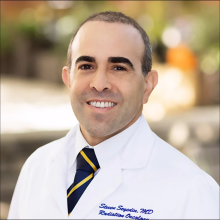
Dr. Steven Seyedin is a radiation oncologist at the University of California, San Francisco (UCSF), affiliated with the School of Medicine and the Department of Radiation Oncology. He specializes in treating genitourinary cancers, including prostate, kidney, bladder, and testicular cancers, utilizing advanced techniques such as stereotactic body radiation therapy and biology-guided radiotherapy. His research is focused on integrating radiation therapy with immunotherapy and targeted agents to enhance treatment efficacy. He actively participates in clinical trials and collaborates with multidisciplinary teams at UCSF to translate laboratory discoveries into clinical practice. B.A. in Biochemistry, University of California, Berkeley, 2008 M.D., University of California, Los Angeles (David Geffen School of Medicine), 2014 Internship in Medicine, University of Illinois at Chicago, 2016 Residency in Radiation Oncology, University of Iowa, 2020 Dr. Seyedin's research interests span radiation oncology , genitourinary cancers , immunotherapy integration , precision radiotherapy , and health disparities in cancer care . His work emphasizes improving clinical outcomes through technological innovation and combination therapies. His recent publications reflect a strong trend in combining radiotherapy with systemic agents, exploring biomarkers for treatment response, and addressing socioeconomic barriers in cancer care. He has published in high-impact journals such as JAMA Oncology , Frontiers in Oncology , and Cancers (Basel) . Scientific Awards and Honors: Association of Residents in Radiation Oncology Educator of the Year, 2022 ASTRO Annual Meeting Resident Recognition Award in Biology, 2020 UIHC Excellence in Clinical Teaching Award, 2020 American Brachytherapy Society HDR LDR Prostate Scholarship Workshop, 2019 RSNA Roentgen Resident Research Award (2019, 2012) ASTRO Annual Meeting Abstract Travel Award, 2018 David Geffen School of Medicine at UCLA Student Teacher Award Dr. Seyedin is actively involved in medical education and clinical research, contributing to grants and collaborative projects across UCSF. While no formal lab or independent students are listed, he mentors through clinical teaching and research collaboration. His future work is likely to continue advancing personalized radiotherapy and equitable access to cutting-edge cancer treatments.
Mariana Guerrero, PhD, is a Professor in the Department of Radiation Oncology at the University of Maryland School of Medicine. A board-certified Medical Physicist (American Board of Radiology), she oversees prostate seed implants, high-dose-rate brachytherapy, and departmental quality assurance while providing clinical coverage for external beam therapy, Yttrium-90 infusions, and thermal treatments. Her expertise bridges clinical physics and radiobiological research to optimize cancer therapy. Her educational background includes: 1989: Licentiate (B.S.) in Physics, University of Buenos Aires 1995: Ph.D. in Physics, University of California, Irvine (Thesis Advisor: Professor Clare C. Yu) Dr. Guerrero's research centers on radiobiological modeling to refine radiation dose-response relationships, multi-criteria optimization for treatment planning, and hyperthermia applications. She investigates extensions of the linear-quadratic model for stereotactic radiotherapy, fractionation effects, and reoxygenation dynamics, aiming to personalize cancer treatments through physics-driven biological insights. Her 20+ publications (2002-2023) reveal evolving focus from foundational radiobiological modeling to clinical translation, with recent work addressing racial disparities in prostate cancer outcomes, VMAT optimization, and Y-90 dose validation. Key themes include prostate/gynecological cancer radiotherapy, brachytherapy physics, and computational modeling of radiation effects. As an active American Association of Physicists in Medicine (AAPM) member since 2002, she serves on the EDIC Committee. Though specific awards aren't listed, her board certification and leadership in departmental QA underscore professional recognition. Dr. Guerrero mentors students through teaching responsibilities and clinical research supervision. Her community engagement includes science fair judging (2006-2019) and bald eagle nest monitoring for the Maryland Bird Conservation Project (2017-present), reflecting commitment to science education beyond oncology. She operates within the Radiation Oncology department's clinical physics team as QA officer and contributes to multidisciplinary cancer care through the University of Maryland's academic medical ecosystem.
Bradford Chong is an Assistant Professor at the University of Chicago in the Department of Medicine-Gastroenterology . His work focuses on Gastroenterology , Diagnostic Imaging , and Vascular Diseases . His research involves endoscopic procedures, interventional radiology, and pulmonary diagnostics. Publications include studies on ampullary access techniques (2025), Y-90 Radioembolization complications (2017), and the "Headcheese sign" in thoracic imaging (2014). Key trends span vascular interventions, medical imaging innovations, and digestive/lung disease diagnostics. Collaborators : Co-authors: Jonathan Chung, Eric Montminy, Jeffrey Matthews, Uzma Siddiqui Same Department: Tenzin Choden, Bana Jabri, Yanchun Li
Arturo Chiti is a faculty member at San Raffaele Vita-Salute University, specializing in Medical Imaging , Nuclear Medicine , and Oncology . He is affiliated with the disciplinary group focused on Imaging, Radiotherapy, and Neuroradiology (MEDS-22/A), and actively teaches courses such as Radiomics and Radiobiology . His research leverages advanced imaging techniques like PET/MRI and PSMA PET to improve cancer diagnosis, treatment planning, and outcome prediction across multiple oncology domains. Research Trends from 2024-2025 show a focus on optimizing imaging protocols (e.g., SUV parameters, target-to-background ratios), integrating multimodal imaging for surgical guidance, and validating predictive models in Pediatric Brain Tumors Prostate Cancer Hepatocellular Carcinoma Pancreatic Adenocarcinoma Oral Cancer Hodgkin Lymphoma .
Dave Sprengers is a researcher at Erasmus MC, affiliated with the Department of Gastroenterology & Hepatology within the Erasmus School of Medicine. His work is centered on liver diseases, particularly hepatocellular carcinoma (HCC), cholangiocarcinoma, and liver transplantation, with a strong focus on clinical and translational research. His research interests span hepatocellular carcinoma , liver transplantation , immune checkpoint biology , T cell immunology , and molecular oncology . He actively investigates epigenetic markers such as DNA methylation for early cancer detection and explores advanced therapies like holmium-166 radioembolization, including dosimetry and functional imaging. The recent trend in his publications highlights a multidisciplinary approach combining clinical hepatology , nuclear medicine , and molecular diagnostics , with a consistent emphasis on improving outcomes in liver cancer patients. His work often involves collaborative, team-based research across specialties. Scientific awards: No awards listed in the provided text. Dave Sprengers has supervised research work, as indicated by three supervised items in the database, suggesting involvement in mentoring junior researchers or students. While specific grants are not mentioned, his extensive publication record in high-impact journals implies involvement in funded research projects. He collaborates widely within Erasmus MC and with external institutions, particularly in nuclear medicine and oncology. He is part of a research network focused on liver cancer, immune regulation, and interventional therapies, contributing to both clinical studies and molecular investigations. His team likely includes clinicians, radiologists, molecular biologists, and data analysts working on liver disease mechanisms and treatments.