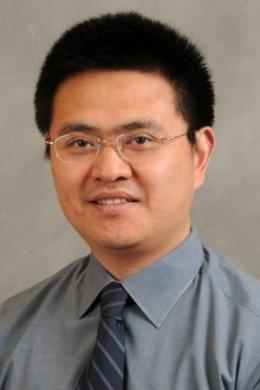
Adel Mustafa is Professor in the Department of Radiology and Biomedical Imaging at Yale School of Medicine. He serves as Director of the Yale Diagnostic Medical Physics Residency Program and Chief of Diagnostic Radiology Physics at Yale New Haven Health System. His work integrates clinical service, education, and research in medical physics. His primary research interests are in image quality optimization , radiation dose management , and the quantification of disease conditions using multiple imaging modalities, with a particular focus on CT imaging. He leads a multidisciplinary team of medical physicists and collaborates with radiologists and clinicians to advance detection, quantification, and optimization in CT. Dr. Mustafa is board certified by the American Board of Radiology (ABR) and the American Board of Medical Physics (ABMP) in diagnostic imaging physics. He is an elected Fellow of the American Association of Physicists in Medicine (AAPM), recognizing his contributions to the field. Fellow of the American Association of Physicists in Medicine (2007) He plays a significant national and international leadership role in medical physics, having served on numerous AAPM committees and as an examiner for the ABR since 2004. Currently, he is Chairman of the Accreditation Committee and Chief Examiner for the International Medical Physics Certification Board (IMPCB), shaping standards and certification globally. He established the Yale Diagnostic Medical Physics Residency under GMEC and continues to lead it as Program Director. Dr. Mustafa's team focuses on advancing clinical imaging through physics-driven innovation, with an emphasis on safety, accuracy, and quantitative analysis in diagnostic radiology.
Professor Hutan Ashrafian is a clinician-scientist and surgeon at the University of Leeds Business School, holding dual roles as Professor of Research Impact and Senior Research Fellow at Imperial College London. His expertise spans AI in healthcare, metabolic surgery, and ancient history. He pioneered STARD-AI and QUADAS-AI guidelines for AI diagnostics, collaborated on AI-driven breast cancer screening with Google and NHS, and led global health policy initiatives. Ashrafian’s work bridges medicine, history, and philosophy, including his contributions to understanding historical figures’ medical conditions, such as King Tutankhamun’s epilepsy. He has authored over 550 publications, 12 books, and holds a PhD in computational physiology and an MBA with distinction. Awards include the Hunterian Prize and Wellcome Trust Fellowship. His research also explores AI ethics, quantum physics paradoxes, and art-based medical diagnostics. Education: PhD in Computational Physiology (Imperial College London) MBA (Warwick Business School) MD (University College London) Bachelor of Science in Immunology (University College London) Research Interests: Ashrafian’s work spans: AI in Medicine: Diagnostic algorithms, guideline development (STARD-AI/QUADAS-AI), and ethical frameworks. Metabolic Surgery: Bariatric interventions, gut microbiome, and obesity treatments. Ancient History: Medical analyses of historical figures (e.g., Tutankhamun, Julius Caesar) and art-based pathology identification. Philosophy: AI rights (AIONAI law), temporal paradoxes, and the Simulation Argument. Awards: Royal College of Surgeons Arris and Gale Lectureship Hunterian Prize Wellcome Trust Research Fellowship Advising & Innovation: Supervised >50 PhD students, co-founded Oxford Medical Products (weight loss tech), and serves as CSO at Flagship Pioneering’s Preemptive Health division. He advises on NHS digital transformation and global health policy. Labs/Teams: Leads AI initiatives at Imperial’s Institute of Global Health Innovation and collaborates with Google, NICE, and international institutions on health tech solutions.
Dr. Saree Alnaghy is an Honorary Associate Professor at the University of Wollongong's Faculty of Engineering and Information Sciences, affiliated with the Centre for Medical Radiation Physics. She holds a Bachelor of Medical and Radiation Physics (Honours) and a PhD in Physics from the University of Wollongong (2009–2017). Her research focuses on advanced medical imaging and radiation therapy technologies, including photon counting detectors, dosimetry systems, and robotic motion phantoms for quality assurance. Key research areas include: Development of novel X-ray detectors for radiotherapy guidance High-resolution dosimetry techniques using silicon and polymer-based systems Integration of real-time imaging in radiation therapy Robotic systems for motion management in oncology Her work has been supported by grants such as 'Sharper Targeting, Brighter Future' (2024) and 'Bringing Colour to Radiotherapy' (2021–2025). She currently supervises PhD and MRes students on projects involving photon counting CT scanners and radiotherapy imaging. Alnaghy also serves as a Radiation Oncology Medical Physics Registrar at the Nelune Comprehensive Cancer Centre.
Associate Professor Ng Bing Feng leads research in Additive Manufacturing, Aerospace Engineering, and Thermofluids at Nanyang Technological University's School of Mechanical & Aerospace Engineering. As Cluster Director for Smart & Sustainable Building Technologies at NTU's Energy Research Institute, he oversees projects spanning energy-efficient cooling technologies, advanced filtration systems, and bio-inspired materials. His interdisciplinary work integrates advanced manufacturing with environmental engineering, focusing on sustainable solutions for air quality management and thermal regulation. Current research explores radiative cooling technologies, acoustic agglomeration for emissions control, and crashworthy structures via biomimetic design. Professor Ng's publications demonstrate consistent innovation in multi-scale manufacturing and fluid dynamics, with growing emphasis on sustainable urban technologies. Methodologies combine experimental fluid dynamics with computational modeling and AI-driven design. Leadership Roles: Cluster Director, Energy Research Institute @ NTU Principal Investigator for multiple industry collaborations in sustainable materials Research Output: 42+ publications in high-impact journals Multiple patents in filtration technologies and cooling systems
Professor Thomas Blumensath is a Professor of Signal and Image Processing at the University of Southampton and a Fellow at the Alan Turing Institute. He is the Academic Lead in Image Processing and Reconstruction at the University's μ-VIS X-ray Imaging Centre and Director of Research at the Institute of Sound and Vibration Research (ISVR). His research focuses on advanced algorithms for solving inverse problems in tomographic imaging, combining machine learning, optimization, and statistical methods. Key areas include X-ray tomography strategies, GPU-accelerated reconstruction, and multimodal imaging applications. Education: B.Sc. (Hons) Music Technology and Audio System Design, University of Derby (2002) PhD in Electronic Engineering (Bayesian Signal Processing), University of London (2006) Research Interests: Professor Blumensath's work spans theoretical and applied signal/image processing, with emphasis on tomographic imaging techniques. His current projects address efficient reconstruction methods, spectral X-ray CT, and applications in manufacturing and plant science. He collaborates with advanced imaging facilities like Diamond Light Source and ISIS neutron imaging beamline. Key Contributions: His research bridges computational methods (e.g., compressed sensing) with practical imaging challenges, including limited-angle tomography and stereo imaging strategies. He leads the National Research Facility for Lab X-ray CT and has developed the TIGRE reconstruction toolbox. Grants & Projects: Active funding includes EPSRC projects on tomographic sensitivity monitoring and CT-based manufacturing inspections. Completed projects cover constrained reconstruction, AM process verification, and industrial CT metrology. Awards: Alan Turing Institute Fellowship Teaching & Leadership: He teaches modules on machine learning, biomedical image processing, and robotics. Leads the BEng Control Engineering program at the Joint Education Institute with Harbin Engineering University. Labs/Teams: Active in the Signal Processing, Audio and Hearing research group (SPAH) and the Institute for Life Sciences. Oversees the μ-VIS X-ray Imaging Centre's research initiatives.
Professor Bharat Bhuva is a faculty member in the School of Engineering at Vanderbilt University, holding the position of Professor of Electrical Engineering and Computer Engineering . His research focuses on radiation effects on integrated circuits, semiconductor device modeling, and VLSI design, with an emphasis on advancing the resilience of nanoscale electronics against single-event effects and total-ionizing-dose damage. He also investigates emerging technologies like FinFET and FDSOI for improved radiation hardness and performance. Education: Ph.D. in Electrical Engineering, North Carolina State University M.S. in Electrical Engineering, North Carolina State University B.S. in Electrical Engineering, Maharaja Sayajirao University Research Interests: Professor Bhuva’s work spans computer-aided design tools, semiconductor process modeling, and the mitigation of radiation-induced failures in advanced integrated circuits. His studies address challenges posed by scaling to smaller technology nodes (e.g., 3-nm FinFET) and the impact of environmental factors like temperature, bias conditions, and neutron exposure on circuit reliability. Key areas include multicell upsets, single-event upset (SEU) cross-section analysis, and the efficacy of radiation-hardened-by-design (RHBD) techniques. Awards & Recognition: None explicitly listed in the provided text. However, his extensive publications in top-tier journals like IEEE Transactions on Nuclear Science highlight his contributions to the field. Grants & Advising: Advises on projects related to advanced semiconductor technologies and radiation effects. His research has been supported by grants from institutions focusing on space electronics and nanotechnology. No specific grant details or student advisees are listed. Labs & Teams: Likely affiliated with Vanderbilt’s Cyber-physical Systems and Nano Science and Technology research neighborhoods, though specific lab names are not mentioned in the text.
Christin A. Knowlton, MD, MA serves as Associate Professor of Therapeutic Radiology at Yale School of Medicine, where she holds dual leadership roles as Vice Chair for Accreditation in Therapeutic Radiology and Medical Director of Smilow Cancer Hospital Care Center-Hamden. Her clinical practice focuses on delivering high-quality, patient-centered radiation oncology services with specialization in breast cancer, lung cancer, bone metastases, and thymoma treatments. Dr. Knowlton's educational background includes a BA from Oberlin College (1994), MA from New York University (1998), MD from SUNY at Stonybrook (2006), and residency training at Hahnemann University Hospital/Drexel University College of Medicine (2011). Her research program centers on optimizing radiation therapy protocols, with particular emphasis on hypofractionation techniques, stereotactic body radiation therapy (SBRT), and management of radiation-related toxicities including pneumonitis and esophagitis. Analysis of her 15 most recent publications reveals a consistent research trajectory focused on improving outcomes in thoracic and breast radiation oncology through dose optimization, toxicity prediction modeling, and innovative treatment approaches for oligometastatic disease. Her work frequently addresses the balance between therapeutic efficacy and radiation-induced complications, with growing emphasis on molecular risk assessment and personalized treatment planning. Smilow Luminary Award of Excellence in Patient Care (2019) National Comprehensive Cancer Network (NCCN) Fellows Recognition Program As a clinician-educator, Dr. Knowlton emphasizes the importance of patient communication and multidisciplinary teamwork, collaborating closely with nursing, physics, dosimetry, and therapy staff to deliver comprehensive cancer care. Her leadership in accreditation reflects her commitment to maintaining the highest standards in radiation oncology practice and education. Dr. Knowlton's clinical trial involvement, including the DD3 trial of dose-deescalated SBRT for centrally located lung cancer, demonstrates her active contribution to advancing evidence-based radiation oncology practice.
Associate Professor Marcus Cattani is a faculty member at Edith Cowan University (ECU), affiliated with the School of Medical and Health Sciences and the Department of Occupational Health and Safety. He serves as Deputy Director of the WA Government-funded MARS Centre, focusing on Mental Awareness, Respect, and Safety initiatives. Since joining ECU in 2015, he has developed risk management and leadership programs for undergraduate/postgraduate programs and supervises PhD/Master's research. His research emphasizes injury risk reduction in industries like mining, oil/gas, and construction, with recent focus on agriculture safety and radiation exposure in Western Australian mining. Education: Doctor of Philosophy (Occupational Health and Safety), Murdoch University (2004) Master of Science, United Kingdom (1995) Research interests include occupational safety frameworks, real-time exposure assessment, fatigue management, and safety leadership tools. Current projects address critical controls for construction fatalities, radiation exposure in mining, and OHS systems for remote work. Over 30 years of industry experience as an occupational hygienist and HSE consultant informs his academic and applied work. Key collaborations involve government agencies (DMIRS, Water Corporation) and industry partners (Rio Tinto, Lifeline WA). Recent grants include MARS Centre initiatives and NORM exposure studies. His 2025 focus includes translating injury prevention techniques into agriculture contexts. Professional memberships include Australian Institute of Health and Safety (Chartered OHS Professional) and the Australian Institute of Occupational Hygienists.
Dr. Sotirios Stathakis is Chief of Physics at the Mary Bird Perkins Cancer Center (2023–Present) and Associate Director of the Medical Physics Division at the University of Texas Health Science Center San Antonio (2017–2022). He holds an Adjunct Professor position at Louisiana State University's Department of Physics and Astronomy (2023–Present). His expertise lies in radiation oncology and medical physics, with a focus on patient-specific quality assurance, dose verification, and advanced treatment techniques like adaptive radiation therapy and SBRT. Education: Ph.D., Medical Physics, University of Patras (2005) M.S., Medical Physics, University of Aberdeen (1997) B.S., Physics (minor in Mathematics and Computer Science), University of Waterloo (1995) Research Interests: Patient-specific quality assurance Daily dose verification Treatment planning techniques Adaptive radiation therapy Stereotactic body radiation therapy (SBRT) Automation and workflow optimization in radiation oncology Publications: Over 20 peer-reviewed articles since 2020, focusing on topics like Monte Carlo simulations, AI-driven beam analysis, and AAPM task group recommendations for IMRT verification. Key themes include improving dose accuracy, equipment validation, and clinical implementation of advanced radiation technologies. Grants & Awards: Not explicitly listed in provided text. Labs/Teams: Collaborates with institutions like Fox Chase Cancer Center, South Texas Veterans Health Administration, and LSU on medical physics research and clinical applications.
Professor Ananya Choudhury serves as Chair and Honorary Consultant in Clinical Oncology at the University of Manchester, where she is also Co-Group Leader of the Translational Radiobiology Group within the Division of Cancer Sciences. She joined The Christie NHS Foundation Trust in 2008, specializing in urology and sarcoma, and has since focused on radiotherapy-related research in prostate and bladder cancers. Professor Choudhury is clinical lead for advanced radiotherapy, including the groundbreaking MRLinac project, and plays a key role in national radiotherapy research initiatives. Professor Choudhury earned her BA (Hons) in 1993, MB. BChir (Cantab) in 1995, and MA (Cantab) in 1997 from Trinity College, Cambridge. She completed her Clinical Oncology training at the Yorkshire Deanery from 2000-2008, during which she earned her MRCP in 2000 and F.R.C.R in 2004. She completed her PhD in 2008 through the University of Leeds and Princess Margaret Hospital in Toronto, Canada, where she studied the molecular epidemiology of DNA double strand break repair in bladder cancer. Professor Choudhury's research program focuses on optimizing and personalizing radiotherapy using advanced imaging technology to deliver high doses while minimizing side effects. Her work centers on prostate and bladder cancers, with particular interest in predictive biomarkers, hypoxia, and the integration of magnetic resonance imaging to improve treatment precision. She has pioneered research in radiotherapy dose optimization, biomarker development, and the identification of patients who would benefit most from different treatment approaches. Her extensive publication record demonstrates a strong focus on radiation therapy, particularly in genitourinary cancers. Recent work explores MRI-guided radiotherapy, hypoxia biomarkers, and personalized treatment approaches across multiple cancer types. She has made significant contributions to understanding how imaging technology can improve radiotherapy precision and effectiveness while reducing side effects, with several publications appearing in top journals through 2025. Professor Choudhury has received multiple prestigious awards recognizing her contributions to the field: Cancer Research-UK/Royal College of Radiologists Clinical Training Fellowship (2005) Fellowship for the 10th ECCO-AACR-ASCO Workshop on Methods in Clinical Cancer Research (2007) Outstanding Contribution, Greater Manchester Clinical Research Awards (2017) RCR Research Fellowship (2005) Research Fellowship, Princess Margaret Hospital, Toronto (2004) Professor Choudhury has supervised numerous doctoral and master's students across multiple cancer types, with current students expected to complete through 2024. She is Principal Investigator on multiple research grants, including 'Measuring tumour radioresistance to improve radiotherapy outcomes' and the 'MAESTRO Programme' as part of CRUK RadNet. Her research program is supported by significant funding from NIHR Manchester Biomedical Research Centre and other major funding bodies. As Co-Group Leader of the Translational Radiobiology Group, Professor Choudhury collaborates extensively with leading researchers including Peter Hoskin, Catharine West, Corinne Faivre-Finn, and Marcel van Herk. Her team is at the forefront of integrating advanced imaging with radiotherapy to improve cancer treatment outcomes, with active projects spanning from basic radiobiology to clinical implementation of novel radiotherapy techniques.
Professor John D. Cressler is a tenured faculty member at the Georgia Institute of Technology, holding a position within the School of Electrical and Computer Engineering in the College of Engineering. His research focuses on cutting-edge semiconductor technologies, particularly silicon-germanium heterojunction bipolar transistors (SiGe HBTs) for mixed-signal applications spanning RF, microwave, mm-wave, analog, and digital domains. His research interests center on atomic-scale bandgap engineering for next-generation semiconductor devices, with emphasis on SiGe HBT technology development, radiation-hardened circuits for space applications, cryogenic electronics, and device-circuit interactions. His team explores fundamental device theory, broadband noise analysis, profile optimization, 2-D/3-D simulation, compact modeling, and radiation effects. Current projects include Europa-surface mission electronics, D-band/sub-THz systems, and radiation-tolerant receiver designs. Analysis of his 15 most recent publications (2024-2025) reveals a dominant focus on radiation-hardened electronics for space applications (40% of works), millimeter-wave circuit design (30%), and SiGe HBT reliability optimization (30%). Key trends include Europa mission electronics development, D-band/sub-THz circuit innovation, and advanced radiation mitigation techniques using SiGe BiCMOS technology. Professor Cressler teaches multiple courses including ECE 3040 (Microelectronic Circuits), ECE 3450 (Semiconductor Devices), ECE 6444 (Silicon-Based Heterostructure Devices and Circuits), and the interdisciplinary IAC 2002 course on Science, Engineering and Religion. His research is supported by industrial collaborations and Georgia Tech facilities including the Georgia Electronic Design Center (GEDC), NanoTECH, and C-STAR.
Associate Professor Ernest Ekpo is affiliated with the University of Sydney's Sydney School of Health Sciences, within the Discipline of Medical Imaging Sciences. He holds academic roles as a Scholarly Teaching Fellow and Co-Director of the Medical Image Optimisation and Perception Group (MIOPeG). He is also an Associate Editor of the Journal of Medical Imaging and Radiation Sciences and a member of the Sydney Southeast Asia Centre and Cancer Research Network. Education: Earned BSc (Hons) in Radiography/Sonography from the University of Calabar, Nigeria, and a PhD from the University of Sydney. His research focuses on breast density, cancer biomarkers, medical image perception, radiation dose optimization, and radiology education. He explores applications in low-resource settings and emerging technologies like AI for diagnostic accuracy. Research interests include breast cancer treatment outcomes, image-based phenotypes, and improving imaging pathways for acute abdominal pain. Key themes are Cancer and Medical Imaging, with an emphasis on Women's Health and Chronic Disease. His work combines clinical practice, public health strategies, and technological advancements to enhance diagnostic efficacy and reduce unnecessary procedures. Articles from 2021–2024 highlight his contributions in mammography optimization, radiographer training, and AI-driven diagnostic tools. Recent grants include a 2024 project on CT examination education and a 2023 initiative to streamline breast cancer screening pathways. His awards recognize peer review excellence, early-career teaching, and research leadership. He supervises multiple students investigating breast density biomarkers, imaging modalities for dense breasts, and radiation dose management. His educational efforts aim to improve radiographers' capabilities in identifying urgent findings across CT and X-ray modalities, leveraging blended learning approaches.
Yading Yuan, PhD is an Associate Professor of Radiation Oncology (Physics) at Columbia University Irving Medical Center and a member of the Data Science Institute. He holds a PhD in medical physics from the University of Chicago (2010) and completed clinical residency at Harvard Medical Physics Program (2013). His research focuses on AI-driven innovations in radiation oncology, including automated medical image analysis systems, federated learning frameworks for tumor segmentation, and data-driven approaches to personalized cancer treatment. He is certified by the American Board of Radiology and licensed in New York State. Education: PhD in Medical Physics (University of Chicago, 2010); Clinical Residency (Harvard Medical Physics Program, 2013). Research interests include: automated knowledge-based treatment planning, large-scale clinical AI systems, medical image reconstruction algorithms, and panomics integration for precision oncology. His work emphasizes translating data science advancements into clinical practice to improve patient outcomes. Key trends in his publications include federated learning for privacy-preserving medical AI, tumor segmentation in multi-modal imaging (PET/CT, MRI), and AI-driven prediction of treatment outcomes and recurrence risks. Recent work emphasizes decentralized learning architectures and cross-institutional collaboration systems. Scientific Awards: Distinguished Reviewers 2013 (selected by peer review committees) Advising/grants: No specific student names or grant details listed in provided text. His work is supported through institutional and collaborative research initiatives. Labs/teams: Active member of Columbia's Data Science Institute and Radiation Oncology department, contributing to interdisciplinary medical AI research groups.
Eleonora Vacca is a PhD student and Research Fellow in the Department of Automatic Control and Computer Science (DAUIN) at the Polytechnic University of Turin. She holds a B.S. in Electronic Engineering from the University of Palermo (2018) and an M.S. in Electronic Engineering-Embedded Systems from Politecnico di Torino (2021). Her research focuses on digital hardware design, reliability engineering, reconfigurable devices, and AI applications in aerospace and safety-critical systems. She is a member of the Aerospace and Safety Computing Lab and the CAD - Electronic CAD & Reliability Group (DAUIN). Her work addresses challenges such as radiation effects mitigation in space missions, fault-tolerant AI accelerators, and real-time anomaly detection in satellite telemetry. She has contributed to projects like the RAMSES CubeSat-1 Development (2025-2026), funded by commercial contracts. In 2024, she won the Best Student Paper Award at the NEWCAS Conference for her research on radiation effects in space missions. Vacca collaborates on teaching, including assisting in the course 'Electronic Calculators' for Computer Engineering students. Her recent publications explore AI resilience in RISC-V ecosystems, radiation environment analysis for space missions, and gesture recognition systems for smart cities. She actively contributes to conferences such as the ACM International Conference on Computing Frontiers and the IEEE International Smart Cities Conference.
Dr Emily Hewson is a Cancer Institute NSW Early Career Fellow and member of the Sydney School of Health Sciences at the University of Sydney's Faculty of Medicine and Health. Her research focuses on advancing real-time radiation therapy techniques, particularly in managing intrafraction motion for prostate and other cancers. She leads projects involving multileaf collimator (MLC) tracking, dose optimization, and deep learning integration in radiation oncology. Research interests include adaptive radiotherapy systems, kilovoltage intrafraction monitoring (KIM), and clinical trial implementation (e.g., TROG 15.01 SPARK trial). Her work emphasizes improving treatment accuracy through real-time dose-guided approaches and multitarget tracking for tumors with complex motion patterns. Developed experimental validations for MRI-linac integration and MLC tracking systems Authored a textbook chapter on Adaptive Radiation Therapy (ART) Recipient of Cancer Institute NSW Early Career Fellowship (2023) Recent grants include an AI platform for targeted radiotherapy (2024) and national critical infrastructure funding for lung cancer applications (2023). Her lab collaborates on real-time dose calculation algorithms and clinical trial implementation across multiple institutions.