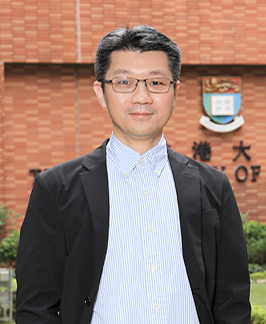
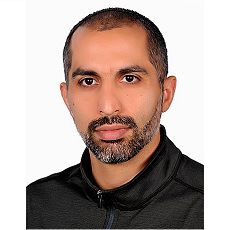
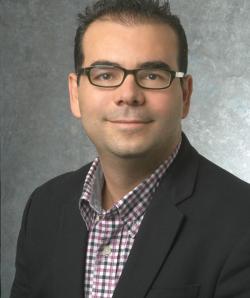
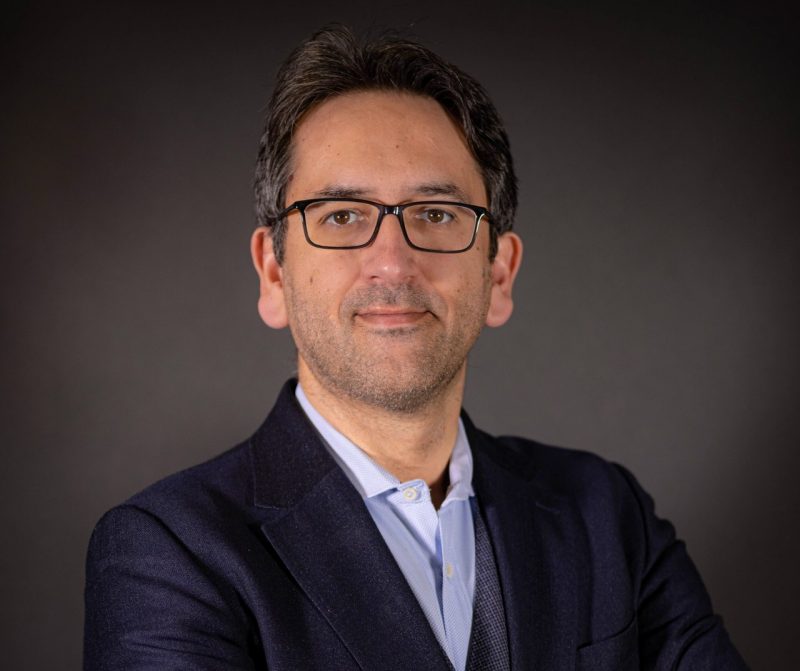
Professor Benjamin C.M. Kao is a faculty member in the Department of Computer Science at The University of Hong Kong (HKU), affiliated with the School of Computing and Data Science. He holds a BSc from HKU (1989) and a PhD from Princeton University (1995). His career includes roles as a teaching/research assistant at Princeton (1989-1991) and a research fellow at Stanford University (1992-1995). His research focuses on Database Management Systems, Data Mining, Real-time Systems, and Information Retrieval Systems. Notable contributions include S-OLAP for sequence data analysis, collaborative resource discovery in social tagging systems, and algorithms for mining periodic patterns in sequences. He has led research grants such as the GRF-funded 'Online Analytical Processing on Sequence Data' (2008) and computational studies in uncertain data mining (2006). Professor Kao has served on program committees for major computer science conferences and reviewed for leading journals. His work bridges theoretical foundations with practical applications in data systems and information retrieval.
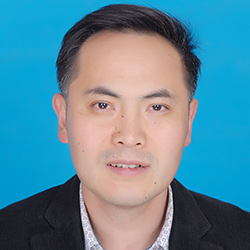
Yan Chen is a Professor of Computer Science at Northwestern University's Robert R. McCormick School of Engineering and Applied Science. He leads the Northwestern Lab for Internet and Security Technology (LIST) and the Center for Ultra-scale Computing and Information Security. His research focuses on cybersecurity, network measurement, and distributed systems security. Chen holds a Ph.D. from UC Berkeley (2003), M.S. from SUNY Stony Brook, and B.E. from Zhejiang University. Research interests include securing networking systems, intrusion detection, cloud-native platforms, and mobile security. Notable awards include the DOE Early CAREER Award (2005), Air Force Young Investigator Award (2007), and ACM ASPLOS'18 Most Influential Paper Award. His work has been cited over 17,000 times with an h-index of 62 (2024). Key contributions include the LIST lab's advancements in APT detection, provenance tracking in microservices, and security frameworks like FlowCog. He advises numerous Ph.D. students and has graduated over 20 researchers now in academia and industry.
Dr. Jason Rights is an Associate Professor in the Department of Psychology within the Faculty of Arts at the University of British Columbia. His office is located in Kenny Room 2017 at 2136 West Mall, Vancouver, BC. He leads The Rights Lab, a quantitative methods research group dedicated to improving statistical practice in scientific research. His educational background includes: B.S. in Psychology and Mathematics from the University of North Carolina at Chapel Hill (2011) M.S. in Psychology (Quantitative Methods) from Vanderbilt University (2015) Ph.D. in Psychology (Quantitative Methods) from Vanderbilt University (2019) Dr. Rights' research focuses on addressing methodological complexities in multilevel/hierarchical data contexts where observations are nested (e.g., patients within clinicians, students within schools). His work spans several interconnected programs including developing R-squared measures for multilevel models, addressing issues with level-specific effects, exploring connections between multilevel and mixture models, and advancing latent variable model selection techniques. Analysis of his publication record reveals a consistent focus on methodological innovations in quantitative psychology, with particular emphasis on improving statistical techniques for hierarchical data structures. His work bridges theoretical statistical development with practical applications across psychology and related fields. Dr. Rights actively develops open-source software in R to implement his methodological contributions, making advanced statistical techniques accessible to researchers. The Rights Lab serves as the hub for his ongoing research program in quantitative methods development.
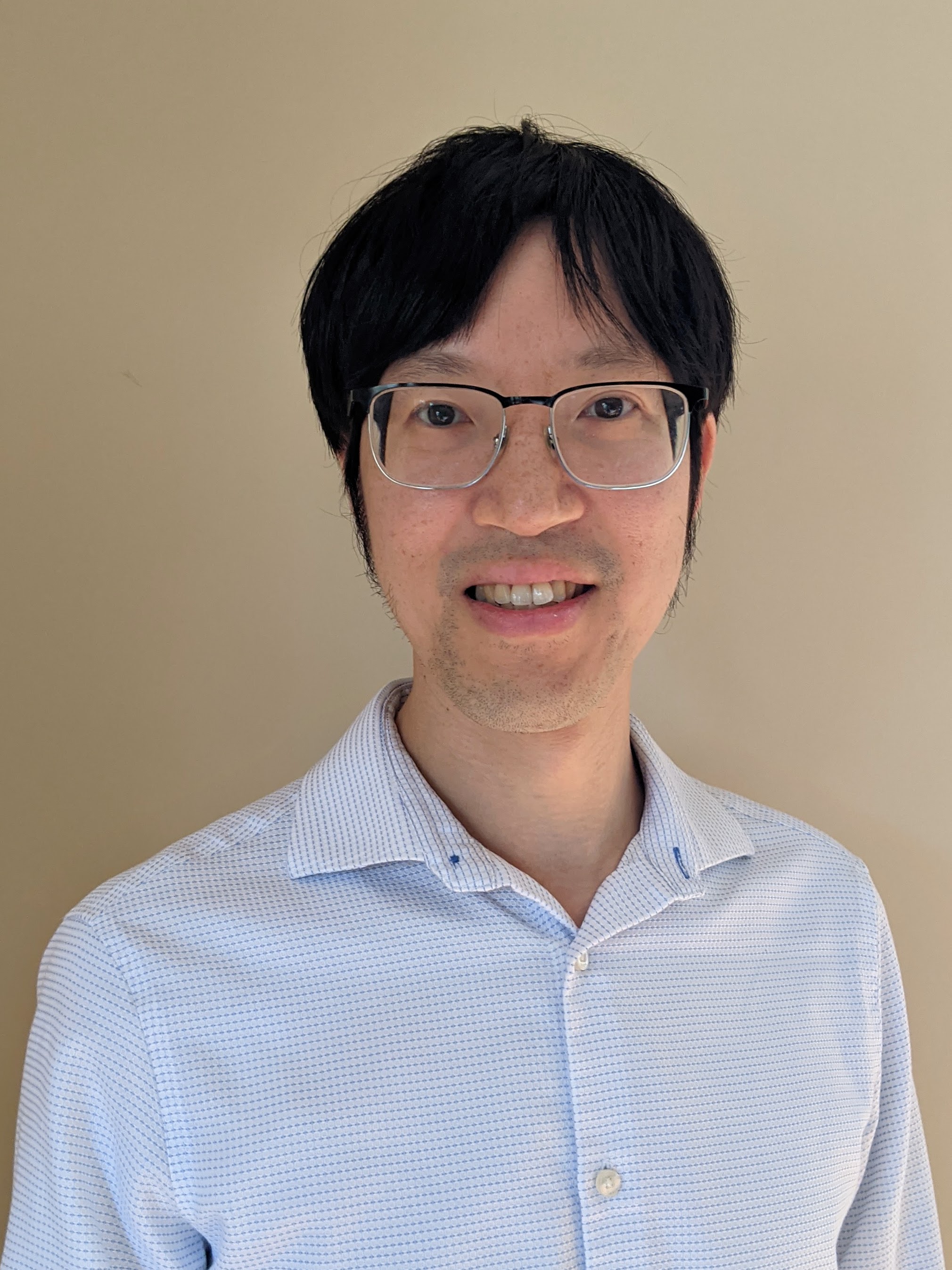
Samuel W.K. Wong is an Associate Professor in the Department of Statistics and Actuarial Science at the University of Waterloo. He holds a Ph.D. in Statistics from Harvard University (2013) under Prof. Samuel Kou. His research focuses on statistical methodology for complex data science challenges in protein structure modeling, dynamic systems inference, and reliability engineering of wood-based products. He has held academic positions at the University of Florida (2013–2018) and has been at Waterloo since 2018. His research interests include Bayesian computation, statistical inference for dynamic systems, and spatial-temporal data analysis. Notable contributions include the development of manifold-constrained Gaussian processes (MAGI package) and sequential Monte Carlo methods for protein folding studies. He has advised over 15 graduate students and researchers, many of whom are now in academic or industry roles worldwide. Wong has received teaching distinctions at Harvard and holds awards including the Nash Medal (2008) for academic excellence. His work bridges computational statistics with applications in bioinformatics, structural engineering, and environmental science. He has published extensively in top-tier journals like Journal of Computational and Graphical Statistics and Biometrics , and collaborates with wood scientists to improve real-time lumber quality assessment using laser imaging data. His teaching portfolio includes courses on probability theory, statistical inference, and spatial data analysis at both undergraduate and graduate levels. Beyond academia, he maintains an active passion for classical piano performance, having performed recitals combining music with his statistical research interests.
Peter F. Halpin is an Associate Professor in the Department of Learning Sciences and Psychological Studies at the University of North Carolina at Chapel Hill School of Education. He holds a PhD in Psychology (Theory and Methods) from Simon Fraser University and completed postdoctoral research at the University of Amsterdam. His research focuses on psychometric methodology, educational measurement, and statistical approaches to analyzing collaborative learning and teacher practices. Halpin has been recognized with awards including the National Academy of Education/Spencer Fellowship and NYU's High Merit Distinction in Research. Key research areas include developing statistical models for small group collaborations, analyzing educational technology data, and improving measurement tools for early childhood development (e.g., IDELA assessments). His work bridges theoretical psychometrics with applied educational research, addressing challenges in global education measurement and program evaluation. Halpin has authored over 20 peer-reviewed articles and contributed to open-source software projects like the scirt and hawkes R packages. He has advised numerous graduate students and led grants totaling over $2 million, including IES-funded studies on collaboration assessment and UNESCO-linked projects measuring educational outcomes in low-resource settings. Halpin also serves on editorial boards for journals like Psychometrika and Journal of Educational Measurement , and has presented globally at venues including the Psychometric Society and NCME conferences.
Prof. Dr. Frank T. Piller is a University Professor and Co-Leader of the Institute for Technology and Innovation Management (TIM) at RWTH Aachen University, where he also serves as Academic Director of the Executive MBA program at RWTH Business School. He leads a research team of approximately 30 doctoral students, 5 postdocs, and over 20 student researchers within the TIME Research Area of the School of Business and Economics. His educational background includes a doctoral degree in Operations Management from the University of Würzburg (1999) and a Habilitation degree from TUM Business School (2004) on "Innovation and Value Co-Creation." Prior to joining RWTH Aachen in 2007, he was a Research Fellow at MIT Sloan School of Management and faculty at TUM Business School. Prof. Piller is recognized as one of the world's leading experts in customer-centered value creation, specializing in mass customization, personalization, and customer co-creation. His current research focuses on how established companies can transform in response to disruptive business model innovations, with particular emphasis on digital transformation (Industry 4.0), AI-augmented innovation, and sustainable business models. He is particularly known for his work on innovation ecosystems, platform-based business models, and stakeholder-oriented technology development. His recent publications demonstrate a clear trajectory toward integrating artificial intelligence with traditional innovation management frameworks, exploring how AI transforms manufacturing systems, innovation processes, and business models. His work increasingly addresses the challenges of digital transformation in established industries while maintaining focus on customer co-creation and mass customization principles. His scientific achievements have been recognized with numerous awards: Co-Creation Award of the PDMA Nomination for "Innovating Innovation" Prize by Harvard Business Review and McKinsey "Lecturer of the Year" by Executive MBA students at TU Munich RWTH Aachen Rector's Prize for Excellent Teaching (since 2010) Grant for innovative "Flipping the Classroom" teaching concept ERC Synergy Grant for SAFER Grid project (2025-2031) Prof. Piller maintains an extensive research network spanning academia and industry. He collaborates with numerous corporations including 3M, Adidas, BASF, EON, J&J, P&G, Siemens, and Vodafone, as well as many technology startups across Europe and North America. As a co-founder, supervisory board member, and investor in innovative startups, he actively transfers research into practice. His research has received significant funding, most notably the prestigious ERC Synergy Grant for the SAFER Grid project. He leads the Technology and Innovation Management Group (TIM) within the TIME Research Area at RWTH Aachen, which comprises over 100 senior and junior researchers working at the intersection of innovation, technology management, marketing, and entrepreneurship. The institute is a leading European research institution for strategic, behavioral, and computer-supported technology and innovation management.
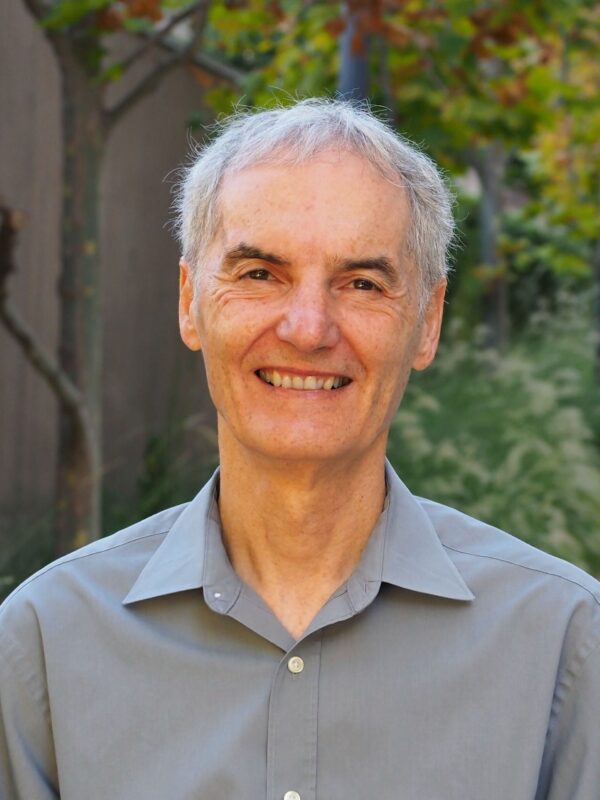
Mark S. Handcock is a Distinguished Professor in the Department of Statistics and Data Science at the University of California, Los Angeles (UCLA), where he leads research at the intersection of statistical methodology and applied problems in social sciences, epidemiology, and environmental science. His work bridges theoretical statistics with real-world challenges through innovative methodological development. His primary research interests encompass statistical models for social networks, network inference, methodology for hard-to-reach population surveys, spatial processes, demography, and environmetrics. Handcock has pioneered advances in exponential-family random graph models (ERGMs) and developed foundational R packages like ergm and tergm within the statnet suite, enabling sophisticated network analysis across disciplines. Analysis of his recent publications (2023-2025) reveals three dominant research thrusts: (1) Antarctic sea ice modeling using Bayesian reconstruction and temporal variability analysis, (2) epidemiological modeling of infectious disease transmission dynamics (particularly COVID-19), and (3) methodological innovations in network inference and causal analysis over stochastic networks. His work consistently integrates advanced computational statistics with domain-specific applications in climate science, public health, and social systems.
Professor Li Hui serves as the executive dean of the School of Network and Information Security at Xidian University, where he holds the position of second-level professor and doctoral supervisor. He is nationally recognized as a distinguished teacher and serves in multiple prestigious roles including member of the National Steering Committee for Postgraduate Education in Cryptography, inaugural president of ACM SIGSAC CHINA, and director of several major academic societies related to cryptography and information security. Professor Li's research spans cryptographic information security, privacy computing, information theory, and coding theory, with significant contributions to network and cyberspace security. His work demonstrates a strong focus on both theoretical foundations and practical applications, particularly in developing security protocols for emerging technologies like blockchain, federated learning systems, and IoT environments. His research output shows consistent innovation in balancing security requirements with computational efficiency across diverse application domains. With over 300 publications and more than 15,000 Google Scholar citations (H-index 60), Professor Li's scholarly impact is substantial. His recent publications demonstrate increasing emphasis on privacy-preserving machine learning, secure multi-party computation, and cryptographic protocols for distributed systems, reflecting the evolving security challenges in the AI era. Three second-class national teaching achievement awards Special prize and first-class national teaching achievement awards Four first-class provincial and ministerial science and technology progress awards Privacy Computing Theory award (Qian Weichang Chinese Information Processing Science and Technology Award) Multiple patents with over 80 granted inventions Professor Li leads the Cyber Changan Team and serves as head of the Shaanxi Provincial Innovation Team for Mobile Internet Security. He has successfully supervised numerous doctoral and master's students who have gone on to win prestigious competitions like the National College Student Information Security Competition. His research is supported by major national grants including a National Key R&D Program project and key projects from the National Natural Science Foundation of China.
Jun.-Prof. Dr. Annette Rudolph is an Assistant Professor leading the AI and (Climate-Induced) Land Use Change research group at TU Berlin's Institute of Landscape Architecture and Environmental Planning. She holds a Diplom in Mathematics (TU Berlin, 2011) and a PhD in Meteorology (FU Berlin, 2018), with a habilitation thesis on geophysical fluid dynamics and data-driven methods (2023). Her research integrates AI, climate science, and geophysical fluid dynamics. Academic Roles: Head of FG KI und Landnutzungswandel (since 2023), Postdoc in SFB 1114 (2014–2022) Research interests focus on AI applications in environmental sciences, clouds-climate interactions, and fluid dynamics. Her work bridges theoretical meteorology with data science, including machine learning for precipitation modeling and climate analysis. Publications emphasize AI-driven climate modeling, geostatistical methods, and atmospheric dynamics. Notable contributions include a 2024 paper on deep learning for precipitation nowcasting and a 2023 study on CAPE-precipitation relationships using machine learning. She developed e-learning resources on geodata analysis using Python and R, and led DAAD-funded research in Oslo (2022). Current projects involve AI-driven land-use change analysis and climate impact modeling.
John Joseph is a Professor of Strategy and Entrepreneurship at the Paul Merage School of Business, University of California, Irvine. His research and teaching focus on organizational design, strategic decision-making, innovation, and the integration of artificial intelligence in business strategy. He is actively involved in editorial leadership as Senior Editor at Organization Science and former editor of the Journal of Organization Design . PhD, Kellogg School of Management, Northwestern University MBA, Wharton School, University of Pennsylvania John Joseph's research centers on how organizations can be designed to enhance innovation, strategic planning, and decision-making. His work explores the role of attention, feedback mechanisms, and AI in shaping strategic outcomes. He investigates organizational structures in technology and healthcare sectors, with a focus on platform ecosystems and community-driven innovation. His recent publications and research projects examine AI-enabled organizational transformation, mobile industry innovation, and healthcare system design. The body of work shows a strong trend toward behavioral strategy, integrating cognitive and structural perspectives to understand how firms adapt and grow. 2017 Ralph Gomory Award, Industry Studies Association John Joseph has advised numerous organizations including General Electric, Samsung Electronics, Molina Healthcare, and UC Irvine. He has received multiple teaching awards and has taught in full-time, part-time, and executive education programs at Kellogg, Duke, and UC Irvine. He serves as Chair of the Behavioral Strategy Interest Group of the Strategic Management Society. His research is supported by engagements with centers such as the Center for Health Care Management and Policy and the Beall Center for Innovation and Entrepreneurship at UCI.
Dr. Todd D. Murphey is a Professor of Mechanical Engineering at Northwestern University's Robert R. McCormick School of Engineering and Applied Science. He serves as Director of Transformative Research and Director of the Master of Science in Robotics Program at Northwestern, leading initiatives in computational dynamics, control systems, and robotics. His work bridges engineering, neuroscience, and biomedical applications, with a focus on developing systems that interact effectively with humans and their environments. Dr. Murphey received his Ph.D. in Control and Dynamical Systems from the California Institute of Technology in 2002, with a thesis titled "Control of Multiple Model Systems." Prior to that, he earned a B.S. in Mathematics, summa cum laude, from the University of Arizona in 1997. Dr. Murphey's research centers on computational methods in dynamics and control, with applications spanning neuroscience, health science, robotics, and automation. His work in the Interactive & Emergent Autonomy Lab focuses on computational models of embedded control, biomechanical simulation, dynamic exploration, and hybrid control. The group develops mathematical approaches that lead to orders of magnitude improvement in computational efficiency for real-time implementation. Key application areas include assistive exoskeleton control, stabilization of energy networks, bio-inspired active sensing, entertainment robots, robotic exploration, and software-enabled stroke rehabilitation. Analysis of Dr. Murphey's recent publications reveals a strong emphasis on human-swarm interaction, algorithmic matter, and control of cyber-physical systems in uncertain environments. His work increasingly integrates information theory with physical systems, exploring how both autonomous and biological systems interact with environments to learn and improve behaviors. Recent trends show growing applications in rehabilitation technology, with particular focus on human-machine interaction in biomedical devices and embodied intelligence. Dr. Murphey has received numerous honors and awards for his contributions to robotics and engineering: Named Director of Transformative Research at Northwestern University (2025) Appointed IEEE Robotics and Automation Society Vice President of Publication Activities (2022) Co-recipient of Best Paper Award for IEEE Transactions on Robotics (2020) Appointed to Air Force Scientific Advisory Board (2019) Recipient of ABB Best Student Paper Award for CPL-SLAM research (2019) Cole-Higgins Award from Northwestern Engineering (2015) Dr. Murphey has supervised numerous graduate students including Taosha Fan, Giorgos Mamakoukas, and Ian Abraham, with research spanning robotic exploration using electrosense and mechanical contact, human-in-the-loop control, and shared control for rehabilitation devices. His lab has secured significant funding from the National Science Foundation, DARPA, and industry partners including Siemens and Ekso Bionics, supporting research in algorithmic matter, emergent behavior, and human-swarm collaboration. The Interactive & Emergent Autonomy Lab, led by Dr. Murphey, investigates how both autonomous systems and biological systems interact with their environments to learn and improve behaviors. Current projects include active learning and data-driven control, active perception in human-swarm collaboration, algorithmic matter and emergent computation, control for nonlinear and hybrid systems, cyber physical systems in uncertain environments, harmonious navigation in human crowds, information maximizing clinical diagnostics, reactive learning in underwater exploration, robot-assisted rehabilitation, and software-enabled biomedical devices. The lab collaborates with researchers across Northwestern and institutions including Georgia Tech, MIT, and industry partners.
Patrick Skeba is a Teaching Assistant Professor at the University of Pittsburgh's Department of Computer Science within the School of Computing and Information. He holds a PhD in Computer Science from Lehigh University (2022) and bachelor's degrees in Cognitive Science and Computer Science from Johns Hopkins University (2017). His research focuses on internet privacy, AI ethics, and the responsible use of data. He teaches courses in machine learning and programming. Research Interests: Skeba's work bridges technology and societal impact, emphasizing privacy risks in data systems, algorithmic fairness, and user-centric privacy frameworks. His recent studies explore informational friction in data collection, community-based privacy strategies, and lay-expert disparities in understanding privacy-enhancing technologies (PETs). Publications: His articles analyze privacy dynamics in digital spaces, from pandemic-era discourse on r/privacy to methodological approaches for categorizing technology non-use. His earlier work includes breakthroughs in sleep disorder diagnostics, particularly periodic leg movement (PLM) analysis and telemedicine applications for neurological conditions. Awards: No scientific awards listed. Grants and advising details are currently unspecified. Labs/Teams: No specific lab affiliations mentioned in provided materials. His teaching and research emphasize collaboration across computational and social domains.
Dr. Sauleh Eetemadi is an Assistant Professor in the School of Computer Science at the University of Birmingham Dubai, contributing to both teaching and research in computer science. His academic and professional journey bridges industry innovation and higher education, with affiliations at Microsoft Research, IUST, and now the University of Birmingham. His educational background includes: PhD in Electrical and Computer Engineering, Michigan State University, 2016 MSc in Electrical and Computer Engineering, Michigan State University, 2005 BS in Computer Engineering, Sharif University of Technology, 2002 Dr. Eetemadi's research focuses on Natural Language Processing (NLP) and Machine Translation , particularly in the area of data selection for statistical and neural models. His work integrates algorithmic design, artificial intelligence, and large-scale language systems. He has taught courses such as Advanced Programming, Data Structures, Algorithm Design, AI, and NLP, reflecting a broad yet deep engagement with core computer science disciplines. Although specific publications are not listed in the provided text, his long-term work at Microsoft Research on developing a world-class machine translation service suggests a strong publication record in NLP, data optimization, and AI-driven language technologies. His research likely spans topics such as bilingual corpora filtering, model efficiency, and scalable translation systems. He has no listed scientific awards in the provided content. Dr. Eetemadi has advised students during his tenure at IUST and continues to mentor in his current role, though specific student names are not mentioned. He has not received any explicitly mentioned grants in the text, but his 13-year tenure at Microsoft Research implies involvement in major industrial research initiatives and collaborative projects. His transition from industry R&D to academia highlights a commitment to both practical innovation and academic education. He is associated with the Natural Language Processing group at Microsoft Research and currently contributes to research activities within the School of Computer Science at the University of Birmingham Dubai, though no formal lab or research team name is specified in the source.
Mehmet Koyutürk serves as the Andrew R. Jennings Professor in the Department of Computer and Data Sciences at Case Western Reserve University's Case School of Engineering, with additional affiliation as a Member of the Cancer Genomics and Epigenomics Program at the Case Comprehensive Cancer Center. His computational research bridges algorithm development with biological applications, focusing on network-structured data analysis to address complex biomedical challenges. Dr. Koyutürk earned his Ph.D. in Computer Science from Purdue University following B.S. and M.S. degrees in Electrical Engineering and Computer Engineering from Bilkent University. His primary research domains include high-throughput biological data analysis, systems/network biology methodologies, data mining algorithms, and scientific computing optimization, with particular emphasis on phosphorylation networks, genomic interactions, and multi-omics integration. Recent publication trends reveal expanding applications of his network science expertise into Alzheimer's disease phosphoproteomics, bipolar disorder biomarker discovery, and intimate partner violence analysis, while maintaining core contributions to graph neural networks and biological link prediction. His group actively develops open-source analytical tools like RokaiXplorer for phospho-proteomic data accessibility. Scientific Recognition Andrew R. Jennings Professorship Dr. Koyutürk leads multiple NIH-funded initiatives including R01-LM012980 for phosphoproteomics analysis, U01-CA198941 (BD2K program) for big network integration, and R01-LM011247 for GWAS enhancement, complemented by NSF CAREER Award CCF-0953195. He serves on the steering committee for CWRU's Systems Biology and Bioinformatics graduate programs and as Associate Editor for IEEE/ACM Transactions on Computational Biology and Bioinformatics (TCBB), with extensive collaboration through Mark Chance's Center for Proteomics and Bioinformatics. His laboratory specializes in developing scalable algorithms for biological network analysis, currently advancing projects on kinase-substrate association prediction, co-phosphorylation network characterization in cancer, and network-based approaches to intimate partner violence data mining, with strong emphasis on translating computational methods into biomedical insights through open-source software dissemination.
Murat Kantarcioglu is a Professor of Computer Science at Virginia Tech, affiliated with the College of Engineering. He is also a Faculty Fellow at the Commonwealth Cyber Initiative (CCI) and directs the Data Security and Privacy Lab. Previously, he held the Ashbel Smith Professorship at the University of Texas at Dallas. His research focuses on data and AI security, privacy, blockchain, and cybersecurity. He has received notable awards, including the NSF CAREER Award and IEEE Technical Achievement Award, and is a Fellow of AAAS and IEEE. Education: Ph.D. in Computer Science (Purdue University), B.S. in Computer Engineering (Middle East Technical University). Research Interests: Privacy-preserving machine learning and data analytics Adversarial machine learning and cybersecurity Blockchain technology and applications Healthcare data security and genomics privacy Risk and incentive models for assured data sharing Awards and Recognition: NSF CAREER Award AMIA Homer R. Warner Award IEEE ISI Technical Achievement Award Fellow of AAAS and IEEE Distinguished Member of ACM Advising and Labs: Directed over 20 PhD/Master’s students, many in cybersecurity and privacy domains. Founder and director of Virginia Tech’s Data Security and Privacy Lab. Associate at Harvard’s University Data Privacy Lab. Service and Leadership: Extensive program committee roles in top conferences (KDD, AAAI, IEEE ICDE). Former CCI co-chair for IEEE TrustCom. Co-authored influential textbooks on adversarial machine learning.