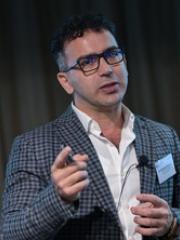
Meltem Aksoy is an Associate Professor at the Department of Architecture, Istanbul Technical University. Her academic work spans urbanization processes, social housing practices, and digital design technologies, with a particular focus on user participation and ecological sustainability in the built environment. Current affiliation: Department of Architecture, Istanbul Technical University Research themes: Composite cities, informal settlements, parametric design, ambient intelligence Her research explores: Intersections of digital technologies and spatial perception Methodologies for participatory social housing Computational approaches to architectural decision-making Temporal-spatial dynamics in contemporary urbanization Recent publications demonstrate trends in: AI-assisted design negotiation frameworks Fuzzy logic applications in architectural performance Critical analyses of composite urban structures Evolution of home-street relationships She has supervised 33 graduate theses spanning topics from: Architectural essay films Political space narratives Smart facade technologies Urban data representation
Dr. Morteza Namvar is a Senior Lecturer at The University of Queensland Business School and an Affiliate of both the Centre for the Business and Economics of Health and Centre for Enterprise AI. His work bridges business contexts with advanced computational techniques, focusing on practical applications of artificial intelligence in organizational and healthcare settings. Faculty of Business, Economics and Law - School of Business Centre for the Business and Economics of Health Centre for Enterprise AI - Faculty of Engineering, Architecture and Information Technology Dr. Namvar specializes in Machine Learning (ML), Natural Language Processing (NLP), and Large Language Models (LLMs), with research concentrated in three primary areas: leveraging NLP and LLMs for enhanced theory building in Information Systems research, text feature engineering using advanced language models, and personalization/user experience enhancement through contextual understanding. His work systematically analyzes unstructured text data to develop robust theoretical constructs and improve machine learning model capabilities. His recent publications reveal strong trends in healthcare applications of LLMs, hate speech detection, and cryptocurrency market analysis through social media. The research consistently applies NLP techniques to solve real-world problems across healthcare, finance, and e-commerce domains, with particular emphasis on sociotechnical aspects of technology implementation. Dr. Namvar has successfully secured competitive funding including the prestigious UQ Knowledge Exchange & Translation Fund grant for developing social media monitoring tools for small businesses, and multiple grants from Medical Protection Society Limited for machine learning applications in healthcare systems. 2021-2022: Developing a context-specific social media monitoring tool to empower Australian small business (UQKx&T Fund) 2021: Enhancing Education Development: Analysing Members' Feedback Using Machine Learning Techniques (Medical Protection Society) 2021: Investigating the effective use of data and analytics in Medical Protection Systems (Medical Protection Society) He currently supervises five PhD students working on NLP and LLM applications in healthcare, data privacy regulation, and patient outcomes. His research impacts include leading machine learning projects with industry partners like Medical Protection Society and PA Hospital, where his NLP techniques have helped improve organizational strategies through text data analysis.
Emilio Osambela is an Adjunct Professor at Georgetown University and currently serves as a Principal Economist in the Capital Markets section at the Federal Reserve System's Division of Research and Statistics. His academic background includes a PhD in Economics with a focus in Finance from HEC Lausanne/Swiss Finance Institute, an MSc in Economics from Universitat Pompeu Fabra, and a BSc in Economics from Universidad del Pacífico. Education: PhD in Economics (Finance focus), Université de Lausanne / Swiss Finance Institute MSc in Economics, Universitat Pompeu Fabra BSc in Economics, Universidad del Pacífico (Perú) His research interests center on financial economics, capital markets dynamics, and quantitative policy analysis. Prior to his Federal Reserve role, he held a tenure-track position as Assistant Professor of Finance at Carnegie Mellon University’s Tepper School of Business. No specific grants, awards, or advised students are listed in the provided text. His affiliation with Georgetown University suggests ongoing academic engagement in financial research and teaching.
Paola Cerchiello is a Full Professor of Statistics at the University of Pavia, Italy. She specializes in integrating machine learning and statistical methodologies into financial risk assessment, ESG analysis, and healthcare management. Her research focuses on topics such as credit risk modeling, cryptocurrency dynamics, greenwashing detection, and the socio-economic impacts of pandemics. She leads the PERISCOPE European project (2020–2023), assessing pandemic impacts, and co-leads the xAIM initiative (2021–2024), developing AI-driven healthcare management programs. Her teaching includes 'Big Data Analysis' in the Master in International Business and Management (MIBE) and 'Machine Learning' at the University of Pavia. She has contributed to over 100 publications since 2009, emphasizing Bayesian models, network analysis, and text mining in finance and public policy. Notable projects include developing tools for real-time pandemic monitoring (PERISCOPE Atlas) and analyzing systemic risk in banking systems through network modeling. Her work bridges academic research with practical applications, addressing global challenges in financial stability, environmental sustainability, and healthcare equity. She collaborates extensively with European institutions on projects like the EU Health Emergency Response Authority impact assessment and anti-corruption compliance frameworks in public administration.
Tirtha Dhar is the Chair and Professor in the Department of Marketing & Consumer Studies at the University of Guelph's Gordon S. Lang School of Business and Economics. He holds a Ph.D. in Agricultural and Resource Economics from the University of Connecticut and has held prior academic positions at the University of Ontario Institute of Technology (UOIT) and the University of British Columbia's Sauder School of Business. His research focuses on quantitative modeling to address business strategies, public policies, and sustainability challenges using big data analytics. Education: Ph.D. Agricultural and Resource Economics, University of Connecticut (2001) M.Sc. Agricultural and Resource Economics, University of Connecticut (1999) M.A. Economics, Delhi University (1994) B.A. (Hons.) Economics, Delhi University (1992) Research Interests: Dhar specializes in applying econometric and statistical tools to analyze marketing strategies (e.g., pricing, advertising), food and health marketing, retailing dynamics, movie marketing, and e-commerce. His work bridges business strategies with public policy debates, such as the impact of advertising bans on consumer behavior and the sustainability of agri-food systems. He has contributed to understanding market competition in industries ranging from dairy to motion pictures. Publications Trends: His recent articles highlight interdisciplinary approaches to sustainability, digital marketing challenges, and policy impacts. Notable themes include analyzing false advertising claims, consumer responses to health-related marketing, and the strategic use of third-party marketplaces. Earlier work includes seminal studies on movie sequel performance and the effects of advertising bans on fast-food consumption. Awards: No specific awards listed in provided materials. Advising and Grants: No student advisees or grant details explicitly mentioned. Lab/Team: No dedicated lab or team described in the provided text.
Philip Cash is a Professor at Northumbria University's Design Arts and Creative Industries department. His research focuses on behavioral design, human digital twins, innovation management, and stroke rehabilitation. He holds a PhD in Engineering (2008–2012). Education: PhD in Engineering, Northumbria University (2008–2012) Research Interests: Behavioral Design: Exploring how design interventions influence human behavior, particularly in healthcare and innovation contexts. Human Digital Twins: Developing frameworks for personalized therapy and rehabilitation using digital twin technology. Innovation Management: Analyzing temporal dynamics and collaboration in energy and transportation sectors. Rehabilitation Technologies: Applying exoskeletons and serious games in stroke recovery. Research Trends: Recent work emphasizes interdisciplinary collaboration, with notable contributions to stroke rehabilitation methodologies, behavioral change techniques, and ethical frameworks for digital twins. His studies often blend experimental and mixed-methods approaches to evaluate design efficacy. Advising & Grants: No specific student advising or grant details are listed in the provided texts. Labs/Teams: Collaborates on projects involving healthcare technology, energy innovation, and behavioral science, though specific lab affiliations are not explicitly stated.
Uros Petronijevic is an Associate Professor in the Department of Economics at York University, affiliated with the Faculty of Liberal Arts & Professional Studies. He holds a Ph.D., M.A., and B.Sc. in Economics from the University of Toronto. His research focuses on Public Economics, Economics of Education, and Labour Economics, particularly on teacher incentives, low-cost interventions for student outcomes, and policy analysis. Education: Ph.D., Economics, University of Toronto M.A., Economics, University of Toronto B.Sc., Financial Economics, University of Toronto Research Interests: Dr. Petronijevic explores how incentives shape educational outcomes, including teacher performance and student success. He investigates low-cost interventions such as coaching and nudging, school choice policies, and pandemic impacts on education. His work emphasizes policy evaluation and distributional effects of incentive schemes. Publications Trends: Recent work highlights interventions to improve academic and non-academic outcomes, the effects of teacher incentives, and pandemic-related challenges. His research bridges behavioral economics, policy analysis, and educational technology. Advising & Grants: No advisees or grants are listed in his profile. His research is supported through institutional affiliations and external collaborations.
Aubrey Etopio is an **Assistant Teaching Professor** in the Department of Psychology at the University of Maryland, Baltimore County (UMBC). They hold a Ph.D. from the University of Nevada, Reno (2020). Their research focuses on emotions, particularly the fear of crime and its demographic and psychological predictors, including how crime perception impacts mental health and safety perceptions. Dr. Etopio teaches courses such as Social Psychology, Psychology of Emotions, and Research Design. Their work bridges theoretical frameworks in emotion theory with applied methodologies, including survey experiments and multi-method analyses. Notable contributions include developing validated scales for fear of crime measurement and exploring how question wording influences crime perception metrics. Advising and grants: No specific advising relationships or grants are listed in the provided text. The CV (last updated September 2024) likely contains additional details not explicitly shown here. Dr. Etopio’s office hours are held weekly at the Math/Psychology Building.
Ariel Helfer is an Associate Professor of Political Science at Wayne State University, affiliated with the College of Liberal Arts and Sciences. His research focuses on ancient Greek political philosophy, particularly Plato and Socratic thought, while maintaining expertise in quantitative political methodology. He has held significant grants and fellowships, including a National Endowment for the Humanities Fellowship (2019) and the Marilyn Williamson Endowed Distinguished Faculty Fellowship (2025-26). Education: Ph.D. in Government from University of Texas at Austin (2015), M.A. (2013), B.A. in Political Science and Physics from Kenyon College (2008). Teaching: Courses span classical political philosophy, American political thought, and quantitative methods. Notable graduate courses include Topics in the History of Political Thought and Contemporary Political and Social Theory . Labs/Teams: Oversees a 'Reading Group in the History of Philosophy' engaging students and faculty in intensive text analysis. Research Interests: Plato’s Letters (argues for their unified Platonic authorship), Isocrates’ Political Philosophy (rehabilitating his role in Socratic discourse), and Quantitative Methodology (designing 'Math Camp' programs for graduate students). Awards: 2023 President’s Award for Excellence in Teaching, multiple research grants, and fellowships supporting his work on Isocrates and Plato. Personal: Lives in Ferndale, MI, with his wife and two sons. Enjoys chess, languages, and remains a Montreal Canadiens fan.
Anish Talsania is an Adjunct Professor at the Gupta College of Business, University of Dallas, where he teaches the Data Analysis for Decision Making course (BUAD 5350). He holds an MBA from NMIMS University (Mumbai, India) and a Master's in Business Analytics from the University of Texas at Dallas, alongside an undergraduate Engineering degree in Computer Science. Professionally, he works in the banking division of USAA as a Business Intelligence Analyst, focusing on financial data analysis and dashboard development for senior management. His over 15 years of teaching experience include roles at 2U (educational technology company), tutoring agencies (specializing in SAT/ACT/GRE/GMAT preparation), and one-on-one academic tutoring in math, physics, computer science, economics, and statistics. His expertise spans business intelligence, data-driven decision-making, and educational methodologies. No specific grants or scientific awards are mentioned in the provided text.
Geraldine Stilwell is a Senior Teaching Fellow in the School of Accounting, Economics and Finance at the University of Portsmouth, part of the Faculty of Business & Law. She has been a dedicated member of the academic staff since 2015, serving as module coordinator, personal tutor, and Year Tutor for Level 4 students. She holds an MSc in Research Methods and is a Fellow of the Higher Education Academy (2019). Her educational journey includes a Btrec National, AAT qualification, partial ACCA qualification, and postgraduate studies culminating in her MSc. She began her career in industry, worked in accounting practices for 15 years, taught at a further education college from 2002 to 2015, and served as a Business Manager before joining the university. Geraldine’s research focuses on student engagement and the educational experience in higher education, particularly the transition from school to university and the use of digital tools like instructor-generated videos. She is an active member of the university’s BESIG research group, which supports scholarly inquiry into teaching and learning. Her sole publication to date, Learner engagement with instructor-generated video (2024), explores how video content impacts student motivation and learning outcomes, analyzing both qualitative and quantitative data. The study contributes to understanding cognitive engagement and the affordances of educational technology in modern pedagogy. Tutor Award, Student Experience Excellence Awards (2019) Geraldine has extensive experience mentoring students informally through her roles as personal tutor and Year Tutor since 2016. While no formal PhD or Master’s students are listed, she has supervised trainee accountants in practice and led curriculum delivery as Programme Leader at an FE college. She has not received specific grant funding mentioned in the text, but her work contributes to institutional teaching excellence and the university’s strategic goals in student experience. Her secondment as BAL Learning and Teaching Coordinator (2021) reflects her leadership in educational development across the Faculty. She is actively involved in curriculum design and delivery across all three levels of the Accounting with Finance undergraduate program, with a strong focus on student support and engagement. Her industry experience in finance and management enriches her teaching, and she integrates real-world insights into her pedagogy. She continues to contribute to the scholarship of teaching and learning through collaborative research.
Ignacio Babiloni Chust serves as a Research Fellow at the Department of Cellular, Computational, and Integrative Biology (CIBIO) within the University of Trento, Italy, located at Via Sommarive, 9 - 38123 Povo. His institutional affiliation reflects a focus on interdisciplinary biological research at the intersection of cellular mechanisms, computational modeling, and systems integration. His research spans Computational Biology, Cellular Biology, and Integrative Biology, with emphasis on quantitative analysis of biological systems. The department's structure indicates specialization in merging experimental cellular studies with advanced computational frameworks for holistic biological understanding. Contact: i.babilonichust@unitn.it . No scientific awards, student supervision records, laboratory teams, or educational background details were identified in the provided text.
Dr. Sarah Wagner is a Lecturer in Politics and International Relations at Queen's University Belfast's School of History, Anthropology, Philosophy and Politics. She specializes in political parties' strategic behavior, particularly radical left parties' cultural policy positioning and electoral outcomes. Her research employs quantitative methods like surveys and text analysis. She holds a PhD from the University of Essex and an MSc from LSE. Research Focus: Strategic behavior of political parties; cultural vs. economic policy stances; radical left parties in Western Europe; voting behavior and electoral dynamics. She examines issues like European integration, identity politics, and foreign policy's impact on party appeal. Teaching: Courses include 'Introduction to Politics,' 'Quantitative Methods for Non-Specialists,' and 'British Politics in Crisis.' She organizes the weekly Politics and International Relations Seminar at Queen's. Recent Work: Includes studies on Germany's Bündnis Sahra Wagenknecht (BSW), Euroscepticism, and voter shifts. Over 15 articles since 2019 explore radical left strategies, electoral behavior, and comparative politics. Awards: Best Paper Award 2023 (PSR), Teaching Prize 2022/23, ECPR Best PhD Prize nomination Grants: Fully funded PhD scholarship from Stiftung der Deutschen Wirtschaft (sdw) Labs/Teams: Active in cross-national research collaborations, organizing conferences on left-wing radicalism and electoral integrity.
Andreas Bayerl is an Assistant Professor of Marketing at the Erasmus School of Economics, Erasmus University Rotterdam. He holds a PhD in Quantitative Marketing from the University of Mannheim and conducts interdisciplinary research at the intersection of digital behavior, consumer psychology, and data science. His research focuses on how individuals generate, process, and are influenced by digital information, particularly in the context of online reviews and influencer marketing. Using a mixed-method approach—combining large-scale observational data, text and image analysis, and field and laboratory experiments—Andreas investigates behavioral patterns in digital ecosystems. His work has been published in leading journals including Journal of Marketing , Harvard Business Review , MIT Sloan Management Review , and Nature Human Behavior . The most recent publications reveal a consistent focus on digital influence, credibility, and consumer decision-making. Key themes include the effectiveness of micro-influencers, the psychological impact of fake reviews, multimodal analysis of visual and textual content, and experimental validations of marketing strategies across platforms. His methodological rigor and real-world relevance are evident across these works. Andreas has received significant recognition for his contributions, including: H. Paul Root Award for groundbreaking research in influencer marketing He actively teaches in the area of data science and marketing analytics, contributing to the next generation of analytically skilled marketers. While no formal advisees are listed, his role as an assistant professor suggests involvement in student supervision and academic mentorship. His research program appears to be supported by empirical rigor and industry relevance, though specific grants or lab affiliations are not mentioned in the provided text.
Jasmin Seijbel is a Lecturer and PhD candidate at the Department of History, Erasmus School of History, Culture and Communication, Erasmus University Rotterdam. Her academic work bridges history, cultural anthropology, and media studies, with a focus on social inequalities in sports and popular culture. Erasmus University Rotterdam – Lecturer, PhD candidate Department of History – Research and teaching Collaborations: Feyenoord (Fancoach), Anne Frank House Her research centers on antisemitism in Dutch football, examining both on- and offline discourses. She also investigates gender dynamics in football fandom and the role of digital media in shaping public narratives. Her methodological approach includes ethnography, discourse analysis, and media ecology. The recent articles reflect a strong focus on antisemitism, gender, and digital disinformation in Dutch-speaking contexts. Her work frequently engages with public discourse and educational interventions, indicating a commitment to socially impactful research. She has contributed to several academic and public platforms, including invited talks and media appearances, though no formal scientific awards are listed. Jasmin has supervised no students mentioned in the text. She has been involved in research projects related to antisemitism education and disinformation networks. Her work contributes to UN Sustainable Development Goals through the ERMeCHS research clusters PCI (Popular Culture and Inequalities) and VISUAL (The Visual in Media, Culture, Society & History). She is active in collaborative research and public engagement, particularly through media contributions and conference presentations.