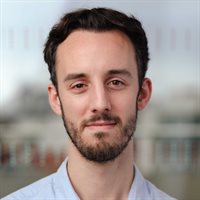
Dr. Stephen Jarvis is an Assistant Professor in Environmental Economics at the London School of Economics and Political Science's Department of Geography and Environment. His expertise spans environmental economics, electricity markets, and public policy. He holds a PhD from UC Berkeley’s Energy & Resources Group and has conducted postdoctoral work at the University of Mannheim. His research focuses on energy transitions, climate policy, and applied econometrics. Education: BSc (Economics & Economic History) from LSE (2012), MS (Energy & Resources) from UC Berkeley (2017), PhD (Energy & Resources) from UC Berkeley (2020). Research interests include renewable energy economics, utility regulation, and the political economy of clean energy. Notable publications address NIMBYism in renewable projects, Germany's nuclear phase-out costs, and air conditioning inequality. He has received grants including the UKRI New Investigator Award and the European Economic Association's Hicks-Tinbergen Award. Teaching includes MSc courses on energy markets, quantitative methods, and economic appraisal. He advises numerous graduate students and serves on LSE's Equity, Diversity, and Inclusion Committee.
Paul Anthony Bolton, MBBS, MSc, MPH, DTMH, is a Senior Scientist affiliated with Johns Hopkins University's Bloomberg School of Public Health, specifically within the Department of Mental Health Primary Center. His work focuses on program design, implementation, and evaluation in mental health and humanitarian contexts, particularly addressing the needs of refugees, displaced populations, and survivors of violence. He holds academic qualifications from institutions including Johns Hopkins Bloomberg School of Public Health (MSc, MPH) and the University of New South Wales (MBBS). Education: MSc - Johns Hopkins Bloomberg School of Public Health (1995) MPH - Johns Hopkins Bloomberg School of Public Health (1993) DTMH - Mahidol University (1988) MBBS - University of New South Wales (1984) His research interests span mental health interventions in conflict zones, cross-cultural methodologies, and trauma recovery. He has led projects in regions such as Africa, Asia, and the Caribbean, focusing on psychosocial support for survivors of violence and disaster-affected communities. Notable initiatives include evaluations of counseling programs in Aceh, Haiti, and Kurdistan. Dr. Bolton’s publications emphasize the integration of qualitative and quantitative methods to enhance program effectiveness, with a focus on randomized clinical trials for psychosocial interventions. He advocates for holistic approaches that bridge clinical research and real-world service delivery. His work addresses urgent global health challenges, including gender-based violence in the Democratic Republic of Congo and mental health recovery in post-conflict areas like Iraq and Indonesia.
Simon Spencer is a Professor of Statistics at the University of Warwick, affiliated with the Zeeman Institute for Systems Biology and Infectious Disease Epidemiology Research (SBIDER) and the Warwick Analytical Sciences Centre (WASC). His research focuses on Bayesian inference applied to epidemiology, stochastic epidemic models, and statistical methods for analytical science. He has held previous positions at the University of Nottingham and Massey University in New Zealand. His teaching includes advanced courses such as CH923: Statistics for Data Analysis , ST925: Graduate Topics in Statistics , and MA4M1/MA6M1: Epidemiology by Example . His research group currently includes PhD students Matthew Adeoye and Richard Haughey, and MSc students Olli Smith and Sangavi Pirabakaran. He collaborates extensively with global health institutions on projects addressing infectious disease modeling and public health policy. Spencer’s work bridges statistical methodology and real-world applications, with a focus on outbreak detection, model comparison, and the integration of geostatistical data with transmission models. His recent contributions include frameworks for lymphatic filariasis elimination projections and analyses of HIV transmission dynamics in Uganda. He actively contributes to interdisciplinary research in systems biology and analytical chemistry, leveraging advanced statistical techniques to address complex health challenges.
Andrea Caggese is an Associate Professor in the Department of Economics and Business at Universitat Pompeu Fabra (UPF), Barcelona, Spain. He is a member of the Applied Macroeconomics and Quantitative Methods Research Group and actively contributes to research in macroeconomics, financial frictions, firm dynamics, and innovation. Research Interests: His research spans macroeconomics, financial constraints, entrepreneurship, investment, and productivity. He investigates how financial frictions affect firm behavior, labor allocation, and innovation, particularly focusing on intangible capital and the impact of economic shocks such as the 2020 pandemic recession. Recent Publications Trends: His recent work, published in journals like the Journal of Banking and Finance and European Economic Review , emphasizes the interplay between financial constraints, innovation types (radical vs. incremental), and macroeconomic fluctuations. A recurring theme is the amplification of shocks through firm-level financial vulnerabilities and the role of policy in mitigating misallocation. Scientific Awards: ICREA Acadèmia (2023–2029) Grant for Institutions and Financial Assts under Asymmetric Information (2006) Grant for Financial Decisions under Imperfect Information (2002) Grant for Fiscal and Monetary Policy under Market Imperfections (2002) Advising and Grants: He has advised PhD students including Roger Magi Gomis Porquet and Alfonso Ugarte Ruiz. He leads multiple research projects, such as Intangibles, Technology Diffusion and Public Policies (European Investment Bank) and Heterogeneidad de empresas y hogares, fluctuaciones agregadas y políticas macroeconómicas (Spanish National Research Agency). He has also participated in editorial boards for journals including American Economic Review and Economic Journal . Labs and Teams: He is a core member of the Applied Macroeconomics and Quantitative Methods Research Group at UPF, collaborating with researchers across Europe and contributing to policy-relevant macroeconomic analysis.
Dr. Fahad Ibrahim is an Assistant Professor in the Department of Marketing at Birmingham Business School, University of Birmingham. He holds a PhD in Management from the University of Hull and has prior academic experience as a Lecturer at Swansea University and a Teaching Fellow at the University of Birmingham. He is a Fellow of the Higher Education Academy (FHEA) and actively contributes to research and teaching in marketing. Education: PhD in Management, University of Hull, 2019 MSc in Marketing Management, University of Hull, 2010 Bachelor of Business Administration (BBA), North South University, Bangladesh, 2009 His research focuses on consumer research, digital marketing, service marketing, strategic marketing, innovation, and big data & AI in marketing . He also explores topics in employee relations, occupational health and safety, and institutional theory as they relate to marketing practice. His methodological approach includes both quantitative and qualitative research methods. Dr. Ibrahim has published in top-tier journals such as the Journal of Travel Research , Journal of Business Research , and Technological Forecasting and Social Change . His recent work examines innovation in international firms, the impact of security threats on tourism, privacy in online health communities, and consumer behavior toward superfoods. His research demonstrates a consistent trend in understanding consumer and organizational behavior in digital and global contexts. Scientific Awards: Journal of Travel Research Charles R. Goeldner Article of Excellence Award, 2024 University Studentship Award, University of Hull He has successfully supervised a PhD student to completion and welcomes inquiries from prospective PhD students. He also serves as an ad hoc reviewer for several academic journals. His industry experience includes working as a Strategy Development Manager in advertising, with campaigns for major brands like Coca-Cola, Lafarge Holcim, and Chevron, including a global strategic campaign adopted in 64 countries. Dr. Ibrahim teaches courses such as Problem Solving and Strategic Marketing, Digital and Innovative Marketing, and Branding in the Digital Age. He is not associated with any specific lab or research center mentioned in the text, but his work is deeply integrated into the academic and industry-facing missions of the Birmingham Business School.
Danny McGowan is Professor of Finance and Head of the Department of Finance at Birmingham Business School, University of Birmingham . He holds a PhD in Economics from the University of Nottingham and has a strong academic background in economics and finance. Education: PhD in Economics, University of Nottingham, 2010 MSc in Economics, University of Bristol, 2007 BSc in Economics, University of Bristol, 2003 His research centers on applied microeconomics with a focus on financial intermediation, banking, mortgage markets, and household finance . He frequently employs quasi-experimental methods to study the impact of regulation, competition, and institutional frameworks on financial institutions and markets. His recent work explores the societal determinants of wealth inequality, lending, and entrepreneurship, as well as the effects of deposit market competition and mortgage default. His publication record is impressive, with articles in leading journals such as the Review of Financial Studies , Journal of Financial and Quantitative Analysis , and Journal of Financial Intermediation . The recent articles show a consistent trend in analyzing bank conduct, risk management, regulation, and the real effects of financial markets , often using natural experiments and policy changes as identification strategies. Research Funding and Recognition: Principal Investigator on a ~£400,000 Leverhulme Research Project Grant Over £500,000 in research funding from ESRC, British Academy, and Leverhulme Trust Research cited in House of Commons inquiries and by media outlets Advising and Grants: He has successfully advised four PhD students to completion, all of whom have secured academic positions. His research is supported by major grants from UK research councils, demonstrating the significance and impact of his work in the field of finance. Professional Engagement: He is an active member of leading professional associations including the American Finance Association, American Economic Association, European Finance Association, and Royal Economic Society, and regularly presents his work at international conferences.
Dr Annika Beelitz is a Lecturer in Accounting at the Department of Accounting, Birmingham Business School, University of Birmingham. She serves as the Senior Academic Tutor and contributes to teaching in advanced financial accounting. Her research focuses on corporate social responsibility, corporate communication, and sustainability reporting, particularly in crisis contexts. Education: PhD in Accounting, Bangor University, 2017 MSc in Accounting and Finance, Bangor University, 2010 BA in International Cultural and Business Studies, University of Passau, 2009 Her research interests lie at the intersection of accounting, communication, and sustainability. She employs qualitative and interpretive methods, especially discourse analysis, to explore how organizations communicate during legitimacy crises, such as nuclear incidents or climate-related disclosures. Her work is interdisciplinary, bridging accounting, linguistics, and organizational studies. The recent publications highlight a consistent focus on corporate discourse, sustainability framing, and CSR communication. Her studies analyze both textual and strategic aspects of reporting, with increasing attention to climate change and net-zero transitions. She has published in top-tier journals such as the Journal of Business Ethics , Accounting, Auditing & Accountability Journal , and International Journal of Corpus Linguistics . Professional Service: Executive Member, Interdisciplinary Perspectives Special Interest Group (IPSIG), British Accounting and Finance Association (BAFA) Editorial Review Board, Accounting Forum Ad hoc reviewer for: Journal of Business Ethics, Social and Environmental Accountability Journal, British Accounting Review, Accounting, Auditing & Accountability Journal, Sustainability Accounting, Management and Policy Journal, Accounting and the Public Interest, Critical Perspectives in Accounting, Journal of Business Research Dr Beelitz is actively involved in the academic community, providing peer review services and contributing to editorial work. She supervises qualitative research projects, particularly those involving interpretive text analyses in CSR and corporate communication. There is no mention of external grants or lab affiliations, but her research collaborations are evident through co-authored publications. She does not appear to have a named research lab or team, but her work is embedded within broader academic networks in accounting and sustainability research.
Ersel Aydinli is a Professor in the Department of International Relations at Bilkent University. He previously taught at George Washington University and Middle East Technical University. His research focuses on international security, non-state actors, and Turkey’s foreign policy. He holds an MA from George Washington University, a PhD in Political Science from McGill University, and a post-doctorate from Harvard’s Kennedy School. Education: MA in International Relations, George Washington University PhD in Political Science, McGill University Post-doctorate, Harvard University’s Kennedy School Research Interests: Disciplinary sociology of International Relations Non-state actors in global security Turkey’s security and foreign policy evolution Peripheral theorizing and non-Western perspectives Publications Overview: Aydinli’s work bridges theoretical innovation with empirical analysis, particularly in non-state actorness frameworks, Turkish foreign policy dynamics, and transnational security governance. His books like Violent Non-State Actors and Widening the World of International Relations emphasize expanding disciplinary perspectives beyond Western-centric frameworks. His articles in journals like Journal of Peace Research and Foreign Affairs highlight transnational security challenges and methodological rigor. Editorial Role: He serves as Editor-in-Chief of All Azimuth: A Journal of Foreign Policy and Peace , furthering discourse on global security and diplomacy. Grants & Advising: No explicit grants or advisee information provided in texts. Focus remains on prolific publishing and editorial leadership.
Dr. Julie M. Urmie is an Associate Professor in the Department of Pharmacy Practice and Science at the University of Iowa College of Pharmacy. She holds a B.S. in Pharmacy from the University of Wisconsin-Madison, followed by an M.S. in Pharmacy Administration and a Ph.D. in Social and Administrative Sciences in Pharmacy from the same institution. Her research focuses on Medicare Part D, pharmacy reimbursement systems, and the impact of prescription drug benefit designs on patient medication adherence and healthcare utilization. Dr. Urmie’s teaching expertise includes healthcare financing systems, health policy, and prescription drug pricing strategies. Her work explores how insurance policies and reimbursement structures influence patient access to medications, with a particular emphasis on vulnerable populations like Medicare beneficiaries and Medicaid coverage gap patients. Her research publications span topics such as pharmacy-led Medicare Part D consultation services, cost-sharing effects on specialty drug use, and the role of pharmacists in collaborative healthcare models. She has been recognized as a High Performing Peer Reviewer by the Journal of Managed Care Pharmacy . Dr. Urmie’s studies often combine qualitative and quantitative methods, including discrete choice experiments, systematic reviews, and stakeholder interviews. Her work highlights systemic challenges in healthcare access and advocates for policy reforms to improve medication affordability and equitable reimbursement practices. Notably, she has examined the financial sustainability of independent pharmacies under Medicare Part D and Medicaid managed care systems, emphasizing the need for equitable reimbursement policies. Her recent projects include evaluating the impact of Medicare drug price negotiation programs and analyzing patient preferences for community pharmacy services.
Zoe Sander is a Research Fellow and PhD student at the Department of Educational Psychology (Heidelberg University, headed by Prof. Dr. Birgit Spinath). She concurrently serves as Journal Managing Editor for Psychology Learning & Teaching . Her work focuses on student motivation, teaching methodologies, and longitudinal development in educational contexts. Education: Bachelor of Science (Psychology), Heidelberg University (2017–2020) Master of Science (Developmental & Clinical Psychology), Heidelberg University (2020–2022) Research Interests: Motivation as a prerequisite for academic success, criteria of effective teaching, and assessment strategies. Her studies explore pandemic impacts on learning, self-regulated learning strategies, and the alignment between teaching methods and student motivation. Publications & Presentations: Recently published work examines motivational differences between regular and pandemic online semesters, and the role of constructive alignment in fostering intrinsic motivation. She has presented at major conferences including EARLI SIG, DGPs, and ESPLAT, focusing on longitudinal analyses of motivation and learning behaviors. Affiliations: Active researcher in educational psychology with roles in editorial work and academic advising. Collaborates closely with Prof. Spinath's research group.
Do-Hong Kim is a Professor in the Department of Educational Evaluation and Research at Wayne State University. His expertise spans research design, program evaluation, psychometric methods, and quantitative analysis in education. He focuses on assessment for culturally and linguistically diverse students, educational measurement validity, and bilingual research. Education: Ph.D. in Educational Psychology and Research from the College of Education, University of South Carolina. Research Interests: Kim specializes in educational and psychological assessment, validity issues in measurement, and program evaluation. His work often addresses equity in assessment, psychometric properties of scales (e.g., self-efficacy in language learning, mathematical problem-solving), and evaluation systems for early childhood education. Grant Leadership: He has led multiple funded projects, including a subaward from the U.S. Department of Education (2022-2027) for gifted education equity in Detroit. Other grants focus on data analytics, pre-K literacy, and formative assessment implementation. Scientific Recognition: Kim has received the NCARE Distinguished Paper Award (2013) and the College of Education Award for Excellence in Research at UNC Charlotte (2008).
Jeffrey Schank is a Professor in the Department of Psychology at the University of California, Davis. He directs the Agent-Based Models Lab, focusing on understanding social and evolutionary behaviors through computational modeling. His academic appointments include teaching roles in biological psychology and quantitative methods, such as courses on Developmental Psychobiology, Animal Behavior, and Agent-Based Modeling. He earned his Ph.D. in Psychology from the University of Chicago in 1991. Research Interests: Schank investigates how complex group behaviors emerge from individual rules, using agent-based models to study social dynamics, evolutionary processes, and developmental biology. Key areas include human mate choice, evolutionary game theory, and the behavior of animal groups like rats and primates. Publications Overview: His work spans theoretical population biology, social simulation, and computational modeling methodologies. Notable contributions include models of cooperative breeding in harsh environments, the evolution of fairness in game theory, and the dynamics of social identity. Recent research emphasizes interdisciplinary applications of agent-based models in ecology and conservation (e.g., waterfowl management). Lab Activities: The Schank Lab collaborates with institutions like the California National Primate Center to model primate social structures. Current projects involve agent-based models of macaque colonies and titi monkeys, incorporating behavioral syndromes and health data. The lab also develops biorobotic models of rat behavior using genetic algorithms.
Professor Jo Leonardi-Bee is a faculty member at the University of Nottingham within the School of Medicine . As Professor of Evidence Synthesis and Co-Director of the Nottingham Centre for Evidence-Based Healthcare (JBI Centre of Excellence), her work focuses on quantitative evidence synthesis, Cochrane reviews, and clinical guideline development. Education: BSc in Mathematics & Chemistry, Nottingham Trent University MSc in Medical Statistics, University of Leicester PhD and PGCHE, University of Nottingham Her research spans tobacco control (smoking cessation, legislation impact, maternal exposure) and dermatology (skin cancer, corticosteroid safety). She specializes in meta-analysis techniques, systematic reviews, and health policy evaluation, with over 50 peer-reviewed publications. Recent publications highlight trends in respiratory health (alcohol/smoking effects), pregnancy outcomes (smoking cessation interventions), and allergy prevention (infant dietary guidelines). She serves as Statistical Editor for the British Journal of Dermatology and former Cochrane Skin Group editor. Teaching includes postgraduate modules in systematic reviews and developing reusable learning objects for evidence-based practice. Current funded projects include maternal tobacco control initiatives, familial hypercholesterolemia management, and infant feeding guidelines with the Health Technology Assessment (HTA) program.
Hans Smid is a researcher at Wageningen University & Research working in the Laboratory of Entomology. He holds a doctorate and serves as a research supervisor and collaborator on multiple projects focusing on insect behavior, particularly parasitoid wasps and their interactions with host plants and insects. Dr. Smid's research focuses on several key areas in entomology and insect neuroscience: Parasitoid wasp behavior and biological control applications Olfactory learning and memory in insects Neural mechanisms underlying insect behavior Plant-insect interactions, particularly in agricultural contexts Neuroethology of small-brained insects Brain size evolution in parasitic wasps His recent work shows a strong emphasis on understanding how insects like Pieris brassicae butterflies and Cotesia glomerata wasps use olfactory cues in their foraging and oviposition behaviors. This research has important implications for developing more sustainable agricultural practices through biological control methods, as evidenced by his 2024 publication on strawberry cultivation and parasitic wasp attraction. Dr. Smid's research has generated significant attention, with his work being picked up by 4 news outlets, posted by 9 X users, and shared on Facebook pages, indicating broad interest in his findings. His publications have accumulated readers on Mendeley and citations in Scopus. As a research supervisor, Dr. Smid has guided multiple PhD students including J. de Bruijn and J. Groothuis through their doctoral work. His collaborative approach is evident in the numerous multi-investigator projects he participates in, often working alongside colleagues like Marcel Dicke and Louise Vet. Current active projects include 'Apport, parasitic wasps as biodetectors' and 'Smart parasitoids: effective biological control.' Dr. Smid maintains an active research profile with continuous output, including multiple publications in 2024. His work bridges basic research on insect behavior with practical agricultural applications, demonstrating the real-world impact of entomological research.
Tobias Dalberg is a Senior Lecturer at Uppsala University's Department of Pedagogy, Didactics and Educational Sociology, with research focusing on sociology of education, social stratification, and higher education policy. His work examines gender differentiation in course selection, curricular blind spots, and historical transformations in academic disciplines. Contact: tobias.dalberg@edu.uu.se | Personal Website Research: Utilizes graph theory, natural language processing, and geometric data analysis for educational pathway studies Current research areas include: Gendered patterns in major selection and course enrollment Educational policy analysis (1950-2020) Academic field institutionalization processes Disciplinary legitimacy struggles (1935-1980) Recent publications (2021-2024) reveal trends in: Higher education marketization and gender segregation Curriculum structure impacts on student trajectories Disciplinary evolution in social sciences and humanities Assessment consistency in educational evaluation As member of international research collaborations, Dalberg works with networks studying educational stratification and transnational academic markets. His methodological contributions include applications of network analysis for studying epidemic spread in educational contexts.