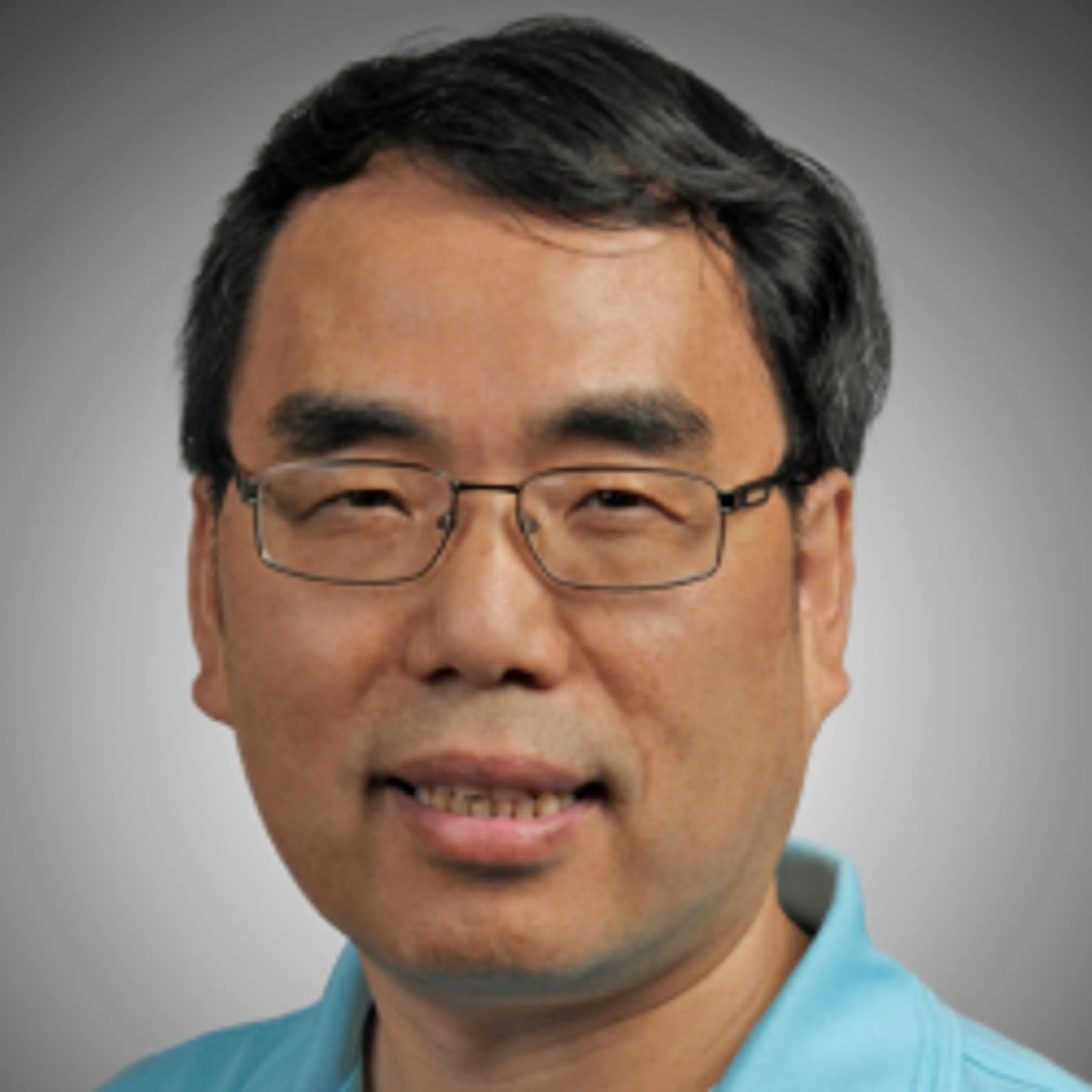
Bart van Esch is an Associate Professor in the Department of Mechanical Engineering at Eindhoven University of Technology (TU/e), specializing in thermal and fluid engineering, energy conversion, and hydraulic turbomachinery. He leads the Power & Flow section and the Group Van Esch, focusing on CFD and industrial applications such as optimizing pumping station energy efficiency and minimizing fish mortality in pumps. He holds a part-time professorship at Jiangsu University, China, since 2017. His academic background includes an MSc in Astronomy (Leiden University, 1990), a Master of Technological Design in Computational Mechanics (Twente University, 1992), and a PhD in Mechanical Engineering (Twente University, 1997). He joined TU/e as an Assistant Professor in 1997, advancing to his current role. Research collaborations include Jiangsu University and Bosman Watermanagement, where he designs fish-friendly pumps. His work bridges disciplines like fluid mechanics, biology, and control systems to innovate in hydraulic machinery. He received the Best Teacher of the Year 2017 award. Editorial roles include Advisory Board Member of Experimental Thermal and Fluid Science and Associate Editor of the ASME Journal of Fluids Engineering (2012–2018). Current educational activities span courses like Engineering Design, Thermal and Fluid Engineering, and Honors Program modules. His research emphasizes sustainable energy solutions and eco-friendly engineering practices.
Professor Robert Delatolla is a Full Professor in the Department of Civil Engineering at the University of Ottawa. He serves as Director of the national CoVaRR-Net Wastewater Surveillance Research Group, co-Chair of the Ontario Wastewater Surveillance Consortium, and Director of the Ottawa-Carleton Institute for Environmental Engineering. Additionally, he is the Graduate Coordinator for the University of Ottawa Environmental Engineering Graduate Program. Ph.D., Chemical Engineering, McGill University (2009) M.Eng., Civil Engineering, McGill University (2002) B.A.Sc., Geological Engineering, University of British Columbia (2000) Professor Delatolla’s research focuses on wastewater-based surveillance as a tool for public health decision-making, particularly in pandemic preparedness and health equity. His work integrates modern analytical methods to optimize wastewater treatment technologies and enhance population health responses. His recent publications emphasize SARS-CoV-2 genomic surveillance, wastewater epidemiology for respiratory syncytial virus (RSV), and data quality improvements in small communities. These studies highlight his leadership in developing standardized protocols for wastewater signal interpretation and public health applications. Ontario Society of Professional Engineers Engineering Excellence Medal (2022-2023) Covid-19 Public Health Innovation Fund Award (Ontario Ministry of Health and Ontario Medical Association, 2022-2023) University of Ottawa Excellence in Education Prize (2017-2018) Faculty of Engineering John V. March Award for Excellence in Teaching (2016-2017) He supervises graduate students, including Juliet Ikem, and collaborates with interdisciplinary teams on wastewater treatment innovations. His research has been featured in media outlets such as CBC News, Globe and Mail, and Huffington Post, underscoring its societal impact.
Marvin Chyke Hempel is a Research Associate at Leuphana University's Institute for Production Technology and Systems, specializing in simulation-based optimization of water management systems. His research examines energy flexibility in pumping operations and stochastic influences on drainage efficiency. He contributes to the SCHOEPFWERK 4.0 project, developing intelligent pump control systems to reduce energy consumption in hinterland drainage infrastructure across Northern Germany.
Murat İSKEFİYELİ serves as an Associate Professor in the Department of Cyber Security Engineering within the Faculty of Computer and Information Sciences at Sakarya University. His academic career at the institution spans 27 years since 1998, progressing from Research Assistant through Lecturer (2009-2010), Assistant Professor (2010), and current Doctor Lecturer (2018) positions. His educational trajectory includes: Doctorate (2002-2010): Sakarya University Institute of Science, Electronics, thesis on "Modeling and performance analysis of WiMAX (IEEE 802.16)-Profibus interconnection element using petri nets" Master's Degree (1998-2002): Sakarya University Institute of Science, Electrical and Electronics Engineering (MA with Thesis) Bachelor's Degree (1994-1998): Sakarya University Faculty of Engineering, Electrical-Electronics Engineering Dr. İSKEFİYELİ's research integrates cybersecurity with artificial intelligence methodologies, focusing on anomaly detection systems for critical infrastructure and IoT environments. His work develops lightweight intrusion detection mechanisms using deep learning architectures, with specialized applications in facial anti-spoofing and two-factor authentication systems. He also pioneers optimization algorithms for multistage pumping stations and load-shifting operations in industrial control systems through dynamic programming approaches. No scientific awards were documented in the source material. Advising activities and research funding details were not specified in the provided information. Research laboratory affiliations and team structures were not mentioned in the available documentation.
Juan Carlos Baltazar is a Professor in the Department of Architecture at Texas A&M University, serving as Director of the Building Performance Assessment Center (BPAC) and Associate Director of the TEES-Energy Systems Laboratory. His affiliations include leadership roles within the College of Architecture and Texas A&M Engineering Experiment Station. He holds a Ph.D. in Mechanical Engineering (Texas A&M, 2006), an M.S. in Mechanical Engineering (Texas A&M, 2000), and additional degrees in Computer Science and Chemical Engineering from institutions in Mexico. His research focuses on building energy efficiency, renewable energy integration, and advanced modeling techniques for optimizing industrial and architectural systems. Key interests include solar thermal applications, energy simulation, and exergy analysis in industrial processes. Recent publications emphasize solar energy utilization in industrial contexts, LED lighting efficiency, and exergy destruction in thermodynamic cycles. His work aligns with Texas' emissions reduction goals, contributing to statewide energy policy analysis and environmental impact assessments. Dr. Baltazar leads interdisciplinary teams at BPAC and TEES, advancing sustainable building design and energy systems. His research spans thermal storage materials, climate-responsive architecture, and the intersection of cultural vernacular elements with modern energy efficiency.
Professor Kenneth Grattan OBE FREng is a leading academic at City St George's, University of London , where he holds the position of Professor of Measurement and Instrumentation and the Royal Academy of Engineering Research Chair in Scientific Instrumentation. He has served in major leadership roles including Head of the Department of Electrical, Electronic and Information Engineering, Dean of the School of Engineering & Mathematical Sciences, and inaugural Dean of the City Graduate School. He is currently the George Daniels Professor of Scientific Instrumentation. Education: BSc in Physics (First Class Honours), Queen's University Belfast (1974) PhD in Laser Physics, Queen's University Belfast (1979) Doctor of Science (DSc), City, University of London (1992) Honorary Doctorate (DUniv), University of Oradea (2014) His research interests focus on the development and application of fibre optic and optical sensing systems for measuring physical and chemical parameters in industrial, environmental, and structural contexts. His work spans structural health monitoring , high-temperature sensing , chemical detection , and industrial process monitoring , often involving custom instrumentation and patented technologies. Supported by EPSRC, EU, and industry partners, his research has led to over 700 publications and strong international collaborations. The recent publications highlight a trend toward advanced optical fibre sensors integrated with nanomaterials (e.g., graphene oxide), molecular imprinting, and machine learning for enhanced sensitivity and specificity. Applications include infrastructure monitoring (pipelines, bridges), environmental sensing (greenhouse gases, humidity), and security (explosives, drugs), demonstrating his focus on real-world industrial and societal challenges. Scientific Awards and Honors: Callendar Medal, Institute of Measurement and Control (1992) Honeywell Prize (twice) Sir Harold Hartley Medal (2012) Applied Optics Divisional Prize (2010) OBE for services to science and engineering Fellow of the Royal Academy of Engineering (FREng) President of IMEKO (2015–2018) Professor Grattan has supervised over 60 PhD and MPhil students and continues to advise research students in optical sensing. He has led numerous grants from EPSRC, EU, and industry, and serves on the editorial boards of key journals such as Measurement Science and Technology and Measurement . He is actively involved in professional societies including the IET, IOP, and IMEKO, and holds visiting professorships in China. He chairs university committees on sustainability and business continuity, reflecting his broader institutional leadership. Labs and Research Teams: He leads a prominent research group in optical fibre sensors at City St George's, collaborating with institutions in the UK, Europe, and China. The team focuses on developing next-generation sensors for industrial and environmental applications, often integrating photonics with material science and data analytics.
Milan Radic is an Assistant Professor in the Department of Electrical Power Engineering at the Faculty of Electronics, University of Niš, Serbia. He has been affiliated with the institution since 2002, progressing from graduate to assistant professor by 2013. His academic journey includes a Master's degree in Electrical Power Engineering from the same faculty. His research focuses on improving energy efficiency in electrical systems, particularly in small pumping stations and water supply networks. He investigates motor starting processes, power transformer protection, and system redesign for enhanced performance. His work bridges theoretical analysis with practical implementation in real-world infrastructure. The available publications show a consistent trend in applied power engineering, emphasizing energy conservation, system reliability, and technical optimization in water and power systems. Much of his work contributes to sustainable engineering practices in regional infrastructure. Development of a measurement information system for monitoring and managing energy and business efficiency of water supply systems (Ministry of Republic of Serbia, I.EE.404-1011.B, 2005) He has participated in five scientific research projects, with two national projects currently active. Though no formal list of advisees is provided, his involvement in academic projects and publications suggests mentorship roles. Milan Radic has published seven papers and co-authored a university textbook, contributing significantly to academic and practical knowledge in his field. He is associated with the Faculty of Electronics in Niš, which hosts departments in energy, computing, telecommunications, and microelectronics, supporting interdisciplinary research in electrical engineering and information technologies.
Слободан Ташин is an Associate Professor at the Faculty of Technical Sciences, University of Novi Sad , leading the Department of Fluid Mechanics and Hydropneumatic Systems. He holds a PhD in Technical Sciences (2016) and has been actively involved in academic roles since 1992. His expertise spans fluid dynamics, energy systems, and industrial diagnostics. Education: MSc in Applied Fluid Mechanics (1997, University of Novi Sad) PhD in Mechanical Engineering (2016, University of Novi Sad) Research Focus: Optimization of pumping systems and cavitation diagnosis Hydraulic and pneumatic system design Non-Newtonian fluid behavior analysis Energy infrastructure diagnostics and maintenance Professional Activities: Licensed project engineer in hydropower and industrial water systems Author/co-author of 48 scientific papers and 2 university textbooks Member of Serbian Society for Mechanics and Engineers' Chamber of Serbia Teaching: Courses include Pump Stations, Fluid Network Calculations, and Hydraulic Power Plants.
Dr. Shaun McFadden is a Senior Lecturer in Mechanical Engineering at Ulster University's School of Computing, Engineering and Intelligent Systems, based at the Derry~Londonderry campus. He serves as the course coordinator for all undergraduate Engineering programs, including Mechanical and Manufacturing Engineering, Renewable Energy Engineering, and Electrical and Electronic Engineering, with responsibility for both full-time and part-time students. Education: BE - University College Dublin (1997) MEngSc - University College Dublin (1999) PhD - University College Dublin (2007) PG Cert in Third Level Teaching and Learning - Dublin Institute of Technology (2012) Research Interests: Dr. McFadden's research focuses on computational materials science with applications in manufacturing processes. His primary expertise includes: Solidification and phase change modeling in metallic alloys Additive manufacturing processes (especially powder bed fusion) Microgravity experimentation using International Space Station data Defect generation and powder characterization Automotive engineering applications (driveline and suspension systems) He maintains strong industry connections and has significant experience in off-road automotive design. Publication Analysis: Dr. McFadden's recent publications (2018-2025) demonstrate consistent focus on advanced manufacturing techniques, with particular emphasis on powder characterization for additive manufacturing, microgravity solidification experiments, thermal modeling of manufacturing processes, and defect prediction in metallic systems. His work shows increasing specialization in powder bed fusion technologies since 2018. Awards and Honors: Chartered Engineer (CEng) - Engineers Ireland Fellow of the Higher Education Academy (FHEA) Conference Chair for 39th International Manufacturing Conference (2023) Scientific Board Member for Eighth International Conference on Solidification and Gravity (SG24) Research Leadership: Dr. McFadden leads several significant research initiatives: Principal Investigator for NUCLEATE project (2020-2021) Co-Investigator for North West Centre for Advanced Manufacturing (2017-2022) Conference chair and proceedings editor for IMC39 (2023) He collaborates extensively with industry partners and international research teams in materials science. Laboratories and Teams: Dr. McFadden works within Ulster University's Engineering Research group, focusing on advanced manufacturing technologies. He collaborates with the European Space Agency on microgravity solidification experiments and maintains research partnerships with the International Space Station science teams.
Zenghu Chang is Full Professor in the Department of Physics, Faculty of Science, University of Ottawa , and inaugural Canada Excellence Research Chair in Attosecond X-ray Photonics (2024–present). Previously he held named chairs at the University of Central Florida (Trustee Chair, Pegasus Professor) and Kansas State University (Ernest & Lillian Chapin Professor), and served as founding director of the Institute for the Frontier of Attosecond Science and Technology. An elected Fellow of both the American Physical Society and Optica (formerly OSA), he is internationally recognized for developing tabletop attosecond X-ray sources spanning the soft-to-tender X-ray range. Education: PhD, Optics – Xi’an Institute of Optics and Precision Mechanics, Chinese Academy of Sciences (1988) MSc, Electron and Ion Physics – Xi’an Institute of Optics and Precision Mechanics, Chinese Academy of Sciences (1985) B.E., Electrical Engineering – Xi’an Jiaotong University (1982) Dr. Chang’s research program centers on attosecond light sources , pushing the frontiers of time resolution to the sub-femtosecond regime. His team builds tabletop keV attosecond X-ray sources based on high-harmonic generation driven by state-of-the-art mid-infrared OPCPA systems. These sources enable real-time observation of electron dynamics in atoms, molecules, and solids, with direct applications to quantum materials, solar-energy conversion, and ultrafast chemistry. Recent work focuses on waveform-controlled mid-IR lasers , plasmon-enhanced harmonic generation , and cryogenically cooled Fe:ZnSe amplifiers , delivering few-cycle, multi-millijoule pulses at 2–5 µm. These advances are critical for scaling attosecond photon flux into the water-window spectral region (280–530 eV), thereby allowing element-specific attosecond spectroscopy of every atom in the periodic table. Scientific Awards & Honors: Canada Excellence Research Chair in Attosecond X-ray Photonics (2024) University Trustee Chair, University of Central Florida Pegasus Professor, University of Central Florida Distinguished Professor, University of Central Florida Ernest & Lillian Chapin Professor, Kansas State University (2009) Fellow, American Physical Society Fellow, Optical Society of America (Optica) Research Environment & Funding: Dr. Chang leads a major collaborative program supported by the Canada Excellence Research Chairs (CERC) program, providing up to CAD 8 M over seven years. His laboratory at 25 Templeton Street, Ottawa, houses custom-built mid-IR OPCPA systems, cryogenic amplifiers, attosecond beamlines, and pump-probe spectroscopy end-stations. The group actively partners with national facilities and international synchrotron/free-electron-laser centers to transition tabletop attosecond sources into user facilities for materials science and chemical physics. Laboratory & Team: The Attosecond X-ray Photonics Laboratory operates in the Advanced Research Complex (ARC 537) at the University of Ottawa. The team includes post-doctoral fellows, graduate students, and technical staff specializing in ultrafast laser engineering, nonlinear optics, attosecond metrology, and X-ray spectroscopy.
Robinjeet Singh is a Senior Research Fellow in the Quantum Sensors Group (QSG) at the National Institute of Standards and Technology (NIST). His research focuses on advancing sensor technologies for electromagnetic radiation and particle detection, with emphasis on superconducting circuits, microfabrication processes, and quantum-limited readout systems. Key projects include developing scalable SQUID multiplexers for telescope arrays (e.g., Simons Observatory) and pioneering optomechanical sensors for dark matter searches. Research Interests: Singh specializes in quantum sensing frontiers, including gravitational-wave detection, optomechanical metrology, quantum memory, and superconducting device fabrication. His work bridges theoretical quantum mechanics and applied engineering, targeting high-sensitivity instrumentation for astronomy and fundamental physics. Publication Trends: Recent articles (2024–2025) highlight innovations in superconducting wiring, multiplexed readout architectures, and telescope calibration for cosmological observations. Earlier work (2016–2020) established foundations in quantum optomechanics, gravitational-wave detector development, and room-temperature quantum measurements, reflecting a consistent focus on pushing sensitivity limits in physical experiments. Affiliations & Labs: As part of NIST's Quantum Sensors Group, Singh contributes to the Device Fabrication Group, which pioneers novel microfabrication techniques for quantum circuits. No awards, students, or grants are detailed in the available information.
Samuel Cross is a Researcher in the Department of Energy and Mechanical Engineering at Aalto University, serving as an academic Coordinator within the Energy Conversion and Systems research group. His work focuses on sustainable energy systems and policy implementation across European contexts. His research spans Renewable Energy Systems , Energy Storage Economics , and Policy Analysis , with significant contributions to bioenergy development in Nordic regions, battery storage viability in island grids, and natural gas impacts on European electricity markets. His interdisciplinary approach bridges engineering solutions with socioeconomic frameworks for sustainable transitions. Publication analysis (2016-2025) reveals evolving expertise from island power system benchmarking toward cutting-edge solutions like electric truck hydropower and planetary-boundary-conscious renewable deployment. Key trends include economic modeling of residential solar-storage systems, European market integration challenges, and sustainable bioenergy pathways. Awards: Award for Achievements in Teaching (2020) Cross actively contributes to the Energy Conversion and Systems research group, leading projects that address critical gaps in renewable energy implementation through both technological innovation and policy refinement.
Ramy Shaltout is an Assistant Professor at the CEES School of The Environment. His expertise spans railway engineering, mechanical systems, and sustainable transportation infrastructure. He holds a PhD in Mechanical Engineering from the Polytechnic University of Valencia (2013) and a Postgraduate Certificate in Academic Practice from Coventry University (2023). His research focuses on aerodynamic noise reduction in high-speed trains, railway track dynamics, and smart infrastructure solutions. BSc Mechanical Power Engineering, Zagazig University (2006) MSc Mechanical and Material Engineering, Polytechnic University of Valencia (2010) PhD Mechanical Engineering, Polytechnic University of Valencia (2013) Postgraduate Certificate in Academic Practice, Coventry University (2023) His research interests include vehicle-track interaction, nanomechanics, and renewable energy systems. Recent work addresses challenges in smart railway stations, aerodynamic noise modeling, and fire safety in passenger rolling stock. He leads the Transport Safety and Security project (2024–2025) and has held roles at The German University of Cairo (2019–2011) and Newcastle University (2014–2016). Grants: Principal Investigator for Transport Safety and Security (2024–2025) Advising: Accepting PhD students in rail engineering and sustainable systems
Hessam Golmohamadi is an Assistant Professor at Aalborg University's Faculty of Engineering and Science, specializing in Electric Power Systems and Microgrids. His research focuses on sustainable energy systems, smart grid technologies, and demand-side flexibility, particularly in residential and industrial sectors. He holds a PhD in Power and Smart Energy Systems (2019) from Aalborg University, with a thesis on retail energy management in electricity markets. Key projects include FLEXDIS (2024–2027), SUSTENANCE (2021–2024), and SERENE (2021–2025), addressing power system stability, carbon-neutral energy communities, and integrated energy systems. His work aligns with UN SDG goals for sustainable energy and climate action. Research interests span electric vehicle charging management, energy storage resilience, machine learning for thermal dynamics, and demand-response programs. Recent publications emphasize Bayesian optimization for energy efficiency, droop control in EV systems, and cognitive optimization for port energy storage. His articles explore technical advancements in grid-forming converters, hardware-in-loop testing, and multi-carrier microgrids. He collaborates widely, with a focus on丹麦 (Denmark) and欧盟 (EU) initiatives.
Dr. Rui Bo is an Associate Professor in the Department of Electrical and Computer Engineering at Missouri University of Science and Technology (Missouri S&T). He holds a Ph.D. from the University of Tennessee, Knoxville, and worked at Midcontinent Independent Transmission System Operator (MISO) before joining Missouri S&T in 2017. His research focuses on computation, optimization, and economics in power systems, high-performance computing, and electricity market design. He is a Fellow of IET and a Senior Member of IEEE. Education: BSEE and MSEE from Southeast University (China), Ph.D. from University of Tennessee, Knoxville. Affiliations: CREE Research Investigator, Intelligent Systems Center, and IEEE editorial roles. Dr. Bo’s research interests include power system operation and planning, high-performance computing applications, and electricity market simulation. He has authored over 100 technical papers and received prestigious awards like the NSF CAREER Award (2024) and DARPA Young Faculty Award (2018). His work has been supported by DOE grants, including a $750,000 award for hydropower research. Key Projects: Hydropower market participation optimization, extreme fast charging stations, and grid cybersecurity.