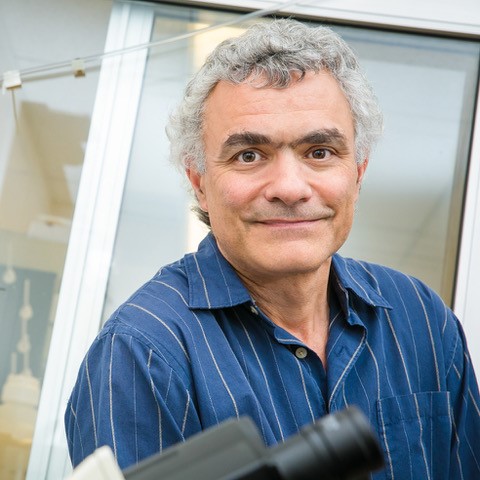
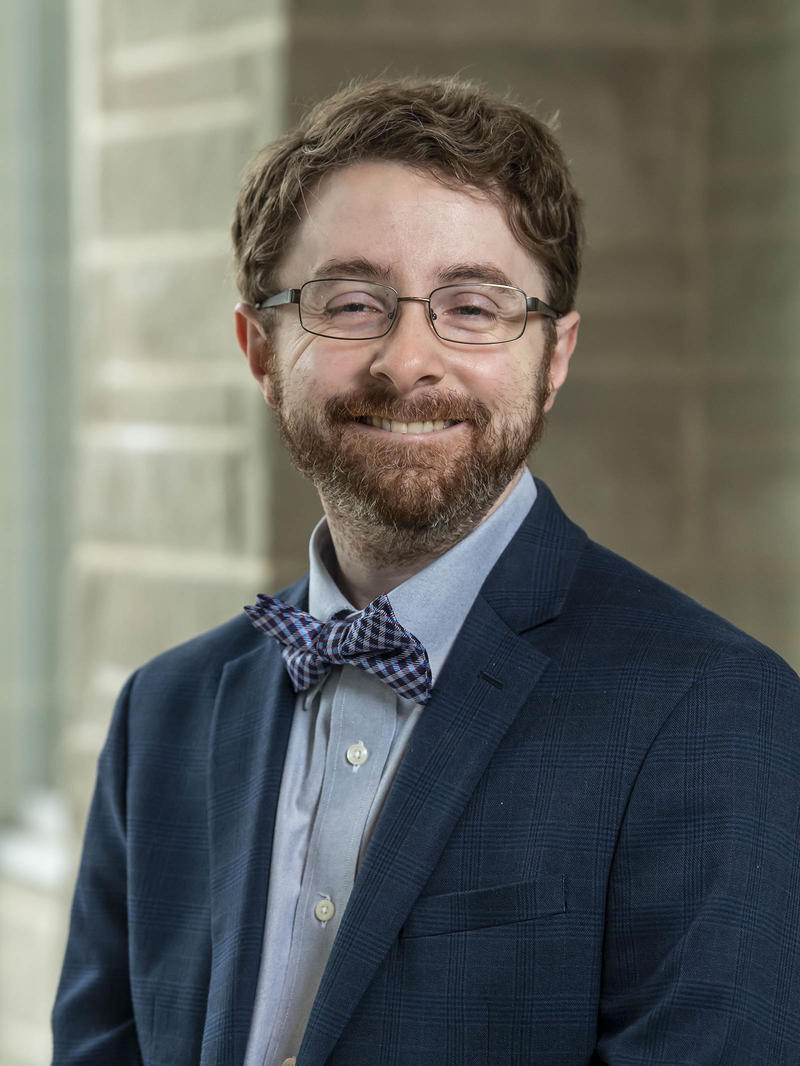
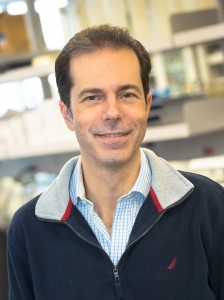
John Schimenti is a James Law Professor of Genetics at the Department of Biomedical Sciences , Cornell University College of Veterinary Medicine . His research focuses on the genetics of reproduction , meiosis , and genome maintenance , particularly checkpoint mechanisms that prevent chromosomal aberrations and birth defects. He has developed CRISPR-based models for studying human infertility alleles. Education: BA from Rutgers University, PhD from University of Cincinnati Children's Hospital, Postdoctoral training at Princeton University Professional Experience: Assistant Professor at Case Western Reserve University (1987-1992), Staff Scientist at The Jackson Laboratory (1992-2004), Director of Cornell Center for Vertebrate Genomics (2004-2019) Research Interests span reproductive genetics, DNA replication stress responses, and mechanisms ensuring germ cell quality. His recent work explores epigenetic regulators in primordial germ cell development and organoid mutagenesis for ovarian cancer drivers. Publications cover meiotic recombination, infertility genetics, ovarian cancer modeling, and genome stability during development. Key areas include CHK2/CHK1 signaling , CDK2 functions , and RABL2A variants . Scientific Awards : March of Dimes Basil O'Connor Award, Searle Scholars Award, NSF Presidential Young Investigator, AAAS Fellow, SUNY Chancellor's Award Teaching includes BioMG Genomics 4000/6000 for 19+ years. Affiliations: Primary in Biomedical Sciences (Cornell CVM), Joint in Molecular Biology and Genetics.
Ryan Pink is a Senior Lecturer in Molecular Biology and Genomics at the School of Biological and Medical Sciences , Oxford Brookes University. His career spans teaching medical genomics, leading extracellular vesicle research in cancer biology, and founding spinout company MetaGuideX . He serves as board member of the UK Society for Extracellular Vesicles and develops digital diagnostic technologies. PhD, MSc, BSc (Hons) in Molecular Biosciences Academic Health Science Centre representative for Oxford Brookes Co-founder of Brookes Data Club for bioinformatics training Research focuses on extracellular vesicle communication in disease with particular application to cancer diagnostics and therapies. His work on exosome profiling and glycan analysis has produced international publications and patents. Key projects include EV-based blood biopsies and glycosylation pattern analysis in breast cancer progression. His recent publications demonstrate growing specialization in EV standardization (MISEV2023 guidelines), metabolic disease models (AKR1D1 knockout studies), and bioactive vesicle applications (plant-derived EV research). Collaborative work spans NHS, TheHill, and Oxford University Hospitals through the Academic Health Partners network. Scientific leadership includes: Chairing international EV conferences Editorial board contributions to Journal of Extracellular Vesicles MRC and Royal Society grant recipient Co-inventor of multiple cancer diagnostic patents As founder of the Oxford Brookes Science Bazaar festival, he has maintained annual public engagement programming since 2013, integrating artistic collaborations (dance/music/visual) that earned RSA Fellowship and BBC Science Engagement Award .
Dr. Malgorzata Rozanowska is a Senior Lecturer and Deputy Director of Research at Cardiff University's School of Optometry and Vision Sciences. She joined Cardiff University in October 2003 after completing her PhD in Biophysics at Jagiellonian University in Poland and conducting research fellowships at Keele University and Duke University. Education: PhD in Biophysics (Photoreactivity of Retinal Pigment Epithelium), Institute of Molecular Biology, Jagiellonian University, Krakow, Poland (1998) MSc in Physics, specialisation in Medical Physics (Photoreactivity of Cationic Derivatives of Porphyrins), Institute of Physics, Jagiellonian University, Krakow, Poland (1992) Postgraduate Certificate in University Teaching and Learning (PCUTL), Cardiff University (2007) Fellowship of the Higher Education Academy (HEA), UK (2008) Dr. Rozanowska's research focuses on understanding the mechanisms responsible for light-induced damage to the retina and the factors contributing to increased oxidative stress in the ageing retina and age-related macular degeneration (AMD). Her work investigates the roles of mitochondria, melanosomes, lipofuscin granules, and small molecules like retinoids, carotenoids, and polyunsaturated fatty acids in retinal function and disease. She employs advanced techniques including electron spin resonance spectroscopy, laser flash photolysis, and various spectroscopic methods to study photo-oxidative damage and protection mechanisms. Analysis of her recent publications (2019-2024) reveals a consistent focus on lipofuscin formation and phototoxicity, antioxidant protection mechanisms in the retina, and the development of therapeutic approaches for retinal diseases. Her work frequently examines the interactions between visual cycle retinoids and protective compounds like lutein, zeaxanthin, and melanin. There is a growing emphasis on therapeutic development for inherited retinal diseases, particularly through chemical chaperones and novel drug compounds targeting opsins and mitochondrial function in optic neuropathies. Scientific Awards: Senior Fulbright Fellowship (2002-2003) for "Identification of the Molecules Responsible for Lipofuscin Phototoxicity" Lester Packer Young Investigator Award (2002) for scientific excellence Travelling Research Fellowship from the Wellcome Trust (2000-2002) Award of the Rector of the Jagiellonian University for Excellent PhD Thesis (1998) Fellowship from the Foundation for Polish Science (1997) Dr. Rozanowska supervises PhD and MSc students and serves as Module Leader for OP1206 Ocular Anatomy and Physiology. Her laboratory work focuses on the biochemical mechanisms of retinal photodamage and protection, with particular attention to the roles of lipofuscin, melanin, and dietary antioxidants. She has served as Associate Editor for Photochemistry and Photobiology since 2007 and as Guest Editor for special issues on light-induced retinal damage and melanins. Her research team collaborates extensively with international institutions including Duke University, Case Western Reserve University, and various European research centers. Current work emphasizes developing therapeutic approaches for age-related macular degeneration and inherited retinal diseases through understanding the fundamental photochemical processes that contribute to retinal degeneration.
Dr David Leader is an Honorary Senior Research Fellow at the School of Molecular Biosciences, University of Glasgow. His research focuses on structural biology, protein architecture, and bioinformatics, with significant contributions to genomics, transcriptomics, and metabolomics. He has developed tools like Structure Motivator and FlyAtlas for analyzing protein motifs and gene expression in Drosophila melanogaster and other organisms. Research Interests: Dr Leader's work centers on hydrogen bonding in protein structures, including motifs like the crown bridge and β-link, as well as ion transport mechanisms in insects. He has also explored metabolic mapping and genomic data visualization, creating accessible software for researchers. Publication Trends: Over his career, Dr Leader has published extensively in structural biology ( Acta Crystallographica , Proteins: Structure, Function and Bioinformatics ), genomics ( Nucleic Acids Research ), and bioinformatics ( BMC Bioinformatics ). Recent work includes transcriptomic atlases for Tribolium castaneum (2024) and functional studies of protein motifs. Collaborations: Dr Leader has frequently collaborated with Prof E. James Milner-White and other experts in genomics (e.g., Julian A.T. Dow, Sue A. Krause) on projects like FlyAtlas 2 and Pathos .
Dr. Brian M. Forster is the GEP Science Lab Coordinator and Chemical Hygiene Officer at Saint Joseph's University's Department of Biology. With a PhD in Microbiology from Cornell University (2011) and a BS in Biological Sciences (Cell/Molecular) from SUNY Binghamton (2006), he specializes in pedagogical innovations for non-science majors through laboratory-based courses in microbiology, environmental science, and quantitative skills development. Institutional Affiliation: Saint Joseph's University, College of Arts and Sciences Education: PhD Microbiology (Cornell), BS Biological Sciences (SUNY) His research interests focus on science education for non-majors, including: Microbiology education pedagogy Environmental science laboratory design Quantitative skill integration Interactive educational technology Science outreach program development Curriculum standardization for allied health Recent publications highlight his work on climate change education (2024), interactive GMO simulations (2023), microscopy skill development (2023), and rain garden pedagogy (2021). These works span environmental science education , microbiology laboratory innovation , and quantitative reasoning frameworks. Scientific recognitions include: 2017 Faculty Merit Award for Teaching 2016 Exemplary Contribution to Journal Curriculum Section 2014 #topprofsju Award He actively participates in science outreach through the Eastern Pennsylvania Branch of the American Society for Microbiology (co-chair of education committee) and Delaware Valley Science Fairs (board member). His laboratory facilities in Connelly Hall feature state-of-the-art AV systems, Leica/Olympus microscopes, and computer-assisted data analysis tools for general education science courses.
Hyunil Jo, PhD is a Specialist in the School of Pharmacy at the University of California, San Francisco (UCSF) . His research focuses on integrin signaling, protein design, and therapeutic targeting of disease mechanisms such as hepatic fibrosis and neurodegenerative disorders. Education: BS (2001) and MS (2003) in Pharmacy, Seoul National University PhD (2008) in Chemistry, University of Pennsylvania Research Interests: Integrin biology dominates his work, with studies on α2β1 and α5β1 integrins in airway disease, renal fibrosis, and vascular smooth muscle function. He also pioneers de novo protein design for drug-binding specificity and uses biophysical probes (e.g., fluorescent amino acids, infrared spectroscopy) to study protein structure and dynamics. His virology work includes SARS-CoV-2 envelope protein analysis, while earlier projects explored malaria and amyloid fibril formation. Publications (2025-2010): His 35+ publications span integrin-mediated diseases, custom protein engineering, and structural studies of amyloid and viral proteins. Key journals include Science , Nature Chemical Biology , PNAS , and Cell . Awards: Department of Defense Predoctoral Training Award for Prostate Cancer (2005-2008) Grants: Principal Investigator, NIH/NIDDK R01DK137892 (2023-2028) - Targeting Acid Ceramidase for Hepatic Fibrogenesis Co-Principal Investigator, NIH R61HL163725 (2022-2024) - Mitigation of Smooth Muscle Force via Integrin Alpha2Beta1 Inhibitors Collaborations: Work with William DeGrado (UCSF) on protein engineering Collaborations with Dean Sheppard (UCSF) in integrin research Partnerships in vaccine development and virology projects
Professor Daniel Coca is an Honorary Professor of Nonlinear and Complex Systems in the School of Electrical and Electronic Engineering at the University of Sheffield, specializing in mathematical and computational methods for complex dynamical systems across physics, engineering, life sciences, and finance. Education: MEng PhD Research Interests: His work focuses on nonlinear and complex dynamical systems with applications in stem cell population dynamics, crystal growth, brain activity, solar wind-magnetosphere interaction, and financial markets. He develops advanced techniques in bioimaging (diffuse optical tomography, protein identification) and reconfigurable computing (FPGA hardware acceleration for proteomics and control algorithms), while advancing nonlinear control theory for PDEs and predictive systems. Publications: Recent work (2016-2020) demonstrates expertise in inverse problems for dynamical systems (Frobenius-Perron operator solutions), spiking neural network modeling (liquid state machines, sensory circuit identification), and interdisciplinary applications including urban air quality monitoring, stem cell characterization, and fly vision neuroscience. His publications span high-impact journals in computational neuroscience, environmental engineering, and nonlinear dynamics. Grants: Professor Coca has secured substantial funding from EPSRC, BBSRC, and MRC, including £2.1M for the Urban Flows Observatories, £530k for Digital Fly Brain, and multiple FPGA proteomics projects. His £4M+ apportioned grant portfolio covers digital built Britain, stem cell dynamics, and neuroimaging systems.
Laura Gunn is an Assistant Professor at the Plant Biology Section of the School of Integrative Plant Science , Cornell University. Her research focuses on engineering the CO₂-fixing enzyme Rubisco to enhance photosynthetic efficiency and crop yields under extreme environmental conditions. Key research areas: Carbon fixation , Synthetic biology , Structural biology , Plant biochemistry , and Biophysics Major projects include: Investigating pyrenoid-based CO₂-concentrating mechanisms in hornworts Characterizing structural and catalytic diversity of Rubisco across bryophytes Developing Rhodobacter sphaeroides Rubisco as a scaffold for engineering red-lineage enzymes Unraveling temperature acclimation mechanisms in Solanaceae Rubisco Her recent work has demonstrated successful expression of red-type Rubisco in tobacco chloroplasts through metabolic repair by RsRca activase, resulting in >2× improved photosynthesis and growth. She received the DOE Early Career Award (2023) for studying ancient enzymes to modernize photosynthesis. Her lab employs synthetic biology, structural analysis, and computational tools to address Rubisco’s catalytic limitations.
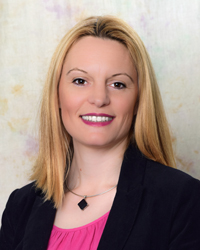
Ashley Stuart is an Associate Professor in the School of Theoretical and Applied Science at Ramapo College of New Jersey . She joined the institution in 2004 and holds a Ph.D. in Biochemistry from Columbia University. B.Sc., University of Illinois M.Sc. and Ph.D., Columbia University Her research focuses on bioinformatics and structural biology , with an emphasis on analyzing ligand binding sites in proteins using publicly available databases. She develops computational tools to study evolutionary trends in protein structure and novel binding site design. Key research areas include: Comparative protein structure modeling Ligand binding site alignment Protein-RNA interaction analysis Database curation for structural biology Dr. Stuart has authored multiple publications on topics such as MODBASE, LigBase, and NMR spectroscopy of viral proteins. Her lab (Stuart Lab) integrates computational methods with experimental validation to advance understanding of protein function and design.
Mikhail Shapiro is the Max Delbrück Professor of Chemical Engineering and Medical Engineering at the California Institute of Technology , and an Howard Hughes Medical Institute Investigator since 2021. His research laboratory develops acoustic and magnetic biomolecular tools for imaging and controlling cellular function in vivo. Chemical Engineering Faculty Medical Engineering Affiliation Howard Hughes Medical Institute Investigator Research focuses on noninvasive control of biological systems through: Acoustic reporter genes (ARG 2.0) for real-time tumor monitoring Ultrasound neuroimaging via acoustically transparent cranial windows Gas vesicle engineering for cellular manipulation Microrobotics with acoustic hydrogels His 2024-2025 publications demonstrate breakthroughs in: Nonlinear ultrasound for deep-tissue visualization Acoustic percolation switches for targeted drug delivery SEMPER systems for multi-gene expression control Scientific recognition includes: HHMI Investigator (2021-) Vilcek Foundation Prize in Biomedical Innovation Roger Tsien Award for Chemical Biology Packard Fellowship in Science and Engineering
James Bainbridge is Professor of Retinal Studies at University College London (UCL) and Consultant Ophthalmologist at Moorfields Eye Hospital. His research focuses on developing novel molecular and cellular therapies for retinal diseases, spanning laboratory investigations to clinical trials. Education: PhD in Genetics (UCL), MBBS (St Mary's Hospital Medical School), MA (University of Cambridge) Research interests include gene therapy for inherited retinal disorders, retinal disease mechanisms, and surgical innovations. Recent work highlights AAV vector development for Leber congenital amaurosis and X-linked retinitis pigmentosa. Scientific awards include the 2018 Champalimaud Vision Award and election to the UK Academy of Medical Sciences (2020). He supervises PhD students and teaches clinical ophthalmology, gene therapy, and microvascular biology at UCL.
Rex L. Chisholm, PhD, is the Vice Dean for Scientific Affairs and Graduate Education at Northwestern University Feinberg School of Medicine . He also holds the Adam and Richard T. Lind Professor of Medical Genetics title and is a Professor in the Departments of Cell and Developmental Biology and Surgery . His work focuses on advancing genomic medicine and personalized healthcare through large-scale biobank studies, pharmacogenomics, and clinical informatics. Education: PhD: University of Michigan (1980) Postdoctoral Fellow: Massachusetts Institute of Technology (1984) Research Interests: Dr. Chisholm’s research is centered on translating genomic discoveries into clinical practice . He leads efforts in the eMERGE Network , leveraging Electronic Health Records (EHR) and biobank samples to study genetic susceptibility, therapeutic outcomes, and pharmacogenomics. His group also develops genome informatics tools , including genome annotation and visualization technologies . His work spans bioinformatics , cell biology , cytoskeleton biology , and genomic medicine . He is particularly focused on polygenic risk scores , clinical implementation of genomics , and population-scale genomic studies . Scientific Awards & Honors: Fellow, American Association for the Advancement of Science (AAAS) (2004) Chair, Public Information Committee, American Society for Cell Biology (2006–2010) Scientific Advisory Board Member, National Center for Biomedical Ontology (2010–Present) Scientific Advisory Board Member, PhenX (2010–Present) Member, National Human Genome Research Institute Advisory Council (2008–2012) Clinical Trials & Leadership: Dr. Chisholm leads the NUGene Project , a clinical trial focused on gene-disease associations and treatment outcomes . The study recruits participants from Northwestern Medicine and affiliates to support genomic research across cancer, diabetes, and cardiovascular diseases. Institute & Center Affiliations: Center for Diabetes and Metabolism Center for Genetic Medicine Institute for Augmented Intelligence in Medicine Institute for Public Health and Medicine (IPHAM) Northwestern University Clinical and Translational Sciences Institute (NUCATS) Northwestern University Institute of Neuroscience (NUIN) Robert H. Lurie Comprehensive Cancer Center Robert J. Havey, MD Institute for Global Health (IGH) Simpson Querrey Center for Neurogenetics
Dr. Daniel E. Kaufmann is a Full Professor at the University of Montreal , operating through the CRCHUM (University of Montreal Hospital Research Center) and its Immunopathology Research Axis . He holds dual appointments in the Departments of Medicine and Microbiology, Infectious Diseases and Immunology , combining clinical expertise as an Infectious Disease Consultant at CHUM with cutting-edge research. His laboratory specializes in CD4 T cell immunobiology during HIV infection , investigating immune exhaustion mechanisms (PD-1, CTLA-4, IL-10 pathways) and developing innovative tools like RNA-FISH flow cytometry for single-cell viral reservoir tracking. Recent work extends to SARS-CoV-2 immunopathology , including breakthrough infection dynamics in immunocompromised individuals. Key research areas : T cell dysfunction in chronic viral infections Viral reservoir characterization Immunotherapeutic strategies for HIV/COVID-19 Host genetics of critical SARS-CoV-2 outcomes Scientific accolades : Fonds en Recherche Québec Santé (FRQS) Merit Researcher Grants from CIHR , NIH , CFI , and Bill & Melinda Gates Foundation Academic leadership : Serves on international review committees for grants and journals, while mentoring students at all levels in immunovirology techniques and analysis.
Jelena Bogdanović Pristov is a Scientific Advisor at the Department of Living Systems Science , Institute for Multidisciplinary Research , University of Belgrade . Her career spans diverse roles including Senior Research Associate (2013–2019) and Research Associate (2009–2013) at the same institution. Doctor of Biological Sciences, Faculty of Biology, University of Belgrade (2008) Master of Biophysical Sciences (2007) Biochemistry graduate, Faculty of Chemistry, University of Belgrade (2003) Her research focuses on biochemistry, biophysics, and redox biology , particularly molecular mechanisms of vascular and neurological pathologies , metal-protein interactions , and oxidative stress in medical and environmental contexts . Recent work explores neuroinflammatory signaling in multiple sclerosis and astrocyte-immune cell crosstalk . Publications reveal expertise in iron and copper biochemistry , antioxidant enzyme systems , plant cell wall adaptations , and methodological innovations in protein detection . She has authored 76 publications with over 13,948 reads and 1,297 citations. Awards : Young Scientist Award, Peroxidase 2006 Congress She serves as a reviewer for journals like Process Biochemistry , Biotechnology Progress , and Food & Function , and contributes to COST actions . Collaborations span institutions including Medical Faculty (Belgrade) and international teams in Poland and Croatia.
Miloš Opacic is a Research Associate at the Institute for Multidisciplinary Research under the University of Belgrade. His primary affiliation is with the Department of Living Systems Sciences. Education: Postdoctoral studies at Yale University School of Medicine (2023–2024), PhD in Biological Sciences (2015–2022), Master’s (2014–2015), and Bachelor’s (2007–2014) at the University of Belgrade. Research Interests focus on molecular mechanisms of neurodegenerative diseases, metal metabolism in neurological disorders, oxidative stress, and spatial tissue organization techniques. His work spans neurology, biochemistry, and metallomics. Publication Trends : Recent articles address multiple sclerosis, epilepsy, and ALS, with emphasis on metal distribution, oxidative stress biomarkers, and functional interactomes. Techniques include electrophoresis, immunoblotting, and advanced imaging. Scientific Awards: ACTRIMS Forum 2024 Travel Grant ENCALS 2018 Travel Grant CEEPUS 2017 Scholarship Best Poster Award, Serbian Biochemical Society (2017) Professional Activities : Member of the Serbian Neuroscience Society, Serbian Biochemical Society, and Serbian Biological Society. Involved in international collaborations including COST Actions CA21115 and CA15133, and bilateral projects with Slovenia.