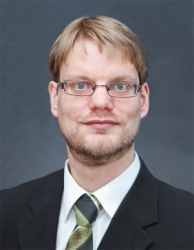
Jantke de Boer is an Assistant Professor of Economics at the School of Business and Economics, Ruhr University Bochum, specializing in International Monetary Macroeconomics. His research focuses on international macroeconomics and finance, with a particular emphasis on exchange rate dynamics and global financial markets. Research Interests: His work explores the interplay between trade policies, bilateral integration, and exchange rate returns, as well as business cycle variations in currency hedging strategies. Key themes include protectionism, global economics, and economic policy implications. Publications: Recent contributions to journals like the Journal of International Money and Finance and Finance Research Letters highlight his expertise in international finance and macroeconomic trends.
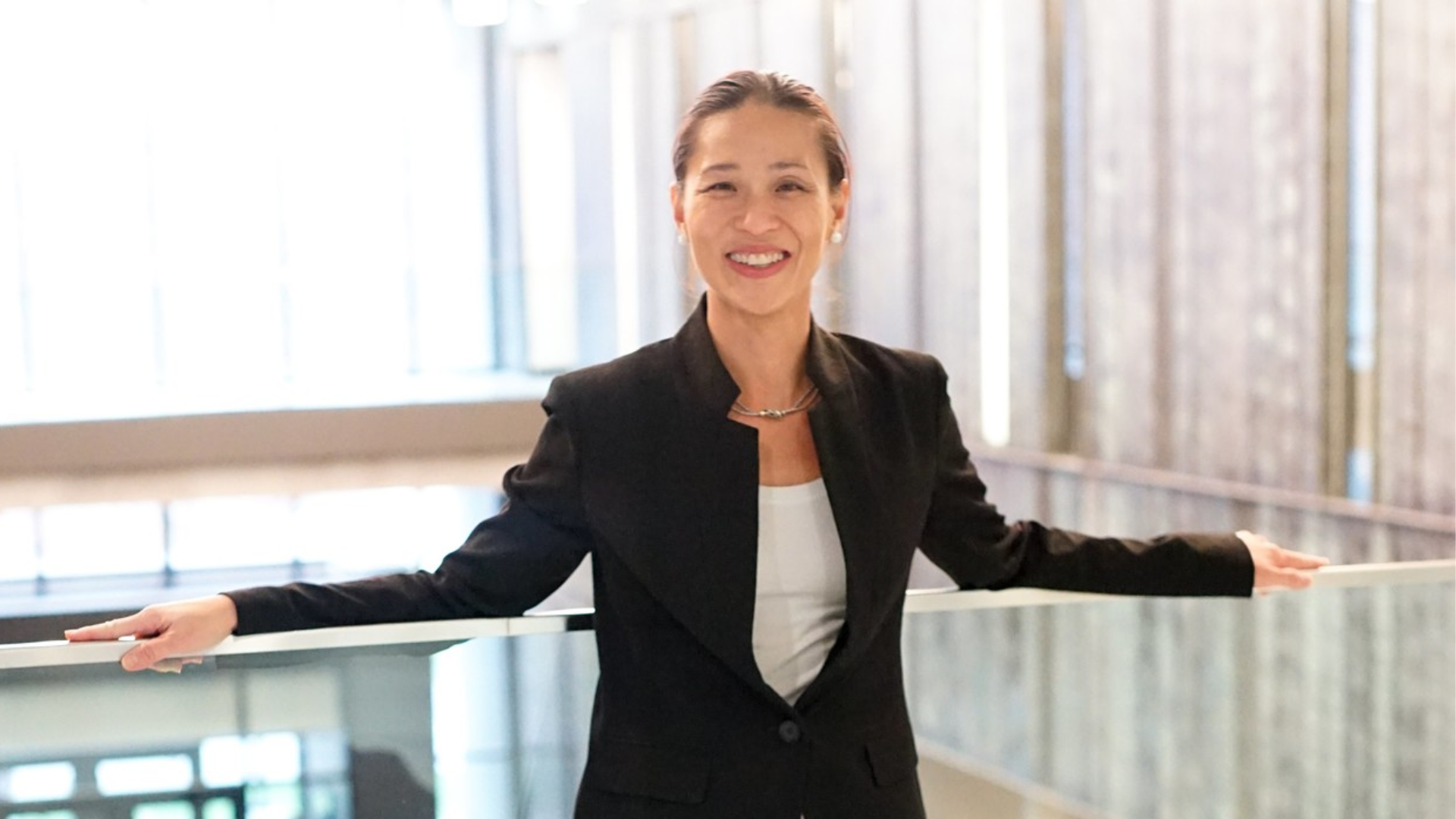
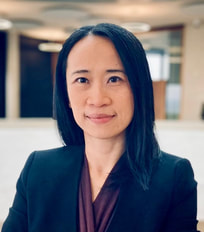
Dr. Candice Chow is an Assistant Professor in Strategic Management at McMaster University's DeGroote School of Business and serves as Director of the Foresight Lab. With a Doctor of Business Administration from Henley Business School, she combines over 25 years of global industry experience with academic rigor, focusing on strategic leadership, values-based management, and corporate sustainability. Educational Background: Doctor of Business Administration (DBA), Henley Business School Her research examines how organizations can balance strategic leadership with sustainable principles, particularly through strategic foresight , governance , and triple bottom line approaches. Her recent articles highlight trends in global supply chains, protectionism, and the role of soft skills in future workplaces. Dr. Chow's work bridges academic theory and practice, emphasizing experiential learning and critical thinking to prepare students for complex leadership roles. She co-founded Elevae, a strategic advisory firm, and previously held executive positions at Purolator.
Wanki Moon serves as Professor and Graduate Program Director in the Department of Agribusiness Economics at Southern Illinois University. His expertise centers on global agricultural trade governance, WTO frameworks, and the political economy of international food systems. His educational qualifications include: Ph.D. in Food and Resource Economics from the University of Florida M.S. in Agricultural Economics from SungKyunKwan University, Korea B.S. in Agricultural Economics from SungKyunKwan University, Korea Dr. Moon's research explores multifunctional agriculture paradigms, trade negotiation dynamics, and global food security challenges. His work critically examines how agricultural trade rules intersect with national food sovereignty and sustainable development goals across diverse geopolitical contexts. His publication portfolio reveals consistent focus on agricultural trade liberalization impacts, multifunctional value assessment, and political economy drivers of protectionism. Key thematic threads include Northeast Asian trade dynamics, US agricultural policy preferences, and climate-food security-trade governance linkages. While no scientific awards are documented in available sources, his research demonstrates sustained engagement with high-impact agricultural economics journals spanning trade policy, food security, and sustainability domains. Dr. Moon directs graduate programs and maintains active research leadership, though specific student advisement records and grant details remain unpublicized. His scholarly contributions operate at the nexus of agricultural economics and international political economy without documented laboratory or team affiliations.
Daniel Drache is a Professor of Political Science at York University and Associate Director of the Robarts Centre for Canadian Studies. His research focuses on International Political Economy , Global Governance , and the Political Economy of Dissent , particularly in the context of trade policy, cultural flows, and the role of counterpublics in shaping global discourse. Research Themes : Global governance, WTO and NAFTA dynamics, cultural flows, digital dissent, and the reimagining of citizenship. Collaborations : Partnered with Marc Froese and others on Doha Round analysis and trade policy critiques. Working Groups : Led the CounterPublics Working Group, exploring the iconography of dissent and visual activism. Daniel Drache's research spans five decades, blending Political Economy , Globalization , and Trade Policy with cultural and social dimensions. His work interrogates the tensions between market logic and public domain, neoliberalism, and the agency of global citizens in challenging trade determinism. His recent publications and working papers highlight trends in Global Cultural Flows , Trade Negotiations , and the Political Economy of Dissent . These works emphasize the role of digital platforms, social movements, and institutional crises in reshaping global governance. Daniel Drache is a key figure in analyzing North American Integration , WTO Reform , and the Impact of Social Media on activism. His leadership at the Robarts Centre and collaborations with institutions like the Centre for International Governance Innovation (CIGI) underscore his influence in transnational policy debates.
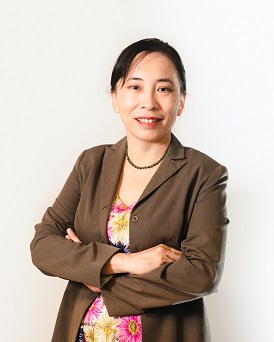
Yeling Tan is Professor of Public Policy at Oxford University's Blavatnik School of Government and a non-resident senior fellow at the Peterson Institute for International Economics. She previously served as an assistant professor of political science at the University of Oregon (2018-2023) and holds a PhD in Public Policy from Harvard University (2017). PhD in Public Policy, Harvard University (2017) MPA in International Development, Harvard Kennedy School (2011) BA (Honors, Distinction) in International Relations and Economics, Stanford University (2002) Her research focuses on the intersection of international and comparative political economy, particularly examining how global economic policies influence authoritarian regimes like China. Key areas include: Impact of international economic rules on domestic policymaking Interaction between global economy and authoritarian politics Corporate strategies and public opinion in authoritarian contexts Globalization and development in the Global South Recent publications analyze China's innovation ecosystem, WTO entry consequences, trade war dynamics, and state strategies under global economic governance. Themes include authoritarian regime resilience, economic interdependence, and corporate-state relations. Scientific Awards & Fellowships: Public Intellectual Fellow, National Committee on U.S.-China Relations (2021-2023) Non-resident Scholar, UC San Diego 21st Century China Center (2020-2023) World Economic Forum Council Membership (2017-2020) Georgetown University U.S.-China Dialogue Participation (2017-2019) She has contributed to debates on globalization, governance innovations, and public policy in China through academic appointments at Harvard, Princeton, and Oxford, alongside policy engagement with institutions like the World Economic Forum.
Giuseppe De Arcangelis is an Ordinario Professor of Political Economy and International Economics at the Department of Social and Economic Sciences, Sapienza University of Rome, since 2005. He holds a PhD in Economics from the University of Michigan (1996) and has taught there as a Visiting Professor (2015-2017, 2020-2022). He previously held teaching positions at the Faculty of Economics, University of Bari, and Sapienza University of Rome. Consultancy Roles : Ministry of Economy and Finance, ICE, European Central Bank Visiting Positions : Sorbonne University, University of Lille 1, University of Michigan Research Interests Giuseppe's research focuses on international migration, migrant remittances, and international trade. His work explores the economic effects of migration on production structures, trade policy, and globalization sustainability. He has published extensively on topics like migration networks, remittance allocation, trade liberalization, and the political economy of sanctions. Publications & Projects He is the author of the textbook Economia Internazionale (2024) and leads research projects on migration-institutions-trade links, economic impacts of migration in Europe, and migration-outsourcing-firm dynamics. His recent articles address trade-migration historical patterns, remittance behavior, vaccine inequality, and the economic consequences of protectionism. Current Courses Teaching International Economics (2024-25) with a curriculum covering balance of payments, exchange rates, and trade policy. Students must register on Moodle for materials and updates.
Dr. Priniti Panday is a faculty member at the Gabelli School of Business, Roger Williams University, Rhode Island, USA. Her research focuses on gender studies, economic development, and child welfare, with a particular emphasis on the relationship between women’s empowerment and children’s well-being in developing countries. Her methodological approach combines comparative studies, regression analysis, and demographic research across multiple geographic, religious, and income-based contexts. Key Research Themes: Gender inequality and its impact on child mortality/malnutrition Human Development Index sensitivity to income assumptions Interplay of conflict, remittances, and poverty Trade liberalization effects on labor markets Recent Publications: 2025 - Human Development Index income sensitivity 2020 - Comparative women's status and child welfare studies 2018 - Women's status and child welfare in developing countries 2017 - Agricultural output and food aid in Sub-Saharan Africa Contact: Email: ppanday@rwu.edu
FUKUNAGA, Yuka is Professor of International Law at Waseda University’s Faculty of Social Sciences and a leading Japanese authority on WTO law and investment arbitration. She combines an academic career at Waseda since 2000 with high-level practitioner experience at the WTO Appellate Body Secretariat and the Permanent Court of Arbitration, and currently sits on the ICSID Panel of Arbitrators and the WTO Indicative List of Panelists. Education: LL.D., Graduate Schools for Law and Politics, University of Tokyo (2013) LL.M., School of Law, University of California, Berkeley (2000) LL.M., Graduate Schools for Law and Politics, University of Tokyo (1999) Bachelor of Law, Faculty of Law, Hitotsubashi University (1997) Research Focus: Her work sits at the intersection of public international law and international economic governance, with particular emphasis on dispute-settlement mechanisms, trade remedies, and the right of states to regulate in the public interest. Recent projects examine climate-change-related investment disputes, the reform of WTO appellate review, and the concept of “necessity” in economic emergencies. Publications & Influence: She has authored or edited more than a dozen books and over seventy peer-reviewed articles and case notes, including recent invited papers on climate arbitration and MPIA appeals. Her 2022 monograph Trade Disputes and the WTO: Case Studies of Rules-Based Dispute Resolution is already a standard reference in Japanese universities. Scientific Awards: 2017 Waseda Research Award – university-wide recognition for outstanding scholarly achievement. Grants & Projects: Principal Investigator, JSPS KAKENHI (C) “‘Necessity’ in International Economic Dispute Settlement” (2024-2027) Team Leader, JSPS KAKENHI (A) “Japanese Influences on International Law” (2021-2024) Principal Investigator, JSPS (B) “Reconstructing the post-WWII international trade law system based on sustainability” (2022-2026) Professional Service: She serves as Co-Secretary of the Society of International Economic Law, Secretary of the Japan Association of International Economic Law, Vice-President of the Asian Society of International Law (Japan Branch), and Book-Review Editor of the Journal of International Economic Law . She is also a founding Co-Chair of the Japan Chapter of ENERAP (Energy-related Arbitration Practitioners).
Dr. Lau Wai Kun (Callie) serves as Lecturer in Economics at Swinburne University of Technology Sarawak's Faculty of Business, Design and Arts, bringing over two decades of specialized teaching experience in core economic disciplines. Academic Background: PhD in International Economics, Swinburne University of Technology Melbourne (Research: Cost of Protectionism) Master of Economics, University of Malaya (Dissertation: Residential Property Cycle) BCM (Honours) Economics, Lincoln Research Focus: Dr. Lau's scholarly work bridges International Economics with Environmental and Development Economics, featuring significant contributions to Property Market analysis. Her side research in Econometrics strengthens empirical validation of economic models, particularly in protectionism cost assessment and property cycle forecasting. Professional Engagement: Malaysian Economic Association New Zealand Association of Economists American Economic Association American Real Estate and Urban Economics Association Instructional Leadership: Dr. Lau delivers comprehensive instruction across Microeconomics, Macroeconomics, Macroeconomic Policy, and advanced Statistics curricula, consistently integrating her research expertise into classroom applications while mentoring students through complex economic modeling techniques.
Markus Lampe is Professor of Economic and Social History at Vienna University of Economics and Business (WU Vienna), where he has served since 2015 as Head of the Institute for Economic and Social History. His academic journey includes previous positions at Universidad Carlos III Madrid (Associate Professor), University of Copenhagen, and University of Münster. Currently, he is also Visiting Professor at the University of Gothenburg (2024-2027). Lampe's research explores historical economic systems through several key lenses: International trade policy evolution and bilateral trade networks Agricultural transformations in 19th-century Denmark Development of global communication infrastructures Real estate market dynamics in historical contexts Role of institutions in economic development His recent publications demonstrate consistent focus on interwar trade policies, migration patterns, and elite influence on economic development, primarily using historical case studies from Europe and colonial systems. Awards and recognitions: Preis für Exzellente Lehre (Teaching Excellence Award), WU Vienna (2022) WU Best Paper Award (2020) Universidad Carlos III Mobility Grant (2011) He leads significant research initiatives including: 'Die Entstehung der In/validen in der Habsburger Monarchie' (2024-2028) 'Wiener Immobilienmarkt 1868-1990' developing Austria's first long-term property price index EU-funded 'TRADEDEPRESSION' project on Great Depression trade patterns
Kris James Mitchener is the Robert and Susan Finocchio Endowed Chair and Professor of Economics at Santa Clara University's Leavey School of Business, Department of Economics. His extensive research affiliations include: Research Associate at the National Bureau of Economic Research (NBER) Research Fellow at the Centre for Economic Policy Research (CEPR) Research Fellow at CESifo Research Associate at the Centre for the Competitive Advantage of the Global Economy (CAGE) Future Fellow (starting June 2025) at the Kiel Institute of the World Economy Professor Mitchener's research focuses on historical and contemporary economic phenomena, with particular expertise in: Financial crises and banking system resilience International trade and currency conflicts Sovereign debt sustainability Economic history of depressions and pandemics Political economy of populist movements His work connects historical patterns to modern policy challenges, especially in monetary policy and financial stability. Recent publications demonstrate his investigations into secession dynamics, Great Depression banking, central bank finances during disinflation, currency-trade relationships, and panic contagion mechanisms. These works consistently employ historical data to inform current economic debates while developing new theoretical frameworks for understanding crisis transmission. Professor Mitchener actively disseminates research through international conferences, policy institutions, and media engagements. He has presented at central banks (Sveriges Riksbank), economic conferences (CEPR, CAGE), and universities worldwide, while contributing policy analyses to major news outlets and research networks.
Billy Melo Araujo is a Senior Lecturer at Queen's University Belfast's School of Law and Deputy Theme Lead of 'People, Firms, Places' at the Centre for Inclusive Trade Policy (CITP). His academic work bridges legal scholarship with practical policy engagement, focusing on the complex intersection of international trade law, EU external relations, and constitutional arrangements within the UK. His research interests primarily center on international trade law with specific expertise in EU external trade relations, trade in services, trade and sustainable development, and the democratic legitimacy of trade agreements. A significant portion of his work examines the legal and practical implications of the Northern Ireland Protocol and Windsor Framework, particularly how these arrangements interact with UK trade agreements and affect Northern Ireland's position within both the UK internal market and EU regulatory frameworks. Analysis of his recent publications reveals a consistent focus on the challenges of implementing trade policy within the UK's devolved structures. His work demonstrates how trade agreements increasingly overlap with devolved competences (approximately 91% according to his research), creating tensions between Westminster's trade policy and devolved administrations' regulatory autonomy. He has produced influential analyses on topics including Article 16 of the Northern Ireland Protocol, steel trade arrangements affecting Northern Ireland, and the role of devolved nations in UK trade policymaking. Dr. Melo Araujo maintains strong connections with government bodies, having provided expert testimony to multiple parliamentary committees including the House of Commons International Trade Committee, the Scottish Parliament's Finance and Constitution Committee, and House of Lords committees. He has also consulted for the Northern Ireland Department for the Economy and provided training to governments across the devolved administrations on international trade law. His advisory approach emphasizes the importance of incorporating devolved perspectives into trade policymaking to create more coherent and resilient trade arrangements that properly reflect the territorial diversity of the UK. His work suggests that treating devolved administrations as genuine partners in trade policy development would strengthen rather than undermine the UK's overall trade position.
Anthony W. Orlando is an Associate Professor of Finance, Real Estate, & Law at California State Polytechnic University, Pomona's College of Business Administration, where he holds the title of Singelyn Fellow of Analytics. He serves as a Visiting Scholar at the Federal Reserve Bank of Atlanta and is affiliated with research centers at the University of Southern California. Dr. Orlando's educational background includes a Bachelor's in economics from The Wharton School of the University of Pennsylvania, a Master's in economic history from the London School of Economics, and a PhD in public policy and management from USC. He is a Chartered Financial Analyst (CFA) charter holder and member of the CFA Society of Los Angeles. His research focuses on the intersection of finance, real estate, and public policy, particularly examining business approaches to societal challenges in housing, health care, and the environment. His recent book, Keeping Races in Their Places: The Dividing Lines That Shaped the American City , has received significant attention, with Katherine O'Regan, former Assistant HUD Secretary, calling it 'A book perfect for this moment.' Dr. Orlando has published extensively in top economics and finance journals and maintains an active Substack newsletter called 'Academic Scribbler' where he analyzes current economic policy issues. His recent work covers topics including SNAP program analysis, federal budget balancing, Medicaid policy, immigration economics, and historical trade policy. Chartered Financial Analyst (CFA) Charterholder (2023-present) Federal Reserve Bank of Atlanta Visiting Scholar (2019-present) Jagdish N. Sheth Award for Excellence in Scholarship (2024) California Air Resources Board (CARB) Grant, Principal Investigator ($149,625) (2023) CPP College of Business Administration Outstanding Advisor Award (2022) As an advisor and educator, Dr. Orlando has received multiple teaching awards and serves on the Public Finance Authority Board for the La Verne Enhanced Infrastructure Financing District. He has secured significant research funding from various sources including the California Air Resources Board and USC research centers, demonstrating the policy relevance of his work. His professional activities bridge academic research and practical policy application, with his expertise sought by both academic institutions and government entities working on complex economic and policy challenges.
Tate Fegley serves as Chair of Business and Economics at Montreat College, while maintaining significant affiliations with the Mises Institute and Independent Institute. His academic career demonstrates a strong commitment to Austrian economics and libertarian thought. Dr. Fegley's research spans multiple domains of political economy, with particular focus on property rights , trade policy , and institutional analysis . His work consistently applies Austrian economic principles to contemporary policy debates, examining how state interventions affect market processes and individual liberty. Notably, he has produced significant scholarship on the political economy of policing, bureaucratic inefficiencies in the 'deep state,' and the economic fallacies behind protectionist trade policies. His recent publications (2023-2025) reveal a consistent analytical framework grounded in Austrian economics, with recurring themes of market solutions to public problems , critiques of state power , and property rights-based approaches to social organization. Dr. Fegley's work demonstrates how economic reasoning can clarify policy debates often clouded by political rhetoric. Notable Recognition: 2018 Grant Aldrich Prize for Best Graduate Student paper at the Austrian Economics Research Conference Mises Institute Fellow (2015, 2016, 2018) Dr. Fegley's academic journey reflects a deep engagement with Austrian economics, having earned his Ph.D. from George Mason University, a leading center for this tradition. His interdisciplinary background in economics and criminal justice informs his unique perspective on the relationship between economic systems, legal frameworks, and individual liberty. His current position as department chair demonstrates his leadership within academic economics, while his external fellowships highlight his standing within the broader libertarian scholarly community.
Christopher Westley serves as Professor of Economics within the Lutgert College of Business at Florida Gulf Coast University and holds an Associated Scholar position at the Mises Institute, a prominent non-profit advancing Austrian economics and libertarian principles. His dual affiliation enables rigorous academic research alongside public intellectual engagement through platforms like Mises Wire. Research interests center on Austrian economic theory with emphases on monetary policy critique, historical analysis of central banking, and comparative studies of economic systems. He examines how laissez-faire frameworks outperform interventionist approaches, using case studies like Chile's post-dictatorship reforms to contrast Friedmanite monetarism with Misesian principles. His work consistently challenges mainstream economic orthodoxy through historical and theoretical lenses. Publications from 2010-2018 reveal evolving focus from Federal Reserve history ('Why the Fed Got Birthed') to contemporary policy critiques ('Countercyclical Capital Buffers') and geopolitical economic analysis ('Anti-Russian Paranoia'). These works demonstrate methodological consistency in applying Austrian business cycle theory while addressing diverse topics from South American development to protectionism in industrial markets. While specific grant details remain undisclosed, his Mises Institute affiliation suggests sustained research support for Austrian economics scholarship. Conference reporting indicates active engagement with mainstream economic discourse, though his advisory capacity for graduate students isn't explicitly documented in available sources.