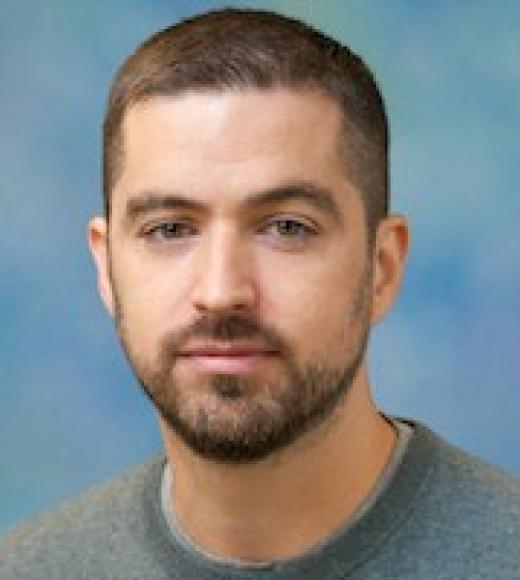
Terje Andreas Eikemo is a Professor at the Department of Sociology and Political Science , Norwegian University of Science and Technology (NTNU) , and Head of the CHAIN research center . His work focuses on the intersection of social inequality , public health , and global policy , emphasizing how socioeconomic factors like education , income , and welfare systems influence mortality , chronic diseases , and mental health . He combines theories from sociology , epidemiology , and medicine to address health disparities across diverse contexts, including pandemics , climate change , and migration . 2009: Prize for Young Researchers in the Humanities 2010: SINTEF Prize for Outstanding Research 2014: NTNU Star Program Eikemo has published extensively in top journals like The Lancet and BMJ Open , with research themes spanning social determinants of health , policy interventions , and global health equity . His work includes GBD studies , European Social Survey analyses , and refugee health assessments. He serves as Editor-in-Chief of the Scandinavian Journal of Public Health and collaborates with international bodies like WHO and UNESCO .
Joy S. Kaufman is a Professor in the Department of Psychiatry at Yale School of Medicine. She serves as Deputy Chair for Career Development, Director of the Yale Consultation Center, and Director of YaleEVAL. Her work focuses on large-scale evaluations of health service delivery systems in under-resourced communities, emphasizing community-based participatory research and stakeholder training. Education: PhD in Clinical and Community Psychology, DePaul University (1994) Postdoctoral Fellow, Yale University (1993) MA in Psychology, DePaul University BA in Psychology, Assumption College Dr. Kaufman specializes in health equity , trauma exposure in children , and program evaluation . Her research bridges public health , social justice , and behavioral health policy through rigorous methodologies. Recent publications highlight her work on opioid use disorder in obstetric care , perinatal substance use reporting , and system-level mental health evaluations . She employs latent class analysis and CBPR frameworks to address disparities. Scientific Awards: Fellow, American Psychological Association Fellow, Society for Community Research and Action Gold Medal, Substance Abuse and Mental Health Services Administration Exemplary Evaluation, American Evaluation Association As principal investigator, she has secured funding from the National Institute of Justice , PCORI , and Connecticut state agencies . Her leadership extends to training community members in evaluation methods and developing trauma-informed healthcare systems .
Dawn Martin-Hill , Professor Emeritus in Indigenous Studies at McMaster University , is Canada’s first Indigenous cultural anthropologist and the founder of McMaster’s Indigenous Studies Program (1992). She also holds the role of Academic Co-Chair of the Indigenous Education Council and has served as Director of Indigenous Studies since 1998. A Mohawk scholar residing at Six Nations of the Grand River, she integrates Indigenous knowledge systems with Western science to address critical issues of water security, health, and sovereignty. Education & Training: PhD, Cultural Anthropology Research Interests: Dr. Martin-Hill’s work centres on traditional ecological knowledge (TEK) , community-driven water security , and Indigenous methodologies . Her flagship program Ohneganos co-creates bilingual tools—apps, VR, water sensors, Indigenous mapping, films, and podcasts—to empower First Nations in monitoring and managing water resources. She explores intersections of climate change, maternal health, mental health, and Indigenous governance . Research Impact: Spanning hydrology, medical anthropology, and digital health, her recent publications address urgent issues such as water insecurity’s impact on maternal mental health , climate-driven hydrological extremes , and digital mental-health tools for Indigenous youth . Collectively, her work advances decolonizing methodologies and supports United Nations Sustainable Development Goals. Scientific Awards & Honours: Inaugural Fulbright Indigenous Canada–U.S. Scholar Award Inaugural Chair, CIHR-IPH Secretariat on Traditional Medicine in Health Research Outstanding Teaching Award, Aboriginal Consortium 2022 University of Oklahoma International Water Prize Oklahoma Universities Water Technologies Award Princeton Book Award for forthcoming Ohneganos volume Funding & Training: Principal Investigator on four Global Water Futures grants that have supported over 30 graduate students and nine Indigenous Studies undergraduates , plus 45 secondary First Nations students receiving McMaster certificates. She has served as co-investigator on CIHR-IPH ARHNets Center funding 80+ First Nations, Métis, and Inuit graduate students . Leadership & Service: Member of the UNESCO Hydrology Committee for Canada , board member of CIHR Institute of Indigenous Peoples’ Health and CIHR Anti-Racism Committee , former Chair of the CIHR College of Reviewers. She spearheaded the McPherson Chair in Indigenous Studies and secured multiple Indigenous student scholarships and bursaries.
Jelena Mirkovic serves as Principal Scientist at USC Information Sciences Institute (USC/ISI) and Research Associate Professor at the University of Southern California's Thomas Lord Department of Computer Science. She has held faculty positions at USC since 2010, progressing from Research Assistant Professor to her current role as Research Associate Professor since 2017, while also serving as Project Leader at USC/ISI. Her educational background includes: PhD in Computer Science from UCLA (2003) MS in Computer Science from UCLA (2000) B.Sc. in Computer Science from University of Belgrade, Serbia (1998) Mirkovic's research spans network security, human-centered attacks, and cybersecurity experimentation infrastructure. Her work focuses on critical security challenges including botnets, denial-of-service attacks, IP spoofing, vulnerability scanning, and user-centric privacy. She has pioneered methodologies for security experiments and led major infrastructure projects including the DETER testbed and SPHERE (Security and Privacy Heterogeneous Environment for Reproducible Experimentation). Analysis of her recent publications reveals consistent innovation across multiple security domains. Her work demonstrates strong technical depth in DDoS defense systems (particularly DNS protection), binary vulnerability analysis, privacy-preserving systems, and security experimentation infrastructure. A notable trend is her focus on bridging theoretical security concepts with practical implementation through large-scale testbeds and real-world data analysis. Her significant scientific achievements include: IEEE Senior Member distinction Best paper award at IEEE COMSNETS 2023 for DNS DDoS defense research Mirkovic has secured substantial research funding as Principal Investigator or Co-PI on numerous grants from NSF, DHS, and other agencies. Current major projects include SPHERE (Security and Privacy Heterogeneous Environment for Reproducible Experimentation), DISCERN (Datasets to Illuminate Suspicious Computations), and modernizing DeterLab education infrastructure. She has successfully led multiple REU sites focused on cybersecurity education and workforce development. She directs the STEEL (Security Research Lab) at USC/ISI, which develops innovative security solutions through interdisciplinary research in network security, human factors in security, and cybersecurity experimentation infrastructure. The lab emphasizes practical implementations that address real-world security challenges while advancing theoretical understanding of security systems.
Professor Steven J. Murdoch is a leading figure in cybersecurity and privacy-enhancing technologies at the Department of Computer Science , University College London . His work bridges computer science and law, focusing on payment system security, electronic evidence reliability, and dispute resolution mechanisms. Head of Information Security Research Group at UCL (2022–present) Director at Open Rights Group (2022–present) Research spans payment security , privacy protocols , and legal implications of computer evidence . Key contributions include analyzing EMV protocol flaws, designing secure authentication mechanisms, and improving Tor's anonymity. Publications cover privacy-preserving federated learning , time-lock puzzles , and malware ecosystem analysis Awards include Fellowships from the Institution of Engineering & Technology and British Computer Society , and a Royal Society University Research Fellowship . Teaches COMP0055 Computer Security II and COMP0061 Privacy Enhancing Technologies at UCL
Santiago Barreda is an Associate Professor in the Department of Linguistics at the University of California, Davis, specializing in speech perception and phonetic analysis. His research examines how acoustic properties of speech convey speaker characteristics including age, gender, and physical attributes. Education: Ph.D. in Linguistics (Phonetics), University of Alberta, 2013 M.A. in Hispanic Studies (Language and Linguistics), University of Western Ontario, 2008 B.A. in Linguistics and Spanish Language and Literature, University of Western Ontario, 2006 Research Focus: Dr. Barreda employs behavioral experiments and statistical modeling to investigate perceptual mechanisms in speech recognition. His work bridges theoretical phonetics with practical applications, particularly in vowel normalization techniques and formant tracking algorithms. Key questions address how listeners extract speaker identity from acoustic cues and interpret social characteristics through vocal signals. Publication Trends: Recent publications (2020-2025) reveal three dominant themes: computational phonetic tools (FastTrack, phonTools), perception of social/physical speaker characteristics from children's voices, and interdisciplinary public health research on speech-related aerosol transmission. His work demonstrates strong methodological consistency in combining acoustic analysis with perceptual validation. Scientific Awards: No scientific awards were mentioned in the source material. Advising and Grants: The provided documentation does not specify graduate student advising roles or external grant funding. Technical Contributions: Dr. Barreda develops open-source phonetic analysis software including FastTrack (Praat-based formant tracking) and the phonTools R package, which have become standard resources in acoustic phonetic research.
Dr. Martin Stürzlinger is a Part-Time Professor for Digital Archiving at the Department of Information Sciences, University of Applied Sciences Potsdam. He also operates his consulting firm Archiversum, advising organizations on long-term information storage (www.archiversum.com). His work bridges academic research with practical applications in digital preservation. Research Interests: Dr. Stürzlinger specializes in digital archiving, focusing on the OAIS model, life-cycle management, and archival description standards like Records in Contexts (RiC). His research addresses organizational challenges in digital preservation, legal compliance (e.g., GDPR), and metadata design for accessibility. Recent Publications: His selected works explore OAIS implementation, the impact of GDPR on private archives, and the evolution of archival description standards. These contributions highlight trends in digital preservation, emphasizing interoperability, sustainability, and cross-institutional collaboration. Collaboration & Standards: He actively contributes to international working groups, including ICA-EGAD (Archival Description) and nestor's certification standards for digital archives. His efforts in standardization include the Austrian implementation of ISAD(G) and ISDIAH, as well as Swiss guidelines for electronic records management. Teaching & Outreach: Dr. Stürzlinger has lectured extensively, including courses on archive management at BFI Vienna and IT applications in archives at the University of Vienna. He has delivered over 40 lectures globally, addressing topics like cost estimation for digital archiving and the role of corporate archives in business efficiency.
Bernardo Jesús Periñán Gómez, currently a Professor of Private Law at Universidad Pablo de Olavide (Seville, Spain) , specializes in Roman Law and its reception into modern legal systems. He leads the research group From the European Common Law to Civil Law and has established research stations at institutions like Harvard and Pavia. His work bridges historical jurisprudence with contemporary legal challenges, particularly in pandemic-related obligations and urban liability frameworks. Education: Doctorate in Roman Law from Universidad de Sevilla (1997) focusing on the Senatus Consultum Macedonianum. Research: Explores Roman legal structures, comparative law, and globalization's impact on individual juridical capacity. Publications: Over 40 articles and monographs in journals like Revista Internacional de Derecho Romano and Boletín Mexicano de Derecho Comparado , emphasizing doctrinal continuity and adaptation. Awards & Roles: Serves on international scientific committees, directs doctoral theses, and contributes to editorial boards including Persona Collection at Comares Publishing.
Hens Runhaar is Professor of Policy and Governance for Sustainable Food Systems at Utrecht University's Copernicus Institute of Sustainable Development. He holds positions as Chair of the Examination Committee for Sustainable Development and is a member of the Core Team of Future Food Utrecht. Additionally, he serves on the Editorial Board of Earth System Governance Journal and as Associate Editor of Frontiers in Sustainable Food Systems journal. His research focuses on sustainable food systems, policy and governance for biodiversity conservation, and nature-inclusive agriculture. Runhaar's research interests center on understanding the connectivity issues in Western food systems that lead to sustainability challenges including biodiversity loss, climate change, and food-related diseases. He investigates the decoupling of food production from environmental conditions, disconnects between feed production and livestock farming, and the separation between food production and consumption areas. His work emphasizes biodiversity as a key indicator of sustainable food systems, with special interest in scaling up agroecology, regenerative agriculture, and nature-inclusive agriculture. He delivered his inaugural lecture on January 17, 2025, titled 'Governing towards sustainable food systems: new connections for more diversity'. His recent publications demonstrate a strong focus on biodiversity policy integration, nature-based solutions, and transformative food system changes. Runhaar has been instrumental in special issues on biodiversity governance and environmental policy integration. His research projects include COMBINED (2025-2031), REWIRE, DivGrass, and work on the Water Framework Directive after 2027. Editorial Board Member of Earth System Governance Journal Associate editor of Frontiers in Sustainable Food Systems journal Member of the Scientific Advisory Committee of Dutch Bird Protection Association Senior Research Fellow of Earth System Governance research network Fellow of Wageningen School of Social Sciences Runhaar actively supervises numerous PhD students and postdoctoral researchers, with a focus on sustainable food systems, biodiversity conservation, and nature-inclusive agriculture. He has contributed significantly to societal debates through media appearances in NRC, De Volkskrant, and EenVandaag, addressing topics like nitrogen policy, nature restoration, and the role of farmers in sustainability transitions. Beyond academia, he volunteers with the Badger Working Group Utrecht and 't Gooi Foundation, monitoring badgers since 2012 and contributing to nature conservation efforts.
Thomas Le Goff is an Assistant Professor of Law & Technology at Télécom Paris – Institut Polytechnique de Paris, affiliated with the Interdisciplinary Institute of Innovation (i3) and the Digital, Organization and Society (DTOS) research team. His work bridges legal frameworks and technological advancements, focusing on AI regulation, environmental sustainability, data protection, and cybersecurity. Education: PhD in Private Law, Université Paris Cité Master’s in Law, Université Paris Cité LLM, University of Exeter (UK) Licence and Magistère, Université de Rennes 1 His research explores the intersection of AI and sustainability, emphasizing how legal principles can guide environmentally responsible technology. Key themes include the AI Act’s implications, data center energy demands, and regulatory strategies for balancing digital growth with net-zero targets. His work has been presented at international forums like BILETA and contributes to EU think tanks such as CERRE. Recent publications address AI’s environmental footprint, nuclear energy’s role in powering AI, and legal frameworks for sustainable digital infrastructure. Collaborations with institutions like the Center on Regulation in Europe (CERRE) highlight his focus on comparative analyses of global regulatory practices.
Dr. Mel Marquis serves as Senior Lecturer and Deputy Associate Dean (Engagement) at Monash University's Faculty of Law. An internationally recognized scholar in competition law and policy, Dr. Marquis is also an Advance HE Fellow (FHEA) and actively contributes to global competition law discourse through research, teaching, and international collaborations. Dr. Marquis earned his educational qualifications from prestigious institutions: Doctorate from the Institute of International and European Law at the University of Macerata, Italy LL.M from the European University Institute (Florence) J.D. magna cum laude from Seton Hall University (Newark) B.A. in political science from the University of Washington (Seattle) Dr. Marquis's research focuses on competition law and policy across multiple jurisdictions, with particular expertise in Australian competition law, East Asian regulatory systems, and ASEAN competition frameworks. His work examines the intersection of cultural contexts and competition enforcement, especially Confucian influences on competition law in East Asia. He has made significant contributions to understanding vertical agreements in the ASEAN Economic Community and the evolution of merger control frameworks. Analysis of Dr. Marquis's recent publications reveals a strong emphasis on comparative competition law, with particular focus on Australia, East Asia, and the ASEAN region. His work bridges legal theory and practical enforcement challenges, addressing contemporary issues like digital markets, merger control reforms, and the cultural dimensions of competition enforcement. The publications demonstrate interdisciplinary approaches combining legal analysis with economic perspectives. Dr. Marquis has received numerous scientific awards and recognitions: Dean's Award for Excellence in Research, 2025 Advance HE Fellow (FHEA) since 2024 Grant recipient for Competition Law Principles for Vertical Agreements in the ASEAN Economic Community (2024) Grant recipient for Distribution Agreements research (2023) Antitrust Writing Awards - Named to Jury and Academic Steering Committee (2021-2022) Monash Teaching Award, 2020 academic year Dr. Marquis actively supervises PhD students in competition law and related fields, welcoming research with global, comparative, interdisciplinary, and Australian perspectives. His grant portfolio includes significant projects funded by the Australian Commonwealth and administered by the ACCC, focusing on competition law applications in ASEAN countries. He has served as an International Expert for the Trade Competition Commission of Thailand and worked with international organizations including the United Nations, Asian Development Bank, World Bank, and Italian Ministry of Foreign Affairs. Dr. Marquis is Convenor of the Monash High Academic Achievers Program and a member of the Executive Board of the Centre for Commercial Law and Regulatory Studies (CLARS). He co-organizes inter-faculty events with the Monash Business-Economics Faculty and serves as a University of Oxford Ambassador for the Value of Competition. Additionally, he is a member of the East Asia Academic Network on Competition Policy and Law and the Virtual ASEAN Competition Research Centre.
Frank Chan is a Professor of Information Systems at ESSEC Business School in France, where he currently serves as Department Head of Information Systems, Decision Sciences and Statistics (2022-2025). He has been with ESSEC since 2013, progressing from Assistant Professor to Associate Professor and now Professor. His academic career focuses on the intersection of information systems, public administration, and organizational behavior. Dr. Chan earned his Ph.D. in Information Systems from Hong Kong University of Science and Technology (HKUST) in 2010 and completed his BBA in Information Systems and Finance from the same institution in 2003. His educational background provided the foundation for his research in technology implementation and electronic government. His research interests span electronic government, technology implementation, agile methodologies, and internet privacy. Dr. Chan's work examines how digital technologies transform public services, organizational processes, and citizen experiences. He investigates the human aspects of technology adoption, including leadership dynamics in agile teams, citizen satisfaction with e-government services, and privacy concerns in digital environments. His multidisciplinary approach combines insights from information systems, public administration, and organizational behavior. Analysis of Dr. Chan's publication record reveals a consistent focus on e-government systems and technology implementation, with increasing attention to agile development methodologies in recent years. His work demonstrates a progression from foundational technology adoption studies to more nuanced investigations of leadership dynamics, privacy concerns, and the societal impacts of digital initiatives. The interdisciplinary nature of his research bridges business, public administration, and technology domains. Pacific Asia Conference on Information Systems Best Associate Editor Award (2022) International Conference on Information Systems Outstanding Associate Editor Award (2019) MIS Quarterly Reviewer of the Year Award (2019) MIS Quarterly Reviewer of the Year Award (2018) Journal of Operations Management Ambassador Award (2017) Finalist for Journal of Operations Management Jack Meredith Best Paper Award (2012) As a Senior Editor for Information Systems Journal since 2021 (previously Associate Editor 2016-2020), Dr. Chan has significantly contributed to the academic community. He has served as Track Co-Chair for major conferences including International Conference on Information Systems and Pacific Asia Conference on Information Systems. His consulting work with United Nations ESCAP on digitalization of tax administrations in Asia demonstrates the real-world impact of his expertise. Dr. Chan teaches courses in Research Design, Quantitative Research Methods, and Digital Business at ESSEC.
Professor Christian Deutscher is a prominent sports economist at Bielefeld University's Faculty of Psychology and Sport Science, specializing in the Department of Sport Science within Division V - Sport and Business. As both Research Officer and Internationalization Officer, he leads significant work in sports economics, particularly focusing on betting markets, match-fixing detection, and sports integrity. His research has attracted funding from major institutions including the German Research Foundation. Deutscher's research interests span sports economics, betting market efficiency, match-fixing detection, sports management, and the business aspects of professional sports. His work combines advanced statistical modeling with practical applications in sports integrity monitoring. He has extensively analyzed live betting markets, Bundesliga economics, and the impact of technological innovations like VAR in football. His research often examines the intersection of sports performance, economic incentives, and market behavior. Analysis of his recent publications reveals a strong focus on empirical studies of sports betting markets, particularly live and in-play betting dynamics. His work demonstrates sophisticated use of state-space models and other advanced statistical techniques to detect market inefficiencies and potential integrity issues. Deutscher frequently collaborates with statisticians and economists to develop warning systems for match-fixing, with particular attention to German football leagues. His research bridges theoretical economics with practical applications in sports governance. Professor Deutscher actively contributes to the European Sport Economics Association (ESEA), having edited special issues of conference proceedings and serving in editorial capacities. His work has been published in leading journals including Journal of Sports Economics, Economic Inquiry, and Applied Stochastic Models in Business and Industry. As Research Officer for the Faculty of Psychology and Sport Science, Deutscher oversees research initiatives and international collaborations. His current projects include data-based fraud detection in live betting markets, funded by the German Research Foundation across multiple phases. He also serves on various university committees including the Quality Improvement Commission and Examination Board for the Department of Sport Science. Deutscher maintains strong connections with sports organizations and betting industry stakeholders, ensuring his research has practical relevance for sports integrity monitoring. His work on betting market inefficiencies has direct applications for regulatory bodies seeking to protect the integrity of sporting competitions.
Lev Kirischian is an Associate Professor at the Department of Electrical and Computer Engineering , Toronto Metropolitan University. He established the Embedded and Reconfigurable Systems Laboratory in 1999 for research and graduate studies. His expertise spans reconfigurable computing, parallel systems, and embedded design. BSc/MASc in Aerospace Control Systems, Moscow Institute of Aviation Technology (MAI) PhD in Parallel and Reconfigurable Computing Systems, Moscow Power Engineering Institute (MPEI) Research Interests : Task-adaptive reconfigurable computing systems Automated architectural synthesis of data-flow parallel computers FPGA-based stream processors Article Trends : His recent research focuses on reconfigurable computing architectures, modular system optimization, and FPGA applications in aerospace and industrial systems. Work includes radiation protection for FPGAs, multi-parametric architecture optimization, and frameworks for parallel multi-tasking environments.
Jamie Morgenstern is an Associate Professor at the Paul G. Allen School of Computer Science & Engineering , University of Washington . She was previously an assistant professor at Georgia Tech and a Warren Center Fellow at University of Pennsylvania . Expertise: Ethics & Fairness, Human-Centered AI, Machine Learning Education: PhD in Computer Science from Carnegie Mellon University (2015) Her research examines the social impact of machine learning and ensuring ML models do not exacerbate societal inequalities. She investigates robustness to human-generated training data, fairness in clustering and active learning, and algorithmic equity in recommendation systems. Recent publications focus on interactive ML systems , fairness constraints , and privacy-preserving methods across conferences like NeurIPS, ICML, and AIES. Key subfields include multimodal learning , membership inference attacks , and data equity . Scientific Awards: NSF Career award for "Strategic and Equity Considerations in ML" Simons collaboration project Simons Award for Graduate Students in Theoretical Computer Science (2014-2016) NSF GFRP fellowship Microsoft Research Graduate Women's Scholarship Spotlight presentation at NeurIPS 2015 Mentoring: She advises current PhD students Rachel Hong , Jie (Claire) Zhang , and Yuanyuan (Chloe) Yang . Former advisees include Daniel Jiang (MS), Bhuvesh Kumar (PhD), and Angel (Alex) Cabrera (BS). Grants: Funded by NSF Career award and Simons collaboration projects. Previously supported by Simons, NSF, and Microsoft Research fellowships. Labs & Collaborations: Collaborates with researchers like Michael Kearns , Aaron Roth , and Avrim Blum . Affiliated with the Allen School's Artificial Intelligence research group.