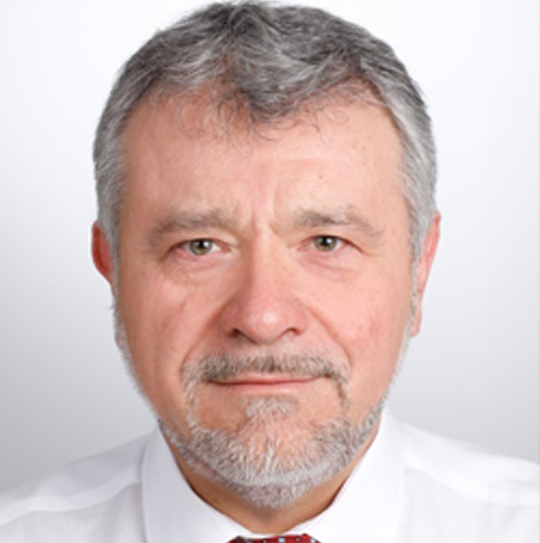
Stefanie Sydlikمشاهده پروفایل
استادیار
Stefanie Sydlik is an Assistant Professor of Chemistry and Biomedical Engineering (courtesy) at Carnegie Mellon University's Mellon College of Science, Department of Chemistry. She joined CMU full-time in summer 2015 after completing a postdoctoral fellowship with Professor Robert Langer at MIT, where she developed biomimetic block copolymers for cartilage repair. Her research group focuses on the synthesis of novel polymers and materials through molecular design principles, with applications spanning electronic, mechanical, and biological materials. Dr. Sydlik's research interests center on polymer chemistry and biomaterials development, particularly in creating functional graphene-based materials for tissue engineering applications. Her work bridges the gap between fundamental molecular design and practical biomedical applications, with emphasis on bone regeneration, stem cell scaffolds, and degradable polymer systems. The Sydlik Group explores how molecular architecture influences material properties and biological responses, developing innovative solutions for regenerative medicine. Analysis of her recent publications reveals a strong focus on graphene functionalization techniques, particularly for bone regeneration applications. Her research demonstrates how tailored surface chemistry of graphene materials can direct stem cell behavior and enhance tissue integration. The trend shows increasing sophistication in material design, moving from basic graphene composites to precisely engineered peptide-functionalized systems that mimic natural extracellular matrices. American Chemical Society PMSE Young Investigator Award National Institutes of Health Ruth L. Kirschstein Postdoctoral Fellowship (2014-2015) National Science Foundation Graduate Research Fellowship (2008-2011) MIT Department of Chemistry Award for Outstanding Teaching (2008) Beckman Scholars Program Award Recipient (2006-2007) Professor Sydlik actively mentors a diverse group of students, including PhD candidates, master's students, and undergraduates working on projects ranging from macrocyclic ring-opening polymerizations to peptide-functionalized graphene materials. Her lab has received funding through prestigious fellowships and grants that support undergraduate research initiatives. The Sydlik Group maintains well-equipped laboratory facilities including chemical fume hoods, biosafety equipment, and advanced microscopy capabilities, supporting their interdisciplinary research at the chemistry-biology-materials science interface.