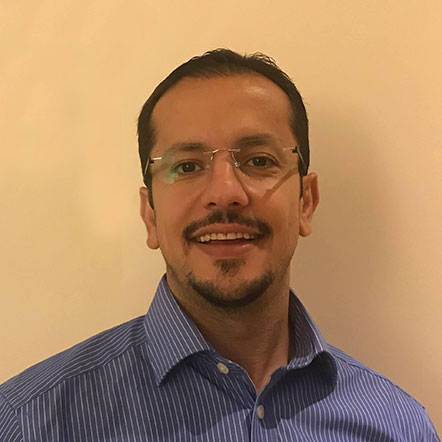
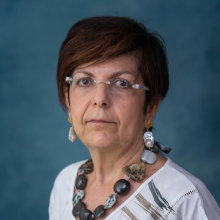
Dr Rosemary Stott is a faculty member at the University of East London, serving as Dean of the School of Arts and Creative Industries. She holds a PhD in Film from Reading University, an MA in Film from Westminster University, and a BA from Oxford University. Education: BA (Oxford), MA (Westminster), PhD (Reading) Leadership roles at UEL, London Metropolitan University, and Ravensbourne University London Research focus: East German film (DEFA), cultural transference, inclusive learning design, digital education Her research explores the intersection of film history, pedagogy, and educational technology. Key projects include World on our Doorsteps (2022-2025, Arts Council England) and Embedding Mental Well-Being in the Curriculum (2020-21). Earlier work involved a Horizon 2020 wearable technology project and Jisc-funded initiatives for dyslexic students. Recent publications analyze Critical Race Theory in film education, DEFA film legacy, and digital pedagogy innovations. Awards include funding from Jisc, HEFCE, and HEA for educational technology projects. She supervises PhD students in German film, media practice, and transnational cinema.
Dr. Monica Ward is a Teaching Professor at Dublin City University, currently serving as the Dean of Teaching and Learning within the Office of the Vice-President for Academic Affairs. Her work bridges technology and pedagogy, focusing on innovative educational tools. Office of the Vice-President for Academic Affairs Glasnevin Campus, Room D114 Monica's research interests revolve around Computer-Assisted Language Learning (CALL) , educational technology , and game-based learning . She has contributed significantly to inclusive education, language revitalization (e.g., Irish and Nawat), and formative assessment in both language learning and introductory programming. Her projects often leverage Artificial Intelligence , Virtual Reality , and gamification to create engaging, accessible learning environments. Her recent publications highlight trends in adaptive learning technologies , socio-cultural immersion , and student-centered CALL design . Notable works include studies on educational robotics for dyslexic learners, AI-driven text analysis in game-based language learning, and the impact of interactive oral assessments. Monica has developed educational games like Cipher: Faoi Gheasa and Cipher VR , which integrate mythology and technology to enhance language reconnection. She also explores peer observation, collaborative modules, and green approaches in educational app development, reflecting her commitment to sustainable and culturally relevant teaching strategies.
Dr Janette Jacobs is a Lecturer in Psychology at London South Bank University's School of Applied Science. She serves as the Level 4 Lead for Undergraduates and the Lead for Hourly Paid Lecturers, while also contributing to BSc Psychology program leadership roles including admissions and child development specialization coordination. Her research focuses on Strategy use in reasoning among individuals with and without dyslexia Impact of external information representation on reasoning strategies Concrete vs abstract reasoning dynamics Working memory and executive functioning in developmental contexts Risky decision-making environments Individual differences in cognitive processing Recent work analyzes dyslexia and deductive reasoning patterns , with a 2024 publication examining rule type and word term effects in adult reasoning. Her 2021 research revealed significant differences in syllogistic strategy usage between dyslexic and non-dyslexic populations, incorporating verbal strategies and cognitive processing metrics. Scientific recognition includes British Psychological Society Best Final Year Student Prize (during her BSc) PlumX Metrics: 5 readers, 1 blog mention, 1 news mention for 2024 research Scopus citations: 2 citations for her 2021 Dyslexia journal article
Dr. Marcia Gibson is a Senior Lecturer in Computer Science and Technology at the University of Bedfordshire, affiliated with the Faculty of Creative Arts, Technologies and Science. She has held this position since 2013, following a career that includes roles as a Research Fellow at the National Centre for Cyberstalking Research (NCCR) and commercial experience as a Web Developer and UX/Accessibility consultant. Her educational background includes a PhD in 'Inclusive and Secure Design of an Online Authentication System' (2013), funded by the Steel Memorial Trust, an MSc in Computer Security, Accessibility, and HCI (2007), and a First-Class BSc in Computer Science (2005). She is also a Fellow of the Higher Education Academy (FHEA) since 2015. Gibson’s research focuses on cybersecurity, usable security, and human-computer interaction (HCI), with emphasis on cyberstalking, virtual reality, and accessible authentication systems. She has led projects such as the HEFCE CATALYST initiative to combat online harassment and contributed to cyber-awareness programs for schools. Her work bridges academic research and practical applications, including advising startups in game development and co-founding BedsHertsBucks++, a networking hub for the creative technologies community. Her awards include the Steel Memorial Trust PhD Scholarship and recognition for her teaching excellence. She supervises PhD and MSc students in areas like immersive VR systems, cyberstalking mitigation, and accessibility in coding for dyslexic learners. Gibson actively engages in academic service, reviewing for journals like the International Journal of Human-Computer Studies and IEEE Transactions on Information Forensics & Security.
Marco Temperini is a Professor at Sapienza University of Rome's Department of Computer, Control and Management Engineering within the School of Engineering. With a publication record spanning over three decades (1990-2024), he has established himself as a leading researcher in educational technology with particular expertise in artificial intelligence applications for learning systems. His work bridges computer science and pedagogy, focusing on creating intelligent tools that enhance teaching and learning experiences. Temperini's research interests center on artificial intelligence in education, learning analytics, and intelligent tutoring systems. His work explores how AI technologies, particularly machine learning and natural language processing, can be effectively applied to educational contexts. Recent research has focused on leveraging large language models for educational assessment, developing chatbots for student support, and creating analytics tools for teachers to understand student learning patterns. His approach emphasizes practical implementations that address real educational challenges while maintaining scientific rigor. Analysis of his recent publications reveals a strong trend toward applying cutting-edge AI technologies to educational problems. His work demonstrates increasing focus on large language models for automated assessment, with particular attention to comparing open-source versus proprietary solutions. He has also maintained consistent research on concept mapping, peer assessment methodologies, and MOOC analytics, showing both depth in specific areas and adaptability to emerging technologies. His research consistently addresses scalability challenges in technology-enhanced learning environments. Professor Temperini has been actively involved in numerous international conferences including ICALT, ITHET, ITS, and IV, often serving in organizational roles. His collaborative work spans multiple European institutions, with particularly strong connections to the Italian AI and educational technology communities. He has contributed significantly to conference proceedings as both author and organizer, helping shape research directions in educational technology. His research methodology combines theoretical frameworks from educational psychology with advanced computational techniques. He frequently employs Item Response Theory for assessment validation and applies machine learning approaches to analyze educational data. This interdisciplinary approach has yielded practical tools like Q2A-II for peer assessment and TutorChat for supporting dyslexic learners, demonstrating his commitment to translating research into tangible educational benefits.
Rob Thompson is a Teaching Assistant Professor in the Department of Computer Science at the Colorado School of Mines . He focuses on welcoming students in introductory classes and developing new courses, such as the Human-Computer Interaction class. His research emphasizes accessibility, computer science education, and collaborative technologies. Education: B.S. Computer Science and Physics, University of Washington (2011) M.S. Computer Science, University of Washington (2013) Ph.D. Computer Science, University of Washington (2019) Research Interests: Rob explores accessibility tools for learning-disabled children, including educational software and accessible programming environments for dyslexics. He also investigates collaborative problem-solving systems and human-computer interaction. His work bridges CSCW and educational technology. Professional Background: Prior to Mines, Rob taught at the University of Washington and worked in industry at Zillow. He has no listed scientific awards or grants in the provided text. Hobbies: Cooking, hiking, video games, and anime.
Rachel Heeley is a Senior Lecturer and Interim Head of Department for Creative Industries at Staffordshire University, with a career spanning both academic leadership and creative practice. She holds an MSc in Fashion Management (Distinction, 2016) and a PGCE in Post-Compulsory Education (2008), complementing her First-Class BA (Hons) Fashion Design (2004). As a Senior Fellow of the Higher Education Academy (2019), she focuses on curriculum development and interdisciplinary learning strategies. Rachel supervises Masters students in Arts and Creative Technologies Currently pursuing a PhD in Global Education at Coventry University (2022-present), investigating dyslexia support in coursework-based programs Serves as External Examiner at University of Hertfordshire and Glasgow Caledonian University Her research explores: Creative education accessibility for dyslexic learners Interdisciplinary approaches in design practice Fashion imagery evolution through digital media Sustainable wardrobe practices Nursing identity through uniform design Curriculum innovation in creative industries Recent publications demonstrate her expertise in fashion communication, healthcare design, and educational innovation. Rachel combines academic work with industry experience from her eponymous fashion label and events management career, maintaining active roles in course accreditation and educational research.
Mr Hossein Sadeghi Movahed is a Senior Lecturer and Subject Coordinator for the MSc Sustainable Architecture: Evaluation and Design program at the School of Architecture, Oxford Brookes University. With a career spanning since 2009 and a Doctorate in Education currently underway, he bridges architectural practice with pedagogical innovation. Education: BA (Hons) RIBA Part 1, Postgraduate Diploma (RIBA Part 2 and 3), MSc, MPhil Professional Affiliations: ARB Registered Architect, AMEI Member, Fellow of Higher Education Academy Research Focus: His work addresses critical challenges in sustainable architecture, including: Overheating mitigation in Passivhaus buildings Natural ventilation integration with low-carbon design BREEAM Excellent certification strategies Educational feedback mechanisms for dyslexic students Cognitive learning theories in architectural education Climate change adaptation in building systems Publication Trends: Recent work analyzes feedback dynamics for neurodiverse students (4 papers, 2024-2025) and overheating solutions in energy-efficient buildings. He is also preparing a paper on Passivhaus overheating mitigation. Scientific Recognition: Fellow of Higher Education Academy Associate Fellow of Higher Education Academy ARB Registered Architect (UK professional certification) AMEI Membership (Architectural Media, Education and Inspiration) Academic Leadership: As Subject Coordinator, he oversees modules on: Urban Sustainability and Microclimates Services and Systems for Net Zero Energy Buildings Building Simulation and Design Context Professional Practice: Maintains active architectural practice specializing in Passivhaus/EnerPhit dwellings, code for sustainable homes, and BREEAM Excellent certification projects.
Dr Myra Thiessen is a Senior Lecturer in the Department of Design within the Faculty of Art, Design and Architecture at Monash University. She serves as the Program Coordinator for the Communication Design program and is a core researcher in the Design Health Collab. Her academic and professional work centers on design for legibility, readability, and usability, with a strong commitment to accessibility and equity in communication systems. She holds a PhD in Typography and Graphic Communication from the University of Reading, where her research focused on visual explanations to aid dyslexic children in literacy acquisition. She also earned a Master of Arts in Information Design and a Bachelor of Design in Communication Design from the University of Reading and the University of Alberta, respectively. Her research interests include typography, functional legibility, user-centered design, and evidence-based design methodologies. She specializes in developing communication systems that support comprehension and decision-making, particularly for individuals with cognitive differences in healthcare settings. Her work integrates motivation, context, and environmental factors into design solutions, contributing to the UN Sustainable Development Goals, especially in health and education. Her recent publications reflect a strong trend in digital health, patient engagement, and user experience design. These include studies on adverse drug event reporting platforms, dementia care environments, and self-service airport security systems, demonstrating interdisciplinary collaboration across health, design, and technology. Good Design Award, Design Research: 'Sleeptite Remi Dashboard', 2024 Good Design Award, Design Research: 'Sleeptite REMi Smart Bedding System for Aged Care', 2024 Vice-Chancellor’s Award for Research Enterprise - Nominee, 2022 Dr Thiessen has been involved in multiple research projects as a Chief Investigator, including initiatives on hand hygiene guidelines, universal design principles for Alfred Health, and self-service airport security systems. She collaborates extensively with interdisciplinary teams and has been featured in international media such as CNET, FOX NEWS, and the US Department of Homeland Security. She also served as Editor-in-Chief for the Critique International Research Conference in 2013. She is currently accepting PhD students and continues to lead impactful design research within the Design Health Collab.
Francesca SANTULLI is a Full Professor of Glottology and Linguistics at Ca' Foscari University of Venice, serving as Director of the Department of Comparative Linguistic and Cultural Studies since 2023. She holds a PhD in Linguistics from the University of Pisa (1994) and has held academic roles at institutions like IULM University and the University of Milan. Her research focuses on discourse analysis, sociolinguistics, political rhetoric, and disability language representation. Education: 1994: PhD in Linguistics (University of Pisa) 1990: Degree in Modern Literature (University of Milan) 1986: Degree in Modern Foreign Languages and Literatures (University of Milan) Research Interests: Analyzes political discourse structures, disability terminology in legislation, rhetorical strategies in specialized communication, and inclusive reading interventions for neurodiverse learners. Recent work explores multimodal rhetoric, metaphor theory, and intercultural pragmatics in literary texts like Charlie Chan narratives. Teaching: Teaches courses in linguistics, sociolinguistics, political discourse analysis, and inclusive education strategies across multiple universities. Courses include Green Discourse , Discourse and Rhetoric , and Formal Analysis of Portuguese/Swedish . Key Projects: Director of the Euresis Center for students with Specific Learning Disorders (2018–2020) Co-leader of the SuperReading project enhancing dyslexic students' reading skills (2013–present) Member of editorial boards for journals like Lingue Culture Mediazioni and Circula Grants and Collaborations: Funded projects include studies on disability policies, corporate communication rhetoric, and neurodiversity in higher education. Engaged in international collaborations with institutions in Germany, Sweden, and Switzerland. Labs/Teams: Leads Ca' Foscari's Departmental initiatives and coordinates the PhD program in Modern Languages, Cultures, and Societies. Active in interdisciplinary teams addressing linguistic accessibility and disability advocacy.
Samantha Lee serves as Course Leader for the BA Business & Management program and Assistant Professor at Regent's University London within the Business & Management Faculty. With over three decades of institutional experience since 1991, she has held progressive leadership roles including Faculty Lead for Student Experience, Faculty Lead on Talent Development, and Deputy Head of Department (Management, HR & OB). Education: MA in Education Leadership & Management (Open University, 2009) Diploma in Digital Learning (2023) Diploma in Supporting Adults with Dyslexia & Co-occurring Difficulties (2021) Further Education Teachers Certificate (Institute of Education, University of London, 1997) C&G 7307 Further & Adult Education Teaching Certificate (1996) RSACELTA (1992) Research Focus: Her work centers on Leadership and Management with specialized expertise in Talent Development through psychometric profiling, Accountability frameworks, and supporting dyslexic learners in higher education. She examines these themes across international business contexts, start-up leadership, and small business succession planning. Supervision: She guides research in Business Leadership for Start-ups, International Leadership and Management, Small Business Management and Succession Planning, and Leading with Authenticity, emphasizing practical application in diverse business environments.
Dr Ellen Larsen is a Senior Lecturer in Curriculum and Pedagogy at the University of Southern Queensland (USQ), School of Education. Her work focuses on mentoring, teacher professional development, and early career educator challenges. She holds qualifications including a PhD from Griffith University and is a Fellow of the Higher Education Academy. Her research addresses education policy, teacher identity, and systemic barriers in mentoring. Education: Diploma in Teaching (BrisbaneCAE) Bachelor of Education (Griffith University) Master of Education (University of Tasmania) PhD (Griffith University) Key Research Interests: Professional learning, mentoring efficacy, early career teacher retention, education policy analysis, and the intersection of professional identity with systemic accountability. Recent Research Trends: Her 2023-2025 articles emphasize collaborative mentoring frameworks, teacher wellbeing in high-accountability environments, and systemic barriers faced by parents of dyslexic children. She explores innovative mentoring models and the disconnect between academic research and teacher practice. Awards & Recognition: Nominated for 2020 Ray Debus Award for Doctoral Research in Education 2020 ATEA Early Career Researcher Grant Leadership & Advocacy: Served on AARE and ATEA executives as ECR representative (2020-2023), convenor of Teachers' Work and Lives SIG (2022-present), and founder of TEECRAA advocacy group at USQ (2020-2023). Active in policy advocacy for ECRs and teacher wellbeing initiatives. Labs/Teams: Collaborates with schools to design future-focused mentoring programs through partnerships emphasizing practical professional development.
Jean Francois CAMPS is an Associate Professor in the Department of Psychology at the University of Toulouse-Jean Jaurès, affiliated with the NeuroPsycholinguistics Laboratory (LNPL). He teaches in the Master MEEF program, focusing on cognitive psychology, neuroscience, and learning psychology. His research centers on developmental disorders of written language, particularly dyslexia, with a comparative approach analyzing memory, attention, reading, and self-esteem in dyslexic versus typical readers. He also investigates left-handedness and its cognitive and educational implications. The recent publications reflect a strong focus on written language disorders across the lifespan, educational interventions for students with 'dys' disorders, and the cognitive aspects of laterality. His work bridges clinical psychology, education, and cognitive science, often with practical applications in school settings. Scientific Awards: No awards listed in the provided text. He has supervised several Master’s and professional dissertations, particularly in speech therapy and educational psychology. His research projects include Albadys (supporting students with specific learning disorders in secondary schools), Senestrum (laterality and education), and validation of the EPELE protocol for oral language disorders. He collaborates with researchers such as Morcillo, Jeunier, Galobardes, and Lafontaine. He is actively involved in academic outreach, delivering invited conferences and participating in national events like National Left-Handers Day, contributing to public awareness and teacher training in special educational needs.
Christine Birch serves as a half-time Visiting Assistant Professor of Education at George Fox University, joining the faculty in 2018 to teach online courses including the Inclusive Classroom in a Diverse Society for general education teacher candidates and specialized courses within the university's special education endorsement program. She concurrently maintains a second-grade teaching position at Cole Valley Christian School in Boise, Idaho, leveraging over two decades of classroom experience across Idaho, Iowa, Kansas, and Oregon. Her academic credentials feature: Master’s degree in adaptive special education from MidAmerica Nazarene University (2008) Bachelor’s degree in elementary education with emphasis in educationally handicapped from Northwest Nazarene University (1996) Birch’s professional expertise integrates special education methodologies with inclusive classroom practices, emphasizing literacy development through structured approaches like the Orton Gillingham Method for dyslexic learners. Her research and teaching focus on creating accessible learning environments for diverse student populations, particularly within elementary education contexts, while addressing challenges in early childhood evaluation and special needs instruction across multiple state educational systems.
Paul Newbury is a Professor of Digital Media Systems in the Department of Informatics at the University of Sussex's School of Engineering and Informatics. He holds a BEng in Electrical and Electronic Engineering (Brighton University), MSc in Intelligent Systems (Plymouth University), and PhD (Bradford University). As Chair of the Informatics Board of Studies, he oversees multiple degree programs including BSc Computer Science and MSc Computing with Digital Media. His research specializes in Technology Enhanced Learning systems, with expertise in: Adaptive and collaborative e-learning frameworks Game-based educational applications Assistive technologies for dyslexic students Arabic language learning tools via touchscreen interfaces Universal Design for Learning (UDL) integration His 60+ publications show consistent focus on practical e-learning innovations, with recent works (2015-2023) emphasizing gamification, mobile learning applications for special needs education, and Arabic literacy tools. Notable trends include pilot studies validating educational technologies and cross-cultural implementations in Saudi Arabian schools. He has supervised PhD students now working as academics internationally. His grant leadership includes the EU-funded 'VIRTUAL IP ENVIRONMENT FOR RAPID SILICON' project (2001-2005).