معرفی
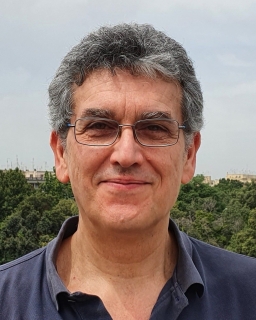
Marco Temperini is a Professor at Sapienza University of Rome's Department of Computer, Control and Management Engineering within the School of Engineering. With a publication record spanning over three decades (1990-2024), he has established himself as a leading researcher in educational technology with particular expertise in artificial intelligence applications for learning systems. His work bridges computer science and pedagogy, focusing on creating intelligent tools that enhance teaching and learning experiences.
Temperini's research interests center on artificial intelligence in education, learning analytics, and intelligent tutoring systems. His work explores how AI technologies, particularly machine learning and natural language processing, can be effectively applied to educational contexts. Recent research has focused on leveraging large language models for educational assessment, developing chatbots for student support, and creating analytics tools for teachers to understand student learning patterns. His approach emphasizes practical implementations that address real educational challenges while maintaining scientific rigor.
Analysis of his recent publications reveals a strong trend toward applying cutting-edge AI technologies to educational problems. His work demonstrates increasing focus on large language models for automated assessment, with particular attention to comparing open-source versus proprietary solutions. He has also maintained consistent research on concept mapping, peer assessment methodologies, and MOOC analytics, showing both depth in specific areas and adaptability to emerging technologies. His research consistently addresses scalability challenges in technology-enhanced learning environments.
Professor Temperini has been actively involved in numerous international conferences including ICALT, ITHET, ITS, and IV, often serving in organizational roles. His collaborative work spans multiple European institutions, with particularly strong connections to the Italian AI and educational technology communities. He has contributed significantly to conference proceedings as both author and organizer, helping shape research directions in educational technology.
His research methodology combines theoretical frameworks from educational psychology with advanced computational techniques. He frequently employs Item Response Theory for assessment validation and applies machine learning approaches to analyze educational data. This interdisciplinary approach has yielded practical tools like Q2A-II for peer assessment and TutorChat for supporting dyslexic learners, demonstrating his commitment to translating research into tangible educational benefits.