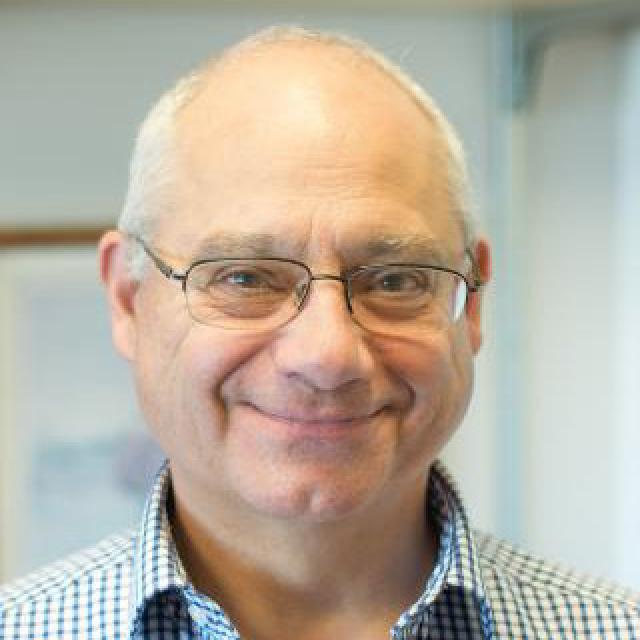
Paul Dellar is a Governing Body Fellow and Tutor in Applied Mathematics at Corpus Christi College, University of Oxford, where he also serves as a University Lecturer in Applied Mathematics. He returned to Oxford in 2007 after previous academic positions including a lectureship at Imperial College London and a Junior Research Fellowship at Corpus Christi College (2001–2004). His educational background includes undergraduate and graduate studies at the University of Cambridge, supplemented by participation in the Woods Hole Summer Study Programme in Geophysical Fluid Dynamics. Dr. Dellar's research spans several interconnected domains: Lattice Boltzmann methods : Developing computational frameworks for fluid dynamics, electromagnetic systems, and quantum applications, with industrial uses in automotive and nuclear engineering. Geophysical fluid dynamics : Deriving improved shallow water equations to model ocean currents (e.g., Antarctic Bottom Water crossing the equator) and atmospheric phenomena on planets like Jupiter. Multiscale modeling : Bridging kinetic theory, magnetohydrodynamics, and active matter systems through novel algorithms. His publications predominantly explore computational innovations in fluid dynamics and plasma physics, with recurring themes of lattice Boltzmann optimizations, conservation properties in geophysical models, and turbulence mechanisms in exotic systems. Recent work shows increasing focus on quantum lattice algorithms and high-precision magnetohydrodynamics solvers. Notable scientific recognition includes: Glasstone Research Fellowship (University of Oxford) He has supervised doctoral candidates such as Andrew Stewart, with whom he co-authored research on Coriolis force modeling in oceanography. Industrial collaborations include study groups addressing challenges like blood flow simulation for surgical stents and wave energy conversion systems.