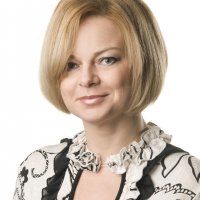
Michaela Bruteničová, PhD, is an Assistant Professor in the Department of Mathematics at Matej Bel University, Banská Bystrica, Slovakia. She teaches undergraduate and graduate mathematics courses and holds consultation hours on Mondays and Wednesdays from 10:00 to 12:00, with advance appointments recommended. Dr. Bruteničová holds a PhD and Master's degree (Mgr.) in Mathematics. Her academic credentials form the foundation for her teaching and scholarly activities within the university's mathematical sciences community. Her research spans core mathematical disciplines including Algebra, Analysis, Geometry, and Probability and Statistics. She applies rigorous theoretical frameworks to solve complex problems across pure and applied mathematics, contributing to both foundational knowledge and practical implementations in quantitative fields. Dr. Bruteničová actively mentors undergraduate and graduate students in mathematical sciences. Contact her directly via email at michaela.brutenicova@umb.sk or telephone at +421 48 446 7240 for academic inquiries or research collaboration opportunities.
Lenka Sokolová is a Professor at the Faculty of Social and Economic Sciences , Comenius University in Bratislava, with a focus on Educational Psychology and School Psychology . Her career spans teaching, research, and leadership in promoting well-being and inclusive education. PhD in Educational Psychology (2006, Comenius University) doc. (2019) and prof. (2025) degrees in Educational Psychology (Charles University, Czech Republic) Her research bridges educational psychology , mental health , and teacher training , with recent work on neurodiversity, social support systems, and pandemic-era teaching adaptations. She leads the STRAWS project (funded by UK’s Arts and Humanities Research Council) and contributes to European psychology education frameworks. Key article trends include: Adolescent mental health and social inclusion Teacher resilience and classroom dynamics Neurodivergent student support Cross-cultural psychology education Technology integration in psychology teaching Preventive psychological interventions Scientific contributions include: President of the European Federation of Psychology Teachers’ Associations (2019-2022) Board member of EFPA Educational Affairs (2017-2023) International conference leadership (EARLI, Coalition of Schools for Mental Health) She mentors through continuing professional development courses and collaborates globally, including Erasmus+ mobility programs and Monash University’s Visiting Scholar initiative. Her work emphasizes participatory research and qualitative methodologies.
Patrik Voštinár is an Assistant Professor at the Department of Computer Science , Faculty of Natural Sciences , Matej Bel University . Holding a PhD in Applied Computer Science from the same university (2014-2017), he teaches courses in Programming , Discrete Mathematics , Web Technologies , and Android Programming . As department head and study advisor, he actively shapes academic programs and student experiences. Matej Bel University (2017-present) Department of Computer Science Faculty of Natural Sciences His research focuses on computer science education and educational technology , with particular emphasis on: VR/AR applications in teaching Game-based learning environments Microcontroller programming pedagogy Mobile application development education Physical computing tools for K-12 Adaptive learning interfaces His work with MakeCode , micro:bit , and EEG-controlled games demonstrates innovative approaches to programming education. He has received multiple eLearning competition awards for educational courseware development. Heart on the palm (Project of the year 2019) 2nd price in eLearning competition (2023) for Discrete Mathematics course Price of České společnosti pro systémovou integraci (2023) for Web Technologies 1st price in eLearning competition (2023) for Geometry Didactics Voštinár actively contributes to academic communities through: Membership in DIDINFO conference program (since 2017) Editorial Board member of Elementary Mathematics Education Journal Organizing workshops for primary/secondary students Popularizing informatics through extracurricular programs
Dr. Silvia Tóbiás Kosár serves as an Associate Professor in the Department of Economics and Management at the Faculty of Economics and Informatics, J. Selye University. With over a decade of academic experience since joining the university in 2009, she has established herself as a prominent researcher in management and knowledge management fields. Education: PhD in Regional and Social Sciences, Széchenyi István University (2010-2017) Examina rigorosa in Management, J. Selye University Faculty of Economics (2009-2012) Master's in Business Management, J. Selye University Faculty of Economics (2007-2009) Undergraduate in Business Economics and Management, J. Selye University Faculty of Economics (2004-2007) Dr. Tóbiás Kosár's research spans management theory and practice with particular emphasis on knowledge management, corporate culture, and innovative educational approaches. Her scholarly work demonstrates how management practices intersect with generational workforce dynamics, technological advancements, and educational methodologies. She has made significant contributions to understanding knowledge sharing mechanisms in service organizations, the application of gamification in higher education, and the evolving relationship between Generation Z and the labor market. Her publication record includes 67 scholarly outputs with 80 citations, reflecting substantial academic impact. Her recent work shows a clear trajectory toward examining the intersection of traditional management practices with digital transformation and contemporary educational technologies. Her research appears in reputable international journals and conference proceedings, with particular strength in economics and management publications indexed in Web of Science and Scopus databases. As an active academic, Dr. Tóbiás Kosár has participated in numerous international research collaborations and scholarly conferences across Central Europe, contributing to the advancement of management science through both theoretical and applied research.
Szilárd Svitek is Assistant Professor and Head of the Department of Mathematics at the Faculty of Economics and Informatics, J. Selye University , Komárno, Slovakia. Holding a PhD in the Theory of Mathematics and Informatics Education, he has continuously served the university since 2018, leading curriculum development and research initiatives while lecturing in both Slovak and Hungarian. Education 2012–2015: Teaching of German Language & Literature and Mathematics – Faculty of Education, J. Selye University 2015–2017: Master’s continuation in the same programme – Faculty of Education, J. Selye University 2020–2024: PhD in Theory of Teaching Mathematics and Informatics – Faculty of Economics and Informatics, J. Selye University Research Focus His scholarly work straddles pure mathematics and mathematics education . In pure mathematics he investigates densities, distribution and convergence properties of numerical sequences, while in education he explores digital distance learning, comparative competences of Slovak and Hungarian secondary students, and innovative didactic methods including visualization and open-ended problem solving. Publications & Impact Since 2021 he has authored or co-authored 20 scholarly outputs indexed in Web of Science Core Collection, Scopus and Current Contents Connect, accruing 19 citations (10 without self-citations). His works appear in journals such as Mathematics (MDPI), Journal of Humanistic Mathematics and Annales Mathematicae et Informaticae . Grants & Projects VEGA 1/0663/19 (2019–2021): Analysis of science & mathematics education in secondary schools and innovation of subject-didactic content VEGA 1/0386/21 (2021–2023): Reasons for student success/failure in mathematics with emphasis on electronic distance education VEGA 1/0776/21 (2021–2023): Densities, distribution and convergence properties of number sequences Department Leadership & Collaboration As Head of the Department of Mathematics, he coordinates curriculum design, supervises junior colleagues and fosters international cooperation, notably through Erasmus+ partnerships and cross-border Slovak–Hungarian educational projects.
Rastislav Podhorský is an Associate Professor and Studio Manager at the Department of Painting within the Academy of Fine Arts in Bratislava . He specializes in visual arts, with a focus on contemporary painting, installation art, and cultural context. Exhibitions (2012–2025): Notable works include The Possibilities of the Palm (2025) and Elegy, As It Stands (2025), exploring themes of cultural narratives, emotional expression, and spatial dynamics. Research Trends: His practice integrates experimental painting techniques, interdisciplinary collaboration, and critical engagement with historical and contemporary art theory. Contact: Email podhorsky@vsvu.sk for inquiries.
Péter Tóth is a Professor at the Educational Science Department of the Teacher Training Faculty at Selye János University, where he has been serving since 2017. Previously, he held a professorship at Óbudai Egyetem from 1994 to 2019. His academic credentials include: Mechanical Engineer from Budapest University of Technology (1987-1991) Mechanical Engineering Teacher from Bánki Donát Technical College (1980-1984) PhD in Educational Science Research from Eötvös Loránd University (2000-2005) Habilitation in Educational Sciences from Eötvös Loránd University (2012) Professorial inauguration in Educational Science at Óbudai Egyetem (2016) Professor Tóth's research focuses on educational science with emphasis on problem-based learning, learning strategies and styles, measurement of visual abilities, electronic learning materials evaluation, minority pedagogy, and historical educational research related to vocational training and STEM education. His work bridges theoretical educational frameworks with practical applications in engineering and vocational contexts. His publication record reveals a consistent trajectory in engineering education research, with recent work examining cognitive processes like analogical and inductive reasoning among engineering students. He has pioneered the application of web mining techniques to analyze student behavior in virtual learning environments, contributing significantly to learning analytics. His research frequently explores the intersection of technology and pedagogy, particularly how digital tools can enhance personalized learning experiences. Professional recognition includes: Member of the Hungarian Academy of Sciences (since 2005) Editor-in-chief of Acta Polytechnica Hungarica (2009-2019) Co-chair of the Global Colloquium on Engineering Education (2009) He leads multiple research initiatives including two VEGA projects, participates in Horizon 2020 and Erasmus+ projects, and serves as program head for History Didactics and the common foundation of teacher training at Selye János University. As co-leader of the Ratio research group and member of the university's Scientific Council, he continues to shape educational research directions. His involvement with the ELTE Educational Science Doctoral School since 2011 demonstrates his commitment to mentoring the next generation of educational researchers.
Davide Crippa is a Researcher at the Institute of Philosophy of the Czech Academy of Sciences, where he serves as Principal Investigator for the project LQ300092401 "Unlocking mathematics: Teaching and learning practices in the Habsburg lands: 1750s-early 1800s" funded by the Czech Academy of Sciences. His work focuses on the history and sociology of mathematics with particular emphasis on mathematical education practices and knowledge circulation during the early modern period. Dr. Crippa received his PhD in 2014 from the University of Paris Diderot (Paris 7) with a dissertation titled "Impossibility Results from Geometry to Analysis." He is the author of the book "The Impossibility of Squaring the Circle in the 17th Century" published by Birkhauser in 2019, and has edited significant works including "The Algebrization of Mathematics during the 17th and 18th Centuries. Dwarfs and Giants, Centres and Peripheries" (2024). His research explores the transmission and transformation of mathematical knowledge across geographical and institutional boundaries, with special attention to Central Europe and the Habsburg lands. Dr. Crippa investigates how mathematical ideas were taught, practiced, and documented in historical contexts, examining textbooks, examination practices, and institutional frameworks that shaped mathematical education. His work reveals the complex interplay between mathematical theory and pedagogical practice in historical settings. Dr. Crippa's publications demonstrate a consistent focus on mathematical practices during the 17th-19th centuries, with particular expertise in geometric problem-solving, algebraic methods, and educational practices. His recent work examines Latin mathematical compendia from 18th century Prague, Christian Wolff's mathematical methodology, and the algebrization of mathematics across European centers and peripheries. As Principal Investigator of his current project, Dr. Crippa leads research investigating mathematical education practices in the Habsburg Empire during the long 18th century. His work has been supported by multiple grants from the Czech Science Foundation (GA ČR) and the Czech Academy of Sciences, reflecting the significance of his contributions to understanding historical mathematical practices in Central Europe.
Tünde Berta is a Lecturer at the Department of Pre-school and Elementary Education within the Faculty of Education at J. Selye University in Komárno, Slovakia. She has been employed at the university since 2004 and is currently pursuing her PhD in Pedagogy at J. Selye University (2024-). Her academic background includes a degree in Mathematics-Informatics from Comenius University's Faculty of Mathematics and Physics (1994-2000). Dr. Berta's educational journey began with her university studies in Mathematics-Informatics at Comenius University, followed by her current doctoral studies in Pedagogy at J. Selye University. Her professional development reflects a strong commitment to advancing educational practices, particularly in mathematics instruction and teacher development. Her research interests focus primarily on mathematics teaching methodology, with special emphasis on cooperative techniques and project methods in mathematics education. She has extensively explored continuing teacher education, adult education possibilities, teacher mentoring and its impact on classroom quality, and inclusive education approaches. Her work demonstrates a consistent dedication to improving teaching practices through evidence-based methodologies and innovative approaches that address the diverse needs of students in primary education settings. Analysis of Dr. Berta's publication record reveals a strong focus on practical applications of educational theory in mathematics instruction. Her recent work (2021-2024) shows increasing attention to teacher development, assessment methods, and the integration of technology in education. She frequently collaborates with colleagues like Zuzana Árki and Ladislav Jaruska, indicating active participation in research teams focused on improving mathematics education. Her publications span multiple languages (English, Hungarian, Slovak), reflecting her work within the Hungarian minority educational context in Slovakia. Her publications have received 5 citations according to institutional records 2 citations registered in citation indexes (Web of Science, Scopus) 3 citations in other databases Dr. Berta has been actively involved in developing educational materials and textbooks, including two versions of 'Project Teaching in School' (2022) in both Slovak and Hungarian. Her research often addresses the specific needs of Hungarian-speaking communities in Slovakia, particularly in the context of mathematics education and teacher development. She has participated in numerous international conferences, demonstrating her commitment to sharing knowledge across borders and engaging with the broader educational research community. Her work on cyberbullying during the pandemic period shows responsiveness to contemporary educational challenges.
Sándor Szénási is a Professor at the Department of Informatics within the Faculty of Economics and Informatics at J. Selye University, where he serves as the person responsible for the Applied Informatics study program. With over two decades of academic experience, he has established himself as a leading researcher in parallel programming, GPU programming, and image processing, with recent expansion into machine learning applications. Eötvös Loránd University, Faculty of Science and Informatics (2001-2004): Information technology teacher Budapest Polytechnic, John von Neumann Faculty of Information Technology (1997-2001): B. Engineer in Information Technology Óbuda University (2010-2013): PhD in Applied Informatics Habilitation at Óbuda University (2019): Information Science and Technology Professor inauguration at Óbuda University (2022) Szénási's research spans computational methods with practical applications across multiple domains. His early work focused on parallel and GPU programming for image segmentation and heat transfer simulation. More recently, he has integrated machine learning techniques with traditional computational approaches, particularly in metaheuristic optimization, speech processing, and inverse problem solving. His interdisciplinary research bridges computer science with transportation safety, manufacturing, and medical applications. His recent publications reveal a clear evolution toward hybrid computational approaches that combine machine learning with traditional algorithms. There is a strong emphasis on optimization techniques, particularly metaheuristics enhanced with machine learning components. His work spans diverse application areas including speech emotion recognition, autonomous vehicle control, additive manufacturing, and heat transfer simulation, while maintaining a core focus on computational efficiency and parallel processing. Szénási has been actively involved in multiple EFOP-funded research projects including 'Improvement of higher education institutes for better teaching quality and accessibility,' 'Dynamics and control of autonomous vehicles,' and 'Solving the Inverse Heat Conduction Problem with Machine Learning.' His collaborative work with researchers like Gábor Kertész, Zoltán Vámossy, and Imre Felde demonstrates his commitment to interdisciplinary research.
Andrea Furková serves as Associate Professor at the Department of Operations Research and Econometrics within the Faculty of Economic Informatics at the University of Economics in Bratislava. Her academic career spans over two decades, beginning as an Assistant Professor in 2003 before advancing to her current position in 2018. She maintains active roles in university governance as Member and Secretary of the Sub-Departmental Committee 3.2 Data Science in Economics. Her research focuses on spatial econometrics and regional development within the European Union context, with particular expertise in spatial heterogeneity, innovation processes, and employment dynamics. Key methodologies include MGWR-SAR models, spatial autoregressive techniques, and multi-criteria decision analysis. Her work consistently addresses EU regional disparities, innovation spillovers, and convergence patterns across member states. Analysis of her publication record reveals a strong concentration on spatial econometric modeling of EU regional phenomena, with recent work emphasizing local particularities in innovation processes (2022), semiparametric approaches to unemployment patterns (2024), and spatial spillover effects in employment (2023). Her research demonstrates consistent methodological evolution from basic spatial models toward advanced multiscale techniques. Professor Furková actively supervises doctoral candidates, including current PhD student Peter Knížat whose research examines spatial effects in regional innovation activities. She has guided 22 bachelor's and 37 master's theses throughout her career, reflecting substantial teaching engagement in operations research and econometrics. Her international research mobility includes Erasmus stays at ISCTE Lisbon (2014), University of Akureyri (2012), and recent research visits to University of Las Palmas de Gran Canaria (2022) and College of Polytechnics Jihlava (2022), demonstrating active European scholarly collaboration.
Allan Jose Sequeira Lopez is an Assistant Professor at the Department of Romance and Slavic Languages within the Faculty of Applied Languages at the University of Economics in Bratislava. His academic career spans teaching, research, and international collaboration. PhD in Economics and Management (2021) MSc in Quantitative Methods in Economics (2015) Research Interests : Lopez specializes in Game Theory , applying multi-criteria decision-making models to Spatial Competition and economic policy. His work explores regulatory interventions, bimatrix games, and evolutionary algorithms in economic contexts. Scientific Contributions : His research includes 2 WoS/Scopus-registered outputs and participation in VEGA projects like 1/0351/17 and 1/0427/20 , focusing on game-theoretic applications for economic problems in Slovakia. International Engagement : He has conducted lectures and research at institutions including Masaryk University (Brno), University of Las Palmas de Gran Canaria, and Jihlava Polytechnic University, emphasizing cross-border academic exchange.
prof. Ing. Viliam Bárek, CSc. is a Professor at the Slovak University of Agriculture in Nitra within the Faculty of Horticulture and Landscape Engineering. He is actively affiliated with the Department of Landscape Engineering and maintains his office at ZM_1_2.08 with contact information including work phone +421 37 641 5236 and university email viliam.barek@uniag.sk. Professor Bárek specializes in Irrigation Engineering and Landscape Management , with research spanning practical applications for agricultural and recreational landscapes. His expertise encompasses drip irrigation systems, soil moisture monitoring, temperature management in orchards, and water conservation techniques for sports facilities. He has consistently bridged theoretical engineering principles with real-world landscape maintenance challenges throughout his career. His supervision of 56 theses from 2011-2025 reveals a clear research trajectory focused on optimizing water resources under economic constraints. Recent works emphasize climate-responsive irrigation management and alternative water solutions, reflecting evolving industry needs. The consistent theme across these projects is developing cost-effective irrigation systems that maintain quality playing surfaces for sports facilities while addressing water conservation concerns. Professor Bárek maintains regular consultation hours during the summer semester every Monday from 8:00 a.m. to 10:00 a.m. for thesis students. His academic mentorship has produced professionals working across landscape engineering sectors, with thesis topics ranging from golf course irrigation to orchard management systems, demonstrating his commitment to applied research that solves practical landscape engineering problems.
RNDr. Lucia Csachová, PhD, is an Associate Professor at the Department of Mathematics, Catholic University in Ružomberok. She serves as a Pedagogical Practice Methodologist for Mathematics Teachers and a Study Advisor for Mathematics students. Her work focuses on mathematics education, problem-solving methodologies, and visual learning. Current roles: Associate Professor, Pedagogical Practice Methodologist, Study Advisor Department: Mathematics Contact: lucia.csachova@ku.sk Research Interests: Csachová specializes in mathematics education, with emphasis on problem-solving strategies, visual learning in geometry, and statistical literacy. She explores interdisciplinary connections (e.g., folk art and geometry) and analyzes cognitive challenges in mathematical understanding. Article Trends: Her publications (2018–2023) highlight: Problem-solving in Slovak educational assessments Visual representation challenges in geometry Statistical literacy in secondary education Integration of folk art into mathematical teaching Remote teaching adaptations during the pandemic Advising & Consultation: Csachová offers consulting hours for students and maintains active involvement in mathematics teacher training.
Kinga Horváth is a Professor and Dean of the Faculty of Education at J. Selye University in Komárno, Slovakia. She holds academic qualifications including a PhD from Comenius University and habilitation from the University of Pécs. Her career spans over three decades, with roles progressing from primary school teacher to university dean. She leads research in educational systems, teacher identity, and minority education. Education: Primary School Teacher Training (Comenius University, 1989–1993) PhD in Pedagogy (Comenius University, 1997–1999) Examina Rigorosa in Pedagogy (Comenius University, 1999–2000) Habilitation in Pedagogy (University of Pécs, 2015) Research Focus: Investigates teacher identity in social contexts, pedagogical communication dynamics, early school leaving phenomena, and educational systems' theoretical foundations. Recent work emphasizes minority education strategies and digital assessment methods. Awards: Multiple rector awards (2018, 2021, 2023) and recognition from the Hungarian Pedagogues Union (2023) for promoting Hungarian-language education. Projects: Leads EU-funded initiatives like Erasmus+ OKTÁV (2024–2026) and coordinates research on Slovak as a second language in teacher training. Active in KEGA/VEGA grants focusing on creativity in education and minority education strategies.