معرفی
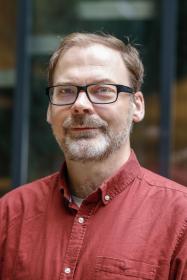
Davide Crippa is a Researcher at the Institute of Philosophy of the Czech Academy of Sciences, where he serves as Principal Investigator for the project LQ300092401 "Unlocking mathematics: Teaching and learning practices in the Habsburg lands: 1750s-early 1800s" funded by the Czech Academy of Sciences. His work focuses on the history and sociology of mathematics with particular emphasis on mathematical education practices and knowledge circulation during the early modern period.
Dr. Crippa received his PhD in 2014 from the University of Paris Diderot (Paris 7) with a dissertation titled "Impossibility Results from Geometry to Analysis." He is the author of the book "The Impossibility of Squaring the Circle in the 17th Century" published by Birkhauser in 2019, and has edited significant works including "The Algebrization of Mathematics during the 17th and 18th Centuries. Dwarfs and Giants, Centres and Peripheries" (2024).
His research explores the transmission and transformation of mathematical knowledge across geographical and institutional boundaries, with special attention to Central Europe and the Habsburg lands. Dr. Crippa investigates how mathematical ideas were taught, practiced, and documented in historical contexts, examining textbooks, examination practices, and institutional frameworks that shaped mathematical education. His work reveals the complex interplay between mathematical theory and pedagogical practice in historical settings.
Dr. Crippa's publications demonstrate a consistent focus on mathematical practices during the 17th-19th centuries, with particular expertise in geometric problem-solving, algebraic methods, and educational practices. His recent work examines Latin mathematical compendia from 18th century Prague, Christian Wolff's mathematical methodology, and the algebrization of mathematics across European centers and peripheries.
As Principal Investigator of his current project, Dr. Crippa leads research investigating mathematical education practices in the Habsburg Empire during the long 18th century. His work has been supported by multiple grants from the Czech Science Foundation (GA ČR) and the Czech Academy of Sciences, reflecting the significance of his contributions to understanding historical mathematical practices in Central Europe.