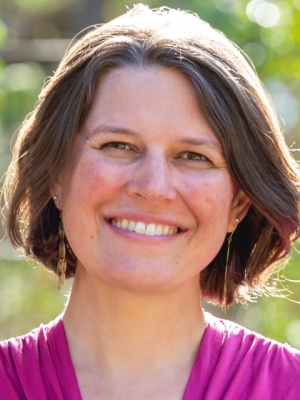
Mollie Chapman is a Lecturer at the Department of Environmental Systems Science, ETH Zurich, where she leads the Environmental Values and Food System Transformation group in TdLab. She holds a B.A. (2006) in Anthropological Sciences from Stanford University, a M.Sc. (2012) in Sustainable Development from the University of Basel, and a Ph.D. (2017) in Resource Management and Environmental Studies from the University of British Columbia. Her research focuses on sustainability transformations, emphasizing inter- and transdisciplinary collaboration between academic and civil society groups. Key areas include food systems, farmer motivations, ecological restoration, and the role of cultural values in shaping human-nature relationships. Chapman’s work bridges social sciences, natural sciences, and humanities to address systemic sustainability challenges. She explores how plural value concepts—especially relational values—can foster inclusive environmental policies while maintaining place-specific meanings. Recent projects examine the socio-cultural dynamics of community supported agriculture and the potential of social media influencers to drive sustainability behaviors, while also critiquing platform limitations. She advocates for methodologies that prioritize creativity and reflexivity in sustainability science. Her publications in 2025 emphasize innovative approaches to sustainability communication and policy, including leveraging social media’s influence and refining transdisciplinary values frameworks. Earlier work (2023–2021) highlights collaborations on cultural dimensions in land use and participatory models in agriculture. Though no formal awards are listed, her contributions reflect a commitment to advancing transformative sustainability practices through rigorous, context-sensitive research. While Chapman does not list formal advisees, her academic roles and publications indicate active involvement in mentoring transdisciplinary research initiatives. TdLab, her affiliated team, serves as a hub for integrating diverse perspectives to tackle complex environmental challenges.