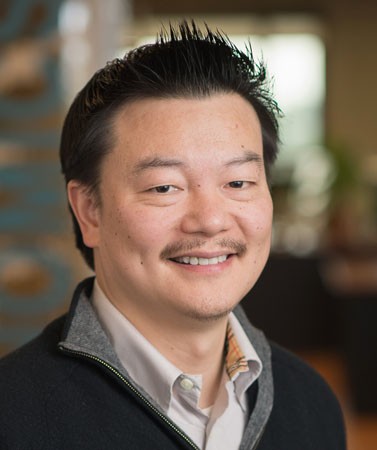
Li Hao is a Professor at the Vancouver School of Economics , part of the Faculty of Arts at the University of British Columbia . His research focuses on microeconomic theory , game theory , contract theory , and decision-making under uncertainty . He earned his Ph.D. from the University of Chicago , USA. His work explores: Committee Decision-Making : Strategic delays, deadlines, and information aggregation in repeated voting games. Matching Markets : Sorting dynamics, early contracting rushes, and price competition in two-sided markets. Information Economics : Signaling, credible ratings, and optimal information disclosure in financial and labor markets. Recent publications analyze deadline effects (2012), organizational sorting (2010), dynamic incentives in sports (2009), and rating agency efficiency (2008). Key themes include equilibrium strategies, incentive compatibility, and market design. He is affiliated with UBC's Iona Building 201C and maintains a personal website for CV and publications.
Professor Paul G A Hickman is a leading academic in Housing and Social Policy at Sheffield Hallam University's Department of Psychology, Sociology and Politics. He holds dual roles as Departmental Research Lead and Co-Director of the Sheffield Institute for Policy Studies. His career includes prior affiliation with the Centre for Regional Economic and Social Research (CRESR) before joining the current institution in 2015. Education: BSc (Hons), MPhil (Cantab), PhD. Research focuses on tenancy sustainment in social housing, welfare reform impacts (including Universal Credit), Housing Benefit analysis, and resilience to economic hardship. Key projects include the Nuffield Foundation-funded 'Holding on to Home' study addressing rent arrears dynamics, and contributions to the ESRC/AHRC-funded Collaborative Centre for Housing Evidence (CaCHE). His work often employs mixed-methods approaches involving stakeholders like tenant steering groups and policy advisory panels. Publications span over 20 peer-reviewed articles and 60 research reports in journals like Housing Studies and Social Policy and Society . He has led major studies for funders including Joseph Rowntree Foundation, Department for Work and Pensions, and Northern Ireland Housing Executive. Advisory roles include supervising nine completed PhD students and currently guiding four more. His professional service includes four years as Chair of the Housing Studies Association. Research collaborations involve institutions like the Chartered Institute of Housing and Qa Research. Labs/Teams: Active in Sheffield Institute for Social Sciences and Social and Economic Research Institute, leading interdisciplinary teams on housing policy and urban regeneration initiatives.
Ellen M. Bassett is the John Portman Chair and Dean of the Georgia Tech College of Design. Previously, she served as Professor and Chair of the Department of Urban and Environmental Planning at the University of Virginia’s School of Architecture, alongside roles as Associate Dean of Research and Director of the Real Estate + Design and Development program. She has held leadership positions including Chair of the UVA Faculty Senate and faculty representative to the Board of Visitors. Her academic background includes a Ph.D. in Urban and Regional Planning from the University of Wisconsin-Madison, with minors in Environmental Studies and History. She also holds an M.A. in History, an M.S. in Urban Planning, and a B.A. in History and Political Science from the University of Michigan. Bassett’s research focuses on land use planning, climate change adaptation, health in urban settings, and international development, with a special emphasis on cities in the Global South. Her work bridges academic research and practical policy, including consulting for international development agencies in Sub-Saharan Africa. Key themes include land governance reforms, equitable urbanization, and sustainable community development. Her recent publications address land rights in Kenya, climate resilience in U.S. cities, and the governance of public spaces. She has pioneered studies on homelessness management in public infrastructure contexts and community land trusts in African urbanization contexts. Bassett’s leadership roles reflect her commitment to interdisciplinary academic programs and institutional governance. Her work integrates policy analysis, spatial planning, and socio-cultural dimensions of urban challenges.
Francisco Nobre is a Postdoctoral Research Associate at Aston Business School and University of Bristol, and a Teaching Assistant at Royal Holloway University of London. He holds a PhD in Economics from the University of Surrey (UK), an MSc from Queen Mary University of London, and a BSc from the University of Coimbra (Portugal). His work focuses on Urban Economics, Economic Geography, and Economics of Crime. In 2023, he was a visiting researcher at Uppsala University's Urban Lab. Education: PhD in Economics, University of Surrey (2019–Present) MSc in Economics, Queen Mary University of London (2016–2017) BSc in Economics, University of Coimbra (2013–2016) Research Interests: His research explores urban spatial dynamics, including the impacts of short-term rentals, gambling harms, and the role of private provision of public goods. Recent projects include analyzing housing market responses to Business Improvement Districts and evaluating gambling venue effects on communities. Recent Work Trends: His articles address contemporary urban challenges, such as the economic footprint of tourism-driven rentals and policy design for mitigating negative externalities from gambling venues. Awards: Fellow of the Higher Education Academy (202X) Advising & Grants: Co-leads the project 'Bad Neighbours: Gambling Venues and Harms' with Dr. Anastasios Kitsos and Prof. Emmanouil Tranos. Active in EU policy discussions via collaboration with Portuguese national authorities. Labs/Teams: Collaborates with the Urban Lab at Uppsala University and the interdisciplinary team at the University of Bristol's Urban Studies group.
Zena Lynch is a Senior Lecturer and Honorary Associate Professor at the University of Birmingham's School of Geography, Earth and Environmental Sciences, where she leads the MSc Environmental Health and Public and Environmental Health Science programmes. Her academic career includes roles as a Health Policy lead in the West Midlands and a practitioner in Environmental Health departments. She specializes in housing's impact on health, particularly focusing on the consequences of poor and insecure housing conditions. Education includes a BSc in Environmental Health and an MA in Environmental Management. She holds professional credentials such as Chartered Membership of the Chartered Institute of Environmental Health (CIEH) and Senior Fellowship of the Higher Education Authority (SFHEA). Research interests revolve around housing policy, occupational safety, and pandemic response. Recent work includes analyzing mobile crane accidents in South Korea, the role of environmental health practitioners during the COVID-19 pandemic, and studentification's impact on wellbeing. Her 2023 publications explore AI's role in environmental health education and student living conditions in private rented sectors. Awards: FCIEH, SFHEA Professional Affiliations: CIEH Housing Advisory Group (since 2016), CIEH Learning Advisory Group (2017–present), Environmental Health Research Network (EHRNet) Teaching responsibilities include Occupational Health and Safety, undergraduate Geography courses, and contributions to the College of Medical and Dental Sciences. She chairs the Environmental Pollution group's teaching initiatives.
Dr Michael Marshall is a Research Associate at the School of Geography and Planning, University of Sheffield . His work focuses on housing policy, decarbonisation of the built environment, and the application of quantitative methods and GIS in social sciences. He previously worked at the UK Collaborative Centre for Housing Evidence (CaCHE) and brings practitioner experience in social housing to his research. Current role: Research Associate in Quantitative Analysis and GIS Previous role: Researcher at the UK Collaborative Centre for Housing Evidence (CaCHE) Email: michael.marshall@sheffield.ac.uk Research Interests: Marshall explores two intertwined research strands: (1) housing dynamics including financialisation of housing associations, housing insecurity, and governance of social housing; and (2) decarbonisation of construction and maintenance in the built environment. His work bridges theoretical inquiry with policy-relevant applications, particularly in evaluating grant impacts on housing supply and post-disaster regulatory reforms. Publications Trends: His work spans 2021-2025, combining quantitative housing policy analysis (e.g., quasi-experimental studies on grant effectiveness) with spatial analysis using GIS. Topics include social housing regulation post-Grenfell, pandemic-related conspiracy theories, and decarbonisation challenges at scale. Teaching Focus: He contributes expertise in Quantitative Analysis , Geographic Information Systems (GIS) , and Housing to academic instruction.
Paulo Bastos is an Associate Professor at the Lisbon School of Economics and Management (ISEG), Universidade de Lisboa, and a Research Fellow at the Center for Economic Policy Research (CEPR) in London. He is also a member of UECE-REM, a research unit within ISEG. His work bridges international economics, development economics, and labor markets with a focus on global trade dynamics and firm behavior. Education: Ph.D. in Economics, University of Nottingham (2007) M.Sc. in Economics, University of Minho (2003) Licenciatura in Economics, University of Porto (2000) His research explores how trade liberalization, technological change, and institutional frameworks affect economic outcomes. Key areas include globalization's impact on wage inequality, firm dynamics in response to trade shocks, and the role of resource rents in local development. Recent work examines automation, cross-border acquisitions, and educational interventions in developing economies. Publications span top journals like the American Economic Review , Journal of International Economics , and World Development , with methodologies ranging from firm-level data analysis to regression-discontinuity designs. His work addresses both theoretical and policy-relevant questions, such as the economic implications of China's trade shocks and the effectiveness of trade liberalization in South Africa. Scientific Awards: GEP/ESRC Post-doctoral Research Fellow (2007) He has held significant roles at the World Bank (2013–2019) and Inter-American Development Bank (2009–2012), contributing to development research. His teaching includes courses on International Economics and World Business Environment at the graduate level, reflecting his expertise in global economic policy.
Jeroen Neckebrouk is an Associate Professor of Entrepreneurship at IESE Business School. He holds a PhD in Business Economics from Vlerick Business School and Ghent University, alongside multiple MSc degrees in Business Economics, Industrial Management, and Civil Engineering. His research integrates entrepreneurship, family business governance, and private equity dynamics. PhD in Business Economics (Vlerick Business School, Ghent University) MSc in Industrial Management, Business Economics, and Civil Engineering (Ghent University) His work addresses board governance in private firms, negotiation strategies in family businesses, and stakeholder value creation. He explores how governance structures enhance entrepreneurial decision-making and employee retention, with a focus on economic and noneconomic goal alignment. His refereed publications appear in top-tier journals like the Academy of Management Journal , Strategic Management Journal , and Journal of Business Venturing , reflecting interdisciplinary trends in strategic entrepreneurship and human capital optimization. Family Firm Institute (FFI) award for business practice impact BVA Private Equity and Venture Capital Association (BVA) award At IESE, he teaches entrepreneurship and governance across Master’s, MBA, Executive MBA, and PhD programs. He previously worked as a telecommunications consultant and co-founded a corporate acquisition platform, bridging academic insights with industry experience.
Katie Morris is a Lecturer in Property Law at Lancaster University’s Law School, affiliated with the Faculty of Arts and Social Sciences (FASS). She holds a PhD in International Human Rights Law from Durham University, an LLM in International Development Law and Human Rights from the University of Warwick, and a Law LLB from Durham University. She is also an Associate Fellow of the Higher Education Association (AFHEA). Her research focuses on International Human Rights Law with particular emphasis on economic and social rights, including the right to food, right to housing, and care ethics. She explores these themes through lenses such as human rights cities, structural inequalities, and marginalized communities. Recent work addresses the UK student housing crisis, cultural dimensions of food security, and integrating care ethics into legal frameworks. Teaching responsibilities include Land Law, International Law, and Equity and Trusts Law. She serves as Year Tutor for Year 2 students and Academic Advisor. Morris actively engages with policy consultations (e.g., Scotland’s Right to Food Bill) and parliamentary discussions on housing insecurity and food inequality. She is a member of organizations like the Socio-Legal Studies Association and Economic and Social Rights Academic Network (UK & Ireland). Her 2025 publications analyze care ethics’ role in socioeconomic rights, normative gaps in food rights frameworks, and the UK student housing crisis through ICESCR principles. These works highlight intersections between legal theory and real-world policy challenges.
Haekwon Lee is a Senior Lecturer in Finance at the University of Sydney, appointed since 2018. He holds a PhD in Finance from the University at Buffalo, alongside a Master of Arts in Economics and a Bachelor of Arts in International Trade from Kyung Hee University. His research focuses on empirical corporate finance, particularly corporate debt structure and lending contract design. Key areas include the impact of disclosure costs on private vs. public debt financing, lender reactions to corporate misconduct, and the role of bilateral investment treaties (BITs) in mitigating political risks in cross-border lending. Haekwon has published in top journals such as the Journal of Financial and Quantitative Analysis and Journal of Banking & Finance , and his work has been presented globally at conferences like the European Financial Management Association and Financial Management Association. He currently advises Stephen FAN on a project titled 'Three Essays on Shadow Banking.' His 2024 grant, 'Limited Access to Labor Markets and Incentives to Form R&D Alliances,' explores strategic R&D partnerships in constrained labor markets.
Nigel De Noronha is a Researcher at the Cathie Marsh Institute for Social Research at the University of Manchester , specializing in housing, race, migration, and social inequality. With a PhD completed in 2016, he has taught at Warwick and Nottingham Universities before transitioning to research roles. His methodological expertise includes quantitative analysis of census data, social surveys, administrative records, and archival collections. His research explores intersections of racial capitalism , housing market dynamics, and urban justice. Key themes include financialization of housing, structural disadvantage, and policy responses to ethnic inequalities. He actively contributes to the Manchester Social Housing Commission and collaborates across disciplines to address socio-spatial inequalities. Professional affiliations include membership in the Royal Geographical Society and the British Sociological Association . While his academic output focuses on housing and race, his work aligns with UN Sustainable Development Goals related to reduced inequalities and sustainable cities.
Matthew B. Anderson is a Professor and Director of the Urban and Regional Planning Program at Eastern Washington University. He holds a PhD in Geography from the University of Illinois at Urbana-Champaign and a Master’s in Geography and Environmental Studies from Northeastern Illinois University. His expertise spans urban governance, gentrification, water resource management, critical social theory, homelessness, and housing affordability. He teaches courses such as PLAN 100: The City and PLAN 501: Planning Foundations, emphasizing sustainable communities and planning methodologies. Dr. Anderson’s research critically examines neoliberal urban dynamics, including the political economy of water provision, class monopoly rent mechanisms, and spatial management of urban crises. His work bridges theoretical frameworks with applied urban policy analysis. His publications explore topics like urban sustainability fixes, homelessness solutions, and the role of private-sector coalitions in shaping urban spaces. While no formal awards are listed, his contributions to critical urban studies and pedagogy reflect his commitment to addressing systemic inequities in urban development. Anderson advises students in the Urban and Regional Planning program, focusing on preparing future planners to navigate complex socio-spatial challenges. Collaborations with interdisciplinary teams and community stakeholders underpin his approach to actionable research.
Julie Roin is a Professor at the University of Chicago Law School, where she has established herself as a leading scholar in tax law and policy. Her work spans multiple dimensions of taxation, with particular expertise in income tax, international taxation, state and local tax systems, and constitutional tax issues. As evidenced by her substantial scholarly output and participation in high-profile amicus briefs before the Supreme Court, Professor Roin plays an active role in shaping contemporary tax policy debates. Professor Roin's research interests focus on the structural complexities of tax systems across multiple jurisdictions. Her work examines how tax policies create incentives and distortions in economic behavior, with particular attention to issues of tax competition between states, international tax coordination challenges, and the constitutional limitations on taxation. She has made significant contributions to understanding tax expenditures, realization principles in income taxation, and the implications of tax boundary effects across geographic and political jurisdictions. Her scholarship often bridges theoretical economic analysis with practical legal and policy considerations, providing insights valuable to both academics and policymakers. Analysis of Professor Roin's publication history reveals a consistent focus on the intersection of tax law with constitutional principles and economic theory. Her work demonstrates growing engagement with international tax issues in recent years, alongside continued attention to state and local tax systems. The evolution of her scholarship shows increasing attention to the temporal dimensions of taxation, particularly regarding the realization principle and timing distortions in the income tax system. Professor Roin frequently collaborates with other leading tax scholars, as evidenced by her participation in multiple amicus briefs addressing significant tax cases before the Supreme Court. Professor Roin has actively contributed to major tax litigation through her participation in amicus briefs for cases including South Dakota v. Wayfair and Loudoun County v. Dulles Duty Free. Her scholarly work has been widely downloaded through SSRN, with her brief in South Dakota v. Wayfair receiving over 500 downloads, demonstrating the practical relevance of her scholarship to current tax debates. While specific grant information isn't provided in the available materials, her extensive publication record suggests sustained research activity supported by institutional and potentially external funding sources.
Dr. Małgorzata Popiołek-Roßkamp is a Research Associate at the Leibniz-Institut für Raumbezogene Sozialforschung (Leibniz Institute for Research on Spatial Contexts) in Erkner, Germany, where she has been a member of the Research Area 'Contemporary History and Archive' since January 2020. Her research focuses on socio-spatial transformations, particularly in Berlin-Brandenburg, with an emphasis on the conversion of military sites after the Cold War and the reconstruction of urban centers in East-Central Europe. PhD, Technische Universität Berlin / University of Wrocław (2017) MA in Heritage Conservation, Technische Universität Berlin (2012) MA in Art History, University of Warsaw / Albert Ludwig University of Freiburg (2010) Her research interests lie at the intersection of urban history, architectural heritage, memory studies, and socio-spatial transformation . She investigates how cities rebuild after conflict, how military spaces are repurposed in peacetime, and how professional communities—especially architects—navigate political upheaval. Her work often emphasizes the overlooked or forgotten dimensions of urban change, such as the social and ecological consequences of military withdrawal or the marginalization of certain groups in architectural professions. The most recent articles reflect a strong trend in post-military landscape conversion, Cold War memory, and architectural responses to displacement . Her publications analyze topics ranging from Soviet troop withdrawals and refugee camps to the reconstruction of Warsaw and the legacy of Nazi-era urban planning in occupied Poland. These works demonstrate a consistent focus on the political, cultural, and spatial dimensions of urban transformation in 20th-century Central and Eastern Europe. She has received notable recognition for her scholarly contributions: Second Prize, German Society of Urban History and Urban Research (GSU) Research Prize of the Polish Ambassador in Germany Dr. Popiołek-Roßkamp has held teaching assignments at Technische Universität Berlin, Europa-Universität Viadrina, and Brandenburgische Technische Universität Cottbus-Senftenberg. She has led and participated in third-party funded projects on topics such as the conversion of military sites and socio-spatial disparities in East and West Germany. She is co-editor of the GSU-Blog Stadtgeschichte(n) and has contributed to public scholarship through digital exhibitions, audio walks, and media appearances. Her work is deeply collaborative, involving partnerships with institutions like the Leibniz-Zentrum für Zeithistorische Forschung and the Centre for Historical Research of the Polish Academy of Sciences. She is actively involved in academic and public discourse through lectures, conferences, and participatory research, particularly in projects that combine historical research with public engagement, such as virtual exhibitions and oral history interviews.
Prof. Dr. Gabriel M. Ahlfeldt serves as Chair of Econometrics at Humboldt University's Faculty of Economics, leading the Institute for Statistics & Econometrics since March 2024. Previously, he was Professor of Urban Economics and Land Development at the London School of Economics. Currently on sabbatical at the University of Barcelona for the winter term 2024/25, Ahlfeldt maintains active research and teaching commitments at Humboldt University. His leadership extends to editing Regional Science and Urban Economics , positioning him at the forefront of spatial economic research. Professor Ahlfeldt's research centers on Quantitative Spatial Economics (QSE) , which integrates theoretical, empirical, and computational methods to model economies as interconnected locations. His work examines how commuting, migration, and trade link spatial economies in general equilibrium, accounting for interdependencies across land, labor, and goods markets. This approach has become essential for simulating policies affecting productivity, amenities, transport accessibility, trade integration, environmental quality, and labor market efficiency. His research regularly influences policy debates and receives coverage in national and international media. His publication portfolio demonstrates consistent focus on spatial economic modeling, with recent work including toolkits for quantitative spatial models, analyses of skyscraper economics, and micro-geographic property price indices. Ahlfeldt's research bridges academic rigor with practical policy applications, particularly in urban and regional contexts. His articles collectively emphasize computational methods for spatial analysis, causal identification in urban settings, and the economic implications of density and transportation infrastructure. As an educator, Ahlfeldt offers courses in Econometric Methods, Applied Econometrics, Time Series Analysis, and Quantitative Spatial Economics at both Master's and PhD levels. He co-organizes the Berlin School of Economics Quantitative Spatial Economics Research Seminar, fostering a vibrant research community in the Berlin metropolitan area. His teaching philosophy emphasizes enabling students to answer real-world questions using appropriate data and methods, with particular attention to coding and practical implementation skills. Professor Ahlfeldt actively engages with external partners including government agencies, non-profit organizations, and private sector entities, applying quantitative models to inform policy decisions. His expertise in causal inference allows for rigorous ex-post assessment of program effectiveness, while his spatial economic models provide valuable ex-ante policy simulation capabilities. The Chair of Econometrics under his leadership maintains strong connections with the broader academic community through initiatives like the Berlin Quantitative Spatial Economics Research Group.