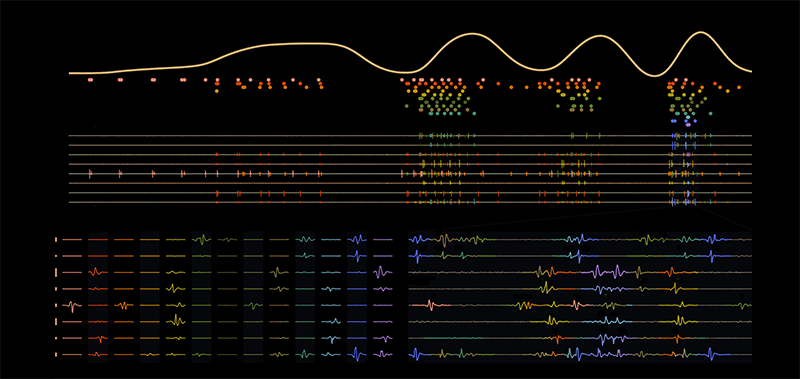
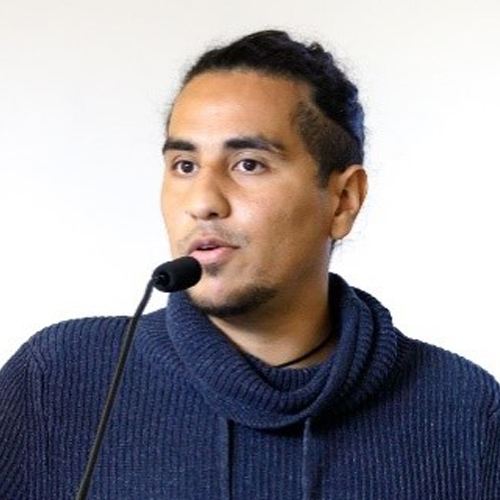
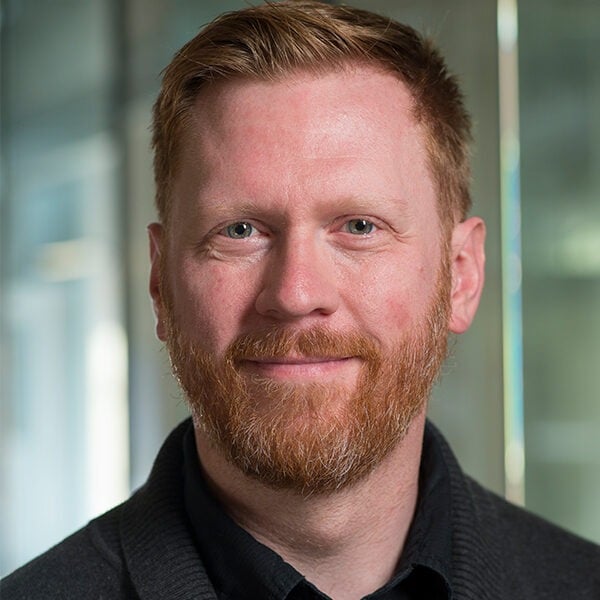
Mark M. Churchland is a Professor of Neuroscience at Columbia University's Vagelos College of Physicians and Surgeons. He serves as Codirector of the Grossman Center for the Statistics of Mind and Principal Investigator at the Zuckerman Institute, working at the intersection of neuroscience and computational modeling. Research Focus : Churchland investigates how the brain plans, triggers, and executes voluntary movements. His work combines primate neurophysiology with dynamical systems analysis to uncover unified neural mechanisms across different movement types, with applications for Parkinson's disease and neural prosthetics. Scientific Contributions : 2017 BRAIN Initiative Team-Research Circuit Program (U19) for Motor Control Pioneering tensor analysis methods for neural population structure Discovering brain activity compression scales in movement preparation Developing brain-machine interface algorithms from cortical dynamics Recent Publications (2024-2025) reveal his lab's focus on: Neural null-space dynamics in movement Interdisciplinary neurotechnology (DREDge motion correction) Preparation-execution timing mechanisms Motor unit flexibility and variability Cortical prosthetic control improvements
Dr. Heike Scherf is a Research Fellow at the Institute of Natural Science Archaeology within the Department of Geosciences, Faculty of Science, University of Tübingen. Her work bridges paleoanthropology and biomechanical analysis of skeletal structures in primates and fossil humans. Her academic background includes: Ph.D. in Natural Sciences (2000-2006) from Darmstadt University of Technology with Senckenberg Research Institute, thesis: 'Locomotion-related femoral trabecular architectures in Primates' Diploma in Geology – Palaeontology from Darmstadt University of Technology, thesis: 'Functional implications of the femoral construction of selected primates and insectivores' Dr. Scherf's research centers on functional adaptation of bone microstructures under locomotor loads, specializing in trabecular and cortical bone analysis through high-resolution CT imaging. She develops computational methodologies for quantifying bony architecture to reconstruct habitual locomotion in fossil hominins, with particular focus on stress estimation and comparative biomechanics between extant and extinct primates. Her work establishes critical links between skeletal morphology and behavioral adaptation. Publication trends reveal progressive methodological refinement from early imaging techniques (2004-2009) toward sophisticated applications in human evolution studies (2016-2021), consistently emphasizing quantitative analysis of bone microstructures and locomotor reconstruction. Key recognitions include: DFG Major Research Instrumentation grant for high-resolution CT system (2010) DFG Travel Grant for International Mammalogical Congress (2005) Senckenberg Gesellschaft research support (2004) Ermann Stiftung CT scan funding (2002) Hessian Ministry Ph.D. fellowship for women in STEM (2001-2003) As a Research Fellow, she leads advanced imaging projects without formal student supervision. Her secured instrumentation grants have significantly enhanced the department's paleoanthropology capabilities, particularly through acquisition of high-resolution CT technology for fossil analysis. Dr. Scherf operates within Tübingen's Palaeoanthropology research group, utilizing specialized laboratories for micro-CT imaging and bone microstructure analysis, contributing to the university's international reputation in human evolution studies.
Sebastian Sosa is a researcher at the Max Planck Institute for Evolutionary Anthropology's Department of Human Behavior, Ecology and Culture. He holds a PhD in Ethology and has held postdoctoral positions at institutions including the University of Strasbourg and Sun Yat-Sen University. His research focuses on animal social networks, particularly mechanisms underlying social structure formation and their evolutionary implications. He employs advanced statistical and network analysis methods, including the development of the ANTs R package for social network analysis. Education: PhD (summa cum laude) in Ethology, Primatology & Social Network, University of Barcelona (2010–2014) Master's in Human and Animal Behaviour, University of Rennes I (2009–2010) Master's in Ethology, University of Paris XIII (2008–2009) Bachelor's in Biology, Paul Sabatier University (2007–2008) Research Interests: Dr. Sosa investigates how ecological and social factors shape animal societies, using multilevel methodologies to analyze affiliative and agonistic interactions. His work integrates field observations, statistical modeling, and network theory to understand group dynamics, hierarchical organization, and adaptive strategies in species ranging from primates to cattle. Recent studies emphasize the role of social networks in stress physiology, multilevel societies, and the impact of anthropogenic interventions on animal behavior. Publications: His research spans topics like telomere dynamics in ground squirrels, social network analysis methodologies, and the application of drone technology in behavioral studies. Over 30 peer-reviewed articles reflect his interdisciplinary approach, with a focus on primatology, ecology, and quantitative biology. Awards & Grants: GDR grant (2018): 1,000€ for Sunbelt Conference participation ESA cover credit (2021): Ecological Society of America Advising & Teaching: Supervised master's students on projects like cascading aggression effects in zebra finches and multilevel horse societies. Taught courses on social network analysis and field data collection methods. Labs & Collaborations: Co-developed the ANTs R package, a widely used toolkit for animal social network analysis. Collaborates globally on primate behavior, macaque social styles, and cattle management.
Katherine C. MacKinnon, Ph.D., is a Professor in the Department of Sociology and Anthropology at Saint Louis University (SLU), within the College of Arts and Sciences. She holds a Ph.D. in Anthropology from the University of California at Berkeley. Her research focuses on biological anthropology, particularly primate behavior, evolution of social complexity, and ethical considerations in field primatology. She has conducted fieldwork across 15 countries, observing primates in diverse ecosystems. Her work integrates sustainability, conservation, and human-wildlife interactions, with current projects in Belize and St. Louis. Notable contributions include co-editing the seminal Primates in Perspective (2011) and developing ethical guidelines for field primatology. Her publications span primate behavior, conservation biology, and neuroanthropology. MacKinnon’s research emphasizes interdisciplinary approaches, linking social behavior to ecological and evolutionary dynamics. She has authored or co-authored over 20 peer-reviewed articles, book chapters, and edited volumes since 1992. Her expertise bridges academic research and applied conservation, addressing global challenges in biodiversity preservation and ethical field practices.
Christin Y. Sander is an Assistant Professor in the Department of Radiology at Harvard Medical School, affiliated with the Athinoula A. Martinos Center for Biomedical Imaging at Massachusetts General Hospital. Her work focuses on multi-modal imaging techniques combining MRI and PET to study neuroreceptor function, molecular signaling pathways, and their clinical translation for brain disorders. She earned her PhD in Electrical Engineering and Computer Science from MIT in 2014. Her research is supported by an NIH K99/R00 Award from the National Institute on Drug Abuse. Dr. Sander’s research integrates engineering, neuroscience, and clinical applications. Key areas include developing quantitative models for neuroreceptor dynamics, advancing PET/MRI experimental setups, and linking molecular changes to brain function. She has received multiple accolades, including the 2018 Early Career Investigator Travel Award and ISMRM Merit Awards for her innovative methodologies. Her lab, the Imaging neuroreceptor & neuromodulation lab , explores dynamic changes in receptor occupancy and neural circuit interactions. Notable contributions include studies on D2/D3 dopamine receptors and neurovascular coupling. She also actively contributes to scientific organizations, co-chairing the 2019 World Molecular Imaging Congress to promote trainee engagement and interdisciplinary collaboration.
Dr. David Leavens is a Professor of Comparative Psychology at the University of Sussex, School of Psychology. He specializes in nonverbal communication in apes and humans, focusing on joint attention and behavioral indices of anxiety. His career includes roles such as Reader (2019–present), Senior Lecturer (2005–2019), and part-time lecturer at the University of Georgia (1998–1999). Leavens holds a PhD in Psychology from the University of Georgia (2001) and prior degrees in anthropology from UC Riverside (BSc) and Southern Illinois University (MA). Education: BSc (UC Riverside), MA (Southern Illinois), PhD (University of Georgia) Non-academic roles: U.S. Marine Corps (1978–1984), Production Supervisor (Applied Cardiac Systems), Emergency Services Dispatcher Research interests include primate communication, evolutionary origins of language, and cognitive development. Key areas involve chimpanzee gestural communication, joint attention in apes and humans, and the ecological determinants of pointing behavior. His work bridges comparative psychology with evolutionary and developmental frameworks. Publications span topics like domestication effects in dogs, object permanence in cats, and the Referential Problem Space theory. Recent work emphasizes inclusivity in developmental psychology (e.g., 'Let’s go WILD' 2025) and primate-canine comparisons. Leavens serves on editorial boards of journals like Journal of Comparative Psychology and Animal Cognition . Awards include the Daphne Jackson Fellowship (2004–2007) and recognition as a Chartered Psychologist and Associate Fellow of the British Psychological Society. He has supervised PhD candidates such as Benjamin Farrar and Catherine Hobaiter, and his grants include funding from the Royal Society and ERC. Teaching focuses on Developmental Psychology, Psychobiology, and Quantitative Methods. He leads the 'Psychology Now' module and has contributed to over 128 publications, reflecting his impactful research in comparative cognition and behavioral science.
Donna Toufexis is a Professor and Director of the Undergraduate Neuroscience Program at the University of Vermont's Department of Psychological Science (College of Arts and Sciences). Her research focuses on sex differences and hormonal influences on stress responses, learning/memory systems, and emotional behaviors, particularly in rodent models. She investigates how hormonal cycles and stress affect habit formation, with implications for psychopathologies like addiction and PTSD. Recent work highlights female rats developing habits faster than males, prompting studies on underlying neurophysiological mechanisms using behavioral, pharmacological, and viral vector techniques. Education: B.S. (Concordia University, 1992), M.S. (Concordia University, 1994), Ph.D. (McGill University, 1999). Research Interests: Neuroendocrinology of stress, hormonal modulation of anxiety/fear, habit learning, and translational models of social stress in aging primates. Her lab uses multidisciplinary approaches to explore neurobiological pathways linking sex differences and psychiatric vulnerabilities. Publications: Over 50 peer-reviewed articles, including high-impact work on PACAP signaling, estrogen's role in fear inhibition, and stress-induced habit formation. Recent studies emphasize translational models linking rodent and primate research to human health. Lab/Teams: Active in the Biobehavioral Psychology unit, collaborating on projects involving viral vector-based neural circuit mapping and pharmacological interventions targeting habit pathways.
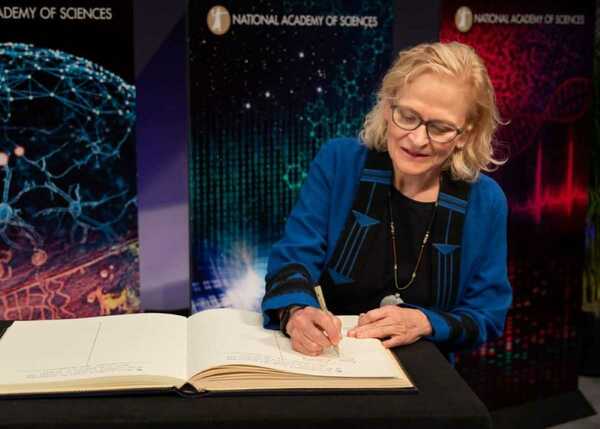
Susan Alberts is a Professor at Duke University with dual appointments in the Department of Biology and Department of Evolutionary Anthropology. She co-directs the Amboseli Baboon Research Project, one of the world's longest-running studies of wild primates ongoing since 1971 in Kenya, and maintains active collaborations with Princeton University, University of Notre Dame, and the Max Planck Institute of Evolutionary Anthropology. Her educational background includes a B.A. from Reed College (1983), M.A. from UCLA (1987), and Ph.D. from the University of Chicago (1992). Her research program integrates field studies of wild baboons with cutting-edge genomic and physiological techniques to address fundamental questions in evolutionary biology. Alberts' work centers on the evolution of social behavior in mammals, with specific focus on primate demography, life history, behavioral endocrinology, and the health consequences of social relationships. Her lab investigates how early-life adversity, social bonds, and environmental stressors shape aging trajectories, gut microbiome composition, and survival outcomes in wild baboon populations. Key research themes include the functional consequences of social behavior for survival and reproduction, intergenerational transmission of adversity, and the biological embedding of social experiences. Analysis of her recent publications reveals a strong interdisciplinary trend combining primatology with genomics, microbiome science, and gerontology. Her work increasingly examines aging mechanisms through non-invasive biomarkers while maintaining deep roots in long-term behavioral observation. The research consistently demonstrates how social relationships serve as fundamental determinants of health and longevity in natural populations. National Academy of Sciences (elected 2019) BBVA Foundation Frontiers of Knowledge Award in Ecology and Conservation Biology Alberts secures substantial funding from the National Institutes of Health and University of Notre Dame for projects examining social and environmental effects on autonomic stress responses and gene regulation across the lifespan. Her mentoring extends through the Amboseli Baboon Research Project, which trains numerous graduate students and postdocs in field primatology. The project's collaborative framework involves Kenyan institutions including the Kenya Wildlife Service and University of Nairobi, facilitating vital local partnerships and capacity building. Current work focuses on developing cardiac monitoring technologies and investigating microbiome-aging relationships in this unique wild primate model. The Alberts Lab operates within the Amboseli Baboon Research Project ecosystem, coordinating field teams across multiple sites in Kenya. This international collaboration includes geneticists, endocrinologists, and ecologists working with Kenyan researchers and wildlife authorities to maintain continuous data collection since 1971. The project's infrastructure supports longitudinal studies examining social behavior, demography, and physiology across generations of wild baboons.
Aleksandra Badura is an Associate Professor in the Neurosciences department at Erasmus MC. Her research focuses on cerebellar function, neurodevelopmental disorders, and behavioral neuroscience. She investigates topics such as autism spectrum disorders, Purkinje cell physiology, and the interplay between immunology and neurodevelopment. Her work employs both animal models and clinical approaches, with a strong emphasis on understanding neural mechanisms underlying attention, motor control, and comorbidities in immunodeficiency disorders. Key research interests include cerebellar circuitry, behavioral assays in autism models, and the role of Purkinje cells in development. She has supervised 4 graduate students and contributed to peer-reviewed journals like eLife, Current Opinion in Allergy and Clinical Immunology, and Frontiers in Computational Neuroscience. Her studies often integrate experimental and computational methodologies, bridging basic science with clinical implications. Notable recent work includes studies on visual attention mechanisms in primates and the impact of environmental factors on autism-related behavioral phenotypes. Collaborations span immunology, neurobiology, and computational neuroscience, reflecting her interdisciplinary approach.
Janine Monique LaSalle is a Professor at the University of California, Davis, affiliated with the MIND Institute, Genome Center, and Center for Neuroscience. Her research focuses on epigenetic mechanisms underlying neurodevelopmental disorders, including autism spectrum disorders (ASD), Rett syndrome, and Prader-Willi syndrome. She investigates how environmental and genetic factors interact through epigenetic modifications like DNA methylation. Education: PhD in Immunology from Harvard University (1993), postdoctoral training at Harvard Medical School and HHMI (1993-1996). Awards: Basil O’Connor Award, March of Dimes (1999); Herbert and Esther Bennett Brandwein Award in Genetic Research (2011). Her work includes developing epigenetic biomarkers to prevent health disparities, particularly in perinatal care. She collaborates across disciplines, integrating genomic, microbiome, and metabolomic data to understand disease mechanisms. Key projects involve placental epigenetic profiling and environmental exposure impacts on neurodevelopment.
Kurt Zinn is a Professor in Biomedical Engineering (College of Engineering), Radiology (College of Human Medicine), and Small Animal Clinical Sciences (College of Veterinary Medicine) at Michigan State University. He holds the Hickman Family Endowed Chair of Oncology and leads the Nuclear Medicine program, overseeing a radiopharmacy manufacturing clinical and research radiopharmaceuticals. His research focuses on molecular imaging, targeted radiation therapy using alpha-particle emitters (e.g., FRIB-derived radionuclides), and brain drug delivery. Dr. Zinn earned a B.A. in Chemistry, DVM, M.S. in Chemistry, and Ph.D. in Biochemistry from the University of Missouri-Columbia. He has conducted over 12 Phase 1 clinical trials and specializes in translational research bridging veterinary and human medicine. His research interests include neuroimaging, alpha-particle therapy, and PET imaging agent development. Recent work emphasizes ovarian cancer therapy, glymphatic clearance quantification, and 3D-printed biomedical imaging tools. Notable achievements include the 2015 Distinguished Investigator Award from the Academy of Radiology Research. Key Roles: Director of Nuclear Medicine, Radiopharmacy Lead Affiliations: Institute for Quantitative Health Science & Engineering Education: B.A. Chemistry, University of Missouri-Columbia DVM, University of Missouri-Columbia M.S. Chemistry, University of Missouri-Columbia Ph.D. Biochemistry, University of Missouri-Columbia Articles reflect a focus on molecular imaging techniques, targeted therapies, and translational imaging tools. Clinical trials span veterinary and human oncology, emphasizing precision medicine approaches.
Mark John Pallen is a Vice-Chancellor's Fellow and Consultant Medical Microbiologist at the School of Veterinary Medicine, University of Surrey . His work bridges microbial genomics, taxonomy, and public health, with a focus on bacterial ecology and evolution. Academic Rank: Research Fellow Key Collaborations: International teams in microbiology, veterinary science, and infectious disease genomics Research Interests span microbial genomics, bacterial nomenclature, and microbiome studies. His projects include tracking SARS-CoV-2 variants, analyzing Escherichia coli diversity in human and animal hosts, and developing scalable systems for naming uncultured taxa. Methodologies: Metagenomic assembly, whole-genome sequencing, phylogenetic profiling Applications: Antimicrobial resistance surveillance, pathogen evolution, and host-microbe interactions Publication Trends highlight his leadership in microbial taxonomy, with recent work on the Candidatus system and the reorganization of prokaryotic phyla. He advocates for genomics-driven nomenclature reforms and has contributed extensively to understanding microbiomes in equine, porcine, and primate hosts. Notable Contributions include: Genomic epidemiology of swine dysentery Development of Golden Gate-based gene editing tools Advances in Leviviricetes RNA virus taxonomy Analysis of E. coli virulence and resistance in sub-Saharan Africa His interdisciplinary approach connects microbiology, computational biology, and planetary health, with a strong emphasis on practical solutions for global health challenges.
Dr. Nafiseh Atapour Senior Research Fellow in Physiology at Monash University since 2015. Holds a PhD in Neurophysiology and completed postdoctoral training at RIKEN Brain Science Institute (Japan), studying visual circuit plasticity. Her research focuses on neuronal plasticity, critical periods in development, inhibitory interneurons, and neurodevelopmental disorders like schizophrenia and epilepsy. Education & Training PhD in Neurophysiology Postdoctoral Fellowship: Prof. Takao K. Hensch’s Lab at RIKEN Brain Science Institute, Japan Research Projects Thalamic plasticity following cortical damage: recovery of vision (2023-2026, PCI) The effects of early exposure to bushfires on adult brain structure and function (2022-2026, CI) Awards Razi Award for Early-Career Scientists (1999) Gender Equity Travel Support Grant (2016) Key Research Themes Explores structural/physiological plasticity in visual circuits, developmental critical periods, and neurochemical markers of cortical neurons. Uses marmoset and mouse models to investigate epilepsy mechanisms and circuit rewiring post-brain injury. Her work contributes to UN SDGs related to health and well-being.
Dan Fehring is a Research Fellow in the Department of Psychology at Monash University, specializing in cognitive neuroscience, neuromodulation, and executive control mechanisms. He focuses on understanding how prefrontal cortex functions modulate decision-making, addiction, and sex differences in brain processes. His work contributes to UN Sustainable Development Goals related to mental health and well-being. Research interests include neuromodulation techniques (e.g., TDCS), neuropharmacology (opioids, cannabis), and cognitive control mechanisms. He has published extensively on topics like prefrontal stimulation effects, dimensional bias in primates, and music’s role in conflict resolution. His articles span 2016–2025, with recent work exploring stimulation safety, morphine’s cognitive impacts, and biochemical markers of cannabis use. Education: Not explicitly stated in the provided text. Awards: Early Career Researcher Presentation Award (2017) Monash Biomedicine Discovery Institute and RIKEN Fellowship (2020) Monash Discovery Institute Rising Star (2022) Activities: Active in conferences (e.g., Australasian Cognitive Neuroscience Society), peer review (Cell Reports), and seminars. His work bridges basic neuroscience and clinical applications, with a focus on translational research for mental health and addiction. He collaborates internationally and has been cited over 70 times in Scopus.
Feilim Mac Gabhann is an Associate Professor of Biomedical Engineering at Johns Hopkins University’s Whiting School of Engineering, with a joint appointment in the School of Medicine. His expertise lies in systems pharmacology, focusing on computational modeling of therapies like antibody-drug conjugates, gene therapies, and cell transplants. He investigates the role of VEGF (vascular endothelial growth factor) in diseases such as cancer, HIV, and vascular disorders. Education: Bachelor’s in Chemical Engineering (University College Dublin, 1997) PhD in Biomedical Engineering (Johns Hopkins University, 2006) Postdoctoral Fellowship in Cardiovascular Research at the University of Virginia (2006–2009) Research Interests: Computational models to simulate therapies targeting VEGF signaling pathways, HIV pathogenesis, and cardiovascular remodeling. Projects include designing antibody-drug conjugates for cancer, simulating HIV therapies to boost host responses, and developing novel data visualization tools. Key Contributions: His work bridges computational biology and clinical applications, supported by NIH grants and awards such as the 2012 Sloan Research Fellowship and 2016 Teaching Excellence Award. He is a core faculty member of the Institute for Computational Medicine. Awards: William H. Huggins Excellence in Teaching Award (2016) JHU Catalyst Award (2015) American Physiological Society Arthur C. Guyton Award (2012) NIH Pathway to Independence Award (2008) Grants & Advising: Leads projects funded by NIH, including virtual clinical trial simulations for HIV therapies. Active in mentoring students and collaborating across disciplines to advance translational medicine. Labs & Teams: Directs the Computational Design of Therapeutics Lab, focusing on mechanistic modeling of therapeutic interventions and vascular biology. Collaborates with the Institute for Computational Medicine on interdisciplinary projects.