Juan Yao is a Senior Lecturer at the Finance Discipline, Business School, The University of Sydney. Her research focuses on empirical asset pricing , funds management , foreign exchange markets , and business forecasting . She has contributed to national research projects such as "Strategies and Approaches to Teaching and Learning Cross Cultures" (2007-2009) and is affiliated with the Sydney Environment Institute, China Study Centre, and Australia-China Business Network. Research Interests: Juan’s work explores financial market efficiency, investor behavior, and cross-cultural economic dynamics. Her publications address hedge fund performance, mutual fund strategies, and behavioral anomalies in both Australian and Chinese markets. Publications: Recent articles analyze price bubbles, sentiment analysis, and institutional trading impacts, spanning journals like Journal of Banking & Finance and Pacific-Basin Finance Journal . Grants: She served as Chief Investigator for a national teaching and learning grant (2007-2009) and a 2014 CIPR grant on asset-price bubbles in Australia.
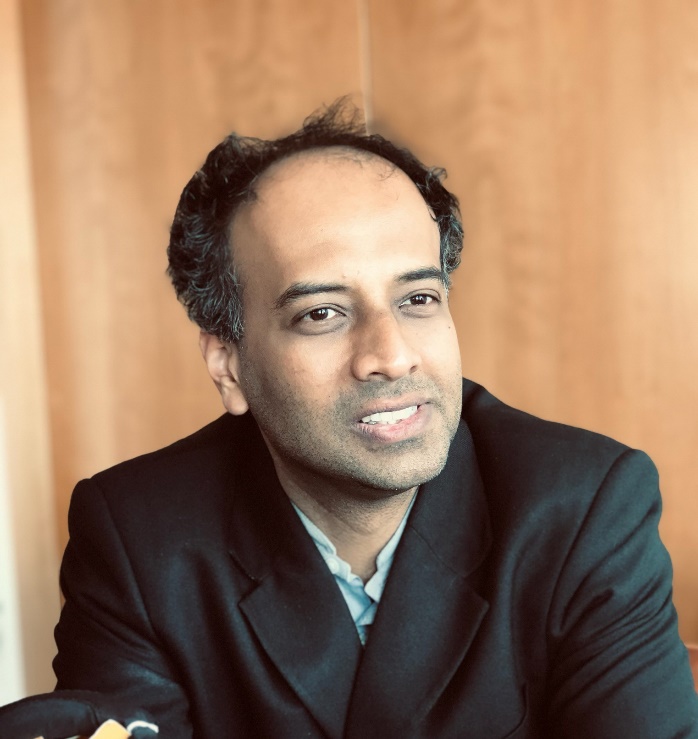
Krishna Jagannathan is a full-time Professor in the Department of Electrical Engineering at the Indian Institute of Technology Madras (IIT Madras), India. He specializes in stochastic modeling, communication networks, information theory, and queuing theory. He obtained his B.Tech from IIT Madras in 2004, followed by S.M. and Ph.D. degrees from MIT in 2006 and 2010, respectively. After post-doctoral positions at Caltech and MIT, he joined IIT Madras in 2011. Education: B.Tech in Electrical Engineering, IIT Madras (2004) S.M. in Electrical Engineering and Computer Science, MIT (2006) Ph.D. in Electrical Engineering and Computer Science, MIT (2010) Research Interests: His research focuses on stochastic modeling and analysis of communication networks , information theory , and queuing theory . He has made significant contributions to understanding network performance, resource allocation, and risk-aware decision-making in complex systems. He leads the Networks and Stochastic Systems lab at IIT Madras, mentoring a large cohort of Ph.D. and M.S. students working on cutting-edge problems in networking, optimization, and stochastic systems. Scientific Awards: Best Paper Award at WiOpt 2013, Tsukuba, Japan Young Faculty Recognition Award for Excellence in Teaching and Research, IIT Madras (2014) Teaching & Mentorship: He has taught a wide range of courses including Probability Foundations , Stochastic Modeling and Queuing Theory , Convex Optimization , and Signals & Systems , consistently receiving high teaching evaluations. He has supervised over 15 Ph.D. and M.S. students to completion and continues to guide several active researchers.
McKenzie F. Johnson is an Assistant Professor at the University of Illinois Urbana-Champaign's Department of Natural Resources and Environmental Sciences (NRES), part of the College of Agricultural, Consumer and Environmental Sciences. She is also affiliated with the Institute for Sustainability, Energy, and Environment (ISEE). Her research focuses on global environmental politics, environmental justice, and human security, with a particular interest in how environmental governance initiatives impact marginalized communities. Education: Began with fisheries governance studies, earned a Master of Arts in Conservation Biology from Columbia University (2007), and a PhD in Environmental Policy from Duke University. Her Fulbright scholarship in West Africa (2010s) focused on extractive industries and social justice linkages. Research Interests: Explores intersections between environment, institutions, and justice through projects in South Asia, Africa, and South America. Current U.S.-focused work examines environmental impact assessments and pipeline development's effects on communities. The (in)Secure Landscapes Lab she leads investigates environmental governance's role in creating human security and justice. Key Themes in Publications: Energy infrastructure conflicts (e.g., Dakota Access Pipeline), environmental peacebuilding in post-conflict regions (Colombia, Afghanistan), carbon market equity, and invasive species governance. Her work critiques neoliberal environmental governance models and advocates for inclusive decision-making processes. Lab Activities: The IL Lab analyzes environmental governance's societal impacts, emphasizing participatory approaches. Current projects include studying soil carbon markets' equity implications and climate change adaptation strategies in conflict zones.
Professor Jill Atkins is a Professor of Accounting at Cardiff Business School, Cardiff University, with a distinguished career spanning accounting and finance. She also serves as a Visiting Professor at the University of the Witwatersrand in South Africa. As a leading academic in sustainable accounting, she has published over 50 journal articles and several influential books, establishing herself as a thought leader in the field of extinction accounting and biodiversity finance. Professor Atkins holds a BA Hons (First Class) in European Economics with a Licence ès Sciences Economiques from the University of Nantes, an MSc in Corporate and International Finance from the University of Durham, and a PhD in Finance from the University of Manchester. She is Series Editor for the de Gruyter Studies in Corporate Governance and has authored the leading international textbook "Corporate Governance and Accountability," now in its 5th edition. Professor Atkins' research focuses on three interconnected areas that have significantly contributed to sustainability accounting literature. Her work on private social and environmental reporting (SER) has evolved into "private integrated reporting," where institutional investor engagement processes increasingly integrate social, environmental, and financial issues. She has pioneered the development of "extinction accounting," creating a framework that has inspired extensive international academic research and influenced investment institutions' pollinator engagement strategies. Her third major contribution involves exploring the historical roots of environmental and ecological accounting, connecting accounting history with sustainability research across various historical periods from Victorian water pollution accounting to 18th century nature diaries. Analysis of Professor Atkins' recent publications reveals a clear trajectory toward increasingly specialized and urgent environmental accounting. Her work has evolved from general sustainability reporting to highly focused extinction accounting frameworks, with growing attention to historical precedents and cross-cultural applications. The publications demonstrate a sophisticated integration of critical accounting theory with practical applications in biodiversity conservation, showing how accounting mechanisms can serve as tools for species protection and environmental preservation. Her research increasingly incorporates interdisciplinary perspectives, drawing from ecology, history, art, and philosophy to develop comprehensive approaches to extinction governance. Professor Atkins has received significant recognition within the ESG investment industry and governance circles as a thought leader, regularly invited to give keynotes at international practitioner and academic events. She has led influential projects including a Nuffield Foundation-funded study on private SER and has developed innovative frameworks such as the extinction governance model that brings together accounting practices with governance mechanisms aimed at preventing species extinctions. Professor Atkins supervises doctoral candidates in extinction accounting, extinction governance, ESG investment, accounting for biodiversity, and corporate governance (qualitative research). She has established collaborative networks with leading practitioners in responsible investment, sustainability ratings, financial analysis, and reporting framework providers, including the Capitals Coalition, Moody's, Vigeo Eiris, AXA, and the WWF.
Goran Avlijaš is a researcher affiliated with Singidunum University in Belgrade, specializing in project management, operations research, and retail logistics. He holds a Doctorate in Engineering Management (2011–2016) from Singidunum University, a Master’s in Project Management (2008–2009) from the Faculty of Organizational Sciences, and a Bachelor’s in Management (2003–2007) from the same institution. His research focuses on optimizing project schedules through methods like Earned Value Management and Monte Carlo Simulation, analyzing supply chain efficiency, and exploring gig economy impacts on well-being in Balkan countries. Key research areas include: Project Management Innovation: Developing risk analysis tools (e.g., Event Chain Methodology) and applying earned value metrics to construction projects. Retail Operations: Investigating automated replenishment systems and inventory management challenges in retail environments. Social-Economic Dynamics: Studying gig economy effects on workforce well-being and regulatory impacts on entrepreneurship. His work spans 30+ peer-reviewed articles and conference papers, including contributions to Management , Sustainability , and Frontiers in Psychology . He co-authored textbooks like Project Management and Entrepreneurship for Singidunum University’s curriculum. Active in academic events such as Sinteza and FINIZ conferences, he bridges theoretical research with practical industry applications.
Dr. Matteo Montecchi is a Senior Lecturer (Associate Professor) in Marketing at King’s Business School, King’s College London, where he also serves as Theme Lead for Sustainable Consumption at the Centre for Sustainable Business and Programme Director for the Strategic Marketing (Open Executive) programme. He teaches core modules such as Consumer Behaviour, Digital Marketing, and Research Methods, and leads executive education initiatives. Previously, he was a Senior Lecturer at the London College of Fashion, University of the Arts London, and has held visiting positions at Milan Politecnico, Università Cattolica del Sacro Cuore, and Università Federico II. Montecchi earned his PhD in Marketing from King’s College London, an MRes in Marketing from Birkbeck College, an Executive Master in Marketing and Sales from SDA Bocconi and ESADE, and a Bachelor’s in Business Economics from the University of Modena and Reggio Emilia. He also holds a PgCert in Academic Practice and is a Fellow of the Higher Education Academy (FHEA). His research focuses on the digital transformation of marketing, particularly the role of artificial intelligence and blockchain in enhancing transparency and trust. He investigates ethical engagement with diverse consumer groups, inclusion, and corporate responsibility, with a special interest in marginalized communities. His work integrates consumer behavior, digital interactions, and decision-making with technological innovation, offering actionable insights for sustainable and responsible business strategies. The most recent 15 publications reflect a strong trend in AI in retail, brand transparency, consumer trust, ethical data use, voice technologies, and social sustainability. His research spans journals in marketing, psychology, interactive marketing, and business ethics, demonstrating interdisciplinary impact. Scientific Awards: KingsCAT: Capture and Analysis Tool for Social Media Research at King’s College London (2024) – Recognized as part of a collaborative team for advancing digital research infrastructure and media analysis. Montecchi is actively involved in PhD supervision and is accepting new students. He has led research projects using social media analytics (KingsCAT) and has contributed to strategic debates on grand challenges in marketing. His work connects academic research with real-world managerial applications, particularly in digital strategy and ethical innovation. He is a key contributor to interdisciplinary research through tools like KingsCAT, which supports collaborative social media analysis, and his publications often involve co-authorship with experts in data science, psychology, and organizational behavior.
Zoran Đukanović is a Professor at the Faculty of Architecture, University of Belgrade. His work focuses on urban design, cultural heritage, and sustainable development, with a particular emphasis on participatory methods and community engagement in urban planning. His research explores the intersection of architecture, public spaces, and social dynamics, addressing challenges such as climate change adaptation, heritage conservation, and urban regeneration. Notable projects include studies on Belgrade’s urban policies, waterfront revitalization, and the role of cultural sites in tourism and placemaking. He has contributed to interdisciplinary initiatives linking education, urban planning, and place branding, advocating for inclusive and equitable urban development.
Senad Bećirović serves as a full Professor at the University of Education Lower Austria (Pädagogische Hochschule Niederösterreich), having progressed from assistant professor (2014) to associate professor (2017) before attaining his current rank in 2023. His academic career spans teaching research methodology, pedagogy, and advanced statistics across undergraduate, graduate, and doctoral programs at international institutions, delivered through both online and in-person formats. Bećirović's research focuses primarily on Artificial Intelligence and digital technologies in education , with significant contributions to intercultural education , gifted education , and foreign language pedagogy . His work demonstrates a consistent trajectory toward understanding how emerging technologies reshape educational practices and outcomes. Through four books published by Springer and Nova Science and over 60 articles in top-tier journals, he has established himself as a leading voice in digital educational transformation. His recent publications (2023-2025) reveal a pronounced emphasis on AI applications in education, with multiple studies examining AI literacy, policy frameworks, and implementation strategies across European higher education contexts. This research demonstrates both theoretical depth and practical relevance to current educational challenges. Bećirović actively contributes to the scholarly community as editor and reviewer for numerous Q1 journals including Smart Learning Environments (Springer), Education and Information Technologies (Springer), and TESOL Quarterly (Wiley). He participates in multiple European Commission-funded initiatives such as ENRICH (Enhancing Teaching and Research through Innovative Digital Technologies) and Erasmus+ projects focused on peace learning and English education. His professional activities extend to international collaboration through membership in the European Network Ethical Use of AI and the American Educational Research Association (AERA). He frequently delivers keynote addresses at international conferences, sharing expertise on AI in education, digital transformation, and intercultural competencies.
Dr. Lesley Batty is a Reader in Ecological Education at the School of Geography, Earth and Environmental Sciences, University of Birmingham. She plays key leadership roles as Head of Wellbeing and Head of Employability and Placements within the School, reflecting her strong commitment to student development and inclusive education. Her educational background includes a PhD from the University of Sheffield, an MRes and BSc from the University of Reading, and a Postgraduate Certificate in Learning and Teaching from the University of Birmingham. She is a Senior Fellow of the Higher Education Academy and a HEFi Scholar, underscoring her excellence in teaching. Dr. Batty's research centers on the ecology of industrial pollution, particularly in post-mining landscapes. She investigates phytoremediation techniques for contaminated soils, focusing on heavy metals and polycyclic aromatic hydrocarbons (PAHs). Her work extends to ecological education, where she explores inclusive teaching practices, barriers in STEM laboratories, and the integration of employability skills into the curriculum. She is actively involved in national educational policy through her role as Lead Secretary of the British Ecological Society Special Interest Group in Teaching and Learning and as an Associate Editor for the Journal of Geochemical Exploration. Her recent publications reveal a dual focus: one stream on environmental contamination and remediation (e.g., metal and PAH pollution in brownfield sites, phytoremediation with bacteria and chelates), and another on innovative pedagogy in geography and ecology (e.g., virtual field trips, inclusive lab practices, and the future of fieldwork education). This reflects her unique position at the intersection of environmental science and educational leadership. Senior Fellow of the Higher Education Academy (HEA) HEFi Scholar Lead Secretary, British Ecological Society Special Interest Group in Teaching and Learning Dr. Batty is a dedicated educator and researcher who bridges the gap between environmental science and pedagogical innovation. She has made significant contributions to both her field of research and the national discourse on ecological education. Her leadership in student wellbeing and employability, combined with her research on pollution and inclusive learning, demonstrates a holistic approach to academic life. She actively supervises research, as evidenced by her co-authorship with doctoral researchers, and welcomes PhD applications in her areas of expertise. She is a key member of several research groups, including those focused on Physical Geography, Global Biogeochemistry, and Environmental Health Sciences at the University of Birmingham. Her collaborative work, especially in large consortia on conservation education, highlights her strong network and impact in the academic community.
Dr. Carolin Vollenberg serves as a Post-Doctoral Researcher at the Chair of Information Systems & Transformation Management within the Faculty of Computer Science at the University of Duisburg-Essen (UDE). Her academic journey includes a PhD from the University of Muenster (2021-2025), an M.Sc. in Technical Consulting and Management from Hochschule Hamm-Lippstadt (2018-2020), and a B.Eng. in Biomedical Technology from the same institution (2014-2018). Prior to her current position, she worked as a Research Assistant at South Westphalia University of Applied Sciences and gained industry experience at Zapp Systems GmbH. PhD in Business Informatics (2021-2025), University of Muenster M.Sc. Technical Consulting and Management (2018-2020), Hochschule Hamm-Lippstadt B.Eng. Biomedical Technology (2014-2018), Hochschule Hamm-Lippstadt Research Focus: Vollenberg specializes in the governance of lightweight IT systems, digital transformation in public and healthcare sectors, and process mining applications. Her work bridges technical implementation with organizational behavior, particularly examining resistance to automation in sensitive domains like healthcare. She investigates how organizations navigate unintended consequences of technology adoption, with emphasis on RPA (Robotic Process Automation), omnichannel transformation, and data-driven process optimization. Her research methodology combines ethnographic field studies with quantitative process analysis. Publication Trends: Analysis of her 16 publications (2020-2025) reveals strong focus on healthcare IT (45% of works), public sector digitalization (30%), and foundational process management (25%). Recent output shows increasing emphasis on ethical dimensions of process mining and sustainability applications. Her collaborative work spans multiple European institutions with consistent publication in top IS conferences (ICIS, ECIS, HICSS). Best Paper nomination at HICSS-55 (2022) Associate Editor for General Track at Internationale Tagung Wirtschaftsinformatik (WI) 2025 Professional Engagement: Vollenberg actively contributes to academic discourse through editorial roles and peer review. Her industry collaborations with healthcare providers and public sector entities demonstrate applied research impact. Current projects examine virtual nursing transformations and crisis-responsive RPA implementations, reflecting her commitment to solving real-world operational challenges through information systems innovation.
Nicola Paltrinieri is a Professor of Risk Assessment at the Department of Mechanical and Industrial Engineering, NTNU (Norway), and an Adjunct Professor at the University of Bologna (Italy). His expertise spans risk assessment, hydrogen technologies, process safety, and data-driven safety management. He holds Chartered Engineer and Chartered Scientist certifications and has served on editorial boards for journals like Safety Science and Journal of Risk Research . Education: PhD in Environmental, Safety and Chemical Engineering (University of Bologna, 2012) Master’s in Chemical and Process Engineering (University of Bologna, 2008) Research Interests: Focuses on hydrogen infrastructure safety, Natech accident analysis, risk-based inspection strategies, and AI integration in safety systems. His work emphasizes sustainable energy transitions and mitigating risks in emerging technologies like hydrogen. Key Projects (2022-2026): H2Glass : Decarbonizing glass and aluminum sectors via hydrogen HyInHeat : Hydrogen technologies for industrial heating HYDROGENi : Norwegian research center for hydrogen/ammonia Awards: Onsager Fellowship (2016–2021) Frank Lees Medal (2012) for safety-related publications Grants & Leadership: Head of NTNU Energy Team Hydrogen, coordinator for EU-funded projects like SUSHy , and active in international risk committees (e.g., EFCE, ESRA). His work bridges academia and industry, with over 8 PhD examinations supervised. Labs/Teams: Leads the NTNU Energy Team Hydrogen and collaborates on initiatives like SH2IFT-2 for safe hydrogen fuel handling. His research group focuses on AI-driven risk analysis and hydrogen infrastructure resilience.
Michael Brito is a Lecturer in Mass Communications and Social Media at the School of Journalism and Mass Communications, College of Humanities and the Arts, San José State University. He is also a seasoned industry leader, currently serving as the Global Head of Data + Intelligence at Zeno Group, where he leads a 50-member analytics team supporting global clients in B2B, consumer, technology, and healthcare sectors. His academic and professional work bridges digital marketing, brand strategy, and data-driven communications. Michael’s research interests include digital marketing, social media strategy, brand communications, narrative intelligence, audience segmentation, and AI applications in PR. He is a recognized thought leader with extensive publications and blog posts exploring brand archetypes, earned media, customer engagement, and the future of digital storytelling. His work emphasizes the integration of data analytics into strategic communications to enhance brand visibility and audience connection. The trends in his recent articles reflect a strong focus on artificial intelligence in public relations, media intelligence, narrative analysis, and the evolution of digital customer journeys. His writings analyze tools like Pulsar and Cision, explore generative AI in search, and critique traditional metrics like earned media value, advocating for more sophisticated, insight-driven approaches. Top 50 Social Intelligence Pioneers by The Social Intelligence Lab Dashboard 25 Class of 2022 by PRWeek Top 25 Digital PR Innovators by PRovoke Media Michael Brito mentors students in digital communications and advises on strategic brand development. He has led major initiatives in media monitoring, social intelligence, and data-informed PR outreach. He founded and contributes to a widely-read blog on social media marketing and is a frequent speaker at industry events, including TEDx. He is also a proud U.S. Marine veteran, bringing leadership and discipline to his academic and professional roles. He is actively involved in the COMM+ lab at SJSU and supports student media through his teaching and mentorship. His work continues to influence both academic curricula and industry best practices in digital communications and brand analytics.
Timo Koivurova is a Research Professor at the Arctic Centre, University of Lapland. He holds visiting and adjunct professor roles at Kobe University (Japan), Riga Graduate School of Law, University of Eastern Finland, and University of Turku. His research focuses on Arctic law, international environmental law, and geopolitical dynamics in the Arctic region. He has authored over 465 publications and led 43 research projects, including major initiatives like the ICEBERG project on Arctic Ocean governance and the Co-CREATE project on solar radiation management. Key research interests include legal frameworks for indigenous peoples, climate change regulations, Arctic geopolitics, and China’s Arctic engagement. He has received awards such as the 2015 Honorable Mention for environmental policy analysis and the 2008 Nordenskiöld Stipend for Arctic legal research. Over 100 media contributions discussing Arctic policy and geopolitics. Active in 552 professional activities, including editorial roles and conference presentations. Principal Investigator for EU-funded projects like Arctic PASSION and MARCS. His work bridges legal scholarship with policy practice, addressing contemporary challenges like Arctic Council functionality post-2022 Ukraine invasion and sustainable development goals in the region.
Christine Cheng serves as Assistant Professor of Accountancy at the University of Mississippi's Patterson School of Accountancy, specializing in Tax and Data Analytics. She previously held a visiting scholar position at the Securities and Exchange Commission Division of Economic and Risk Analysis (2020-2022) and currently contributes to the Financial Accounting Standards Board Taxonomy Advisory Group. Her academic credentials include: Ph.D. in Business Administration from Pennsylvania State University (2011) M.B.A. in Business Administration from Pennsylvania State University Harrisburg (2003) Dr. Cheng's research examines machine-readable financial reporting determinants, tax-influenced decision making, and the intersection of tax analytics with corporate strategy. Her work bridges theoretical accounting frameworks with practical data science applications, particularly in post-Wayfair e-commerce taxation and marriage tax policy analysis. She employs advanced tools like Alteryx and robotic process automation to model complex tax scenarios. Publication trends reveal a strategic shift toward data-driven tax education and regulatory compliance, with 60% of recent work integrating analytics into financial reporting. Her articles frequently address real-world policy impacts, such as same-sex marriage tax implications and hail damage fraud detection, demonstrating applied relevance to both academic and practitioner audiences. Major recognitions include: 2023 Public Interest Section Best Paper Award (American Taxation Association) 2023 Graduate Teacher Award (American Accounting Association) Three ATA/Deloitte Teaching Innovation Awards (2019-2022) 2019 Best Article Award from The Tax Adviser As an educator, she pioneered Ole Miss's Master's of Taxation and Data Analytics program and maintains a YouTube channel with 200+ instructional videos. Her advising includes master's student Taylor, J. (lead author on a 2015 publication), and she has secured multiple curriculum development grants through Deloitte partnerships. Current projects focus on SEC disclosure analytics and blockchain-based tax compliance systems.
Zhe He is a Full Professor at Florida State University (FSU), leading the eHealth Lab in the School of Information (iSchool) within the College of Communication & Information. He holds courtesy appointments in the Department of Behavioral Sciences and Social Medicine (College of Medicine), Department of Computer Science, and Department of Statistics. His research focuses on biomedical informatics, AI, and big data analytics, aiming to improve population health and advance biomedical research through informatics applications. He directs the Institute for Successful Longevity and co-leads the Biostatistics, Informatics, and Research Design Program (BIRD) of the UF-FSU Clinical and Translational Science Award. Education: Postdoctoral training at Columbia University (2015), PhD in Computer Science from NJIT (2014), MS from Columbia University (2009), and BE from Beijing University of Posts and Telecommunications (2007). Research Interests: Clinical trial generalizability, ontology quality assurance, consumer health informatics, and AI in medicine. His work bridges biomedical terminologies, patient engagement, and healthcare equity, with a focus on older adults and underserved populations. Grants & Funding: Over $21.9M in grants from NIH (NLM, NIA, NIMH), AHRQ, Amazon, NVIDIA, and Eli Lilly. Active grants include projects on medical marijuana effects, AI-driven clinical training, HIV prevention, and lab result interpretation tools for older adults. Awards & Honors: 2022 Lois Lunin Award (ASIS&T), FAMIA (2022), two AMIA Distinguished Paper Awards, and recognition for interdisciplinary research. Promoted to Full Professor in 2025 after early tenure as Associate Professor (2020). Labs & Teams: Directs the eHealth Lab and collaborates with跨学科 teams in the OneFlorida Data Trust, UF-FSU Clinical and Translational Science Award, and the National Center for Biotechnology Information (during sabbatical).