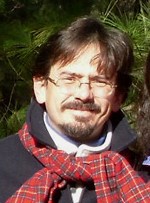
Tamás Bodor is a Professor in Professional Communication at the University of Wisconsin-Stevens Point. His research focuses on public opinion formation, political communication, and the interplay between survey methodology and media effects. He has extensively studied the spiral of silence theory, particularly in the context of new media’s influence on political opinion climates. Bodor’s notable work includes the analysis of polling inaccuracies during the 2002 Hungarian elections, which earned him the 2008 Elizabeth H. Nelson Prize from the World Association for Public Opinion Research. His research spans two major areas: Political Communication: Examines mass media effects on public opinion, political behavior, and the spiral of silence dynamics. Quantitative Research Methods: Focuses on polling methodology, including the challenges of timing and opinion congruity in surveys. Recent publications highlight his exploration of media’s role in fragmented information environments and empirical validations of Lakoff’s moral frameworks in U.S. and comparative contexts. Scientific Recognition: 2008 Elizabeth H. Nelson Prize for his work on Hungarian polling failures. Dr. Bodor holds a PhD in Sociology/Communication and an MA in Communication from the State University of New York at Albany, and an MA in Sociology and History from Pázmány Péter Catholic University.
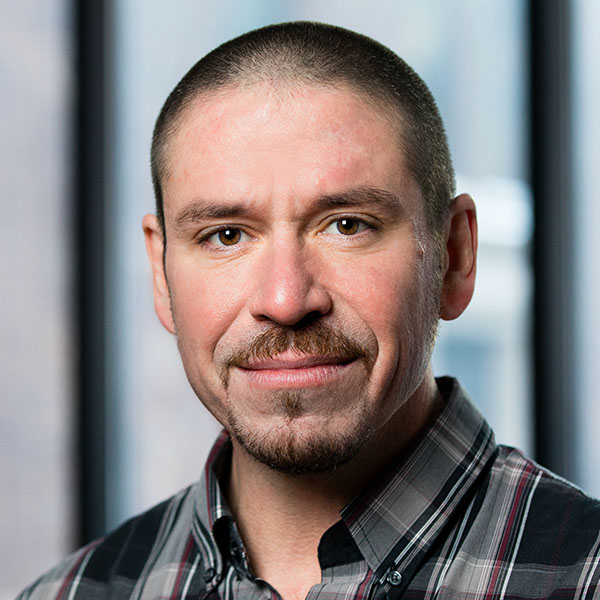
Dr. Alexander M. Tahk is Associate Professor of Political Science at the University of Wisconsin–Madison, with additional affiliations as Faculty Affiliate at the University of Wisconsin Law School and Honorary Fellow at the Institute for Legal Studies. He serves as Director of the Tommy G. Thompson Center on Public Leadership and participates in various university committees including the Faculty Senate. Ph.D., Political Science, Stanford University (2010) M.S., Statistics, Stanford University (2006) S.B., Mathematics and Political Science, MIT (2002) His research focuses on political methodology, statistical modeling of roll-call votes and judicial citations, and applications of machine learning to public health policy. Key contributions include developing the MONOCAR model for handling complex time-series data in political science, particularly polling and events data. Selected scientific contributions include the 2002 MIT award for outstanding undergraduate political science thesis He has advised numerous PhD students in political science including Sarah Bouchat, Marc Ratkovic, Chris Krewson, and Zachary Barnett-Howell, many of whom now hold positions at prestigious institutions like Princeton, Yale, and Pew Research Center. Dr. Tahk created several R packages including npideal for nonparametric ideal-point estimation bucky for social science data analysis CARMAgeddon for continuous-time autoregression modeling pscl for Bayesian analysis of roll-call data
Cavan S. Reilly is Professor in the Division of Biostatistics & Health Data Science at the University of Minnesota School of Public Health , and concurrently serves as Director of the Coordinating Centers for Biometric Research (CCBR) . His expertise lies in the design, conduct, and analysis of clinical trials and observational studies for infectious diseases, with major programmatic emphases on HIV/AIDS and Ebola virus disease (EVD). Education PhD, Statistics, Columbia University (2000) MS, Statistics, Columbia University (1997) MA, Economics, New School for Social Research (1995) BS, Sociology, University of Minnesota (1993) Research Interests Reilly’s methodological work spans Bayesian modeling , high-dimensional longitudinal analysis , and statistical genomics . Application-wise, he presently directs large-scale trials and cohort studies of Ebola survivors, HIV prevention and treatment strategies, and chronic conditions such as COPD. His lab has produced open-source software for microarray and mass-spectrometry data processing, as well as platforms supporting multi-site clinical data management. Scientific Awards & Recognition Elected Member, Delta Omega Honorary Society in Public Health Teaching & Mentorship At Minnesota, Reilly regularly teaches PubH 8401 Linear Models and has previously offered courses in statistical genetics, Bayesian decision theory, and non-parametric methods. Graduate students working at CCBR routinely receive methodological and domain mentorship under his guidance. Laboratories & Centers He leads the Coordinating Centers for Biometric Research , a major academic contract research organization that provides statistical, data-management, and informatics support to multi-center NIH and international trials in infectious disease and chronic illness.
David C. Wilson serves as Dean of the Goldman School of Public Policy and Professor of Public Policy at the University of California, Berkeley. His scholarly work centers on political psychology, race and justice, and American politics, with a particular focus on survey research methods and the measurement of intergroup attitudes. Wilson has published extensively on racial resentment, voter identification laws, and the impact of diversity climate on organizational engagement, and co-authored the book Racial Resentment in the Political Mind (University of Chicago Press, 2022). Wilson earned a BA in government from Western Kentucky University and completed his graduate education at Michigan State University, where he received an MPA in public policy and administration, an MA in political science, and a PhD in political science. His academic journey reflects a deep commitment to understanding the intersections of policy, psychology, and social dynamics. His research investigates how social cognition shapes political preferences and survey responses, with key contributions in understanding double standards in racial evaluations, blame attributions in politics, and the relationship between diversity climate and employee engagement. Wilson's work bridges political science and psychology, employing experimental and survey methods to explore the psychological underpinnings of political behavior, particularly regarding racial attitudes and justice perceptions. Analysis of Wilson's recent publications (2022-2025) reveals a strong emphasis on contemporary political challenges, including the January 6th insurrection, voter ID laws, and public opinion on emerging technologies like facial recognition and artificial intelligence. His articles consistently address methodological issues in survey research while advancing theoretical understanding of racial attitudes and political trust, demonstrating his dual expertise in substantive political issues and research methodology. Wilson maintains life memberships in the American Political Science Association, International Society for Political Psychology, and several other professional organizations. He has held leadership roles including service on the executive council of the American Association of Public Opinion Researchers and the editorial board of Public Opinion Quarterly , reflecting his significant contributions to the field of survey methodology and political psychology. Throughout his career, Wilson has advised graduate students in public policy and political science. His professional experience extends beyond academia to include senior positions at the Gallup Organization, where he led national and international survey projects on topics ranging from workplace creativity to prejudice in politics, and consulting for SPSS on data analysis. A US Army Reserve veteran with 19 years of service and combat tours in Operations Desert Storm and Iraqi Freedom, Wilson brings diverse perspectives to his academic work.
Ziv Katalan serves as Adjunct Professor in the Operations, Information and Decisions department at the University of Pennsylvania's Wharton School and Managing Director for Wharton Global Initiatives. He holds a PhD in Management Science/Operations Research from Columbia University (1995) and a BS in Mathematics from Tel-Aviv University (1987). His educational background includes: BS in Mathematics, Tel-Aviv University (1987) PhD in Management Science/Operations Research, Columbia University (1995) Dr. Katalan's research focuses on optimizing production and service systems through operations research methodologies, specifically examining resource allocation dynamics, scheduling under uncertainty, and manufacturing performance impacts of product variety expansion. His work bridges theoretical modeling with practical applications in supply chain and service operations management. His publications (1994-2005) in Operations Research, Management Science, and Queueing Systems reveal consistent themes: stochastic modeling of production-inventory systems, economic lot scheduling under demand variability, and queueing network analysis for multi-class service systems. A significant portion addresses base-stock policy optimization across rental fleets, manufacturing lines, and polling systems. He has received multiple teaching honors: Wharton MBA Program Core Teaching Award (2013) Wharton MBA Program for Executives Elective Teaching Award (2006, 2011) MBA Core Curriculum Cluster Teaching Award (1997, 1999, 2001) First Place Student Paper Award, ORSA Technical Section (1994) Honorable Mention, George E. Nicholson Competition (1994) Dr. Katalan has taught business analytics, operations management, and quantitative finance across Wharton's MBA programs and Penn's Executive Master’s in Technology Management (EMTM). As EMTM Co-Director (2002-2007), he led this engineering-business joint program. His industry-focused research demonstrates strong connections between theoretical operations models and real-world business applications, particularly in resource-constrained environments.
Philip E. Tetlock is the Leonore Annenberg University Professor at the University of Pennsylvania, with appointments in the Psychology Department and the Wharton School of Business. A leading scholar in social psychology , political psychology , and decision science , he is renowned for his work on forecasting tournaments and expert judgment . His research bridges organizational behavior , cognitive science , and geopolitical risk assessment . Ph.D., Yale University (Psychology, 1979) M.A. and B.A., University of British Columbia (1976-1975) Tetlock’s research focuses on: Expert judgment and its limitations in political and geopolitical forecasting Counterfactual reasoning in world politics and historical analysis Forecast aggregation via prediction markets and polls Cognitive biases in decision-making and belief perseverance His recent publications explore: 2024 – Comparing prediction markets (LMSR vs. CDA) and their efficacy in identifying elite forecasters 2023 – Analyzing long-range geopolitical forecasts and the role of specialization in nuclear proliferation prediction 2022 – Challenging the false dichotomy between individual forecasting and systemic risk awareness Scientific awards include: Fellowships in the American Philosophical Society , MacArthur Foundation , and American Academy of Arts and Sciences Thomas Schelling Award , Woodrow Wilson Award , and Grawemeyer World Order Prize Multiple MacArthur Fellowships and Distinguished Scientific Awards As co-leader of the Good Judgment Project , Tetlock has pioneered superforecasting and probability judgment training . He advocates for Bayesian reputational bets and adversarial collaborations to advance scientific progress in political science and behavioral economics .
Dr Ian A Rudy is a Research Fellow at the University of Cambridge , affiliated with Robinson College. His academic roles include serving as Director of Studies in Management Studies and a Senior Returning Agent for RCSA polls . Email: iar1@cam.ac.uk Degrees: MA in Natural Sciences (Cambridge), PhD (Cambridge) Teaching Interests: Mathematics, statistics, quantitative methods, operational research, and presentation skills. He is actively engaged in academic governance and mentoring within his college.
Marie Neihouser is an Associate Researcher at ESPOL (School of European and International Studies) within the Catholic University of Lille, specializing in digital political behavior with empirical focus on French electoral contexts. Her work bridges digital media studies and political sociology to examine evolving citizen-state interactions in online spaces. Her educational background includes: Doctorate in Political Science, University of Montpellier Neihouser's research centers on digital social sciences, investigating how internet platforms reshape political communication, electoral participation, and media consumption. She pioneers studies on political disconnection—where citizens deliberately withdraw from online political discourse—and analyzes internet voting adoption, social media dynamics during elections, and neighborhood effects on voting behavior. Her methodology combines quantitative survey analysis with latent class modeling to uncover nuanced voter typologies. Analysis of her 15 most recent publications reveals dominant trends in French digital politics: 73% examine election-related phenomena (presidential/municipal), 60% focus on social media impacts, and 47% analyze voter disconnection/non-participation. Geographically, 87% center on France with specific attention to Roubaix and Lille metropolises, while 20% extend to European Parliament dynamics. Methodologically, she prioritizes mixed-method approaches combining big data analysis with traditional survey techniques. Neihouser actively contributes to major research initiatives including the ANR-funded MUTADATA project at Université Catholique de l'Ouest, plus ESPOL-Lab projects CCS France, PEOPLE2022, and MULTIDEMAUT. Previously, she participated in RECONNECT, PELiCaN2020, and PELMEL projects examining European democratic innovations. As a core member of ESPOL-Lab, she collaborates within interdisciplinary teams studying digital governance, political communication, and electoral behavior. Her current work investigates algorithmic influences on political disengagement and comparative cross-platform analysis of political discourse withdrawal.
Blanka Szeitl is a Lecturer at the Department of Statistics, Faculty of Social Sciences, Eötvös Loránd University (ELTE), and an active Research Fellow at the HUN-REN Center for Social Sciences. She holds a PhD in Applied Mathematics (2024) from the Bolyai Institute, University of Szeged, with a thesis on survey error correction, and an MSc in Survey Statistics from ELTE. PhD: Applied Mathematics, University of Szeged (2017-2024) MSc: Survey Statistics, ELTE (2012-2015) BA: Sociology, ELTE (2008-2012) Her research focuses on survey methodology in evolving social and technological contexts, particularly Total Survey Error, measurement uncertainty, and probability theory applications. She has published extensively on sampling bias, data correction techniques, and health status of marginalized groups. As founder of ELTE’s Survey Methods Room Budapest research group, she leads funded projects and student mentorship initiatives. Key trends in her publications include cross-national survey design (European Social Survey), health disparities in vulnerable populations, and mathematical optimization for sampling strategies. She frequently presents at conferences like the ISI World Statistics Congress and European Survey Research Association meetings. Scientific recognition includes: Invitation to the Young Statistician Meeting (Austria, 2015) for her MSc thesis work In teaching, she leads courses on survey sampling, data analytics, and statistical theory, integrating mathematical rigor with practical survey techniques. She also co-founded Panelstory, Hungary’s first probability-based online panel.
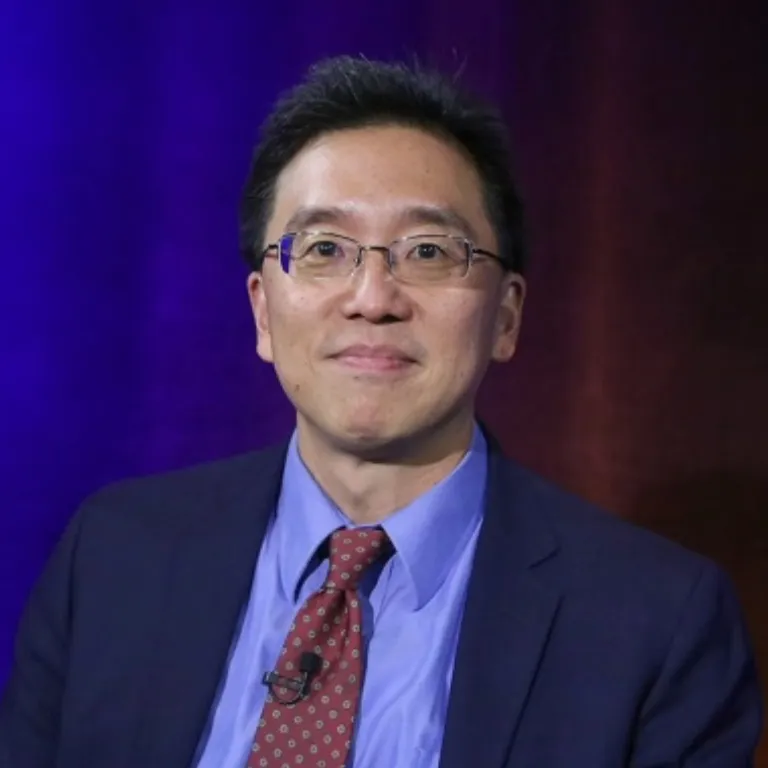
Charles Tien serves as Professor of Political Science in the School of Arts and Sciences at Hunter College, City University of New York, and concurrently directs the Asian American Studies Program. His academic career spans congressional staff experience, departmental leadership as former chair, and international recognition as a Fulbright Scholar at Renmin University in Beijing. His research expertise centers on American political institutions with particular focus on congressional behavior, racial and ethnic dynamics in voting patterns, and sophisticated quantitative approaches to election forecasting. Tien has developed significant methodological contributions through his collaborative work with Michael S. Lewis-Beck on presidential election prediction models that have appeared consistently in leading journals. Tien's publication record demonstrates consistent scholarly productivity since the early 2000s, with recent work examining the intersection of racial identity and presidential voting behavior alongside continued refinement of election forecasting techniques. His research bridges theoretical political science with practical electoral analysis, often addressing contemporary political challenges through rigorous quantitative frameworks. Fulbright Scholar in American Politics at Renmin University in Beijing Tien's teaching portfolio includes foundational courses in American government alongside specialized offerings in congressional politics, minority representation, and advanced research methodology. His professional trajectory reflects deep engagement with both theoretical political science and practical electoral analysis, having previously served as congressional staffer on Capitol Hill before transitioning to academia where he has shaped departmental leadership and interdisciplinary program development.
Olivier Robin is an Assistant Professor in the Department of Mechanical Engineering at the Faculty of Engineering, Université de Sherbrooke, Canada. He joined the university as an Assistant Professor in 2021, following his roles as a Lecturer (since 2013), Research Professional (2015-2021), and Post-doctoral Researcher (2014-2015). He also has teaching experience at the University of Maine in France (2007-2013). His research focuses on acoustics, vibrations, noise control, and full-field vibration measurements. His work spans experimental methods, computational modeling, and practical applications in noise reduction and acoustic measurement techniques. He has developed innovative approaches including deflectometry for vibration measurement, methods for acoustic field synthesis, and applications of metamaterials for sound control. Dr. Robin's publication record shows a strong focus on turbulent boundary layer excitation, panel vibrations, sound radiation, and similitude laws. His recent work has expanded into science communication through comics and crowdsourcing listening tests, demonstrating an interdisciplinary approach that bridges engineering with human perception and educational outreach. Prix 'Yves Rocard' de la Société Française d'Acoustique (2014) Bourse Pratt & Whitney (2013) Bourse du vice-doyen à la recherche, Université de Sherbrooke (2013) 3e Prix d'excellence des professionnels et professionnelles de recherche 2021 - FRQNT 2020 CASCADE AWARD - Meilleure exposition, petite institution Dr. Robin has supervised 8 undergraduate internships between 2012 and 2021 and has been involved in numerous research grants totaling over $3 million. He serves as Principal Investigator on several projects including COMSILABE, flexible mechanical engineering laboratories, and positive energy compromise metamaterials for noise reduction. He is active in international collaborations, particularly with institutions in France, Chile, and Italy, and has organized multiple academic conferences including Acoustics Week in Canada 2021. His laboratory work focuses on vibroacoustics testing, full-field vibration measurements, and the development of novel acoustic measurement techniques. He leads the Material/Metamaterials axis of the Jacques Cartier Acoustics Center and has established collaborations with institutions worldwide to advance research in acoustics and vibration.
Jason Gershman is Chair and Associate Professor of Mathematics at the Halmos College of Arts and Sciences, Nova Southeastern University. He holds a Ph.D., M.A., and B.A. in Statistics from Rice University. Research Focus: Biostatistics, Statistics in Sports, Applied Probability, Statistical Genetics, and interdisciplinary applications to pharmacy, medicine, marine biology, and political polling. His recent publications explore diverse areas including educational technology in statistics pedagogy, political polling methodologies, mathematical modeling in sports analytics, and healthcare policy analysis. Gershman actively engages in honors education through course instruction, committee service, and experiential learning activities like the Murder Mystery Dinner and honors banquets.
Robert Northcott is a Professor of Philosophy at the School of Historical Studies , Birkbeck, University of London , where he has been affiliated since 2011. He previously taught at the University of Missouri-St Louis and earned his PhD from the London School of Economics . His research spans philosophy of science, metaphysics, and interdisciplinary applications to economics, political science, and public health. Education: PhD in Philosophy, London School of Economics MSc in Economics BSc in Mathematics and History His primary research focuses on causal fragility in real-world systems, particularly in philosophy of science and metaphysics . He advocates for localized empirical work over abstract theory in fields like economics and political science. His recent book Science for a Fragile World synthesizes these themes, emphasizing the limitations of generalizable scientific models in unstable environments. His publications analyze topics such as: Predictive modeling in economics and political science Causation and counterfactual reasoning Ethical implications of statistical methods Philosophical critiques of big data and experiments He has supervised doctoral researchers including Mattias Ahlgren and Richard Urwin and teaches modules like The Ethics of Technology and Artificial Intelligence and Research in Practical Philosophy . Outside academia, he has personal interests in competitive sports and holds an ORCID identifier (0000-0001-8791-8364).
Daniel Hopkins is the Julie and Martin Franklin Presidential Professor of Political Science at the University of Pennsylvania , with secondary appointments at the School of Engineering and Applied Science and the Annenberg School for Communication . His research focuses on American politics , particularly racial and ethnic politics , state/local politics , and political behavior , with methodological expertise in research methods . His recent work has examined public support for cross-issue compromises , ideological voting patterns , and racial classification dynamics . He has also contributed to understanding Latino political shifts toward the GOP and the limits of elite influence on ACA attitudes . Scientific Awards: 2024: Phillip E. Converse Book Award 2021: Best Paper with Pre-registration Award (Journal of Experimental Political Science) 2020: APSA Citizenship and Migration Section Best Article Prize 2019: Political Research Quarterly Outstanding Reviewer Award 2015: Society of Political Methodology Miller Prize He has contributed methodologically to conjoint experiments , survey design , and political data analysis , with practical applications in Philadelphia through the Philadelphia Behavioral Science Initiative . His work has appeared in major journals including the American Journal of Sociology and Political Behavior .
Paula Vicente is an Associate Professor of Statistics and Data Analysis at ISCTE Business School, ISCTE - Lisbon University Institute, and an Integrated Researcher at BRU-Iscte (Business Research Unit) specializing in the Data Analytics Group. Her expertise spans survey methodology, data science applications in market research, and official statistics, with extensive consulting experience in survey design and sampling. Her academic qualifications include: Aggregation in Statistics and Data Analysis (2013) PhD in Quantitative Methods (Surveys and Opinion Polls) from ISCTE (2004) Master's degree in Business Sciences (1996) Bachelor's degree in Business Organization and Management (1993) Her research focuses on telephone/mobile phone surveys, official statistics, and data science integration in traditional survey methods. She addresses critical challenges like coverage error in internet surveys, mobile-only population representation, and social media data applications for social science research. Her work bridges methodological rigor with practical applications in public policy and business contexts. Recent publications (2015-2025) reveal three dominant research trajectories: mobile survey methodologies (dual-frame CATI, callback strategies), public transport user behavior (satisfaction, loyalty, adoption barriers), and environmental/public health applications (willingness-to-pay, recycling behavior, pandemic response). Her work increasingly integrates computational techniques like fuzzy clustering with traditional survey approaches. No major scientific awards or fellowships are documented in the source materials. She serves as Coordinator for the PhD in Management program (2022-2026) and 1st Year Coordinator for the Data Science Bachelor's program (2024-2026). Her consulting portfolio includes ICS/ISCTE Surveys and the Study on Oral Health of Children and Youth (SCML), with active participation in professional associations like the Portuguese Statistical Society (2000-2013) and Portuguese Association for Classification and Data Analysis (since 2000). As a core member of BRU-Iscte's Data Analytics Group, she contributes to advancing business research through statistical modeling and computational methods, with particular focus on applying survey methodology innovations to real-world business and societal challenges.