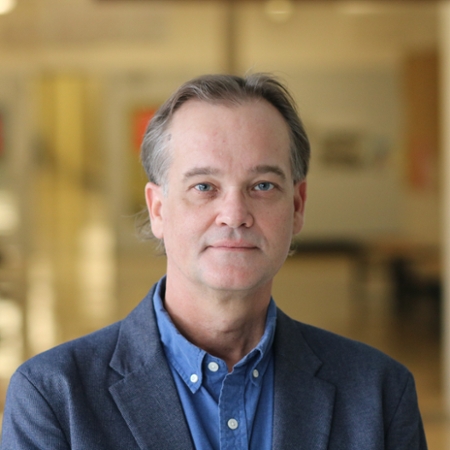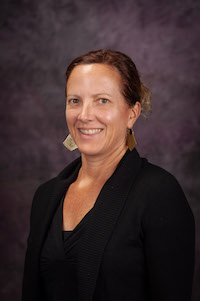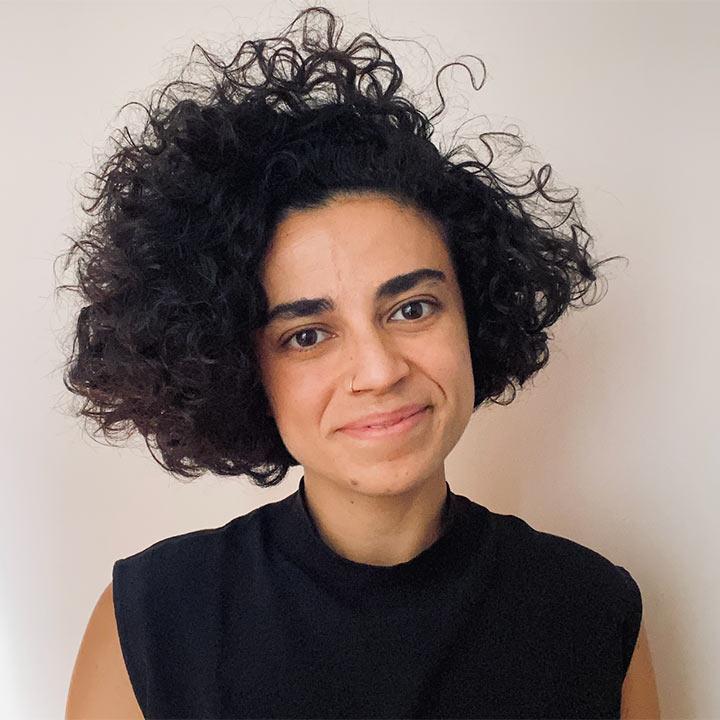
Cynthia Citlallin Delgado is an Assistant Professor in the Department of Women and Gender Studies at Dyson College of Arts and Sciences, Pace University, New York City. Her interdisciplinary scholarship intersects performance studies, queer and trans studies, feminist theory, and Latin/x American studies, with a focus on the spatial and aesthetic dimensions of political resistance. Education: PhD in Performance Studies, New York University, 2022 MS in Gender Studies, London School of Economics and Political Science, 2015 BA in Studio Art / Economics, Mount Holyoke College, 2009 Her research explores the interstitial spaces of transfeminist performance, particularly in urban contexts like Mexico City. She examines how performance art and activist practices challenge normative spatial and gendered boundaries. Her work engages with critical theory, visual cultures, and the politics of aesthetics, often through a decolonial and queer lens. Her recent publications span journals such as TSQ , Gender, Place & Culture , and Women & Performance . These works reveal a consistent focus on trans performance, feminist pedagogy, and the politics of space—often blending creative and scholarly forms. Her book project, Staging the Interstice: The Space of Transfeminist Performance , develops a queer theory of space through artistic and activist interventions. Scientific Awards: Monroe Lippman Memorial Prize for Distinguished Doctoral Dissertation, NYU, 2022 Dean's Dissertation Fellow, NYU Graduate School of Arts and Sciences, 2021 Delgado has taught courses including Gender, Race and Class , Queer Theory , and Research Methods . While no formal advisees are listed, her engagement with pedagogy and mentorship is evident in her scholarly focus on trans*pedagogy and feminist teaching practices. She has not mentioned grants in the provided text, but her fellowships indicate institutional support for her research. Her work is grounded in collaborative, community-engaged, and interdisciplinary methodologies. Though no lab or formal research team is mentioned, her creative and scholarly work suggests deep collaboration with artists, activists, and collectives in Mexico City and beyond. Her future work is likely to expand on the spatial, aesthetic, and political dimensions of transfeminist resistance.