معرفی
D. Medina Lasansky is a Professor in the Department of Architecture at Cornell University, within the College of Architecture, Art, and Planning. Her work bridges architectural history, theory, and popular culture, exploring how built environments reflect and shape political and social dynamics.
Her research interests include architectural history, architectural theory, the politics of space, tourism, sensory experience in architecture, and the mediation of architecture through popular media. She has developed innovative courses such as Archi.Pop, Gastro-Porn, and Sensational Space, which challenge students to critically engage with everyday cultural forms as spatial practices.
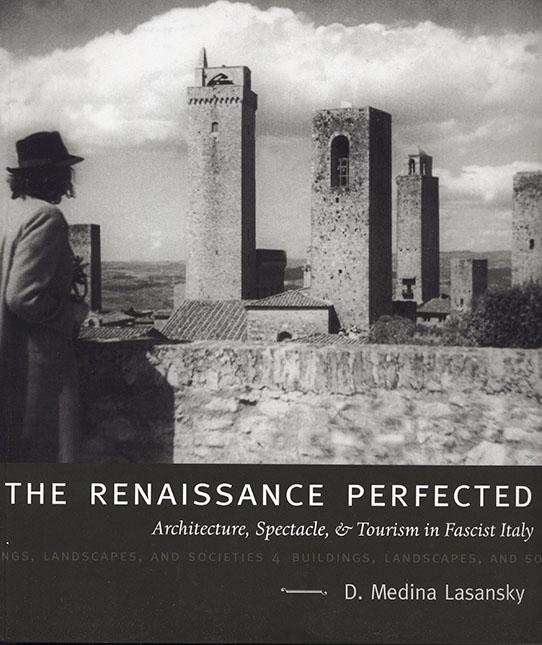
The publications and essays she has authored or edited, such as Playing Place and Renaissance Perfected, demonstrate a consistent focus on how architecture interacts with broader cultural narratives, from fascist Italy to contemporary board games. Her work often reveals hidden or overlooked histories embedded in both monumental and mundane environments.
Her scientific awards and fellowships include the Provost's Award for Distinguished Scholarship, a Fulbright to Italy, and residencies at the Wolfsonian, the Canadian Centre for Architecture, and the Society for the Humanities at Cornell.
- Provost's Award for Distinguished Scholarship (2005)
- Fulbright to Italy
- Faculty Fellow, Society for the Humanities, Cornell (2003–04)
- Research Fellow, the Wolfsonian-FIU (2003)
- Research Fellow, University of Turin (2003)
- Visiting Scholar, Canadian Centre for Architecture (2004)
Lasansky has advised and collaborated with numerous scholars and students, including Ph.D. candidates and alumni such as Chad Randl. She has received significant research grants that have supported archival work in Italy and interdisciplinary collaborations. Her editorial projects, such as Playing Place, involve wide networks of contributors from across disciplines and institutions, reflecting her commitment to engaged, public-facing scholarship.
Though not explicitly affiliated with a named lab or research center, her work is closely tied to the intellectual life of Cornell’s architecture department and the Society for the Humanities. Her courses and publications foster collaborative, cross-disciplinary inquiry into the cultural dimensions of architecture.