معرفی
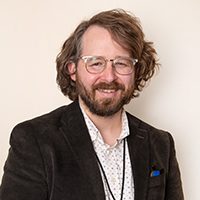
Kyler Campbell serves as an Assistant Professor of English and Foundational Studies at Charleston Southern University, integrating academic rigor with spiritual mentorship. He holds a Bachelor of Arts in Interdisciplinary Studies from North Greenville University and a Master of Fine Arts in Fiction from Converse College, grounding his pedagogical approach in both scholarly and creative traditions.
His educational credentials include:
- Bachelor of Arts in Interdisciplinary Studies, North Greenville University
- Master of Fine Arts in Fiction, Converse College
Dr. Campbell's research centers on American literary traditions, with dual emphases on critical analysis and creative production. His scholarly work explores ecocritical frameworks in Steinbeck's fiction, while his creative output spans Southern Gothic, magical realism, and regional narratives that interrogate place, identity, and environmental consciousness. This synthesis reflects his commitment to bridging theoretical discourse with narrative artistry.
Publication trends reveal consistent engagement with Southern literary aesthetics across two decades, evolving from early regional explorations (2009-2013) toward more theoretically grounded criticism (2014-2019). His creative fiction consistently examines cultural and ecological relationships, while his sole scholarly article demonstrates specialized expertise in ecocritical methodology applied to canonical American texts.
No scientific awards or honors are documented in the provided materials.
Information regarding student advisement, research grants, or funded projects is absent from the source text, though his role as faculty suggests potential mentorship responsibilities. His integration of faith-based service as Riverbluff Church's worship director complements academic duties, reflecting CSU's mission-driven environment.
Professional affiliations with the Associated Writing Programs (AWP) and National Association of Christian Teachers in Education (NACTE) indicate active participation in literary and faith-based academic communities, though specific contributions remain unspecified.