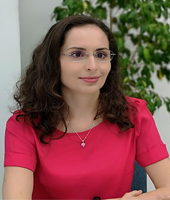
Professor Ana-Maria CAZAN serves in the Department of Psychology and Education Sciences at the Faculty of Psychology and Education Sciences, Transilvania University of Brașov, Romania. Her office is located at Nicolae Bălcescu 56, Building K, Brașov, with contact via phone/fax (+40 268 416184) and email (ana.cazan@unitbv.ro). Her research program centers on educational psychology with critical focus areas including: Self-regulated learning and cognitive development in academic settings Academic adjustment mechanisms for university students Positive psychology applications in educational contexts e-Learning efficacy and technostress mitigation Career decision-making frameworks for adolescents Pandemic-induced disruptions in educational systems Recent publications (2023-2025) reveal strong methodological diversity through longitudinal studies, cross-cultural comparisons, and instrument validation research. Her work consistently addresses Romanian educational contexts while contributing to global discourse on digital learning challenges, academic resilience, and psychometric assessment tools. Key thematic trends include pandemic recovery strategies, technostress interventions for educators, and culturally adapted measurement instruments for student well-being.
Prof. Cosmin Goian is a Full Professor at the Department of Social Assistance, Faculty of Sociology and Psychology, West University of Timișoara (UVT). He has been a faculty member since 1999 and currently serves as Director of the Department of Social Assistance and Director of the master's program in Management and Supervision in Child and Family Welfare. He earned his PhD in Sociology (2007) from Alexandru Ioan Cuza University, Iași, with a focus on communication in social work. He became a PhD supervisor in Sociology in 2014. His research focuses on communication dynamics in social work, deontology, and conflict resolution. Notable areas include the role of media in shaping societal perceptions, gerontological care, and crisis management during the pandemic. He has authored/co-authored over 50 publications, including books like Practical Training in Social Work and Semantic Analysis of Social Work Language in Romania . His recent work addresses pandemic impacts on vulnerable groups (e.g., elderly in institutions, children with special needs), nonverbal communication with refugees, and fake news effects during the Ukraine war. He leads projects funded by UEFISCDI grants (2018). His teaching and administrative roles emphasize practical training, interprofessional collaboration, and evidence-based practice in social work education. Education: PhD in Sociology (2007), UVT Social Assistance studies Key Roles: Department Director, Master's Program Director, PhD Supervisor Research Themes: Social Work Communication, Gerontology, Crisis Intervention, Media Sociology Awards: Multiple UEFISCDI grants (2018), recognition for contributions to social work pedagogy
Laura Bini is an Assistant Professor of Financial Accounting at the University of Florence, School of Economics and Management. She teaches courses in business administration, accounting, financial statement analysis, and business planning at both undergraduate and graduate levels. Education: PhD in Financial Accounting, Università degli Studi di Firenze (2010) Visiting Student, Manchester Business School (2009) Her research focuses on corporate disclosure, international accounting, financial statement analysis, disclosure quality, impression management, and non-financial information . She investigates how firms communicate performance metrics across Europe and the drivers behind disclosure practices, particularly in relation to regulatory and cultural differences. The recent articles reflect a consistent research trajectory centered on transparency, harmonization, and the informational value of financial and non-financial reporting. Her work spans disciplinary areas such as accounting, corporate governance, financial communication, and sustainability reporting, with strong emphasis on European contexts and cross-country comparisons. Scientific Awards and Grants: Research grant from the Institute of Chartered Accountants of Scotland (ICAS) for the project 'The informational capacity of financial performance indicators in European annual reports' Research grant (2010–2011) for the project 'The disclosure of performance indicators in European annual reports: a comparison between Anglo-Saxon and Continental countries' Laura Bini has been actively involved in funded research projects related to disclosure practices and performance indicators. While no formal advising of students is mentioned, her academic contributions include publications in journals such as Advances in Accounting , Journal of Management and Governance , and Journal of Intellectual Capital , as well as a published book. She does not appear to lead any named labs or research teams, but her work contributes significantly to the field of accounting transparency and international comparability.
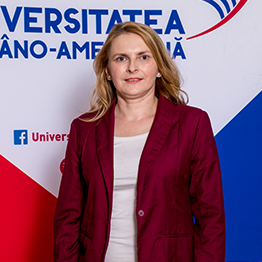
Lavinia Stănică Justina is a university lecturer at the Faculty of Managerial Informatics, Romanian-American University (URA), with 18 years of teaching experience in software programming and e-learning domains. Holding a PhD in Cybernetics and Economic Statistics since 2011, she teaches courses in Romanian and English at both bachelor's and master's degree programs. Her research focuses on ICT's role in innovation, educational technologies, and data analysis for energy consumption, with over 30 publications and multiple coordinated research projects. Faculty: Managerial Informatics University: Romanian-American University Academic Rank: Lecturer Teaching Experience: 18 years PhD: Cybernetics and Economic Statistics (2011) Her research interests include: e-Learning systems and technology integration Artificial Intelligence applications in education ICT's impact on innovation performance Mathematical content modeling Energy consumption data analysis Internet of Things implementations Fractal techniques in imaging Recent publications highlight trends in: Comparative innovation-ICT readiness analysis AI education accessibility Smart energy systems Competitive programming metrics Neural network energy forecasting IoT cloud solutions Modular educational software As Erasmus coordinator since 2013 and Institutional Erasmus Coordinator since 2020, she actively promotes internationalization efforts and academic collaboration with partner universities across Europe.
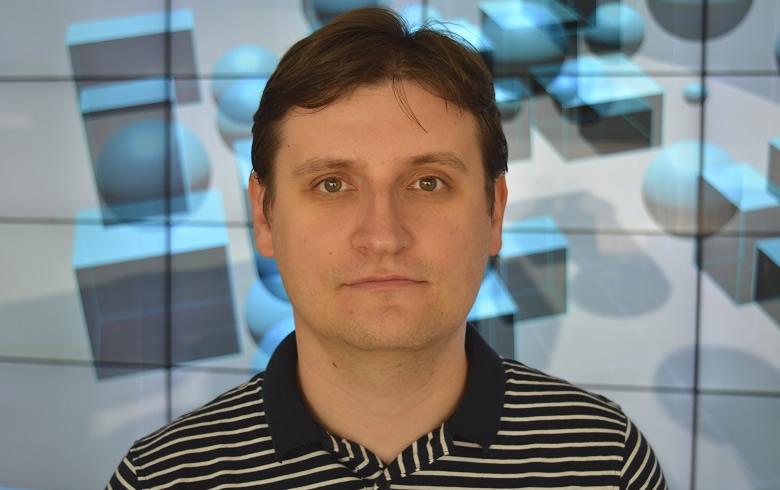
Călin-Adrian POPA is a Full Professor at the Department of Computer and Software Engineering, Politehnica University of Timişoara. He holds a Ph.D. in Computer Science and Information Technology (2015) from Politehnica University Timişoara, and additional degrees in Mathematics from West University of Timişoara (B.Sc. 2013, M.Sc. 2015). His research focuses on artificial intelligence, machine learning, and neural networks, with specializations in complex-valued systems (octonion, quaternion, Clifford algebra), stability analysis, and synchronization of neural networks. He has been awarded the 'Profesor Bologna' Distinction (2017). Research interests include: Advanced neural network architectures Deep learning for computer vision Fractional-order systems Nonlinear dynamics and control Applications in robotics and astrophysics His publications span 2014–2025, emphasizing theoretical contributions to neural networks and practical applications in computer vision and robotics. He supervises a large cohort of PhD students in AI-related fields.
Cosmina Lungoci is a Professor at the Department of Educational Sciences, West University of Timișoara, Faculty of Letters, History and Theology. Her academic contributions span teacher training, language pedagogy, and intercultural education, with a focus on Romanian and French language teaching. She graduated from UVT and earned her PhD there with a thesis on Francophonie and Francophilia in 19th-century Romanian culture. Her research includes national and international projects, specialized publications, and books on didactics. PhD: West University of Timișoara (Francophonie și francophilie în cultura romană a XIXth century) Graduate: UVT, Faculty of Letters, History and Theology (Romanian and French Language/Literature) Her work emphasizes intercultural competence development, literacy challenges, and innovative pedagogical methods like KAMISHIBAÏ. Recent publications address online teaching, remedial activities, and diversity in education. She coordinates projects and edited volumes such as Places and Therapy (2023) and Roamer in Western Romania (2023). Contact: cosmina.lungoci@e-uvt.ro, Office 336, UVT.
Radu-Daniel Vatavu is Professor of Computer Science at Ștefan cel Mare University of Suceava, Romania, where he directs the Machine Intelligence and Information Visualization Lab (MintViz). His research focuses on human-computer interaction, gesture recognition, ambient intelligence, and accessible computing. Education includes PhD in Computer Science. He develops gesture recognition algorithms including $P and $Q recognizers used widely in HCI research. Awards include Mihai Draganescu Award of the Romanian Academy (2019), Ten-Year Technical Impact Award from ACM ICMI (2022), and multiple ACM CHI Best Paper Awards (2023, 2016, 2015). Research develops new interaction techniques for touchscreens, wearables, and smart environments. Creates open-source tools like Agreement Analysis Toolkit (AGATe) and Gesture Heatmaps Toolkit (GHoST).
Adrian TRIFAN is a Professor at the University of Brasov, affiliated with the Department of Finance, Accounting and Economic Theory within the Faculty of Economic Sciences and Business Administration. His research focuses on management accounting methodologies, performance measurement systems, and the integration of mathematical models into economic analysis. He also explores digitalization trends in Central and Eastern Europe, consumer behavior in e-commerce contexts, and sustainable development strategies driven by technological innovation. Trifan's academic contributions span over two decades, with notable work on accounting treatments for financial assets, inventory management practices, and the application of emerging technologies like Augmented Reality in corporate promotion. He has collaborated on projects analyzing health perception impacts of new technologies across EU nations and evaluating green consumption patterns among Romanian youth. His work bridges theoretical frameworks with practical business challenges, emphasizing empirical research in regional development and SME competitiveness. His publications demonstrate interdisciplinary reach, linking accounting practices to broader economic indicators and digital transformation. While no specific awards are listed, his extensive publication record reflects sustained academic impact in finance, management accounting, and tech-driven economic analysis. Advising activities are not detailed in the provided materials, though his research collaborations suggest involvement in guiding academic projects related to his core specialties.
Daniela Popa is an Associate Professor at the Department of Psychology and Formation in Education within the Faculty of Psychology and Educational Sciences at Transilvania University of Brașov (UNITBV). Her research focuses on educational psychology, speech disorders therapy, and learning difficulties, with notable contributions to information literacy, digital competencies, and pandemic-era educational challenges. She has collaborated internationally, including studies with Brunei on intercultural competence and positive psychology. Her work addresses contemporary educational needs such as virtual learning adaptation, ethical AI in education, and inclusive pedagogical strategies. She has authored textbooks like Tulburări de comunicare. Abordări terapeutice and edited volumes on educational approaches. Her research spans student motivation, librarian professional development during crises, and the impact of media in learning. Popa’s publications reflect a blend of qualitative and mixed-methods research, emphasizing practical solutions for modern educational systems. Her recent work highlights innovations in hybrid teaching, mindfulness in sports performance, and biomedical ethics, showcasing interdisciplinary engagement.
Dr. Chernova Irina Viktorivna is an Associate Professor at Zaporizhzhia Polytechnic National University's Faculty of Business Technologies and Economics, Department of Business and Management. With a Candidate of Philological Sciences degree (1999) and Master's in Architecture (2021), her expertise bridges Ukrainian cultural history with modern business communication. Specializes in Management Psychology , Public Relations , and Corporate Branding Developed 120+ scientific works including 3 Web of Science/Scopus publications Led international educational projects with Prometheus and DVV International Her research examines: Branding and Digital Marketing strategies Communication Systems in post-conflict management Historical Preservation in urban development Recent publications analyze: Ukraine's national image in global economics Ukrainian business communication challenges Psychopedagogical motivation frameworks
Sorin Anagoste is a Professor and Vice Dean for Academic Affairs at FABIZ, part of the Bucharest University of Economic Studies. His primary affiliation is with the Bucharest Business School (BBS), where he contributes to academic leadership and faculty governance. He holds a PhD and focuses on interdisciplinary research at the intersection of business strategy, technology, and innovation. His academic career spans over two decades, with a strong emphasis on advancing education and research in digital transformation, artificial intelligence, and entrepreneurship. Prior roles include leadership in mergers and acquisitions studies, transformational leadership research, and Lean Six Sigma methodologies. Research Interests: Artificial Intelligence applications in business decision-making Digital transformation strategies Entrepreneurship dynamics across generations Impact of AI on political and economic systems Knowledge dynamics in organizational contexts Recent work emphasizes the societal implications of AI, including election influence via LLMs, post-pandemic consumer behavior, and Romania's economic interdependencies through Leontief matrix analysis. He has authored over 35 articles on topics ranging from robotic process automation to sustainable development. Professional Activities: Academic leadership in business education reform Consultancy on digital strategy for enterprises Founder of BBS's strategic frameworks for chatbot implementation
Laurențiu-Mihai Treapăt is an Associate Professor at the National School of Political Science and Public Administration (SNSPA), Faculty of Management in Bucharest, Romania. With over 35 years of combined practical and academic experience in banking, financial risk management, and insurance, he bridges theoretical knowledge with real-world banking expertise. He is a member of the Center for Research in Management at SNSPA and has published extensively with 43 publications and 110 citations. Doctor in Economics (2010, Bucharest University of Economic Studies) Postgraduate Program in Banking Management (1994, Romanian-French Institute for Business Enterprises Administration) Bachelor in Finance, Credit, and Accounting (1991, Bucharest University of Economic Studies) Dr. Treapăt's research primarily focuses on finance-banking, capital markets, insurance, and risk management. His work demonstrates expertise in credit risk, operational risk, financial instruments, and banking operations. His international professional training in Germany, Austria, Great Britain, Ireland, and Italy has informed his academic perspective, making him particularly valuable in analyzing European banking practices and risk management frameworks. His publications often address practical banking challenges in the Romanian context while connecting to broader European financial systems. Analysis of his 15 most recent publications reveals consistent focus on risk management across various banking contexts, with increasing attention to digital transformation, virtual teams, and the impact of the COVID-19 pandemic on financial systems. His work spans theoretical frameworks and practical case studies, particularly examining Romanian banking institutions and their adaptation to international standards. Quality Assurance Auditor/Lead Auditor certification from Moody International (IRCA London, Certificate number: 10585/2002) Dr. Treapăt's professional trajectory shows a seamless transition from top banking positions at institutions including National Bank of Romania (BNR), BCR, ERSTE Bank, and BCR Leasing to academia. His teaching connects directly to his extensive practical experience, particularly valuable in training future banking professionals. His international cooperative contract with the European Union Council in Brussels for delivering financial training demonstrates the recognition of his expertise beyond Romania. As a member of the Center for Research in Management at SNSPA, he contributes to the academic community while maintaining connections with banking practice. His leadership experience since age 26, including managing training departments and service delivery divisions in major banks, provides unique perspective when working with students.
Oana Mitruț is an Associate Professor at the Polytechnic University of Bucharest, affiliated with the Department of Computer Science in the Faculty of Automatic Control and Computers. Her research focuses on virtual reality therapy, machine learning applications in healthcare, and accessibility technologies for visually impaired individuals. She has collaborated extensively on projects such as the 'Sound of Vision' initiative, exploring audio-haptic interfaces for navigation and sensory substitution. Her work integrates computational methods with clinical applications, including emotion recognition systems using biophysical signals and adaptive exposure therapy for phobias like acrophobia. She has published widely in journals like Sensors and Symmetry , as well as conferences such as EDULEARN and CHI. Her contributions address challenges in human-centered design for medical VR systems and gamification approaches to improve accessibility. Key areas of investigation include: Machine learning models for fear level detection Audio-based navigation systems for visually impaired users Therapeutic game design for mental health interventions Integration of multimodal feedback in assistive technologies Her research bridges computer science, neuroscience, and clinical practice, emphasizing real-world applications in healthcare and accessibility.
Mihoc T. D. serves as a Lecturer at Babeș-Bolyai University in Cluj Napoca, Romania, teaching Artificial Intelligence, Computer Graphics, and Quantum Computing. He earned his Ph.D. in Computer Science from the same institution in 2011 with a dissertation on evolutionary approaches to game-theoretic equilibria under Prof. D. Dumitrescu. His academic career includes prior service as an Assistant Professor (2012-2017) and foundational experience as a Mathematics and Computer Science Teacher (2000-2008). His educational background features: Ph.D. in Computer Science, Babeș-Bolyai University (2011) Research centers on optimization and game theory, with evolutionary algorithms for Nash equilibrium detection in large-scale games. His work extends to quantum computing implementations, computer graphics applications, and human-computer interaction systems for education and healthcare. Recent publications demonstrate a strategic pivot toward educational technology, examining student perceptions of AI ethics and learning behavior analytics in computer science education. Publication trends reveal a clear evolution: 2010-2017 focused on computational game theory foundations (Cournot oligopolies, equilibrium refinements), while 2023-2025 articles emphasize AI education (ethics perception, assessment techniques, entrepreneurship training). This trajectory shows deliberate expansion from theoretical game theory to applied educational technology solutions. No scientific awards were documented in available sources. Information regarding student advising, research grants, and laboratory affiliations was not provided in the source material. His current teaching responsibilities include course delivery, seminars, and laboratory sessions across three advanced computing domains.
Ana Cristina Marques Daniel serves as an active Associate Professor at the Higher School of Technology and Management (Escola Superior de Tecnologia e Gestão - ESTG) within Portugal's Instituto Politécnico da Guarda (IPG), where she bridges engineering principles with healthcare innovation through teaching and research activities. Her research program demonstrates exceptional interdisciplinary breadth: Biomechanics : Advanced studies on human balance control, gait dynamics, and plantar pressure distribution inform orthotic design and rehabilitation protocols for mobility impairments. Visual System Engineering : Pioneering work on eye movement simulation, visual stress diagnostics, and orthokeratology contact lenses enhances vision correction methodologies and low-vision assistance. Rehabilitation Technology : Development of mechatronic systems for motor recovery and smart-city-integrated assistive devices represents significant translational impact in assistive technology. Biomedical Modeling : Computational frameworks for human vibration response and corneal mechanics enable predictive healthcare solutions for occupational health and refractive therapy. Examination of her 15 most recent publications reveals an evolutionary trajectory from foundational biomechanical modeling toward integrated smart-city applications, with 2023-2024 works emphasizing predictive analytics for motor dysfunction and innovative visual aid systems. This progression demonstrates movement from laboratory research to real-world implementation, highlighting growing emphasis on user-centered design in healthcare technology development. No scientific awards or major professional honors were documented in the source materials. While specific doctoral advisees aren't listed, her frequent co-authorship on student-involved projects (e.g., 3D printing applications, ocular training apps) suggests active mentorship in engineering education. The absence of dedicated laboratory descriptions indicates collaborative research within institutional frameworks rather than standalone facilities.