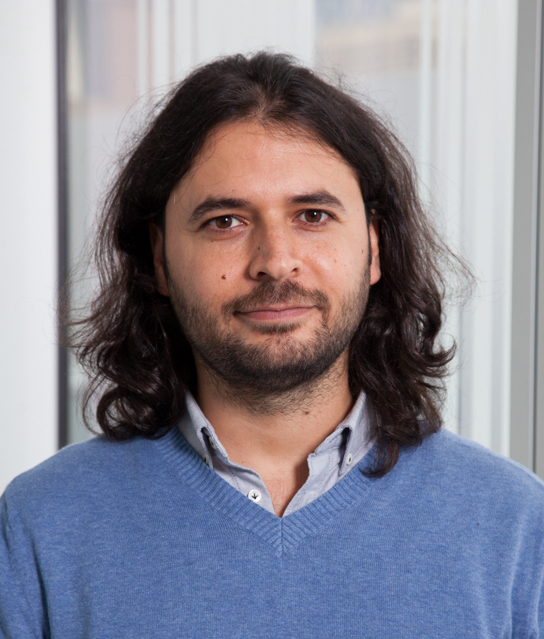
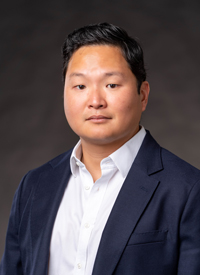
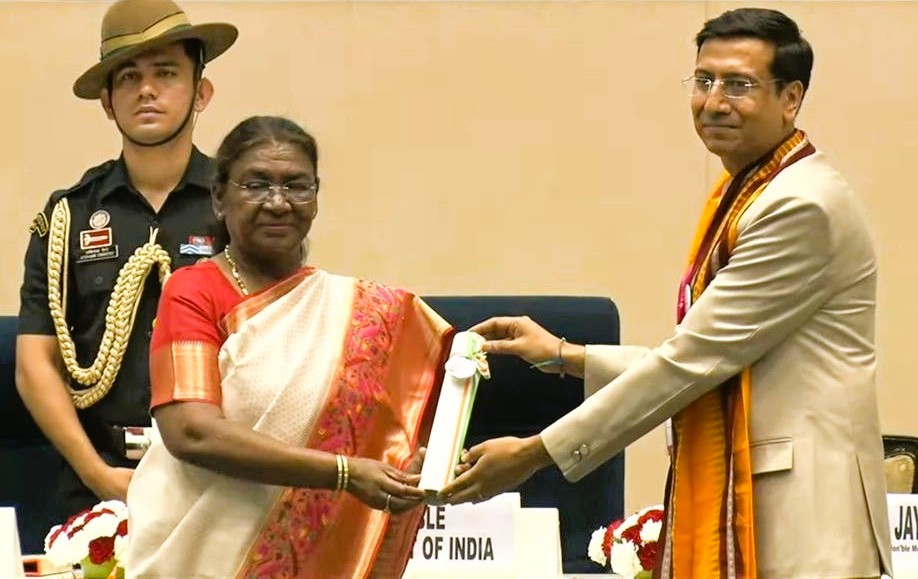
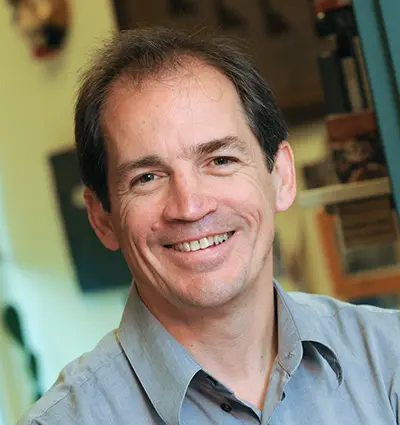
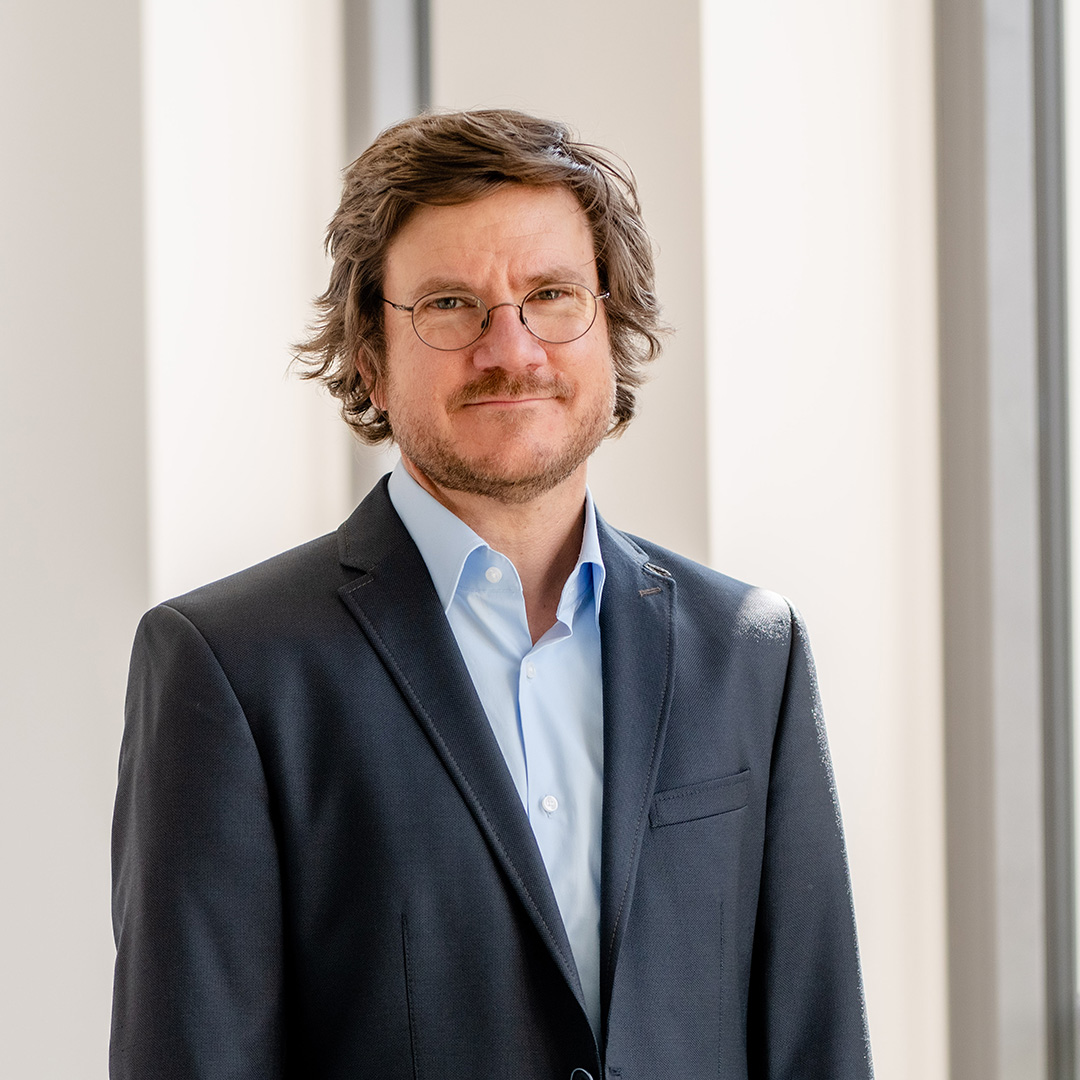
Ömür Arslan is an assistant professor in the Department of Mechanical Engineering at the Eindhoven University of Technology (TU/e) , affiliated with the Robotics Group and the EAISI Mobility and EAISI High Tech Systems institutes. His research focuses on the algorithmic foundations of robotics, particularly safe adaptive motion planning algorithms for robots operating around humans. Education: PhD in Electrical and Systems Engineering (2016), University of Pennsylvania MSc in Electrical Engineering (2012), University of Pennsylvania MSc in Electrical & Electronics Engineering (2009), Bilkent University BSc in Electrical & Electronics Engineering (2007), Middle East Technical University His research interests span robotics, motion planning, control theory, sensor networks, dynamical systems, optimization, machine learning , and machine perception . Recent work includes safe unicycle control, probabilistically safe corridors, and statistical coverage control of mobile sensor networks. He has received nominations for best paper awards at ICRA 2018 and WAFR 2016 . Ömür has supervised student projects such as Hancheng Min's MSc thesis on statistical coverage control and Vincent Pacelli's work on local geometry in motion planning .
Prof. Dr. Kevin Heng is Chair Professor of Theoretical Astrophysics of Extrasolar Planets at Ludwig Maximilian University of Munich, with additional honorary professorships at University College London and University of Warwick. Previously, he served as Executive Director of the Center for Space and Habitability and Professor of Astronomy & Planetary Science at the University of Bern, Switzerland. Dr. Heng received his Ph.D. in astrophysics from the University of Colorado at Boulder in 2007, following undergraduate studies at the National University of Singapore. His academic path included prestigious positions as Zwicky Prize Fellow at ETH Zurich and Member of the Institute for Advanced Study at Princeton. Professor Heng's research focuses on theoretical astrophysics, particularly exoplanetary atmospheres. His work spans atmospheric radiative transfer, dynamics, and chemistry, with applications to missions like ARIEL, JWST, and next-generation space telescopes. He has developed analytical methods and applied machine learning and Bayesian inference to exoplanet science. His innovative approach extends to 'Geoastronomy,' which unifies principles of astrophysics and geochemistry for studying rocky exoplanets. Dr. Heng's recent publications show a strong trend toward analyzing exoplanet atmospheres using data from cutting-edge missions like JWST, with particular focus on hot Jupiters, super-Earths, and sub-Neptunes. His research often combines theoretical modeling with observational data to understand atmospheric composition, dynamics, and evolution across diverse planetary types. Awards and Recognition: ERC Synergy Grant (2025-2031) for Project GEOASTRONOMY Fellow of the Royal Astronomical Society (2023) ERC Consolidator Grant (2018-2023) for Project EXOKLEIN Chambliss Astronomical Writing Award (2018) for his textbook 'Exoplanetary Atmospheres' NCU-Delta Young Astronomer Lecturership Award (2015) Professor Heng has secured substantial research funding totaling over 3.383 MCHF + 12.06 M€, including leadership roles in major projects like PlanetS NCCR. He serves on science teams for multiple space missions including ARIEL, PLATO, and CHEOPS, and has advised numerous students and postdocs through his research groups focused on exoplanet atmosphere modeling and data analysis. His laboratory develops theoretical models and computational tools for exoplanet characterization, with current work focusing on the 'Hot Rocks Survey' of bare rocky exoplanets and advancing retrieval methods for next-generation telescope data.
Bin Ran serves as the Vilas Distinguished Achievement Professor and Director of the Intelligent Transportation Systems (ITS) Program within the Civil & Environmental Engineering Department at the University of Wisconsin-Madison. A globally recognized expert in Connected Autonomous Mobility (CAM), he has authored over 850 scientific articles and secured more than 200 patents across multiple jurisdictions, significantly advancing transportation engineering through innovations in vehicle-highway automation and intelligent infrastructure systems. His educational foundation includes a PhD from the University of Illinois at Chicago (1993), an MS from the University of Tokyo (1989), and a BS from Tsinghua University (1986). These qualifications underpin his leadership in transportation research and education. Ran's research program centers on Connected Autonomous Mobility (CAM), Collaborative Automated Driving Systems (CADS), and Connected and Automated Vehicle & Highway (CAVH) technologies. His work integrates dynamic transportation network modeling, smart city applications, big data analytics, and Drive GPT-enhanced traffic simulation to develop proactive safety systems and resilient infrastructure solutions. Current projects emphasize cloud-based architectures, digital twins, and cooperative vehicle control frameworks. Analysis of his 2024-2025 publications reveals dominant trends in cloud-to-vehicle control systems, risk-quantified adaptive cruise control, and federated digital twin frameworks for connected corridors. Research spans cybersecurity for connected vehicles, energy-efficient platooning, and urban traffic flow optimization—addressing both technological innovation and sustainability challenges in transportation networks. Professor Ran has received prestigious accolades including the ITE's Wilbur S. Smith Distinguished Transportation Educator Award (2018) and the Vilas Distinguished Achievement Professorship (2016). His complete award portfolio features: 2025 TRB Committee on Vehicle-Highway Automation Best Paper Award 2024 Top 0.05% Lifetime Global Highly Ranked Scholar in Transport 2020 ASCE Journal Best Paper Award 2010 Chinese National Distinguished Expert Lifetime Honor 1994 Charley Wootan Award for best transportation PhD dissertation He actively mentors graduate researchers through thesis supervision (CIV ENGR 890/990 courses) and leads major initiatives including the Transportation Research Board's Task Force on vehicle-highway automation architecture and the World Transport Convention's Faculty Committee. His grant portfolio supports international collaborations through the International Road Federation's 180-country network. As ITS Program Director, Ran oversees a research ecosystem integrating connected vehicle corridors, roadside edge computing, and V2X-enabled infrastructure. His team develops physical-virtual integration frameworks like the Digital Twin for Connected Vehicle Corridors, focusing on real-world deployment of cooperative automated driving systems across diverse environmental conditions.
Benjamin Biermeier-Hanson is an Assistant Professor of Management at Radford University's Cox School of Business. His teaching focuses on Organizational Behavior and Human Resource Management. Previously, he served as Associate Professor and area coordinator for Radford's Industrial-Organizational Psychology program. Academic Rank: Assistant Professor University: Radford University School: Cox School of Business Department: Department of Management Research Interests: Dr. Biermeier-Hanson's research explores leadership dynamics, organizational culture, and their intersections. Key themes include: Leader-follower identity integration Workplace stress and well-being Generational and age-based stereotypes Technology's role in organizational behavior CSR impact on employee behavior Gender equity in STEM careers Publication Trends: His recent work (2023-2025) examines identity conflicts, disability disclosure, and CSR ethics, while earlier publications investigate ageism, impostor syndrome, and leader-member exchange dynamics. Articles span journals like Journal of Business & Psychology and Work, Aging, & Retirement .
Lan Kong is an Assistant Professor at Eastern Kentucky University specializing in computer science and engineering, with research spanning digital forensics, cyber security, and artificial intelligence. Education: Renmin University of China (degree unspecified) Ph.D. in Computer Science and Engineering from the University of Nebraska His research focuses on digital forensics (evidence collection methodologies), cyber security (network resilience and optical network recovery systems), and artificial intelligence applications across domains. Work in optical networking demonstrates expertise in multicast tree architectures and wavelength conversion protocols. Publication trends reveal two distinct phases: foundational work (2002-2006) on optical network recovery mechanisms, followed by recent interdisciplinary collaborations (2020) in entomology involving chemosensory protein functions and transcriptome analysis of insect reproduction. This evolution highlights cross-disciplinary adaptability while maintaining core expertise in network security frameworks.
Prof. Dr. Dana Dina Kolevska is a full professor at the Faculty of Forestry, Ss. Cyril and Methodius University in Skopje , continuously employed since 1986. She teaches numerous undergraduate and postgraduate courses centered on forestry, afforestation, seed production, and ornamental horticulture. Her educational path began at the Faculty of Forestry in Skopje (BSc 1984), followed by a master’s degree from the Faculty of Forestry in Belgrade (1989) and a PhD from the Faculty of Forestry in Skopje (1996). Research interests span: Forest crop establishment and management Afforestation of degraded and erosive terrains Seed production technologies and nursery management Ornamental plant production—both woody and herbaceous species Flower arranging and landscape horticulture She leads or contributes to courses such as Forest Crops, Afforestation, Production of Ornamental Plants, Flower Arranging at the undergraduate level, and advanced modules like Establishment of Forest Crops 2, Forest Seed Production and Nursery Production 2 , and statistical data processing at the postgraduate level.
Professor Christian Frevel serves as Chair of Old Testament Studies in the Department of Catholic Theology at Ruhr University Bochum, Germany. He has held the position of Dean of the Faculty of Catholic Theology since 2011, following his tenure as Vice Dean from 2007-2011. Professor Frevel is also a principal investigator at the research department CERES (Bochum) and serves on the board of the German Society for the Exploration of Palestine. His academic journey began with studies in Catholic theology, orientalism, and philosophy at the University of Bonn from 1982-1989, followed by a fellowship from the Studienstiftung des Deutschen Volkes in 1989-1990. He completed his dissertation in Bonn in 1994 and earned his Habilitation in 1998. His career path includes positions as scientific collaborator and assistant at the University of Bonn (1990-2000), Professor of Biblical Theology at the University of Cologne (2000-2004), and Professor of Old Testament at Ruhr University Bochum since 2004. Professor Frevel's research focuses on Biblical Anthropology, the Pentateuch (particularly the Book of Numbers), the Religious History of Israel and Judah, and the Formation of Post-Exilic Judaism. His scholarly approach integrates textual criticism, historical analysis, archaeological evidence, and theological interpretation. His extensive publication record demonstrates consistent scholarly output across multiple disciplines within biblical studies, with particular emphasis on understanding ritual practices, historical contexts, and theological implications of the Hebrew Bible. His recent publications reveal a sustained intellectual engagement with the Book of Numbers as central to Pentateuchal studies, while also exploring broader questions of Israelite history, Yahwism in the Iron Age, and the relationship between textual evidence and archaeological findings. Professor Frevel's scholarly output spans traditional exegesis, historical analysis, anthropological perspectives, and theological reflection. As an academic leader, Professor Frevel maintains international scholarly connections through his teaching activities at the Dormition Abbey in Jerusalem since 1996 and his service on the DAAD selection board. His leadership extends to editorial roles for numerous scholarly publications and series. Professor Frevel's research department CERES provides a platform for interdisciplinary work connecting biblical studies with historical, archaeological, and theological perspectives. His ongoing scholarly contributions continue to shape contemporary understanding of the Old Testament and its historical context through rigorous methodology and innovative interpretative approaches.
Prof. Kapil Ahuja is a Full Professor in the Department of Computer Science & Engineering at the Indian Institute of Technology Indore (IIT Indore), where he heads the Mathematics of Data Science and Simulation (MODSS) research lab. After completing dual Master's degrees and a Ph.D. from Virginia Tech (USA) followed by postdoctoral work at the Max Planck Institute in Germany, he has held visiting positions at UT Austin, IMT Atlantique, Sandia National Labs, TU Dresden, and TU Braunschweig. His administrative roles include founding Dean of International Affairs and former Head of Computer Science & Engineering at IIT Indore. Education: Ph.D. in Mathematics, Virginia Tech (2011) M.S. in Mathematics, Virginia Tech (2009) M.S. in Computer Science, Virginia Tech (2007) B.Tech. in Mechanical Engineering, IIT (BHU) Varanasi (2001) Research Focus: Prof. Ahuja's work bridges theoretical advances with real-world applications, emphasizing machine learning algorithms for plant/cancer studies, game-theoretic poverty reduction models, exascale climate modeling solvers, and drone trajectory optimization. His interdisciplinary approach integrates numerical linear algebra with network science to solve complex systems problems across healthcare, agriculture, and climate science, supported by 4.85 Crores INR in external funding. Publication Trends: Recent work demonstrates growing emphasis on AI-driven optimization for physical systems (drones, climate models) and biomedical applications (cancer classification). His publications increasingly feature cross-disciplinary collaborations between computer science, biology, and economics, with notable contributions in explainable AI for healthcare and resource allocation algorithms for social networks. Scientific Recognition: National Teacher's Award (2024) from the President of India Five-time recipient of IIT Indore's Best Teacher Award (2013-2023) Best Poster Award at International Workshop on Game Theory & Networks (2019) Steeneck Graduate Research Fellowship (Virginia Tech, 2011) Multiple SIAM travel awards for international conferences Mentorship & Service: Prof. Ahuja has graduated 5 Ph.D. and 4 M.S. (Research) students while mentoring 75 B.Tech. projects. He serves as Associate Editor for Applied Intelligence Journal (Springer Nature) and Knowledge and Information Systems, organizes international conferences, and reviews for 35+ academic sources. His administrative leadership significantly expanded IIT Indore's global partnerships through the Research Park initiative. Research Infrastructure: The MODSS lab maintains active collaborations with Oak Ridge National Lab, Sandia National Labs, and European institutions. Current projects include AI-optimized drone swarms for agricultural monitoring and game-theoretic models for poverty intervention, utilizing high-performance computing resources for large-scale simulations.
Peter Arsenault, DMD, MS, MBA is a Professor and Division Head of Operative Dentistry within the Department of Comprehensive Care at Tufts University School of Dental Medicine. He has been teaching at Tufts since 2005, progressing through academic ranks from Clinical Instructor to his current position as Professor. His academic journey includes positions in both the Department of Comprehensive Care and Prosthodontics. Dr. Arsenault earned his D.M.D. from Tufts University School of Dental Medicine in 1994, following B.S. and M.S. degrees in Plastics Engineering from the University of Massachusetts. He later completed an MBA from Louisiana State University in 2020. His educational background uniquely combines engineering, dentistry, and business administration. His research primarily focuses on eye safety in dentistry, a field where he has conducted significant work evaluating spray paths toward dental operators' faces and advocating for updated OSHA safety regulations. Dr. Arsenault has also made notable contributions to dental product development, holding several U.S. patents and patent-pending products related to the dental field. Analysis of his publication record reveals consistent contributions across multiple dental disciplines, with particular emphasis on operative dentistry techniques, dental materials science, preventive approaches to dental caries, and practice management issues. His research often bridges clinical practice with engineering principles, reflecting his unique interdisciplinary background. Scientific Awards and Distinctions: Dr. James A. Cottone Award for Excellence in Investigative Research (2017) from Organization for Safety, Asepsis and Prevention (OSAP) Fellow of the National Academy of Inventors (2016) Fellow of the American Dental Education Association Fellow of the American College of Dentists Dr. Arsenault maintains an active private dental practice while teaching at Tufts, demonstrating his commitment to both clinical excellence and dental education. His professional activities include significant contributions to dental standards through committee work with the American Dental Association, particularly on eye protection standards. He has served as a reviewer for the Journal of the American Dental Association and as a consultant for dental product evaluation.
Mary Jo Pugh, PhD, RN is a Professor in the Department of Medicine, Division of Epidemiology at the University of Utah School of Medicine. She serves as an investigator at the Informatics, Decision-Enhancement and Analytic Sciences Center of Innovation (IDEAS COIN) and the VA Salt Lake City, where she leads the COIN focus area dedicated to identifying and mitigating health risks in Veterans across periods of vulnerability. Dr. Pugh's educational background includes a Bachelor of Arts degree in Nursing from the College of Saint Scholastica, a master's degree in Education from Boston University, and master's and doctoral degrees in Psychology from the Catholic University of America. Her unique career path began with service as an Air Force nurse, followed by medical retirement and pursuit of advanced academic credentials. Dr. Pugh has developed an extensive epidemiological research program focused on examining the long-term sequelae and outcomes of military exposures. Her work spans multiple critical areas: Epidemiology of Trauma and Chronic Effects of Traumatic Brain Injury Phenotypes of Multimorbidity and Neuroepidemiology Epilepsy Outcomes Research and Quality of Care Health Services Research and Instrument Development Analysis of her recent publications reveals a strong focus on veteran health outcomes, particularly examining social determinants of health, epilepsy following traumatic brain injury, and the relationship between military exposures and long-term health consequences. Her work increasingly incorporates advanced data science methods including deep learning models to identify optimal treatment pathways for specific phenotypes. Dr. Pugh is the author or co-author of over 275 peer-reviewed publications. Her research program is robustly funded by VA Health Services Research and Development, VA Rehabilitation Research and Development, the Department of Defense, and the National Institutes of Health. She serves as chair for the HSR&D career development award panel and regularly reviews for major funding agencies. Dr. Pugh leads significant research initiatives including the Long-term Impact of Military-relevant Brain Injury Consortium (LIMBIC) and the Military Injuries: Understanding Post-Traumatic Epilepsy (MINUTE) Study, which investigate relationships among traumatic brain injury history, epilepsy, and quality of life in veterans. Her work bridges epidemiology, clinical care, and health services research to improve outcomes for military service members and veterans.
John Bodinger serves as Professor of Anthropology at Susquehanna University, holding concurrent leadership roles as Chair of the Department of Sociology and Anthropology, Director of Museum Studies, Director of Diversity Studies, and Program Director for study abroad initiatives in Iceland and Morocco. His academic trajectory spans over two decades at the institution, progressing from Assistant Professor (2003) to Associate Professor (2009) to full Professor (2021), while maintaining active research and program development. His educational background includes a BA from Vassar College, followed by MA and PhD degrees from the University of Texas at Austin, where he combined photography with cultural anthropology after a decade in commercial photography. This unconventional path informs his interdisciplinary approach to visual representation and institutional analysis. Bodinger's research centers on museum studies, particularly examining Native American representation in tribal casinos and museums, Icelandic national identity construction, and the anthropology of tourism. His work critically analyzes how visual and spatial practices shape narratives of sovereignty, with significant contributions to understanding service learning pedagogy and the impacts of global crises like the COVID-19 pandemic on study abroad programs. His methodology blends ethnographic observation with visual analysis to interrogate power dynamics in representational spaces. His publication portfolio reveals evolving thematic priorities: early work focused on Mashantucket Pequot tribal representation (culminating in the 2007 monograph Casino and Museum ), expanding to Icelandic museology and critical study abroad pedagogy in recent years. This trajectory demonstrates a consistent concern with how institutions mediate cultural identity, increasingly emphasizing decolonial frameworks and crisis-responsive educational innovation. Fulbright–NSF Arctic Research Scholar Award (2017) Andrew W. Mellon Foundation Planning Grant for Museum Studies ($20,000, 2015) Sycuan Institute Tribal Gaming Research Grant ($13,250, 2009) Eight Susquehanna University Faculty Development Grants (2006-2022) As academic administrator, Bodinger directs multiple interdisciplinary programs while advising the university's Ultimate Frisbee team. His grant portfolio demonstrates strategic focus on program development (Museum Studies) and crisis-responsive pedagogy (post-pandemic study abroad). Current projects include co-authoring No Two Identical Things about the Museum of Sundry Objects and examining sovereignty narratives at Iceland's National Museum through Fulbright-supported research. Though not explicitly detailing laboratory facilities, his work involves collaborative research with Icelandic institutions and tribal nations, utilizing museum spaces as primary field sites. His leadership in the Council for Museum Anthropology and American Anthropological Association panels indicates active community engagement in shaping disciplinary discourse around representation and pedagogy.
Dr. Rainer Wackermann serves as Senior Lecturer and Academic Council for Physics Education at Ruhr University Bochum's Faculty of Physics and Astronomy, concurrently teaching mathematics and physics at Uellendahl-Katernberg Comprehensive School and Carl-Fuhlrott-Gymnasium in Wuppertal. His dual institutional roles bridge secondary education and university-level physics didactics. His educational background includes physics and astronomy studies at Tübingen University, Heidelberg University, and US institutions, followed by diploma research at the Max Planck Institute for Astronomy and teacher training in Bavaria. Wackermann's research investigates structural elements of physics instruction, focusing on lesson duration impacts, climate change concept assessment, and astronomy's interdisciplinary potential. His work develops analytical tools for teacher training while integrating atmospheric physics and sustainability education into mainstream curricula through evidence-based pedagogical models. Analysis of his 11 publications (2006-2021) reveals consistent methodology in classroom-based studies measuring time variables, instructional quality, and conceptual understanding. Key trends include longitudinal examination of lesson pacing effects, development of discipline-specific assessment instruments, and evaluation of professional development programs targeting physics teaching efficacy. As an active member of Ruhr University's Physics Didactics Group, he contributes to curriculum development and teacher education initiatives within the Faculty of Physics and Astronomy, maintaining laboratory and classroom research partnerships across secondary and tertiary educational settings.
Chanhwa Lee is an Assistant Professor in the Department of Artificial Intelligence and Robotics at Sejong University since 2021, following industry roles as Senior Research Engineer at Hyundai Motor Company (2018-2021) and Electrical Engineer at Hyundai Engineering Company (2010-2012). His academic credentials include: B.S. from Seoul National University (2008) M.S. from Seoul National University (2010) Ph.D. from Seoul National University (2018) Dr. Lee's research centers on Control Theory with emphasis on estimator design, robust control methodologies, and security frameworks for cyber-physical systems. His work bridges theoretical foundations in switched systems and discrete-time observers with practical automotive applications including vehicle platooning and autonomous driving systems. Current investigations address attack-resilience in control networks and decentralized observer architectures for distributed systems. Analysis of his 2023-2025 publications reveals concentrated advancement in disturbance observer techniques applied to automotive control, with dominant themes in platooning stability (40% of recent work), cyber-physical security (30%), and robust observer design (30%). His research demonstrates strong industry-academia integration through Hyundai collaborations and vehicle-in-the-loop validation. No scientific awards were documented in the provided materials. No graduate student advising relationships or external research grants were specified in the source information. Dr. Lee directs the AA Lab (Automated and Autonomous Systems Laboratory) at Sejong University, which focuses on control system development for cyber-physical and automotive applications through theoretical analysis and hardware-in-the-loop validation.
Ali Emre Turgut is an Associate Professor at Middle East Technical University (METU) in Ankara, Turkey. His research intersects robotics, control systems, and bio-inspired design, with a focus on swarm robotics, UAVs, and complex systems. He maintains a formal email address ( aturgut@metu.edu.tr ) and an online presence at users.metu.edu.tr/aturgut . Education B.Sc. in Electrical Engineering, METU (1996) M.Sc. in Electrical Engineering, METU (1999) Ph.D. in Electrical Engineering, METU (2008) Research Interests center on swarm robotics , mechatronics , and unmanned aerial vehicles (UAVs) . His work explores self-organization in robotic swarms, bio-inspired control mechanisms, and adaptive systems for complex environments. Key themes include: Swarm intelligence for collective motion and task specialization Design and control of aerial and legged robots Applications in environmental monitoring, manufacturing, and biological interaction Publication Trends highlight his leadership in swarm robotics, with recent works addressing predictive flocking algorithms, biohybrid platforms, and exoskeleton-assisted motor learning. His studies often integrate hardware design with computational models. Advising and Grants information is unavailable in the provided texts, though his active research role since 2008 suggests significant contributions to graduate training and funded projects in robotics.
Safwan S Halabi serves as Associate Professor of Radiology at Northwestern University Feinberg School of Medicine, holding dual leadership roles as Vice-Chair of Radiology Informatics and Director of Fetal Imaging at The Chicago Institute for Fetal Health. He practices clinically in fetal and pediatric imaging at Ann & Robert H. Lurie Children's Hospital of Chicago, with additional hospital affiliations including Northwestern Medicine Central DuPage Hospital and Delnor Hospital. His administrative focus targets quality improvement, patient safety, and enterprise imaging platform optimization. His educational background includes an MD from The University of Toledo College of Medicine (2001), followed by diagnostic radiology training at Henry Ford Health System (Intern 2002, Chief Resident 2005, Resident 2006), and a Pediatric Radiology Fellowship at Cincinnati Children's Hospital Medical Center (2007). He maintains dual board certification in Radiology (with Pediatric Radiology CAQ) and Clinical Informatics. Dr. Halabi's research centers on the intersection of imaging informatics and artificial intelligence, with emphasis on deep/machine learning applications in medical imaging, clinical decision support systems, and patient-centered healthcare delivery. His work prioritizes practical AI implementation, reproducibility frameworks, and ethical data sharing, particularly in pediatric contexts. Current projects address federated learning strategies, skeletal maturity assessment, and fetal imaging analytics. Analysis of his 15 most recent publications reveals a dominant focus on AI reproducibility (40% of articles), followed by federated learning architectures (27%) and pediatric-specific applications (20%). Key trends include standardization of AI model documentation, multi-institutional dataset curation, and workflow integration challenges in clinical radiology settings. Fellow of the American College of Radiology (2025) Imaging Informatics Innovator Award, SIIM (2022) Dual Caffey Awards for Basic Science Papers (2021, 2017) Focus on People Award for Radiology Safety (2008) Howard P. Doub Radiology Resident Award (2003) As Associate Editor for the Journal of the American College of Radiology (2019-2024) and Journal of Digital Imaging (2018-2020), he shapes scholarly discourse in radiology informatics. His leadership extends to the RSNA Machine Learning Data Standards Committee (2018-2024) and SIIM Board of Directors (2018-2023), where he drives standards for AI implementation. Current advisory roles include Change Healthcare (2021-present) and the ACR Pediatric AI Workgroup. He directs the fetal imaging program at The Chicago Institute for Fetal Health and leads Northwestern's radiology informatics division, overseeing enterprise imaging platform development. His teams actively participate in RSNA AI challenges, focusing on multi-institutional collaboration for pediatric bone age assessment and pulmonary embolism detection, with emphasis on real-world clinical integration of AI tools.