معرفی
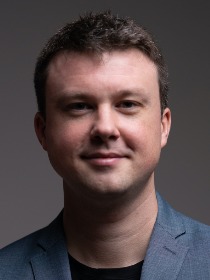
Prof. Dr. Kevin Heng is Chair Professor of Theoretical Astrophysics of Extrasolar Planets at Ludwig Maximilian University of Munich, with additional honorary professorships at University College London and University of Warwick. Previously, he served as Executive Director of the Center for Space and Habitability and Professor of Astronomy & Planetary Science at the University of Bern, Switzerland.
Dr. Heng received his Ph.D. in astrophysics from the University of Colorado at Boulder in 2007, following undergraduate studies at the National University of Singapore. His academic path included prestigious positions as Zwicky Prize Fellow at ETH Zurich and Member of the Institute for Advanced Study at Princeton.
Professor Heng's research focuses on theoretical astrophysics, particularly exoplanetary atmospheres. His work spans atmospheric radiative transfer, dynamics, and chemistry, with applications to missions like ARIEL, JWST, and next-generation space telescopes. He has developed analytical methods and applied machine learning and Bayesian inference to exoplanet science. His innovative approach extends to 'Geoastronomy,' which unifies principles of astrophysics and geochemistry for studying rocky exoplanets.
Dr. Heng's recent publications show a strong trend toward analyzing exoplanet atmospheres using data from cutting-edge missions like JWST, with particular focus on hot Jupiters, super-Earths, and sub-Neptunes. His research often combines theoretical modeling with observational data to understand atmospheric composition, dynamics, and evolution across diverse planetary types.
Awards and Recognition:
- ERC Synergy Grant (2025-2031) for Project GEOASTRONOMY
- Fellow of the Royal Astronomical Society (2023)
- ERC Consolidator Grant (2018-2023) for Project EXOKLEIN
- Chambliss Astronomical Writing Award (2018) for his textbook 'Exoplanetary Atmospheres'
- NCU-Delta Young Astronomer Lecturership Award (2015)
Professor Heng has secured substantial research funding totaling over 3.383 MCHF + 12.06 M€, including leadership roles in major projects like PlanetS NCCR. He serves on science teams for multiple space missions including ARIEL, PLATO, and CHEOPS, and has advised numerous students and postdocs through his research groups focused on exoplanet atmosphere modeling and data analysis.
His laboratory develops theoretical models and computational tools for exoplanet characterization, with current work focusing on the 'Hot Rocks Survey' of bare rocky exoplanets and advancing retrieval methods for next-generation telescope data.