- Multifunctional BlueGreen Water Infrastructures
- Decentralized Rainwater & Wastewater Treatment
- Ecological Engineering
- +۳ مورد دیگر
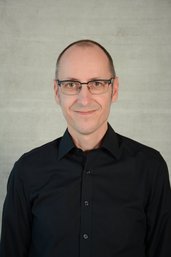
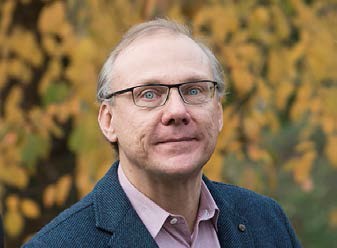
Prof. Dr. Roland A. Müller serves as Department Head of Systemic Environmental Biotechnology at the Helmholtz Centre for Environmental Research - UFZ in Leipzig, Germany, and holds an Honorary Professorship for Integrated Wastewater Resource Management at Leipzig University of Applied Sciences (HTWK) since 2016. With over three decades of experience at UFZ, he has held progressively senior positions including Head of Department SUBT since 2013, Speaker of the Department from 2010-2012, and Head of Infrastructure Unit from 1996-2010. His educational foundation includes university studies in Technical Microbiology at the Carolo-Wilhelmina Technical University of Braunschweig (1984-1990). This technical microbiology background has informed his interdisciplinary approach to environmental biotechnology. Prof. Müller's research pioneers the integration of ecological principles into urban water management systems, particularly focusing on Multifunctional BlueGreen Water Infrastructures for Water Sensitive Cities. His work spans Decentralized Rainwater & Wastewater Treatment, Ecological Engineering, and Resource-efficient Wastewater Treatment systems, with special attention to applications in water-scarce regions like Jordan. He has developed innovative approaches for implementing nature-based solutions that simultaneously address urban flooding, water scarcity, and climate adaptation challenges. His research combines engineering, ecology, and urban planning to create resilient water systems that enhance urban sustainability. Analysis of his recent publications reveals a consistent focus on implementing the 'Leipziger Modell Blau-Grün' - a comprehensive approach to integrated blue-green infrastructure in urban settings. His work demonstrates how nature-based solutions can simultaneously address stormwater management, irrigation needs, and urban greening. A significant portion of his research examines decentralized wastewater treatment systems, with particular attention to their application in arid and semi-arid regions where water resources are constrained. His publications increasingly emphasize participatory planning approaches involving municipal authorities, housing associations, and research institutions to co-design water-sensitive urban developments. 2018: German Environmental Award for solving a central water problem in a decentralized manner in Jordan 2016: Winner of UFZ Knowledge Transfer Award for contributions to Jordanian wastewater policy framework 2014: UFZ Technology Transfer Award for development of vertical filter systems for groundwater purification 2014: Finalist for Hugo Junkers Prize for innovative groundwater purification research Prof. Müller has been instrumental in advising on water policy frameworks, particularly in Jordan where he served as the German representative in the National Implementation Committee for decentralized Wastewater treatment. His work directly influenced the development of national certification standards for wastewater treatment systems with capacities up to 5,000 PE in Jordan. He leads the 'Leipziger BlauGrün' project, a German model city initiative for resource-efficient urban districts that demonstrates practical implementation of his research concepts. His department collaborates with international partners on projects addressing water challenges across diverse climatic conditions. As head of the Systemic Environmental Biotechnology department at UFZ, Prof. Müller oversees research at the intersection of environmental engineering, microbiology, and urban planning. His department is actively involved in the Technical Biogeochemistry Integration Platform, which focuses on 'Tapping Nature's Potential' for sustainable water management solutions. The department maintains strong international partnerships, particularly with institutions in water-stressed regions, to develop and implement decentralized wastewater management concepts that are both scientifically sound and practically implementable in resource-constrained settings.