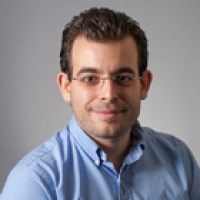
Professor B Buchanan OBE FRSE is a Professor of Cryptography at the University of Edinburgh, based in Edinburgh. His research focuses on cryptography, cybersecurity, blockchain technology, quantum computing, and IoT security. He leads initiatives in post-quantum cryptography, secure IoT architectures, and privacy-preserving machine learning. His work spans theoretical developments and practical implementations, including frameworks for threat intelligence sharing and ethical AI integration in security systems. Research Interests: His core areas include cryptographic algorithm design, quantum-resistant protocols, machine learning in cybersecurity, and secure distributed systems. Recent projects explore homomorphic encryption for financial applications, GANs for anomaly detection, and blockchain frameworks for trust management. He is a vocal advocate for ethical cybersecurity practices and interdisciplinary collaboration. Scientific Awards: He has been awarded the OBE (Order of the British Empire) and is a Fellow of the Royal Society of Edinburgh (FRSE). These honors recognize his contributions to advancing cybersecurity and cryptography in both academic and industry contexts. Labs/Teams: His work is supported by the asecuritysite.com , a platform for cybersecurity research and analysis. Collaborations include EU initiatives on digital governance and industry partnerships in secure manufacturing.
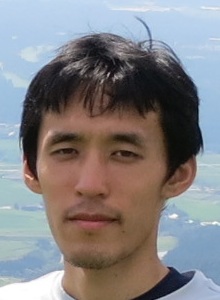
Tomohiro I is an Associate Professor in the Department of Artificial Intelligence at Kyushu Institute of Technology, Japan. He has been in this position since January 2019, following a research associate role at the same institution from 2015 to 2018. Prior to that, he held postdoctoral positions at Kyushu University and TU Dortmund, Germany. His academic foundation includes a Ph.D. in Science from Kyushu University, awarded in 2012. His research primarily centers on string algorithms , with a strong emphasis on compressed data structures , pattern matching , indexing , and algorithmic efficiency . Key interests include Lyndon factorization, Lempel-Ziv compression, palindrome matching, and reverse engineering of string data structures. He frequently collaborates with prominent researchers like Hideo Bannai and Shunsuke Inenaga, producing high-impact work in theoretical computer science. His recent publications demonstrate a consistent focus on improving algorithms for string processing in compressed formats. Work on Re-Pair , RLBWT , and SLP encoding highlights his expertise in space-efficient computation. The 2022 Best Paper Award at IWOCA for work on Lyndon subsequences underscores the quality and recognition of his contributions. His research bridges theoretical analysis with practical algorithm design. Best Paper Award, International Workshop on Combinatorial Algorithms (IWOCA) 2022 Tomohiro I advises graduate students in his laboratory, although he currently notes that the lab is not accepting new research students. His work involves significant algorithmic research, often supported by theoretical grants or institutional funding, leading to numerous publications in peer-reviewed journals and conferences. He has also presented his work in invited talks, such as at CompressedAI2025 and WCTA 2024, indicating active engagement with the research community. He leads a research laboratory at Kyushu Institute of Technology, focused on advanced string processing and compressed data structures. His team collaborates extensively on algorithm design and analysis, contributing to the broader field of combinatorial pattern matching.
Stephen B. Wicker is a Professor at Cornell University's College of Engineering with a distinguished research career spanning over three decades. His work has significantly impacted the fields of wireless communications, information theory, privacy, and security. Wicker has published extensively in top-tier journals and conferences, demonstrating consistent scholarly productivity from the early 1990s through 2021. His research interests include: Wireless network security and privacy Information theory and error control coding Location-based services and privacy implications Digital rights management and consumer protection Blockchain applications for IoT environments Ethical considerations in technology development Legal implications of digital technologies Wicker's recent publications reveal a strategic evolution in his research focus, increasingly addressing the intersection of technical systems with legal and ethical considerations. His work on smartphone privacy and the Fifth Amendment, eBook surveillance, and zero-day exploits demonstrates his unique ability to bridge technical expertise with societal implications. This interdisciplinary approach has positioned him as a thought leader in understanding how technological capabilities intersect with constitutional rights and civil liberties. His scholarly impact is evident through his extensive collaboration network, with significant work alongside researchers like Kolbeinn Karlsson on blockchain for IoT applications, Dipayan P. Ghosh on eBook privacy issues, and Shion Guha on social surveillance in location-based networks. His research has appeared in prestigious venues including Communications of the ACM, IEEE Proceedings, and IEEE Transactions on Information Theory. Wicker has mentored numerous students who have become productive researchers in their own right, including Xiao-an Wang, Hazer Inaltekin, and Kolbeinn Karlsson, who frequently appear as co-authors on his publications. His work continues to address emerging challenges at the intersection of technology, law, and society, making significant contributions to both academic discourse and public policy discussions.
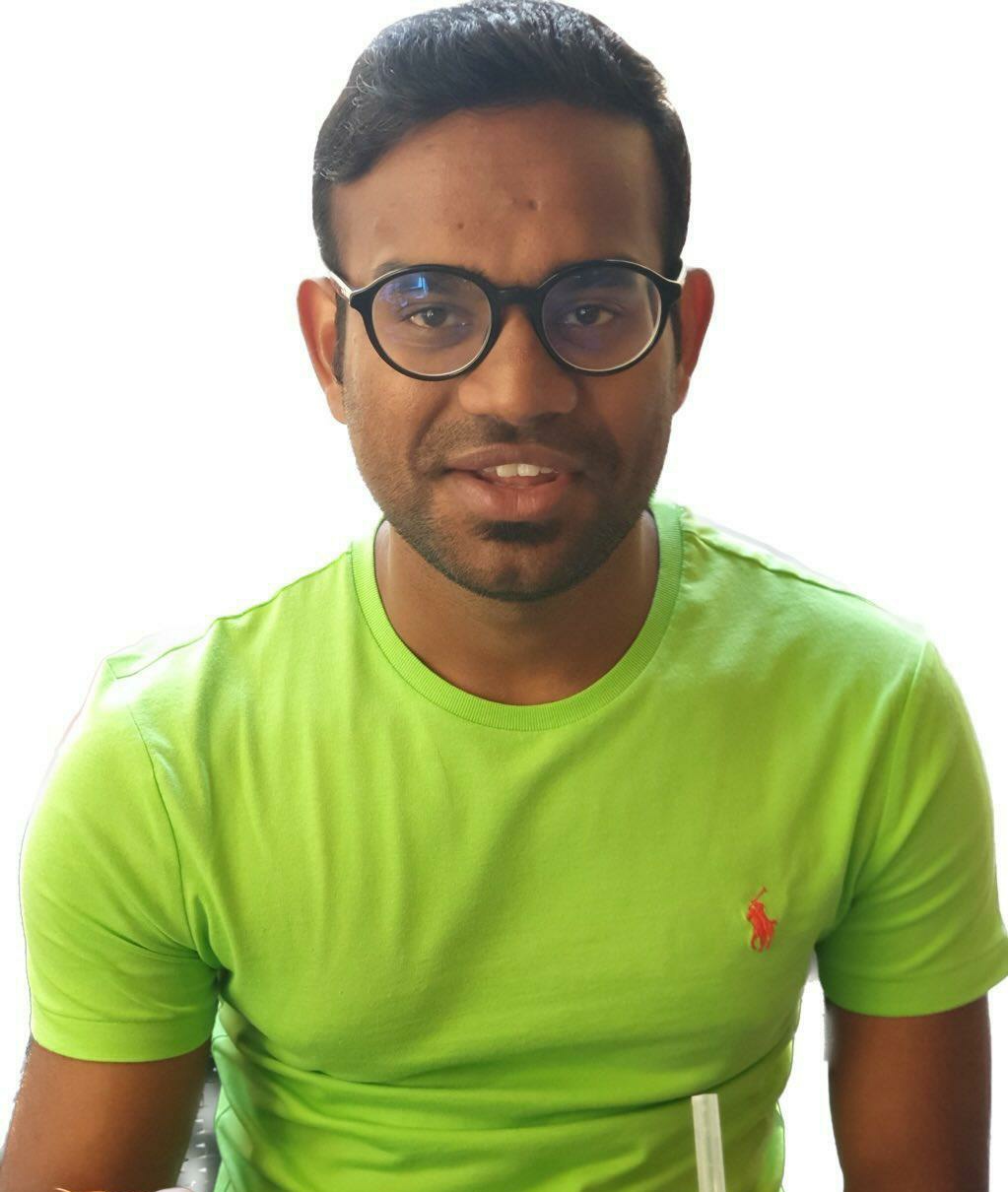
Dr. Charles Thevathayan is an Associate Professor in the School of Science at RMIT University, Australia. His academic focus spans Computer Science Education, Software Security, Trust Models, and Model Checking. He actively contributes to curriculum design and pedagogical innovation in computing education. His research explores areas such as algorithmic reasoning, constructivist learning tools, and service-oriented frameworks for social data analysis. Dr. Thevathayan is open to supervising PhD/Masters students in these domains. Research interests include Big Social Data Analysis, educational technology, and software engineering methodologies. His work emphasizes reducing cognitive load in programming education and enhancing industry-relevant skills through innovative pedagogical approaches. He collaborates with industry partners to bridge theoretical and practical aspects of computing education. Recent publications highlight his contributions to algorithmic reasoning tasks, UML sequence diagram learning tools, and adaptive remediation systems for novice programmers. His research has been presented at conferences like ACM SIGCSE, ITiCSE, and IEEE TrustCom. Dr. Thevathayan holds expertise in mentoring diverse student cohorts and evolving project-based learning frameworks. He is committed to advancing educational practices in computing disciplines through evidence-based approaches.
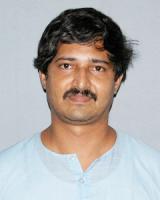
R. Ramanujam is a Professor at the Institute of Mathematical Sciences (IMSc), Chennai, where he has been a faculty member since 1987. He holds a BE (Hons) in Electrical and Electronics Engineering from BITS, Pilani, and a PhD from the Tata Institute of Fundamental Research (TIFR), Mumbai. His research interests span Automata theory, Mathematical logic (including modal and epistemic logics), finite model theory, distributed systems, game theory, security theory, and science education. He has taught advanced courses on topics such as Mathematical Logic, Model Theory, Temporal Logics, Automata Theory, and Game Theory. His work emphasizes formal methods in security, verification of distributed systems, and the application of logic to computer science and game theory. Ramanujam's publications include seminal works on cryptographic protocol analysis, temporal logics for web services, and game-theoretic models. Notable contributions include studies on definability in first-order theories and the complexity of intuitionistic logic operations. His research bridges theoretical foundations with practical applications in security, distributed computing, and educational initiatives.
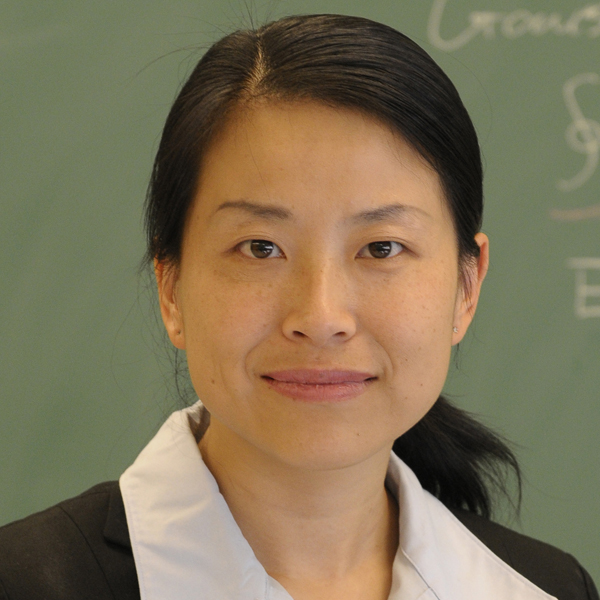
Xuemei May Cheng is a Professor of Physics and the Rachel C. Hale Professor in the Sciences and Mathematics at Bryn Mawr College . She serves as the Dean of Graduate Studies and directs the Nanomaterials and Spintronics Laboratory , which is well-resourced with over $6.5M in NSF grants, including a CAREER award and a $5M NSF ExpandQISE grant for the Quantum Materials, Sensing and Education Center (QMSEC). Education: B.S. and M.S. from Nanjing University; M.A. and Ph.D. in Condensed Matter Physics from Johns Hopkins University (2006). Research Interests include the fabrication and characterization of nanomaterials and topological spin textures such as magnetic skyrmions and vortices. Her work spans quantum materials and quantum sensing , 2D materials , interface magnetism , and multiferroic materials , with applications in magnetic data storage and biomedical engineering . Research Trends from her 15 most recent publications highlight advancements in skyrmion Hall effect , dative epitaxy for moiré superlattices, magneto-mechanical tissue engineering , and voltage-controlled spintronics . These works emphasize quantum sensing , topological charge transport , and nanoscale magnetic interactions . Scientific Awards: NSF CAREER award Advising & Grants: Cheng has mentored 40 undergraduate students , 5 graduate students , and 3 postdoctoral fellows . Her lab has secured $6.5M in NSF grants , including a $5M ExpandQISE team grant for quantum information science. Labs & Facilities: The Nanomaterials and Spintronics Laboratory features a 925-square-foot space with a class 1000 cleanroom, AJA sputtering system, and access to Advanced Light Source and Argonne National Lab facilities.
Assoc. Prof. Dr. Nil Banu Tarım is an Associate Professor at Istanbul Technical University's Department of Electronics and Communication Engineering. She earned her PhD at the same institution and has held academic roles since 1989, including a Visiting Professor position at Sweden's Royal Institute of Technology (2002-2004). Education: PhD in Electronics and Communication Engineering (1993-1999) Current Role: Associate Professor (2010-present) Prior Role: Assistant Professor (2000-2010) Her research spans RF engineering, communication systems, and biomedical signal processing, with recent work focusing on fully homomorphic encryption for secure data handling in biomedical applications. She has contributed to LTE/WiMAX receiver design, X-band amplifiers, and CMOS-based RF components. Key research trends include: Privacy-preserving computation (2024) Adaptive RF hardware (2017-2018) CMOS process optimization (2007-2008) Wireless synchronization systems (2007) Contact: tarimn@itu.edu.tr
Tal Malkin is a Professor at Columbia University's Department of Computer Science, School of Engineering and Applied Science. Her work spans cryptography, secure computation, and data privacy, with a focus on non-malleable codes, topology-hiding communication, and privacy-preserving protocols. 2025: Peony Onion Encryption for asynchronous anonymity 2024: Structural lower bounds for pseudorandom functions 2022: XSPIR for Ring-LWE-based private retrieval Research themes include: Cryptographic Foundations: Non-malleability, garbling circuits, and zero-knowledge protocols Privacy-Preserving Systems: Differential privacy, secure multi-party computation, and database anonymity Applied Security: Biometric encryption, model watermarking, and polymer-based unclonable functions Her 15 most recent publications analyze anonymity in dynamic networks, robust watermarks for AI models, and tamper-resilient encryption. Keywords span computer science, cryptography, and machine learning. Sub-fields include secure computation, lattice-based cryptography, and function-private protocols.
Rongmao Chen is a Professor at the College of Computer Science and Technology , National University of Defense Technology , China. He earned his Ph.D. from University of Wollongong, Australia (2016), following B.Eng and M.Eng at NUDT (2011, 2013). As a visiting researcher at COSIC, KU Leuven (2019-2020), he collaborated with Prof. Bart Preneel . Research Focus: Public-key cryptography, network security, and privacy-preserving protocols Key Contributions: Subversion-resilient encryption, reverse firewalls, and leakage-resilient key exchange Editorial Roles: IEEE TDSC (2024-), IACR Communications in Cryptology (2025), JCST Young Editorial Board (2023-) His recent works explore quantum-resistant cryptography (CRYPTO 2025, ASIACRYPT 2024), privacy-preserving machine learning (S&P 2025), and blockchain security (IEEE TIFS 2025). He serves on program committees of ACM CCS , PKC , and CT-RSA conferences. Awards & Recognitions: NSFC Excellent Young Scholar (2021) ACM SIGSAC China Rising Star (2020) Best Student Paper Award, ACISP 2018 Outstanding Advisor (National College Student Information Security Contest, 2017 & 2023) Young Elite Scientists Sponsorship, CAST (2018)
Roles & Affiliations Professor of Computer Science and Fellow of St. Michael's College at the University of Toronto. Leads research in computational linguistics, natural language processing, and logic programming. Maintains affiliations with the Computational Linguistics group at Toronto and serves on the editorial board of Linguistics & Philosophy . Research Interests Typed Feature Logic and Grammar Development Parsing/Generation Algorithms for Free-Word-Order Languages Substructural Logics (e.g., Lambek Calculus) Finite-State Methods and Speech Summarization Constraint Logic Programming (ALE System) Teaching Teaches courses including Natural Language Computing , Computational Linguistics , and Programming Languages . Recent courses span academic years 2023–2024. Projects & Contributions Principal developer of the Attribute Logic Engine (ALE) , a constraint logic programming system. Organized the 2019 Mathematics of Language (MOL) conference.
Mayank Raikwar serves as a Postdoctoral Fellow in the Department of Informatics at the University of Oslo, where he is an active member of the Networks and Distributed Systems research group. His work focuses on advancing blockchain technologies and cryptographic protocols within distributed computing environments, with significant contributions to DAG-based distributed ledger systems and privacy-preserving mechanisms. Dr. Raikwar's research centers on blockchain security and distributed consensus , with particular expertise in DAG architectures, cryptographic primitives, and privacy-enhancing technologies. His investigations span theoretical foundations and practical implementations, addressing critical challenges in scalability, attack resilience, and secure data management. Recent work extends to healthcare applications through secure medical image retrieval frameworks, demonstrating interdisciplinary applicability of cryptographic techniques. Analysis of his publication trajectory (2019-2025) reveals consistent leadership in blockchain security research. His work frequently appears in top-tier venues including IEEE conferences and ACM proceedings, with significant contributions to understanding consensus protocols, randomness generation, and privacy models. The evolution of his research demonstrates increasing sophistication in addressing real-world implementation challenges while maintaining rigorous security guarantees. Within the University of Oslo's research ecosystem, Dr. Raikwar maintains active collaborations with Professor Danilo Gligoroski and Professor Roman Vitenberg. His current projects focus on next-generation blockchain architectures and privacy frameworks, positioning him at the forefront of distributed systems innovation.
Dr. Daniel Sanchez is a Professor of Electrical Engineering and Computer Science at the Massachusetts Institute of Technology (MIT), where he leads the Computation Structures Group within the Computer Science and Artificial Intelligence Laboratory (CSAIL). His research focuses on computer architecture, scalable systems, and memory hierarchies, with particular emphasis on multicore and many-core systems, quality-of-service guarantees, and runtime systems. Education: Ph.D. in Electrical Engineering, Stanford University (2012) M.S. in Electrical Engineering, Stanford University (2009) B.S. in Telecommunications Engineering, Technical University of Madrid (UPM) (2007) Research Interests: Dr. Sanchez’s work spans computer architecture innovations such as cache partitioning (KPart), software-defined caches (Jenga), and accelerators for sparse computing (Azul, Terminus). He designs systems that enhance performance, energy efficiency, and scalability in modern computing environments. His projects include the Swarm Architecture for ordered parallelism and architectures supporting fully homomorphic encryption. Articles Trends: Recent publications emphasize accelerators for sparse algorithms, cryptographic hardware (e.g., Fully Homomorphic Encryption), and high-performance computing. His work bridges hardware-software co-design to tackle challenges in irregular applications, memory hierarchies, and secure computing. Awards & Grants: No scientific awards explicitly listed, but his work has been recognized in top conferences (e.g., MICRO, ISCA). Advising & Teaching: He advises over 20 Ph.D. and master’s students, including current advisees Axel Feldmann and Hyun Ryong Lee. He teaches courses like 6.5900 Computer System Architecture and 6.191 Computation Structures at MIT. Labs & Teams: Leader of the Computation Structures Group at MIT CSAIL, collaborating with researchers like Joel Emer, Srini Devadas, and Armando Solar-Lezama. His team explores cutting-edge architectures and systems for next-generation computing.
Jesper Buus Nielsen is a Professor at the Department of Computer Science, Aarhus University. He specializes in cryptography, blockchain technology, and secure multiparty computation. His research focuses on cryptographic protocols, privacy-preserving systems, and theoretical computer science. He has contributed to advancements in anonymous payments, consensus algorithms, and fault-tolerant distributed systems. Notable research interests include blockchain security, threshold cryptography, and formal verification of cryptographic protocols. His work often addresses challenges in achieving privacy, security, and scalability in decentralized systems. Selected publications include innovations in OCash (anonymous blockchain payments), CRAFT (secure MPC protocols), and formalizing network security under adaptive corruptions. He has participated in numerous international conferences and serves as a peer reviewer for leading cryptographic venues.
Edoardo Manino is a Lecturer in AI Security at the University of Manchester's Department of Computer Science, part of the Systems and Software Security group. He holds a PhD in Bayesian machine learning from the University of Southampton (2020). His research focuses on automated verification of neural networks, theoretical machine learning, software testing, algorithmic game theory, multi-agent reinforcement learning, and network science. Affiliations : - Member of the Digital Futures Research Beacon and the Institute for Data Science and AI. - Core contributor to the ESBMC model checker and related verification tools. Research Trends : Recent work emphasizes secure AI systems, formal verification of neural networks, and adversarial inversion of language models. His 2025 publications address homomorphic encryption verification, concurrent software analysis, and linguistic consistency in neural models. The 2024 work includes tools for Arm architecture verification and generative AI inversion. Awards : - Best Paper Award (2024) for contributions to formal verification methodologies. Collaborations : Extensive work with industry partners (e.g., Arm) and academic institutions on verification tools and AI security. Active in international conferences (SAIV, SAS, COLING). Labs/Teams : Leads the Systems and Software Security group at Manchester, focusing on advancing AI safety and formal methods.
Mehmet Sabir Kiraz is a Senior Lecturer in Cyber Security and Programme Leader for the BSc Cyber Security program at the School of Computer Science and Informatics, De Montfort University, UK. He is affiliated with the Cyber Technology Institute (CTI) and holds Senior Fellowship of the Higher Education Academy (SFHEA). He previously served as a chief researcher at TUBITAK BILGEM and visiting lecturer at Middle East Technical University and Istanbul Sehir University. Education: Bachelor of Science in Mathematics, Middle East Technical University (2000) M.Sc. in Computer Science, International Max Planck Research School for Computer Science, Germany (2003) Ph.D. in Computer Science, Eindhoven University of Technology, Netherlands (2008) Mehmet Sabir Kiraz specializes in cryptography, blockchain, and cybersecurity. His research focuses on cryptographic protocols, secure multiparty computation, zero-knowledge proofs, threshold cryptography, privacy in vehicular networks (VANETs), blockchain-based PKI, electronic voting, and cloud security. He integrates advanced cryptographic techniques into practical systems, especially in decentralized and privacy-sensitive environments. His work bridges theoretical foundations with real-world applications in digital trust and secure communication. His recent publications (2023–2025) highlight a strong focus on blockchain technologies, secure voting, VANETs, and privacy-preserving systems. Common themes include decentralization, verifiable security, and trustless architectures. He frequently collaborates on topics involving DLT integration, cryptographic redaction, NFTs on Bitcoin, and secure key management. The research demonstrates a consistent trajectory toward enhancing trust, privacy, and efficiency in digital systems using cutting-edge cryptographic tools. Scientific Awards and Recognitions: Senior Fellowship of the Higher Education Academy (SFHEA), November 2024 Fellowship of the Higher Education Academy (FHEA), December 2022 Mehmet Sabir Kiraz actively supervises PhD candidates, currently serving as first supervisor for Mosbah Alown, Ahmad Aladwan, and Mustafa Alnajjar, and second supervisor for Anil Kumar. He has held leadership roles as Programme Leader for Cyber Security and Digital Forensics BSc programs and represents his school as Programme Leader Representative. He has not disclosed specific grant funding in the text, but his extensive publication record and leadership in blockchain and cybersecurity research suggest active involvement in funded research projects. His teaching includes cryptography, cyber security management, blockchain, and programming. He is a founding director of the Blockchain Research Lab at TUBITAK BILGEM (2017–2018) and currently contributes to the Cyber Technology Institute at De Montfort University, a research center focused on digital security, resilient systems, and responsible innovation. His work often involves interdisciplinary collaboration, particularly in blockchain, AI-driven security, and secure network architectures.