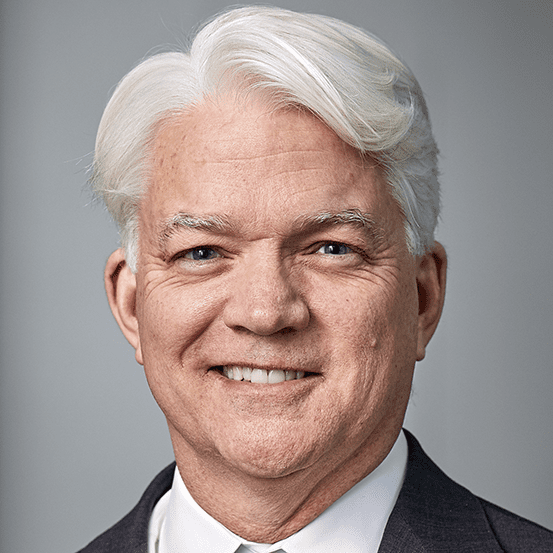
Stephen B. Wicker
استاد · Wireless Communications
Schloss Dagstuhl - Leibniz Center for Informaticsمعرفی
Stephen B. Wicker is a Professor at Cornell University's College of Engineering with a distinguished research career spanning over three decades. His work has significantly impacted the fields of wireless communications, information theory, privacy, and security. Wicker has published extensively in top-tier journals and conferences, demonstrating consistent scholarly productivity from the early 1990s through 2021.
His research interests include:
- Wireless network security and privacy
- Information theory and error control coding
- Location-based services and privacy implications
- Digital rights management and consumer protection
- Blockchain applications for IoT environments
- Ethical considerations in technology development
- Legal implications of digital technologies
Wicker's recent publications reveal a strategic evolution in his research focus, increasingly addressing the intersection of technical systems with legal and ethical considerations. His work on smartphone privacy and the Fifth Amendment, eBook surveillance, and zero-day exploits demonstrates his unique ability to bridge technical expertise with societal implications. This interdisciplinary approach has positioned him as a thought leader in understanding how technological capabilities intersect with constitutional rights and civil liberties.
His scholarly impact is evident through his extensive collaboration network, with significant work alongside researchers like Kolbeinn Karlsson on blockchain for IoT applications, Dipayan P. Ghosh on eBook privacy issues, and Shion Guha on social surveillance in location-based networks. His research has appeared in prestigious venues including Communications of the ACM, IEEE Proceedings, and IEEE Transactions on Information Theory.
Wicker has mentored numerous students who have become productive researchers in their own right, including Xiao-an Wang, Hazer Inaltekin, and Kolbeinn Karlsson, who frequently appear as co-authors on his publications. His work continues to address emerging challenges at the intersection of technology, law, and society, making significant contributions to both academic discourse and public policy discussions.