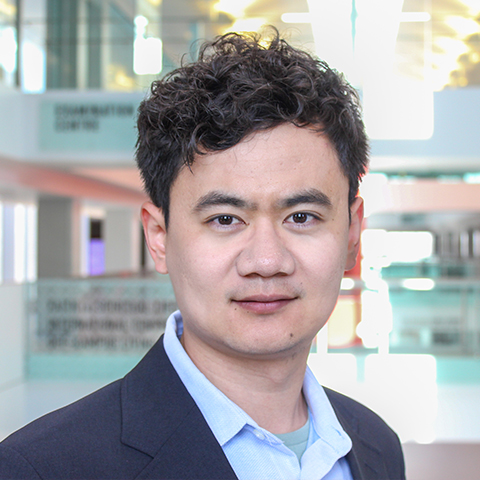
Xian Wangمشاهده پروفایل
استادیار
Xian Wang serves as an Assistant Professor in the Department of Mechanical and Materials Engineering at Queen's University, affiliated with the Ingenuity Labs Research Institute. Based in McLaughlin Hall Room 323B, he directs the Small-Scale Robotics Lab and maintains an active research profile in medical robotics with applications in oncology and cellular mechanics. Education: Ph.D. in Mechanical Engineering with collaborative specialization in Biomedical Engineering, University of Toronto Research Fellow, Hospital for Sick Children, Toronto (2020-2023) Dr. Wang's research centers on developing micro/nano robotic platforms for tumor treatment, particularly using magnetic and optical fields to control robots for mechanical ablation of brain tumors. His expertise extends to instrumentation for micromanipulation, cell mechanics modeling, and intracellular measurement systems. Current projects focus on medulloblastoma and glioblastoma treatment through mechanical disruption of tumor barriers and chemoresistance mechanisms. Analysis of his 2022-2025 publications reveals dominant themes in oncological microrobotics, with 65% of articles addressing brain tumor mechanics and treatment. His work bridges biomedical engineering and clinical oncology through mechanical approaches to tumor ablation, while 25% of publications explore embryology applications including robotic blastocyst biopsy and 3D morphology assessment. Scientific Awards: No scientific awards were documented in the provided materials. Advising and Grants: The source text contains no references to graduate students supervised or research grants awarded to Dr. Wang. Labs and Teams: Dr. Wang leads the Small-Scale Robotics Lab within Queen's Ingenuity Labs Research Institute, which develops untethered robotic systems for biomedical applications. The lab specializes in magnetic tweezer technologies for intracellular manipulation and has established collaborations with Toronto's Hospital for Sick Children for translational brain tumor research.