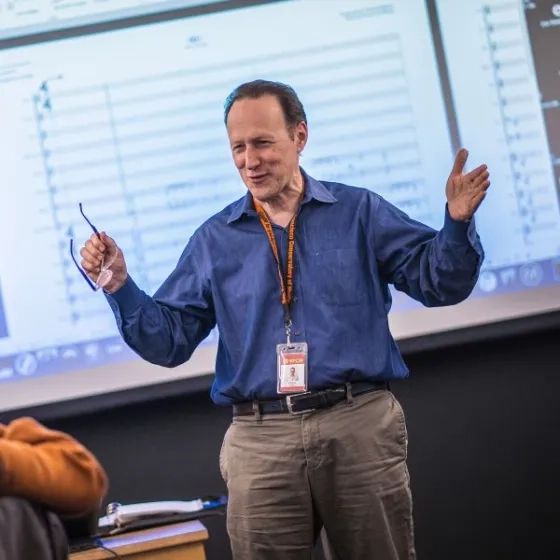
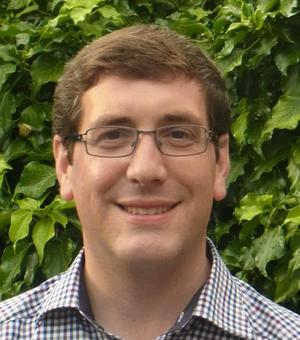
Christopher Chowrimootoo holds a concurrent Associate Professor appointment in the Department of Music at the University of Notre Dame, and serves as a Faculty Fellow at the Nanovic Institute for European Studies. He teaches in the MSM and DMA programs of Sacred Music at Notre Dame. His research bridges music history, historiography, and aesthetics, challenging traditional high/low cultural divides through the lens of 'middlebrow' mediation. PhD (Historical Musicology), Harvard University MSt (Musicology) with Distinction, Merton College, Oxford B.A. (Music) First Class Honors, Oxford Key works include Middlebrow Modernism: Britten’s Operas and the Great Divide (UC Press, 2018), and the forthcoming Oxford Handbook of Music and the Middlebrow . His current project Sacred Secularism examines spiritual dimensions in 20th-century concert music. Editorial roles include Journal of the Royal Musical Association and Cambridge's Elements in Music Since 1945 . Awards include the RMA Jerome Roche Prize and Kurt Weill Foundation Prize for his Death in Venice article analyzing operatic sublimation aesthetics.
Michael Symmons Roberts is Professor of Poetry at Manchester Metropolitan University, within the Department of English, Faculty of Arts and Humanities. A renowned poet, librettist, and broadcaster, he holds a degree in Philosophy and Theology from Oxford University and was formerly Executive Producer at BBC Religion & Ethics. Full Name: Michael Symmons Roberts Position: Professor of Poetry Institution: Manchester Metropolitan University Department: Department of English Field: Poetry and Creative Writing His research interests center on modern and contemporary poetry, with a particular focus on intersections between poetry and theology, science, music, and broadcast media. He is deeply engaged in exploring how poetic form interacts with spiritual, scientific, and ethical questions, often through collaborative and interdisciplinary projects. Michael’s recent publications and creative works reflect a sustained exploration of spiritual and existential themes. His poetry collections such as Drysalter and Ransom , radio dramas like Paradise Lost and Utopia , and choral works including Quickening and The Birds of Rhiannon demonstrate a consistent engagement with religious symbolism, myth, and the human condition. His works are frequently shortlisted for major literary prizes, highlighting their critical acclaim. Among his many honors are the Forward Poetry Prize (twice), the Costa Poetry Prize, the T.S. Eliot Prize shortlist (five times), the Jerwood Award for Non-Fiction, and the Sandford St. Martin Award. He is a Fellow of the Royal Society of Literature and a trustee of the Royal Literary Fund. Forward Poetry Prize for Best Collection (2013, 2004) Costa Poetry Prize (2013) T.S. Eliot Prize Shortlist (2001, 2004, 2013, 2017, 2021) Fellowship of the Royal Society of Literature (2014) Whitbread Poetry Award (2004) Eric Gregory Award (1988) BBC Audio Drama Awards (2013, 2014) He supervises PhD students in poetry and creative writing, teaches campus and online workshops, and is active in public engagement through performances, radio broadcasts, and commemorative poetry projects. His collaborations with composer James MacMillan have resulted in major commissions for the BBC Proms, Royal Opera House, and Welsh National Opera, underscoring his impact across literature and music. He has not been associated with any formal research lab but leads creative teams in interdisciplinary performance and literary projects.
Anna Mikolon is a Professor at the Academy of Music in Gdańsk, where she serves as Head of the Inter-Faculty Department of Accompaniment since 2022. She also works as a pianist-repetiteur in the Faculty of Vocal and Acting and as a piano teacher and accompanist at the Complex of Music Schools in Gdańsk-Wrzeszcz. PhD in Musical Arts (2018) Doctoral studies at the Academy of Music in Gdańsk Graduated from Grażyna Bacewicz State Primary School of Music and Fryderyk Chopin State Secondary School of Music Her research focuses on Vocal Music , Chamber Music , and Music Pedagogy , with notable monographs on the interpretation of Shostakovich's works and the role of imagination in pianist education. Recent publications explore Ukrainian influences in Noskowski's piano music and social impacts of children's songs. Anna's artistic career spans 1,300+ concerts across Europe, including collaborations with the Baltic Opera and participation in festivals like Gdańsk Music Summer. She has received the Cultural Scholarship of the City of Gdańsk and multiple competition awards as an accompanist. Her scientific awards include: First Prize, Early Music Competition (Łódź) First Prize, Solfeggio Competition (Łódź) Cultural Scholarship of the City of Gdańsk (2017) She has contributed to numerous student awards through her accompaniment and teaching, and her work integrates interdisciplinary influences from theatre, literature, and visual arts into musical interpretation.
Prof. Katharina Thoma is a renowned opera director currently serving as Head of the Opera School at the University of Music Würzburg . She also holds the positions of Deputy Chair of the Music Academy and Dean of Studies . With a career spanning major European opera houses including the Royal Opera House Covent Garden and Glyndebourne Festival, she specializes in blending historical accuracy with modern theatrical innovation. Studied piano at Lübeck University of Music Resident director at Dortmund Opera (2011-2014) Visiting professor at Graz University of Music (2018) Freelance director since 2008 Katharina Thoma's research and practice focus on opera stage direction , scenic training for singers , and historical opera interpretation . Her work spans from Baroque masterpieces to contemporary political operas, emphasizing: Contextual authenticity in period-specific productions Modern reinterpretation of classical works Interdisciplinary approaches to staging Integration of visual and musical elements Training of next-generation opera performers Exploration of war-related themes in opera Notable productions include: 2024: Johann Strauss' The Bat (University of Music Würzburg) 2023: De Falla's El retablo de Maese Pedro 2022: Britten's The Rape of Lucretia 2019: Schönberg's Pierrot lunaire 2007: European Opera Directing Competition Finalist Her artistic contributions have been recognized with: Second Prize at the European Opera Directing Competition 'Camerata Nuova' (2007) Katharina Thoma actively mentors young singers and develops innovative opera productions at the University of Music Würzburg's Opera School. Her recent work includes: Wagner operas debut (2019/20 season) Collaboration with composers like Richard Jones and Christof Loy Participation in renowned festivals (Munich Biennale, Glyndebourne) The Opera School under her leadership focuses on comprehensive training combining: Historical performance practices Contemporary staging techniques Technical vocal training Interdisciplinary collaboration
Ann-Katrin Zimmermann is an apl. Professor (non-tenured professor) at the Musicological Institute within the Faculty of Philosophy at the University of Tübingen. She has held this position since 2018, following her time as a private lecturer from 2012-2018. In addition to her academic work, she serves as a dramaturg at the Gewandhaus Leipzig since 2013 and has teaching assignments at LMU Munich, Felix Mendelssohn Bartholdy University of Music and Theatre, and Leipzig University since 2012. Her educational background includes: Habilitation (2012) on "Forms of slow movements in the classical cycle" Promotion/PhD (2006) on "Studies on medieval three-part harmony" Master's degree in musicology, philosophy and art history from University of Tübingen and University of Oxford (1998-2003) Professor Zimmermann's research spans multiple eras and aspects of music history and theory. Her work focuses particularly on polyphony of the 12th and 13th centuries, keyboard music from the 15th-18th centuries, early German-language music terminology, and the works of Heinrich Schütz, composers of the Viennese classics, and Richard Strauss. She has made significant contributions to the fields of organology, instrumentation, music iconography, and 19th-century symphonies, with particular interest in cross-temporal aspects of genre, form, and composition. Her extensive publication record shows a consistent focus on historical music analysis, particularly examining compositional strategies across different periods. Her recent work has increasingly focused on Richard Strauss and Mozart, while maintaining her longstanding interest in early music traditions and terminology. She has published numerous articles in prestigious journals and contributed to important edited volumes in musicology. Professor Zimmermann is actively involved in the academic community: Member of the Society for Music History in Baden-Württemberg since 2009 Member of the DHV since 2012 Throughout her career, Zimmermann has balanced academic research with practical musical experience. She has been a bassoonist and leader of various vocal and instrumental ensembles since 1998, and served as a church musician from 1997-2014. Her work as a dramaturg at the Gewandhaus Leipzig since 2013 demonstrates her commitment to connecting scholarly research with contemporary musical practice.
Anna Elisabet Einarsson is a Dean at the Academy of Opera , part of the Oslo National Academy of the Arts . She holds degrees in organ, conducting, baroque interpretation from the Malmö Academy of Music and specialized opera training from the Oslo National Academy of Opera. As an active opera and concert singer since her 2000 debut, she has premiered contemporary works, received accolades like the Royal Norwegian Academy of Music Award, and been nominated for a US Grammy. Education in organ, conducting, and baroque interpretation Opera singer with international acclaim Focus on sustainable careers in the arts Research on collective creative processes and accessibility Her research explores intersections between opera, societal challenges, and gender diversity, with recent publications addressing cultural policy and non-binary representation. She has collaborated on academic lectures and workshops, emphasizing career development and risk management in creative teams. Scientific awards include: Royal Norwegian Academy of Music Award US Grammy nomination Her work bridges artistic practice with pedagogical innovation, contributing to Norway’s performing arts discourse through leadership and scholarship.
Joseph S. C. Lam serves as Professor of Musicology in the School of Music, Theatre & Dance at the University of Michigan , specializing in the musics and cultures of Southern Song (1127-1275), Ming (1368-1644), and modern China (1900-present). His international profile includes regular lectures across China, Europe, and the United States. His research centers on: Historical Chinese music traditions across three dynastic periods Kunqu opera composition and performance practices Ethnomusicological analysis of Shijing (Classic of Poetry) vocalization Queer theory applications in traditional Chinese cross-dressing performance Interdisciplinary connections between Confucian ritual and musical expression Recent publications reveal a cohesive scholarly trajectory emphasizing contextual analysis of Chinese musical heritage, with increasing attention to gender studies and globalization frameworks. His work consistently bridges historical musicology with contemporary performance theory, particularly through examination of textual sources and stage realization practices. No scientific awards were documented in the source material. Teaching activities include courses on Chinese music/culture, ethnomusicology theory, and creative/historical music practices since 2020, with upcoming winter 2024 instruction on shiyue (Shijing-based vocal music). No laboratory facilities or research teams were specified.
Prof. Stephan Mösch is a Professor at the Karlsruhe University of Music, specializing in Music Theatre Studies. He holds a dual habilitation in musicology and theatre studies, focusing on music theatre. His career includes chair positions at the University of Bayreuth and teaching roles at institutions like the University of Zurich and Seoul's Korean National University of Arts. He has led international projects such as the FWF-funded 'Opera between Hermeneutics and Performativity'. Education: Dual degrees in music, theatre & literature from Berlin/Stuttgart; masterclasses with renowned figures like Elisabeth Schwarzkopf. Awards include the Domgraf-Fassbaender Prize and Gottlob Frick Medal (for Opernwelt). Scholarships from German National Academic Foundation and Richard Wagner Foundation. Research interests span opera history, Wagnerian studies, and the intersection of performance art & cultural theory. He has curated conferences globally and serves as a jury member for prestigious competitions like Bundeswettbewerb Gesang and Concours Suisse Ernst Haefliger. Published extensively in Opernwelt and Frankfurter Allgemeine Zeitung , he also contributes to radio/TV broadcasts of major opera festivals. Current roles include German Academy of Performing Arts membership and advisory board positions for institutions like the German Historical Museum (2019-2022).
Daniel Nesta Curtis is an Associate Teaching Professor and Interim Director of Orchestral Studies at Carnegie Mellon University's School of Music. He serves as Music Director of the CMU Contemporary Ensemble and leads initiatives like the Pittsburgh Composers Project. His roles include conducting the CMU Philharmonic, Baroque Ensemble, and orchestras in interdisciplinary productions. Education: BA in Music from Amherst College (2008) MM in Conducting from Carnegie Mellon University (2012) Research & Interests: Curtis specializes in adventurous programming of contemporary and underrepresented composers, blending orchestral music with theater, multimedia, and community engagement. He advocates for diversity in composition through projects like Nat 28 and Co-Opera, a collaborative initiative with CMU's drama department and Pittsburgh Opera. Advising & Grants: While no formal advisees are listed, Curtis mentors students through ensemble leadership and collaborative productions. His work includes premiering over 50 student/faculty compositions with the CMU Contemporary Ensemble. Labs/Teams: Directs ensembles such as Brass Roots, CMU Pre-College Orchestra, and the Contemporary Creative Practice group. Key collaborations include Quantum Theater, Chatham Baroque, and the New Hazlett Theater.
Arnold Jacobshagen is a Professor and Chair of Musicology at the Cologne University of Music and Dance since 2006. He holds a Ph.D. from Freie Universität Berlin (1996) and habilitation on 19th-century Italian opera semiseria (2003). His expertise spans opera studies, 19th/20th-century music history, music historiography, and performance practice. He has authored five books and edited/co-edited 18 volumes, with significant contributions to journals like Die Musikforschung , Cambridge Opera Journal , and Acta Musicologica . Awards include membership in Academia Europaea (2015) and fellowships from the Deutsches Historisches Institut Rome and Deutsches Studienzentrum Venice. He currently leads editorial roles at Die Musikforschung and advisory boards for institutions like the Joseph Haydn Institute. Educations: Musicology, Modern History, and Philosophy studies in Berlin, Vienna, and Paris Research focuses on opera historiography, performance practices, and cultural transfer. Key works include Gioachino Rossini und seine Zeit (2015) and Opera semiseria (2005). Publications analyze composers like Handel, Berlioz, and Mahler, with attention to national genres, stage practices, and historical reception. His recent work explores 19th-century French grand opéra and counter-tenor vocal traditions.
Lennie Moore serves as a faculty member in the Technology and Applied Composition (TAC) program at the San Francisco Conservatory of Music (SFCM), where he teaches Applied Lessons, Tools, Techniques and Analysis, and Orchestration for the Media Composer. With decades of experience as a composer, arranger, and orchestrator for video games, commercials, film, and television, Moore brings real-world industry expertise to his academic role. His teaching extends beyond SFCM, having developed and taught courses in Composing for Video Games at USC and UCLA Extension. Moore's research interests focus on the complex puzzle of video game scoring, emphasizing the deconstructionist approach required for interactive media. His work explores how to break down compositions into vertical layers and horizontal procedural components that can be implemented into music playback systems in real-time based on player choices. He specializes in open-world environments where music must smoothly transition through different game areas. His passion for building computers and video games outside of traditional music informs his innovative approach to media composition. His recent work includes the 2024 release of Outcast: A New Beginning , a sequel to his groundbreaking 1999 score for the original Outcast game, which was one of the first live orchestra and choir scores in gaming history. This new project involved approximately two hours and fifteen minutes of music with complex interactive elements, recorded during the pandemic with remote sessions. Best Soundtrack Album, G.A.N.G. Awards, 2011 Best Interactive Score, G.A.N.G. Awards, 2011 Best Audio — Other, G.A.N.G. Awards, 2008 Moore actively mentors students in the TAC program, with notable alumni including Kyle Randall (winner of the American Prize in composition), Shengyuan Li (Top 10 Finalist in the Berlin International Film Scoring Competition 2023), and Shawne Workman (now SFCM TAC faculty). His 2023 album Mentors pays tribute to his influences including Weather Report, Steps Ahead, Arif Mardin, Michael Gibbs, Don Grolnick, David Mash, Nick & Andy, Ken Kraintz, and Toshiko Akiyoshi. Moore emphasizes to students that 'Failure is an option' and encourages them to consider 'Who am I as an artist?' early in their development.
Christian Thomas Leitmeir is an Associate Professor in Music at the University of Oxford and a Tutorial Fellow in Music at Magdalen College. His expertise lies in medieval music theory, early modern music of Continental Europe, and interdisciplinary research bridging theology and art history. Education: University of Munich (Musicology, Comparative Literature, Philosophy, Theology), King’s College London (MMus in Musicology, 1999), University of Tübingen (DPhil, 2003) Former roles: Frances A. Yates Fellow at Warburg Institute (2003–2006), Lecturer at Bangor University (2007–2015) As a devoted palaeographer and critical editor , Leitmeir focuses on manuscript studies and music reconstruction. His research spans German Romantic opera , Richard Strauss studies, and the history of musicology . Recent work explores confessionalisation paradigms in late Renaissance music and liturgical adaptation in Catholic Reform contexts. Leitmeir serves as co-editor of Plainsong & Medieval Music , reviews editor for Archa Verbi , and sits on editorial boards of the Journal of the Alamire Foundation and Music Theory & Analysis . He was elected to the Academia Europaea in 2013. Teaching emphasizes medieval and early modern music history , including palaeography and critical editing.
Mark Morris is an Adjunct Professor in the Department of English and Film Studies at the University of Alberta's Faculty of Arts, where he has taught since 2000. A multi-faceted academic, he is also an award-winning librettist, music critic, theatre director, broadcaster, curator, and photographer with international recognition for his creative and scholarly work. His educational background includes: BA from the University of Oxford MA from the University of Oxford PhD in Creative Writing (Canada's first) from the University of Calgary (1996) His research spans creative non-fiction, children's literature, Shakespeare studies (including authorship skepticism), and the social-political history of Western genre film/novel. He specializes in classical music's literary context, Victorian family history, Lawrence Durrell's interdisciplinary intersections, and Indian literature in English. His work bridges academic rigor with artistic practice through libretto composition and cultural criticism. Recent publications demonstrate his interdisciplinary fusion of musicology, literary analysis, and political biography, particularly examining opera's relationship to historical narratives and contemporary leadership. This reflects his consistent focus on cultural transmission across artistic mediums. His accolades include: Faculty of Arts Teaching Award (University of Alberta) Morris has mentored students across creative writing and literature disciplines while leading major collaborative projects including KidsOp (children's opera company), Vaughan String Quartet productions, and Durrell Society initiatives. His work has been supported through institutional affiliations, artistic commissions, and educational partnerships with Alberta schools and international festivals. He co-founded KidsOp for cross-generational opera productions, collaborated with the Vaughan String Quartet on immigrant narrative projects, and served on the Durrell School of Corfu's Advisory Board until 2014. His university roles include Visiting-Scholar-in-Residence for the 100th Anniversary project and ongoing cultural journalism through EdmontonScene.com.
Noam D. Elkies is a Professor in the Department of Mathematics at Harvard University. He is also an accomplished composer and musician, blending mathematical rigor with musical creativity. Born in 1966 in New York, he moved to Israel before returning to the U.S., where he studied at Juilliard and Columbia University, earning degrees in Mathematics and Music. His dual expertise is reflected in his academic position and prolific musical career. Elkies' research interests span mathematics and music composition, with notable works including the Brandenburg Concerto No.7 , Rondo Concertante , and opera Yossele Solovey . His compositions have been performed globally by ensembles like the Metamorphosen Chamber Orchestra and Greater Boston Youth Symphony Orchestras. He has received multiple commissions and awards, including the BMI Award for Young Composers and performances at prestigious venues like Jordan Hall and Symphony Hall. Elkies' music often explores Baroque styles and counterpoint, with works ranging from choral pieces to orchestral fantasies. His academic contributions in mathematics complement his musical pursuits, showcasing interdisciplinary excellence.
Roseen Giles is an Assistant Professor of Music at Duke University, affiliated with Trinity College of Arts & Sciences. She also serves as Curator of the Duke University Musical Instrument Collections (DUMIC). Her expertise lies in early modern Italian musical culture, particularly the intersections between poetry and music in the 17th century. Giles holds a Ph.D. and B.Mus. from the University of Toronto. Her research explores the aesthetic, professional, and personal relationships between poets and musicians, with a focus on Claudio Monteverdi and Giambattista Marino. Key works include her monograph Monteverdi and the Marvellous: Poetry, Sound, and Representation (2023) and the forthcoming Lettera amorosa Musical Love-Letters in Early Modern Italy (2025). She has been recognized with the 2025 Bass Chair award. Teaching spans courses on music history, Baroque studies, and interdisciplinary topics. Recent courses include Music History I/II , Focus Seminars , and Analysis of Early Music . Outreach activities include leadership in Duke’s Story+ program, fostering collaborative research projects. Awards: 2025 Bass Chair Publications: Over 20 scholarly works, including books and chapters on Monteverdi, Marino, and Baroque aesthetics Grants/Advising: Not explicitly detailed in provided texts Labs/Teams: Curator of DUMIC, engaged in musicological curation and public outreach