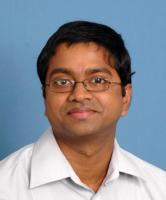
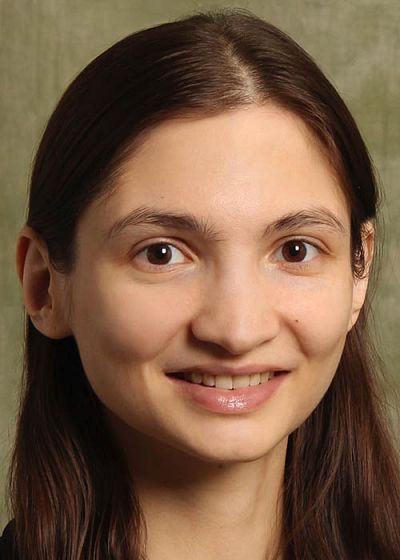
Leonardo Pagnotta is a Full Professor in Mechanical Design and Experimental Mechanics at the University of Calabria (UNICAL), where he serves in the Department of Mechanical, Energy and Management Engineering (DIMEG). He has held significant leadership positions including Director of DIMEG (2015-2021), member of the university's Academic Senate (2015-2021), and Coordinator of the PhD program in Mechanical Engineering. Currently, he heads both the Laboratories of Mechanical Engineering and the Laboratory of Mechanical Characterization of Materials at UNICAL. Professor Pagnotta earned his Degree in Industrial Technology Engineering (Mechanical specialization) from the University of Calabria in 1984, followed by a PhD in Mechanics of Materials from the University of Pisa in 1990. His academic career progressed from University Researcher (1994-2000) to Associate Professor (2000-2006), and finally to Full Professor since 2006 in the Scientific Sector ING-IND/14 "Mechanical Design and Machine Construction". His research focuses on numerical methodologies for stress analysis, reliability design, structural optimization, and experimental mechanics techniques. Key areas include residual stress measurement, elastic properties characterization of isotropic and anisotropic materials, fracture mechanics, and non-destructive testing. He has extensively worked on thermal barrier coatings (TBCs), metallic coatings, and mechanical characterization at micro- and nano-scales. Recent research explores nanostructured coatings, graphene-based composites, SMART materials, and applications in hydrogen energy systems, including fluid dynamics in hydrogen transport pipelines and hydrogen-powered trains. Professor Pagnotta's recent publications reveal a strong trend toward sustainable energy applications, particularly hydrogen infrastructure and storage systems. His work bridges traditional mechanical engineering with cutting-edge materials science, with significant focus on additive manufacturing technologies and their material challenges. The research demonstrates a clear evolution from fundamental mechanics to applied sustainable energy solutions, reflecting contemporary engineering priorities in clean energy transition. Professor Pagnotta has received numerous prestigious awards throughout his career: 2023: Best Poster Award for "On Fatigue Behavior Nanostructured Epoxy Composite Materials" at the 8th World Congress on Advanced Materials 2013: JMST Best Paper Award for "Mechanical Characterization of Materials at Small Length Scales" 2010: WSEAS Best Paper Award for "Evaluation of Squeeze-film Damping Effects in MEMS Perforated Plates" 1996: AIAS Award for "Lifetime Reliability Evaluation of Ceramic Components by a Finite Element Post-Processor" 1993: AIAS Award for "Influence of Specimen Planarity Errors in Biaxial Flexure Tests on Ceramic Materials" 1987: AIAS Award for "Application Possibilities of Holographic Interferometry in Residual Stress Measurement" As an academic advisor, Professor Pagnotta has supervised numerous theses across Mechanical, Management, and Biomedical Engineering programs, mentored student internships at companies and research centers worldwide, and served as scientific supervisor for multiple PhD dissertations. His research has been supported by significant grants including AQUAGENIUS, SAFE H2D, AGE-IT, INSPIRATION, ARIA, PICO-e-PRO, and other competitively funded projects. He has served as Principal Investigator for research agreements with ENEL, AEROprogetti, and IRPE, and contributed to collaborations with ALENIA, BREDA, and FOS. Professor Pagnotta leads several research laboratories at UNICAL, including his current role as Coordinator of the Mechanical Laboratories Cluster at DIMEG (2024-present). He previously co-founded and headed "MechLab" at DIMEG (2015-2023) and founded the "Material Characterization Laboratory (LCM)" in 2012. His laboratory work focuses on mechanical measurements, materials characterization, and advanced experimental techniques, supporting both research and educational activities in mechanical engineering.