Todd Forsgren is an Assistant Professor of Art and Director of the Ryniker-Morrison Gallery at Rocky Mountain College. His work focuses on photographic projects addressing ecological and cultural themes. Recent exhibitions include The World is Round at the Missoula Art Museum, with a piece acquired for their permanent collection. He has published Driving into the Sunset (2022) and is preparing Phase FAZE (2023) and An Imperfect Representation (2024). An upcoming five-volume series Full Fathom Five explores oceanic ecological challenges. Education: MFA from Jan Evangelista Purkyně University (Czech Republic). Current exhibitions include works at the Missoula Art Museum and Yellowstone Art Museum. He performed a collage piece titled Monster Drawing Rally at Yellowstone Art Museum in March 2023.
Aspen Hochhalter is an Associate Professor of Art and the Photography Area Coordinator in the Department of Art and Art History at the University of North Carolina, Charlotte. She holds an MFA in Photo-Based Media from East Carolina University and a BFA in Photography from Creighton University. Her work bridges digital technologies, historic photographic processes, and experimental materials through projects like Alt + Ink (Instagram-inspired cyanotype prints) and 92/20 Self-Portrait Series (wet plate collodion explorations of identity). Recent exhibitions include the McColl Center for Art + Innovation Residency and solo shows at Pease Gallery and Castell Photography Gallery. She also collaborates with artists like Natalie Abrams and Melissa Word on interdisciplinary projects. Her research focuses on reinterpreting photographic waste, such as The Reclamation of Silver series, which transforms discarded darkroom materials into large-scale installations. She teaches workshops on experimental processes and has been featured in The Book of Alternative Photographic Processes . Awards include the McColl Center residency, recognizing her innovative blend of historical and digital techniques. Hochhalter’s work often explores themes of impermanence, cultural critique, and material transformation. She currently teaches in the Department of Art and Art History at UNC Charlotte, where she mentors students in photographic practices and experimental techniques.
Zipporah Camille Thompson is an Assistant Professor of Textiles at Georgia State University, Atlanta. Her work bridges fiber art, ceramics, and sculpture, focusing on themes of ancestral connection, environmental justice, and marginalized narratives. She holds a BFA in Fibers from UNC Charlotte (2008) and an MFA in Textiles and Ceramics from the University of Georgia’s Lamar Dodd School of Art (2015). Education: Bachelor of Fine Arts in Fibers, UNC Charlotte (2008) Master of Fine Arts in Textiles and Ceramics, University of Georgia (2015) Her research explores alchemical transformations of materials—such as textiles, clay, and found objects—to address social and ecological crises. Thompson’s installations, like the ocean wept rainbows (2022), reimagine trauma through tactile landscapes. She has exhibited nationally and internationally, including at MOCA GA, the Zuckerman Museum of Art, and Alabama Contemporary. Awards: 2024 Georgia Fellow for Visual Arts Margie E. West Prize (2023) Artadia Atlanta Awardee (2020) Thompson’s career is marked by residencies at Hambidge Center, OxBow, and Watershed. She is represented by Whitespace Gallery in Atlanta and actively engages in activism through her art, addressing issues of race, gender, and environmental sustainability.
Dr. William Teahan is a Lecturer in the School of Computer Science and Engineering at Bangor University. His research focuses on Artificial Intelligence, Machine Learning, and Natural Language Processing, particularly applying text compression-based models to Information Retrieval and text mining. Prior to Bangor, he held roles including Research Fellow at Robert Gordon University (1999-2000), Invited Researcher at Lund University (1999), and Research Assistant at the University of Waikato (1998), where he completed his Ph.D. in text compression models for English text. Key research interests include AI agent behavior, evolutionary programming, and cross-linguistic NLP applications (e.g., Arabic, Welsh, Chinese). He leads projects such as KESS II (2018-2024) and AMBER (2013-2018), focusing on data visualization, procedural animation, and organic photovoltaic material analysis using machine learning. Collaborations span robotics, virtual reality, and ethical AI frameworks. Teahan’s work bridges theoretical advancements in compression algorithms with practical applications in text mining, OCR systems, and energy materials. His contributions include developing compression-based toolkits and exploring VR’s impact on parameter optimization in animation systems.
Dr Nick Croft is a Senior Lecturer in Aerospace Engineering at Swansea University. He is affiliated with the School of Aerospace, Civil, Electrical and Mechanical Engineering within the Faculty of Science and Engineering. His research focuses on developing efficient computational fluid dynamics (CFD) techniques for real-world engineering problems, particularly in metals processing, renewable energy systems (wind/tidal), and drinking water quality. Dr Croft's work integrates multi-physics modeling with advanced numerical methods, emphasizing the extension of finite volume approaches to unstructured meshes for complex geometries. His expertise spans computational fluid dynamics, electromagnetic induction processing, and multiphysics simulation frameworks. Research highlights include optimizing corrosion control in drinking water systems, tidal turbine performance analysis, and hydrogen embrittlement mechanisms in materials. Dr Croft has supervised PhD projects on fluid-structure interaction, tidal energy systems, and material degradation processes. Publications emphasize CFD applications in renewable energy, metallurgical processes, and environmental engineering. His work bridges academic research with industry challenges, addressing topics like heap leaching efficiency, turbine array optimization, and hydrogen-related material failure. Collaborations include projects with industry partners and academic institutions globally.
Erik Deerly is a Professor and Department Head of Visual Arts at the University of Louisiana at Lafayette, within the College of the Arts. His academic and artistic work spans visual art, sound art, new media, and interdisciplinary practices. Master of Fine Arts, Interdisciplinary Arts & Media, Columbia College Chicago, 2008 Bachelor of Music in Composition, Northern Illinois University, 1985 His research and creative work explores synesthetic experiences, perception, cognition, time, and movement, expressed through audio, film, installation, and expanded photography. His practice is deeply interdisciplinary, blending sound and image to create immersive, sensory-rich experiences that challenge conventional modes of perception. Themes of identity, environment, and technology recur throughout his projects. His recent works, such as Non Sequitur (2024), Apophenia (2021), and A Sense of Place (2022), demonstrate a consistent engagement with audiovisual integration, experimental composition, and digital storytelling. These pieces often combine abstract visuals with intricate sound design, reflecting a deep understanding of both media. His exhibitions have been presented internationally in festivals and galleries across South Korea, Serbia, Italy, Venezuela, and the United Kingdom. New Frontiers of Creativity and Scholarship Grant, Indiana University, 2016 First place, National Interactive Design Awards, South by Southwest, 2002 Long-Listed, The Lumen Prize, 2016 Aesthetica Art Prize: Top Eighteen, 2020 Multiple awards for Apophenia , including Best Film Score and Web/New Media honors in 2021 Erik Deerly has received significant recognition for his creative output, including film festival accolades and grants supporting innovation in art and scholarship. His leadership as Department Head reflects his commitment to advancing visual arts education. He actively exhibits and releases new work, indicating ongoing research, mentorship, and artistic production. His studio practice, documented through Bandcamp, Vimeo, and personal website, functions as a living lab for experimentation in sound and image.
Andre Kleinwächter works at the Teaching Transfer Center of the University of Rostock , focusing on technical experimentation and measurement systems. His projects include KickMeToScience (technical education transfer), SPURT-Schullabor (laboratory engineering), and contributions to the Ocean Technology Campus Rostock in talent development. Research Areas: Fluid dynamics, PIV measurement techniques, marine propulsion systems, and cavitation analysis. Courses: Conducts Technical Experiments and Tests (WS 2025/26), emphasizing hands-on engineering education. Recent publications highlight advancements in single-camera position estimation, FPGA-based velocity field analysis, and full-scale PIV measurement applications for marine technology. His work bridges experimental validation with computational models (e.g., ANSYS CFD) to improve propeller design and cavitation prediction.
Zbigniew Szot is a Professor at the Faculty of Painting and Drawing , M. Abakanowicz University of Arts in Poznań. He has headed the 9th Drawing Studio since 2006 and remains active in both artistic practice and academic leadership. Born: 1962 Education: M. Abakanowicz University of Arts (1981–1986) Research Focus: Szot's work bridges traditional painting, digital graphics, spatial installations, and scenography. His art often explores: Memory and Place Representation Intersections of Art and Literature Contemporary Digital Art Techniques Environmental and Geospatial Themes Experimental Film and Time-Based Media Theater and Performance Design Publications/Artworks show a consistent engagement with multimedia installations, literary adaptations (e.g., Kafka projects), and environmental themes. His collaborations with Wojciech Müller in installations like Road II and Cracks I demonstrate interdisciplinary approaches. Awards: 1987: Ministry of Culture and Art Scholarship Professional Impact: Szot has presented his work internationally across 16 years, with 27 listed exhibitions in 11 countries. His artistic practice informs his academic role, particularly in digital art education and studio leadership.
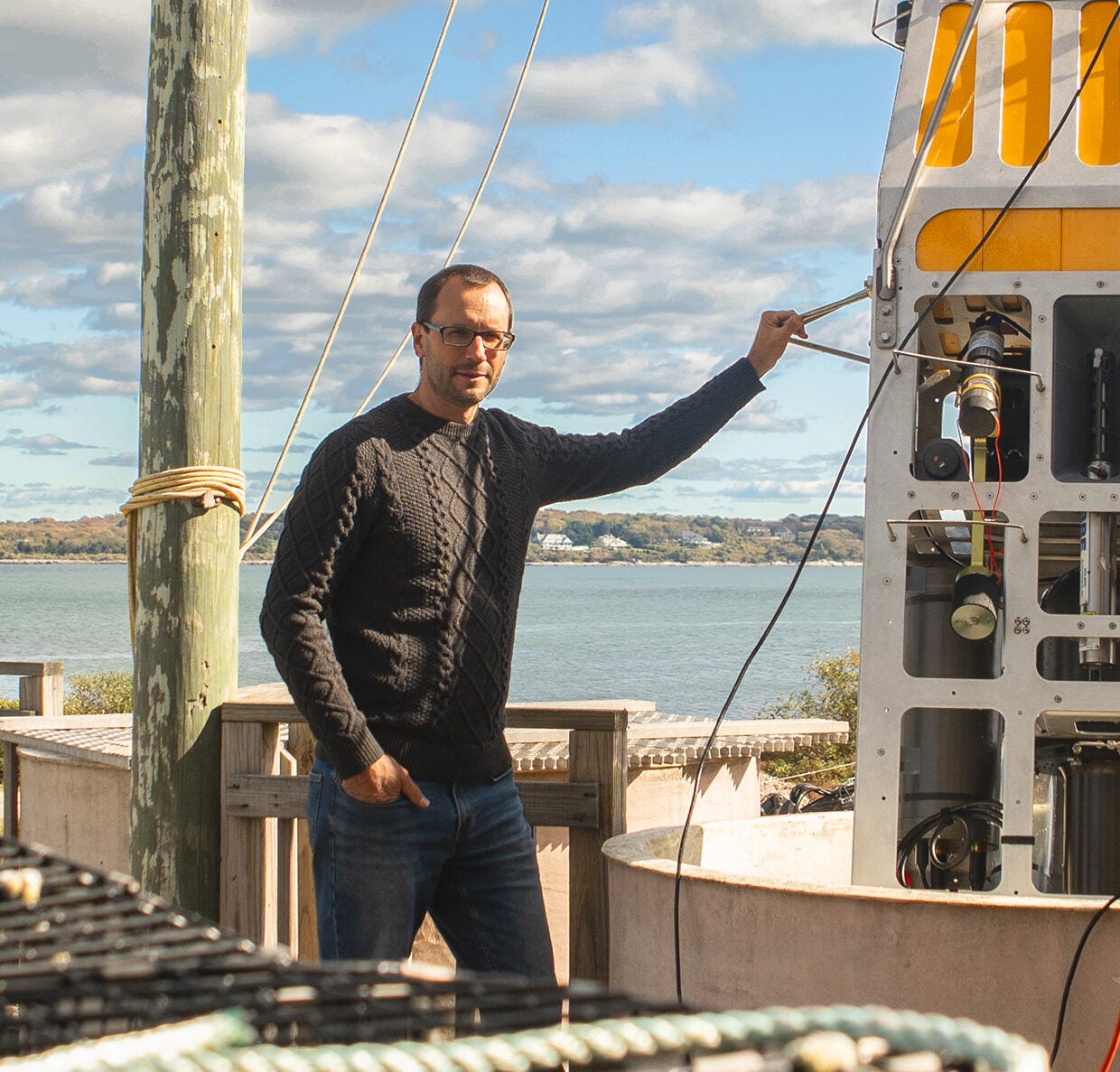
Christopher Roman is a Professor of Oceanography in the Marine Geology and Geophysics program at the University of Rhode Island's Graduate School of Oceanography (GSO), with a joint appointment in the Department of Ocean Engineering. He has been at URI since 2006, contributing to deep-sea exploration with the Ballard Group and advancing coastal oceanography through autonomous vehicle development. His educational background includes: Ph.D. Ocean Engineering, Massachusetts Institute of Technology / Woods Hole Oceanographic Institution, 2005 M.S. Mechanical Engineering, University of California, San Diego, 1999 B.S. Mechanical Engineering, Virginia Polytechnic Institute and State University, 1997 Roman's research centers on developing sensing systems for acoustic and photographic seafloor mapping, with dual expertise in deep-ocean archaeology and coastal dynamics. His work spans coastal circulation, underwater robotics, and oxygen minimum zone studies, exemplified by innovations like the Wire Flyer profiling vehicle that captures "shower curtain slices" of ocean properties through rapid vertical maneuvers. Recent publications demonstrate a strong trajectory toward autonomous underwater vehicle technology, with emphasis on real-time bathymetric modeling, acoustic-visual sensor fusion, and deep-sea exploration in extreme environments like the Puerto Rico Trench. His research increasingly addresses climate change impacts through high-resolution observations of mesopelagic ecosystems and interocean fluxes. No specific scientific awards are documented, but research is supported by diverse funding sources including the Champlin Foundations, which enabled development of an educational Autonomous Surface Vehicle (ASV) for Narragansett Bay studies. Roman mentors students in engineering-data science integration, assigning projects that link mechanical design challenges to oceanographic questions. His GSO lab assembles custom instrumentation with external machining partners, focusing on deployable systems for field campaigns. Current projects include methane seep investigations in the Gulf of Mexico, Antarctic krill behavior studies, and hadal zone exploration using the Deep Autonomous Profiler, maintaining active fieldwork across global ocean basins.
Dr. Alexandra Karamitrou is a Lecturer in Archaeology and AI at the University of Southampton's Faculty of Arts and Humanities, specializing in the application of artificial intelligence to archaeological and marine heritage challenges. Her interdisciplinary work bridges geophysics, computer vision, and cultural heritage preservation. Her research focuses on Artificial Intelligence and Image Processing algorithms applied to Geophysical Archaeology , particularly in shipwreck detection and Crannog identification. Using deep learning and convolutional neural networks, she analyzes remotely sensed geophysical data to solve complex underwater cultural heritage problems. Current projects include global decommissioning practices of offshore structures funded by the Royal Academy of Engineering. Her publication trends demonstrate consistent innovation at the AI-archaeology intersection, with recent work emphasizing satellite multispectral imagery for shipwreck detection (2023), neural networks for site identification (2022), and advanced image fusion techniques (2024). Key disciplinary themes include marine archaeology, computer vision applications, and sustainable offshore infrastructure management. Outstanding Student Paper Award (IEEE IGARSS 2011) Outstanding Student Paper Award (EARSeL 2011) Best Poster Presentation Award (2022) Alan Turing Postdoctoral Enrichment Award (2022) Best Scientific Photograph Award (2023) Her research is supported by prestigious fellowships including the Daphne Jackson Fellowship and Alan Turing Postdoctoral Enrichment Award. Current projects involve vessel mobility impact on underwater heritage with Professor Fraser Sturt and Royal Academy-funded decommissioning studies. She contributes to Southampton Marine and Maritime Institute initiatives including Nature-Based Ocean Solutions and Maritime Decarbonisation.
Professor Jonathan Bamber is a leading glaciologist and Professor in the School of Geographical Sciences at the University of Bristol, specializing in sea level rise, cryospheric dynamics, and Earth Observation technologies. His research leverages big data analytics and satellite remote sensing to address critical questions about polar ice sheet stability and climate change impacts. With a B.Sc. from the University of Bristol and a Ph.D. from the University of Cambridge, he has established himself as a key figure in polar science through extensive fieldwork and computational modeling. Education: B.Sc. in Geographical Sciences, University of Bristol Ph.D. in Earth Sciences, University of Cambridge Research Focus: Bamber's work centers on quantifying ice sheet contributions to sea level rise using satellite altimetry, gravimetry, and novel machine learning approaches. He investigates Antarctic and Arctic ice dynamics, glacier retreat patterns, and freshwater flux impacts on ocean circulation. His research integrates physics-based modeling with data-driven techniques to improve predictions of cryospheric responses to global warming, with particular emphasis on the vulnerability of polar regions to temperature increases beyond 1.5°C. Publication Trends: Analysis of his recent publications reveals a strategic shift toward AI-enhanced cryospheric monitoring, including physics-aware machine learning frameworks for ice thickness estimation and glacier mapping. His work increasingly focuses on high-resolution datasets (e.g., Bedmap3 for Antarctica), spatio-temporal modeling of ice sheet changes, and quantifying uncertainties in climate projections. The research demonstrates strong interdisciplinary connections between glaciology, oceanography, and climate policy, with growing emphasis on actionable insights for climate adaptation. Awards and Recognition: While specific awards aren't detailed in source materials, his leadership in major projects like ESA's Sea Level Budget Closure (SLBC_cci+) initiative underscores significant professional recognition. Collaborative Frameworks: Bamber actively participates in international research consortia, including contributions to IPCC assessments and CMIP6 climate modeling efforts. His work on the MAGIC Mission Science team demonstrates engagement with space-based Earth observation systems. Current projects like the SLBC_cci+ (2023-2026) exemplify his role in bridging satellite data validation with fundamental sea level science questions.
Dr. Matthew Birk is an Assistant Professor of Biology at Saint Francis University, leading the Birk Lab of Cephalopod Physiology. He holds a Ph.D. in Marine Science (University of South Florida) and a B.Sc. in Marine Biology (University of North Carolina Wilmington). His research focuses on physiological adaptations of marine animals to environmental challenges, particularly oxygen regulation in cephalopods. By integrating biochemistry, genetics, and ecology, his work explores how organisms balance oxygen supply and demand under extreme conditions. Recent articles highlight studies on sodium pump mechanisms, temperature-dependent RNA editing in octopuses, and oxygen dynamics in marine ecosystems. The Birk Lab emphasizes the ecological roles of cephalopods and their resilience to environmental stressors. Collaborations involve R package development for respirometry and fiber optic data analysis, reflecting his commitment to advancing experimental tools in marine biology.
Odile Cazenave is a Professor of French Studies in Romance Studies, African Studies, and the Center for the Study of Europe at Boston University. She also serves as an Associate Faculty member at the Pardee School of Global Studies. Her roles include Director of Graduate Studies and Director of Undergraduate Studies for French. Cazenave holds a BA in Lettres Modernes and French as a Second Language from the University of Strasbourg, followed by an MA in English and subsequent MA/PhD in French from Pennsylvania State University. Her research focuses on postcolonial literary and filmic narratives, particularly in Francophone African contexts. Key themes include gender, sexuality, postmemory, diaspora, migration, and global citizenship. She has authored influential works like Contemporary Francophone African Writers and the Burden of Commitment (2011) and edited special issues on topics such as Rwandan genocide representation and African documentaries. Her recent scholarship explores Indian Ocean literature and filmmakers like Assia Djebar and Ananda Devi. In 2018, she was awarded the Chevalier dans l’Ordre des Palmes Académiques for academic contributions. Cazenave is a core faculty member of the African Studies Center and affiliated with interdisciplinary programs including Cinema and Media Studies, Middle Eastern and North African Studies, and Holocaust/Genocide Studies. Her academic leadership extends to editorial roles, including co-editing JALA, the Journal of the African Literature Association and contributing to educational initiatives like the LittérAfrique series for Francophone African students.
Andrea Drewes is an Assistant Professor in the Graduate Education, Leadership and Counseling department at Rider University . She holds a Ph.D. in Education – Learning Sciences from the University of Delaware (2017-2018 Dissertation Fellow), along with a M.A. and B.A. in Education. Her academic focus includes teacher preparation for climate change instruction , student learning outcomes in climate science , and instructional interventions to facilitate scientific explanations . Ph.D. in Education – Learning Sciences, University of Delaware M.A. in Education, University of Delaware M.Ed. in Middle/Secondary Science Education, Salisbury University B.A. in Chemistry Education, University of Delaware Dr. Drewes serves as Co-PI on the National Science Foundation (NSF) Improving Undergraduate STEM Education grant and as Research Consultant for the Drumthwacket Foundation's 'New Jersey Student Climate Challenge' . Her research explores: Climate change pedagogy and teacher identity Mixed methods assessment in coteaching models Socioscientific issues in STEM instruction Educator data literacy and scientific reasoning Recent publications analyze climate change education trends , data literacy interventions , and inclusive teaching frameworks across K-12 and undergraduate contexts. She has presented at international conferences including American Geophysical Union , National Science Teaching Association , and American Educational Research Association . Distinguished Teaching Award (2023) Robert W. Stegner Award (2018) Multiple University of Delaware Fellowships (2016-2017) Dr. Drewes teaches graduate courses such as CURR 706: Inclusive Methods for Teaching Science and CURR 682: Climate Science: Socioscientific Issues , while supervising student teaching clinical experiences in science education at both graduate and undergraduate levels.
Dr. José Antonio Orosa García is a Researcher at the Department of Navigation Sciences and Marine Engineering, affiliated with the Higher Technical School of Nautical and Marine Engineering at the University of A Coruña. His academic career spans over two decades, with a focus on applied research in maritime technologies and mechanical systems. Research Merits: 2 patents, 2 software registrations Teaching: Over 102 hours in 'Energy and Auxiliary Systems of the Ship' alone Research interests include: Marine Energy Optimization: Ship energy systems, sustainable construction, and wind energy applications Advanced Manufacturing: CNC machining, 3D printing, and mechanical prototyping Smart Maritime Systems: Digital twin technology, machine learning for predictive maintenance Occupational Safety: Human factor analysis in extreme marine environments Educational Innovation: Development of maritime training simulators Recent publications demonstrate his expertise in: Machine learning applications for marine equipment maintenance Energy efficiency in maritime operations Computational fluid dynamics for ship stability analysis Renewable energy integration in marine environments Scientific contributions recognized through: Patente Universidade da Coruña (2008) Software Rexistrado UDC (2006) Multiple book chapters in specialized publications Research grants include funding from: Defense University Center, Military Naval School Universidad de Las Palmas de Gran Canaria Fundación Universidad Empresa de la Provincia de Cádiz Dirección Xeral de Investigación, Desenvolvemento e Innovación