معرفی
Christopher Roman is a Professor of Oceanography in the Marine Geology and Geophysics program at the University of Rhode Island's Graduate School of Oceanography (GSO), with a joint appointment in the Department of Ocean Engineering. He has been at URI since 2006, contributing to deep-sea exploration with the Ballard Group and advancing coastal oceanography through autonomous vehicle development.
His educational background includes:
- Ph.D. Ocean Engineering, Massachusetts Institute of Technology / Woods Hole Oceanographic Institution, 2005
- M.S. Mechanical Engineering, University of California, San Diego, 1999
- B.S. Mechanical Engineering, Virginia Polytechnic Institute and State University, 1997
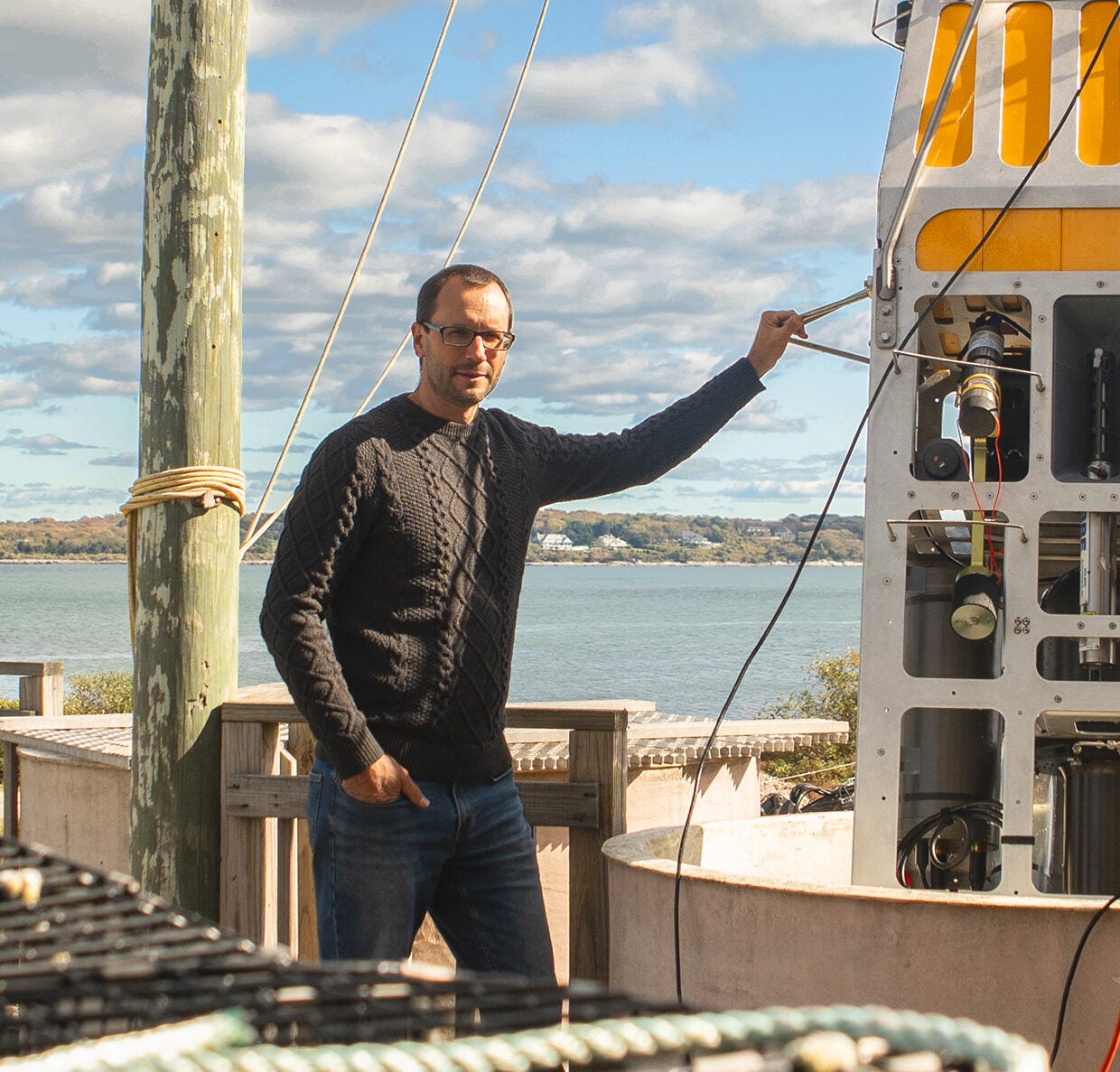
Roman's research centers on developing sensing systems for acoustic and photographic seafloor mapping, with dual expertise in deep-ocean archaeology and coastal dynamics. His work spans coastal circulation, underwater robotics, and oxygen minimum zone studies, exemplified by innovations like the Wire Flyer profiling vehicle that captures "shower curtain slices" of ocean properties through rapid vertical maneuvers.
Recent publications demonstrate a strong trajectory toward autonomous underwater vehicle technology, with emphasis on real-time bathymetric modeling, acoustic-visual sensor fusion, and deep-sea exploration in extreme environments like the Puerto Rico Trench. His research increasingly addresses climate change impacts through high-resolution observations of mesopelagic ecosystems and interocean fluxes.
No specific scientific awards are documented, but research is supported by diverse funding sources including the Champlin Foundations, which enabled development of an educational Autonomous Surface Vehicle (ASV) for Narragansett Bay studies.
Roman mentors students in engineering-data science integration, assigning projects that link mechanical design challenges to oceanographic questions. His GSO lab assembles custom instrumentation with external machining partners, focusing on deployable systems for field campaigns.
Current projects include methane seep investigations in the Gulf of Mexico, Antarctic krill behavior studies, and hadal zone exploration using the Deep Autonomous Profiler, maintaining active fieldwork across global ocean basins.