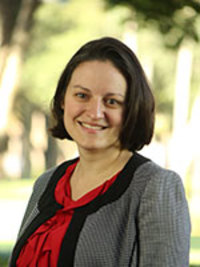
Kathleen Richardson is Professor of Ethics and Culture of Robots and AI at De Montfort University, affiliated with the School of Computer Science and Informatics and the Centre for Computing and Social Responsibility (CCSR). She is also involved in the Europe-wide DREAM project focused on robot-enhanced therapy for children with autism. Her academic background spans social anthropology, digital culture, and critical technology studies. Educational Background: PhD in Social Anthropology, University of Cambridge (2008) MPhil in Social Anthropology, University of Cambridge (2001) MSc in Development, Planning and Administration, University College London (1999) BA (Hons) in Anthropology and Linguistics, University College London (1998) Her research is grounded in humanistic anthropology and centers on the ontological distinction between persons and machines. She challenges perspectives that decenter human subjectivity (e.g., ANT, cyborg theory) and instead emphasizes power structures, relationality, and ethics. Her work critically examines therapeutic robots for autism and the rise of sex robots, linking them to broader societal issues of objectification, gender inequality, and abolitionist feminism. She founded the Campaign Against Sex Robots in 2015 to advocate for non-coercive, freedom-based technologies. The recent scholarly articles reflect a consistent focus on human-robot boundaries, sociality, and ethical implications across diverse contexts—from autism therapy to digital identity. Themes include the critique of machine personhood, the ethics of robotic intermediaries, and the anthropological study of technological fantasies and design practices. Scientific and Public Engagement: Member, Advisory Board, AI and Society Journal (2015–) Member, Scientific Committee, Machine Ethics and Machine Law (2016) Keynote speaker at Robophilosophy 2016, Trieste Next, and TEDxULB Featured expert on BBC Newsnight, Sky News, CBC, and BBC World Service Contributor to The Independent , Times Higher Education , New Scientist , and The Guardian Richardson has supervised various academic and public seminars and is deeply involved in advising on ethical frameworks for AI and robotics. She has participated in numerous international conferences and public debates on robot ethics, autonomy, and the future of human intimacy. Her work is supported by affiliations with interdisciplinary research groups like CCSR and the DREAM project, where she contributes to shaping ethical guidelines for robotic applications in sensitive domains. She leads initiatives that bridge academic research with public policy and ethical campaigning, particularly through her leadership in the Campaign Against Sex Robots. Her vision promotes a compassionate, non-violent technological future rooted in human dignity and relational ethics.