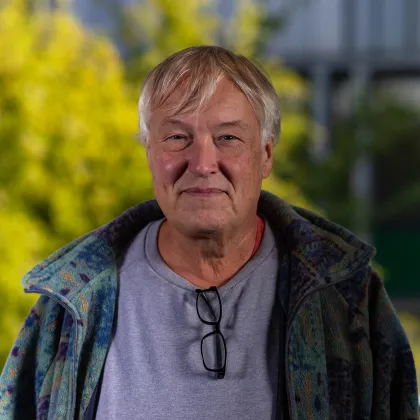
Joan Lluís Pijoan is an active researcher in wireless communication systems, with a focus on high frequency (HF) radio transmission, antenna design, and IoT architectures. He has co-authored numerous publications in journals such as IEEE Access, Sensors, and Remote Sensing, primarily investigating technical challenges in long-haul HF links, NVIS communication, and heterogeneous wireless networks. His research spans applications in Antarctic geophysical observatories IoT for natural disaster monitoring Advanced modulation schemes Signal processing for remote sensing Recent work highlights his expertise in antenna booster design (2023), multicarrier modulation (2020), and ionospheric channel analysis (2015). While specific university affiliations or departmental roles remain unspecified, his 15 most recent articles demonstrate sustained contributions to wireless systems since 2004.
Dr. Jennifer C Wolff is a Professor of Psychiatry and Human Behavior at The Warren Alpert Medical School of Brown University and a Child Psychologist at Rhode Island and Bradley Hospitals. She serves as the Director of the Adolescent Mental Health Collaborative (AMHC), which aims to improve mental health for youth through research, treatment, and training, and as the Director of the COBRE-funded Pediatric Biopsychology Core at Bradley Hospital, which promotes sleep and mental health research. Dr. Wolff's research program focuses on delineating social, cognitive, and affective mechanisms underlying adolescent psychopathology, translating these findings into treatments, and implementing these treatments in real-world settings. Her specific interests include suicide prevention, parenting practices, and improving treatment delivery across settings. She is currently Principal Investigator or Multiple Principal Investigator on four NIH grants addressing adolescent suicide assessment, parenting interventions, juvenile justice involvement, and social media impacts on youth mental health. Her recent publications demonstrate significant expertise in adolescent suicide risk assessment and prevention, emotion regulation, parenting interventions, and implementation science. Her work spans from basic mechanisms of psychopathology to the development and implementation of evidence-based treatments in community settings. She has made substantial contributions to understanding suicide risk factors among adolescents, particularly those in psychiatric care, and has developed innovative approaches to improve treatment delivery. Dr. Wolff has received numerous honors including the Distinguished Professional Contributions to Applied Research from the American Psychological Association, the Department of Psychiatry Education Committee Excellence in Teaching award from Brown University, a Certificate of Exemplary Teaching from the Office of Medical Education, and the Outstanding Mentor Award from the American Academy of Child and Adolescent Psychiatry. Her active research portfolio includes major grants such as R01MH129457 ("Towards a reliable and valid assessment of preteen suicidal thoughts and behavior"), R01MH129770 ("From the Court to the Community: Improving Evidence Based Treatment for Underserved Justice Involved Youth At-Risk for Suicide"), and P20GM139743 ("The Pediatric Biopsychology Core"), demonstrating her leadership in adolescent mental health research and implementation science.
Peter H. Aaen is a Reader in Microwave Semiconductor Device Modeling at the University of Surrey, with expertise in RF and microwave device modeling and characterization. His work focuses on developing advanced methodologies for high-power and high-frequency electronic devices, with applications in telecommunications and quantum technologies. Dr. Aaen received his B.A.Sc. in Engineering Science and M.A.Sc. in Electrical Engineering from the University of Toronto, Canada, and his Ph.D. in Electrical Engineering from Arizona State University, USA, in 1995, 1997, and 2005 respectively. Prior to joining the University of Surrey, he was the manager of the RF Modeling and Measurement Technology team at Freescale Semiconductor Inc (formerly Motorola Inc.), bringing significant industry experience to his academic work. Dr. Aaen's research spans several critical areas in microwave engineering, with a particular emphasis on developing multi-physics based modeling methodologies for high-power and high-frequency electronic devices. His expertise includes calibration techniques for microwave measurements, package modeling, development of compact models for microwave power transistors and RFICs, and efficient electromagnetic simulation methodologies for complex packaged environments. He has made significant contributions to understanding frequency dispersion in RF LDMOS transistors, electro-thermal modeling, and the development of measurement techniques for extreme impedance devices. His publication record demonstrates a clear progression from fundamental device modeling to advanced measurement techniques and applications in next-generation communications systems. Recent work has focused on multiphysics measurements, electro-optic field imaging, and the application of nanowire technologies to microwave switches, reflecting the evolving challenges in 5G and beyond communications infrastructure. Dr. Aaen is a Senior Member of the IEEE and active in several technical committees including the IEEE Technical Committee (MTT-1) on Computer-Aided Design, the technical program committee of the IEEE Conference on Electrical Performance of Electronic Packaging and Systems (EPEPS), and the executive committee of the Automatic RF Techniques Group (ARFTG). Dr. Aaen has supervised numerous PhD students whose research has advanced the field of microwave engineering, particularly in areas related to measurement uncertainty, multiphysics characterization of high-power transistors, and nanoscale device integration. His collaborative work spans multiple institutions and has resulted in significant advancements in understanding device behavior under complex operating conditions. His laboratory work focuses on developing novel measurement techniques that combine electro-optic systems with nonlinear vector network analyzers and load-pull measurement systems, enabling unprecedented visualization of electromagnetic field distributions within operating transistors. This work has led to breakthroughs in understanding oscillation mechanisms and thermal behavior in high-power devices.
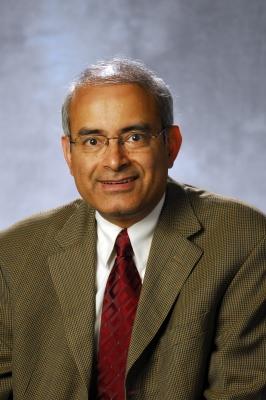
Yogendra K Joshi is a Professor at the Georgia Institute of Technology, holding a joint appointment in the School of Mechanical Engineering and the School of Electrical and Computer Engineering. He specializes in thermal management of electronic, telecommunication, and power systems, with expertise in computational modeling of semiconductor processes and microfabricated thermal devices. His work spans thermal modeling of data centers, electric vehicle motors, and high-power electronics packaging. Education: B.Tech. (Mechanical Engineering, IIT Kanpur, 1979); M.S. (SUNY Buffalo, 1981); Ph.D. (University of Pennsylvania, 1984). Previous academic positions include the University of Maryland (1993–2001) and the Naval Postgraduate School (1986–1993). He has also contributed to semiconductor industry R&D. Research focuses on thermal phenomena in electronics cooling, including flow boiling, microfluidics, and embedded evaporative cooling. He has pioneered internet-based distance learning programs in thermal management. Awards: Fellow of ASME (American Society of Mechanical Engineers) 1999 ASME Curriculum Innovation Award Multiple Faculty Performance Awards at Naval Postgraduate School His research integrates thermal-fluid modeling with engineering applications, addressing challenges in data center efficiency, electric vehicle thermal systems, and high-power electronics. Collaborations span academia and industry, emphasizing practical solutions for modern thermal management problems.
Nikolay Dimitrov Madzharov is a Professor at the Department of Electronics, Faculty of Electrical Engineering and Electronics, Technical University of Gabrovo. His work focuses on power electronics, wireless power transfer systems, and electric vehicle charging infrastructure. He has led and participated in numerous international and national projects, including modernization of educational institutions and development of energy-efficient systems. Research Interests: Wireless power transfer, inductive resonance systems, electric vehicle technology, energy storage systems, and control systems in energy. Projects: Over 7 projects, including 'Optimal Design and Management of Electrical Energy Storage Systems' and 'Intelligent Mechatronic, Eco- and Energy-Saving Systems and Technologies.' His research emphasizes practical applications, such as contactless charging stations and high-efficiency energy converters. Madzharov has authored 4 books and over 96 publications, including journal articles and conference papers on topics like resonant inverters and battery management systems. He has advised 6 doctoral students, contributing to advancements in power electronics and energy systems. His work has been presented at international conferences such as PCIM, ICEST, and SIELA, showcasing innovations in wireless energy transfer and system reliability.
Bruno Delacressonniere is an Associate Professor at ENSEA, affiliated with the Quartz laboratory and Electronic Systems department. His research focuses on RF electronics, electromagnetic compatibility (EMC), and advanced electronic systems including optical communications and sensor technologies. He teaches courses in analog electronics, microelectronics, and sensor systems. His research activities span nanophotonics for network-on-chip (NoC) architectures, reliability analysis of RFID systems, and innovative antenna designs for energy harvesting. He has contributed to advancements in optically controlled oscillators, SiGe-based phototransistors, and tunable microwave components using CMOS/SiGe technologies. Delacressonniere has supervised numerous Master’s theses and projects (PFE) focusing on embedded systems and RF design. His work bridges theoretical research with practical implementations, emphasizing energy-efficient solutions and high-reliability electronics for harsh environments. He leads the Electronic Systems team at Quartz, collaborating on projects involving 3D optical integration, microwave filter design, and photonics-based interconnects for multiprocessor systems. His publications reflect a strong emphasis on integrating nanophotonics and advanced semiconductor technologies for next-generation electronic systems.
Prof. Stefan Tai is a full professor and Chair of Information Systems Engineering at Technische Universität Berlin (Germany) since 2014. Previously, he held a full professorship at Karlsruhe Institute of Technology (KIT) and worked as a Research Staff Member at IBM's Thomas J. Watson Research Center. His research focuses on distributed systems, decentralized architectures, cloud service engineering, and privacy-preserving blockchain systems, emphasizing off-chain solutions and scalable technologies. Tai's work bridges academic research with industry applications, particularly in serverless computing, energy-efficient cloud-native systems, and blockchain-based solutions for supply chains and energy grids. He has authored numerous peer-reviewed publications in top-tier conferences and journals, including IEEE ICSA, Future Generation Computer Systems, and IEEE Blockchain. His contributions address challenges in software systems engineering, federated learning, and sustainable computing. Research Interests: Next-generation distributed software systems Decentralized architectures and blockchain systems Cloud and serverless computing Energy-efficient design Data management and privacy-preserving technologies Smart energy grids and IoT integration Key Publications Trends: Tai's recent work explores the intersection of blockchain and federated learning, serverless architectures for big data, and energy-efficient cloud-native applications. His 2025 paper introduced a framework for optimizing cloud-native energy efficiency, while 2024 contributions advanced verifiable decentralized systems and serverless data processing. Earlier research (2020–2021) focused on privacy in local energy grids and serverless computing scalability. Grants & Labs: While specific grants are not detailed, his leadership in TU Berlin's Information Systems Engineering group indicates involvement in EU-funded or industrial projects. Collaborations with institutions like TU Wien and KIT suggest multi-institutional efforts in distributed systems and blockchain. Labs/Teams: Leads the Information Systems Engineering research group at TU Berlin, focusing on software systems engineering, cloud architectures, and blockchain applications.
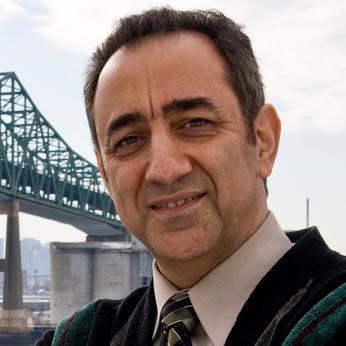
Masoud Sanayei is a Professor of Civil and Environmental Engineering at Tufts University's School of Engineering, where he has been a faculty member since 1986. He currently serves as an active professor in the Civil and Environmental Engineering department, teaching courses in structural analysis, finite element analysis, and structural dynamics. Dr. Sanayei's research focuses on bridge structural health monitoring (SHM), building train-induced vibrations, nondestructive testing of full-scale structures, and fatigue life prediction of structures with nonproportional multi-axial loading. His work has significantly advanced the field of structural health monitoring through the development of bridge signatures, an innovative nonparametric probabilistic method using operational bridge responses due to daily traffic for structural condition assessment. His recent publications demonstrate a strong trend toward integrating advanced computational methods including deep learning and machine learning with traditional structural engineering approaches. His research spans from fundamental vibration analysis to practical applications in bridge and building monitoring, with particular emphasis on train-induced vibrations in over-track structures and fatigue assessment of complex connections. Albert Nelson Marquis Lifetime Achievement Award by Marquis Who's Who 2017 Professor of the Year Award, Tufts University Dr. Sanayei has secured numerous research grants from the National Science Foundation, Federal Highway Administration, and Massachusetts Port Authority, focusing on structural performance monitoring, fatigue assessment, and asset management. His professional activities include editorial board membership for the Journal of Bridge Engineering (ASCE), committee leadership in the AISC/ASCE Steel Bridge Competition, and active participation in technical committees related to structural identification. His laboratory work includes extensive full-scale testing on structures such as the Tobin Bridge in Boston, Powder Mill Bridge in Massachusetts, Memorial Bridge in New Hampshire, Boston Convention Center, Hynes Convention Center, TD Garden, MIT Brain and Cognitive Science Center, and over-train-track buildings atop Shenzhen Metro Depot in China.
West Virginia University College of Law professors Kirsha Trychta, Amy Cyphert, and Melissa Giggenbach are prominent faculty members actively engaged in legal education, scholarship, and professional service. Trychta serves as director of the Academic Excellence Center, focusing on bar exam preparation and legal education. Cyphert specializes in AI ethics and health law, frequently publishing and speaking on technology's impact on legal practice. Giggenbach directs the West Virginia Innocence Project Clinic, concentrating on forensic science issues and wrongful convictions. Their research interests span legal education innovation, artificial intelligence ethics, health law, forensic science, and criminal justice reform. Trychta's work centers on West Virginia law and bar examination preparation. Cyphert explores the intersection of AI and legal ethics, with numerous publications in health law journals. Giggenbach investigates 'junk science' in criminal cases and advocates for evidence-based forensic practices. Collectively, their publications demonstrate a strong commitment to contemporary legal challenges, particularly in legal technology, criminal justice reform, and healthcare law. Their scholarship appears in venues including the Houston Journal of Health Law & Policy, U.C. Irvine Law Review, and various presentations at national conferences. They regularly contribute to discussions on AI in law, bar exam preparation, and forensic evidence standards. Their professional recognition includes conference presentations, editorial contributions, and leadership roles in academic organizations. Trychta chairs the AASE Committee and presents on NextGen Bar Exam topics. Cyphert participates in expert panels on AI and has been cited in judicial opinions. Giggenbach leads the West Virginia Innocence Project Clinic, directly impacting criminal justice through clinical legal education. All three maintain active scholarly agendas with numerous recent publications and presentations, demonstrating their ongoing contributions to legal education and practice. They regularly present at conferences including the Indigent Defense Annual Conference and contribute to law review publications across multiple disciplines.
Heli Koivuluoto is an Associate Professor (tenure track) in Materials Science and Environmental Engineering at Tampere University. She holds a Doctor of Science (Tech.) degree in Materials Technology with a focus on Rock Engineering and a Master of Science in Technology. Her research centers on advanced coating technologies, including cold spray, thermal spraying, and icephobic materials. Key areas include surface engineering for corrosion resistance, functional coatings for marine and cold environments, and material characterization using SEM/TEM. Education: Doctor of Science (Technology), Materials Technology, Rock Engineering (2010) Master of Science (Technology) (2005) Her work emphasizes practical applications such as ice-resistant coatings, composite materials for aerospace and infrastructure, and process optimization in additive manufacturing. She has supervised numerous master's theses and internships, including projects on cold-sprayed coatings and composite materials at institutions like the University of Modena and Reggio Emilia. Recent research trends include real-time process monitoring in cold spray additive manufacturing, development of durable superhydrophobic and icephobic surfaces, and microstructural analysis of quasicrystalline composites. Her work contributes to UN Sustainable Development Goals related to industry, innovation, and infrastructure. Dr. Koivuluoto is actively engaged in organizing international conferences, including the ITSC 2025 Thermal Spray Conference, and serves as a reviewer for multiple journals and funding applications.
Onur Mutlu is a Full Professor of Computer Science at ETH Zurich (since 2015), with adjunct professor positions at Carnegie Mellon University (since 2016) and Bilkent University (since 2015). His academic career spans prestigious institutions including Carnegie Mellon University where he served as Assistant Professor (2009-2013) and Strecker Early Career Endowed Professor (2013-2016). His research focuses on computer architecture, particularly memory systems, with expertise in: Computer memory systems and DRAM architecture Multi-core processor design Fault tolerance and reliability Hardware/software interactions Systems security related to hardware Emerging memory technologies Dr. Mutlu's work has significantly impacted both academic research and industry practices. His discovery of the RowHammer problem created a new field at the intersection of hardware reliability and systems security. His research on memory controllers, flash memory reliability, and emerging memory technologies has been adopted by major technology companies including Samsung, Intel, IBM, and Microsoft. His numerous scientific awards include the IEEE Computer Society Harry H. Goode Memorial Award (2025), IFIP Jean-Claude Laprie Award (2024), Huawei OlympusMons Award (2023), IEEE Computer Society Edward J. McCluskey Technical Achievement Award (2020), and ACM SIGARCH Maurice Wilkes Award (2019). He is an IEEE Fellow (2018), ACM Fellow (2017), and member of Academia Europaea (2018). Dr. Mutlu has received significant industry recognition with Faculty Awards from Google, Facebook, HP, Huawei, IBM, Intel, Microsoft, NSF, and VMware. His work has earned over 20 Best Paper awards and 12 papers selected for IEEE Micro's Top Picks as some of the most influential papers in computer architecture. He maintains strong industry connections, having worked at Microsoft Research (2006-2009), Intel (multiple summers), AMD (multiple summers), VMware (2016), and Google (2016), enabling direct technology transfer of his research ideas into commercial products.
Dr. Chulsoon Hwang is an Associate Professor of Electrical Engineering at Missouri University of Science and Technology (Missouri S&T) , part of the College of Engineering . He leads the EMC Laboratory and focuses on RF desensitization, signal/power integrity, machine learning in hardware design, and electromagnetic interference (EMI). His work bridges theoretical electromagnetics with practical applications in high-speed digital systems and hardware security. Education: Ph.D., M.S., and B.S. in Electrical Engineering from KAIST (Korea Advanced Institute of Science and Technology), Daejeon, South Korea. Prior to joining Missouri S&T in 2015, he worked as a Senior Engineer at Samsung Electronics (2012–2015). Research Highlights: Developed machine learning-driven simulators for signal integrity (e.g., High-speed Channel Transformer). Pioneered physics-assisted genetic algorithms for PDN decoupling optimization. Explored intentional EMI attacks (e.g., inaudible voice command injection into smart speakers). Advanced understanding of power supply-induced jitter (PSIJ) and EMI mitigation strategies. Recent Trends in Publications: Focus on AI-driven hardware optimization (deep learning/RL for PDN design), EMI/RFI modeling, and security vulnerabilities in IoT devices. Over 150 IEEE publications and multiple patents (e.g., inaudible voice command injection, laser foil printing for resonators). Awards and Recognition: Best Paper Awards (7 papers, 4 student papers). Dean’s Scholar Award (2022–2023) and IEEE EMC Society Technical Achievement Award (2023). Google Faculty Research Award (2020) and APEMC Young Scientist Award (2018). Grants and Labs: Active in securing research grants for AI-driven hardware design and EMI mitigation. The EMC Lab collaborates on industry-relevant projects, such as acoustic noise analysis in power distribution networks. Labs/Teams: Director of the EMC Laboratory at Missouri S&T, fostering interdisciplinary research in electromagnetics and hardware security.
Christopher Saldaña is an Assistant Professor in K-12 educational leadership and policy analysis at the University of Wisconsin-Madison's School of Education. His research focuses on K-12 school finance, educational equity for marginalized students, and mixed-methods policy analysis. He has authored/co-authored numerous NEPC reviews and publications examining school choice, edtech, and fiscal policies. Saldaña is a fellow with the National Education Policy Center and has collaborated extensively on projects like designing equitable school systems in Michigan and North Carolina. His work critiques privatization trends and advocates for systemic reforms to address inequities in public education. Education: PhD in Educational Foundations, Policy, and Practice from University of Colorado Boulder Key Contributions: Over 30 NEPC publications, including reviews of voucher programs, personalized learning platforms, and policy frameworks for equity Research Focus: Saldaña analyzes how school funding and policy decisions impact marginalized groups. Recent work includes evaluating Summit Learning's privatization risks, Michigan's community school initiatives, and equitable resource allocation in North Carolina. Grants & Awards: While no specific awards are listed, his sustained NEPC contributions highlight institutional recognition in educational policy circles.
Sembukutti Arachchige Ajith Panduka Karunanayake is a Senior Lecturer in Clinical Medicine at the Faculty of Health, University of Colombo. He is actively involved in medical education and clinical research, particularly in infectious diseases prevalent in tropical regions. MD in General Medicine, Postgraduate Institute of Medicine, University of Colombo (1996–1998) MB BS, North Colombo Medical College (1985–1992) His research focuses on clinical infectious diseases, especially dengue fever, leishmaniasis, melioidosis, and thromboelastometry in critical illness. He contributes to public health through epidemiological studies and psychometric validations for local populations. His work aligns with the UN Sustainable Development Goal on Good Health and Well-being. The recent articles (2022–2025) highlight his engagement in both clinical and public health research, spanning tropical medicine, coagulation disorders in dengue, validation of mental health tools, and nationwide disease awareness surveys. These works reflect a multidisciplinary approach combining infectious disease management, laboratory diagnostics, and community-based health research. No scientific awards were explicitly mentioned in the provided text. Dr. Karunanayake has co-authored numerous research articles, indicating active collaboration with peers and institutions. While specific grants or advising roles are not detailed, his extensive publication record suggests involvement in funded research and academic mentorship. He is likely part of research teams focusing on tropical and infectious diseases in Sri Lanka. He is associated with research groups working on cutaneous leishmaniasis, dengue, and melioidosis, contributing to national and international efforts in understanding and managing these conditions. His work often involves multi-center collaborations and public health assessments.
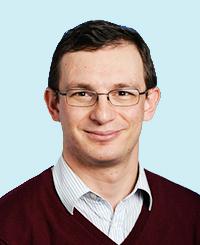
Adam Burke is a Research Fellow at Queensland University of Technology (QUT), affiliated with the School of Information Systems and Department of Information Systems. He holds a PhD in Process Mining with Labelled Stochastic Nets (2024). His research focuses on process mining, stochastic modeling, blockchain technology, and algorithm development. Burke has authored numerous papers in top venues like CAiSE, ICPM, and PETRI NETS, addressing topics including complexity analysis, fraud detection via blockchain integration, and stochastic process discovery. Education: PhD in Process Mining (QUT, 2024). Research Interests: Process Mining techniques, stochastic models, blockchain applications, algorithm design, and computational complexity analysis. His work bridges theoretical foundations with practical applications in data analysis and system optimization. Publications span 2016 to 2025, emphasizing advancements in process model quality dimensions, historical data analysis (e.g., Qing Dynasty civil servant career paths), and experimental studies in stochastic systems. His 2025 work on blockchain-enhanced suspicious activity detection showcases innovation in cybersecurity and distributed systems. Labs/Teams: Collaborates with researchers in process mining and stochastic systems, though specific lab affiliations are not detailed in the provided texts.