Dr. John C. Livesey is an Associate Professor at the University of the Pacific , where he has taught since 1994. He specializes in endocrine physiology , cancer biology , and pharmacology , with a research focus on metastasis mechanisms and drug interactions. B.S., Chemistry - Stanford University (1977) Ph.D., Pharmacology - University of Minnesota (1982) Postdoctoral Research - Oregon State University (1982-1985) His research explores metastatic cancer dissemination , emphasizing non-unique biological processes contributing to 90% of cancer deaths. He investigates drug-induced modulation of cellular calcium dynamics and oxidative stress responses, with publications in Biochemical Pharmacology and Molecular Cancer Research . Recent scholarly work includes 2019 strategic planning analysis in pharmacy education and 2015 neurotoxicity assays using human stem cells. Collaborations span institutions like University of Washington and Oregon State University. Teaching philosophy emphasizes curricular mastery through structured information delivery for pharmacy students. Courses taught include PHAR111 Physiology I , PHAR212 Introduction to Pharmacology , and PCSP 391 Independent Study .
Hans Paul van der Laan is a researcher at the University of Groningen's Faculty of Medical Sciences, specializing in the Personalized Cancer Treatment department. His work focuses on optimizing radiation therapy protocols for head and neck cancer patients through advanced modeling techniques. His research interests center on precision oncology, particularly: Head and neck cancer treatment optimization Radiation-induced toxicity prediction Frailty assessment in cancer patients Normal tissue complication probability modeling Aspiration risk reduction strategies Proton therapy applications His publications demonstrate consistent focus on improving patient outcomes through quantitative modeling of radiation effects. His recent publications reveal strong emphasis on interdisciplinary approaches combining medical physics, geriatric assessment, and clinical oncology. Key trends include development of NTCP models for dysphagia and aspiration, integration of frailty metrics into treatment planning, and international validation of radiation protocols. Hans Paul van der Laan has supervised at least one research project as indicated by institutional records. His collaborative network spans multiple international institutions focused on head and neck cancer research. He actively contributes to the Personalized Cancer Treatment research group at UMCG, which develops advanced radiation therapy protocols using computational modeling and clinical data analysis to minimize treatment complications while maintaining efficacy.
Dr. Arjen van der Schaaf is a medical physicist affiliated with the University of Groningen , working within the Faculty of Medical Sciences through the Personalized Cancer Treatment (PCT) and BRIDGE research groups. His research focuses on optimizing radiation therapy through advanced imaging and modeling of treatment effects, particularly in head and neck cancer and proton therapy applications. His work intersects with critical subfields including NTCP model development , aspiration risk prediction , dysphagia toxicity analysis , and radiation-induced contrast enhancement . Key collaborations span institutions like UMCG, with emphasis on international cohort studies and multi-institutional validation . Notable contributions include: Development of predictive models for radiation-induced complications in brain tumors and mandibular health Improvement of NTCP frameworks for aspiration and swallowing disorders Integration of proton therapy dosimetry with clinical outcomes His research directly supports the UN Sustainable Development Goal 3 (Good Health and Well-being) , focusing on reducing radiation therapy side effects while improving efficacy.
NG Wirsdörfer is a research group leader at the University of Duisburg-Essen's Medical Faculty , specializing in Radiation Oncology and Immunomodulation . Their work focuses on radiation-induced immune changes in tumors and normal tissues, particularly lung toxicity mechanisms. University: University of Duisburg-Essen Radiation-related immunology and tumor resistance Grants: DFG, EU ITN THERADNET, Wegener Foundation Research Themes: The group investigates how radiation therapy interacts with innate and adaptive immunity, identifying therapeutic targets to protect normal tissue while maintaining tumor control. They use co-clinical radiation models , multicolor flow cytometry , and advanced imaging to study NSCLC/HNSCC treatments. Scientific Contributions: Key publications address biomarker development for pneumonitis/fibrosis, immune checkpoint inhibition combinations, and the role of CD39/CD73 and microbiome in radiation responses. 2023 articles in Neoplasia and J Immunother Cancer highlight overlapping immune-related adverse effects and glucocorticoid-mediated immunosuppression. Neuropilin-1 targeting in pulmonary fibrosis Pathological macrophage modulation Microbiome effects in radioimmunotherapy Team Leadership: Supervises doctoral students Irene Bocci, Alexander Ziebolz, and Hugo Laporte. Collaborates with Prof. Verena Jendrossek and PD Dr. Nika Guberina on projects funded by GRK2762/1 and the UMESciA initiative.
Stewart J. Becker, PhD, DABR is an Associate Professor in the Department of Radiation Oncology at the University of Maryland Medical Center . He holds dual roles as a Medical Physicist and Radiation Safety Officer , focusing on advanced radiation therapy technologies and safety protocols. Education: B.A. in Physics, Rice University (2000) M.S. in Medical Physics, University of Wisconsin-Madison (2002) Ph.D. in Medical Physics, University of Wisconsin-Madison (2006) Fellow, NYU Institute for Innovations in Medical Education (2014) Dr. Becker is an international expert in the GammaPod , a stereotactic radiosurgery technique for breast cancer treatment. His research spans radiosurgery , dosimetry , radiation safety , and image-guided therapy . He has collaborated globally on GammaPod installations and authored key publications on its clinical applications, dose optimization, and device commissioning. His most recent work in Radiation Oncology explores dose homogeneity, brain metastasis treatment limits, and standardized dosimetry reporting to address reproducibility challenges in radiobiology. Earlier studies focus on prone breast positioning, linac collision avoidance, and stereotactic body frame transmission. Scientific contributions include a 2014 NYU Institute Fellowship and an Editor’s Pick Award (2012) . Dr. Becker’s publications highlight advancements in breast cancer treatment, radiation device safety, and reproducibility standards.
Shifeng Chen, Ph.D., is a Professor and Chief of Clinical Medical Physics in the Department of Radiation Oncology at the University of Maryland. He earned his Ph.D. in Physics from Florida State University in 2006, followed by postdoctoral training at Duke University Medical Center. Before joining the University of Maryland in 2012, he served as an Assistant Professor at the University of Nebraska Medical Center. His research integrates clinical data mining and machine learning to model normal tissue complication probabilities (NTCP) for radiation therapy outcomes. He spearheads clinical innovations including RayStation Treatment Planning, Linac-based SRS/SBRT, thermal therapy programs, and calculation-based quality assurance systems. Key focus areas include: NTCP prediction using self-organizing maps and neural networks Optimization of IMRT/VMAT delivery and MLC modeling Radiation safety protocols and adaptive therapy techniques AI applications for outcome modeling and image segmentation Dr. Chen actively contributes to professional societies including the American Association of Physicists in Medicine (AAPM) and American Society for Radiation Oncology (ASTRO). He serves on the editorial board of the Journal of Applied Clinical Medical Physics .
Hem D. Shukla is an Assistant Professor in the Department of Radiation Oncology at the University of Maryland School of Medicine . His research focuses on radiation-induced modulation of immuno-suppressive tumor microenvironments in pancreatic and non-small cell lung cancers, with an emphasis on immunotherapy and targeted therapeutics to inhibit cancer-altered pathways. PhD in Biochemistry , R. D. University Jabalpur, India Post-Doctoral Training , University of Massachusetts (1996–2002) Cancer Biology Training , National Institutes of Health and Johns Hopkins University School of Medicine (2006–2009) Dr. Shukla’s lab at the Bressler Research Building employs photon and proton-beam radiation on tumor xenografts and patient-derived organoid models to study chemo/radiation resistance and translational research . His recent publications highlight the role of SOX2/OCT4 in radiation/drug resistance (2024) and the efficacy of 3-Bromopyruvate in targeting glycolysis and mitochondria (2022). His work spans radiobiology , cancer metabolism , and combination therapies integrating radiotherapy , hyperthermia , and immunotherapy to improve tumor response and survival outcomes.
Rinat O Esenaliev, PhD is a Professor in the Department of Neurobiology at the University of Texas Medical Branch (UTMB). He serves as Director of the Laboratory for Optoacoustic Imaging and Monitoring and leads the Biomedical Engineering and Imaging Sciences Group. His academic affiliations include the Department of Anesthesiology and UTMB Cancer Center. Education : PhD in Applied Biophysics (Institute of Spectroscopy, Russian Academy of Sciences), MS (Moscow Institute of Physics and Technology), BS in Theoretical Physics. Research Focus : Pioneering optoacoustic/photoacoustic imaging for noninvasive monitoring of cerebral oxygenation, tumor therapy, and infection treatment using laser/ultrasound/nanoparticle systems . Major inventions: Optoacoustic technology for real-time physiological monitoring , nanoparticle-enhanced drug delivery , and pathogen inactivation . Article Trends : Recent work spans neurotrauma therapy , single-molecule detection , wearable sensors , and multi-wavelength oxygenation monitoring . Scientific Awards : UT System Chancellor’s Innovation and Entrepreneurship Award Fellow of The Optical Society of America (OSA) Fellow of SPIE Grants & Impact : PI/co-PI in 33 grants, 195+ publications, 266+ conference presentations. Labs & Teams : Leads the Laboratory for Optoacoustic Imaging and Monitoring, collaborating with biomedical engineering and critical care teams.
Ryan Thomas Hughes, MD is an Assistant Professor in the Radiation Oncology (Winston-Salem) department at Wake Forest University Health Sciences. He is affiliated with the Atrium Health Wake Forest Baptist Comprehensive Cancer Center and actively engaged in both clinical practice and research. MD from Wake Forest University School of Medicine (2015) Radiation Oncology Internship (2016) and Residency (2020) at Wake Forest School of Medicine Board Certified in Radiation Oncology by the American Board of Radiology Member of Radiation Research Society and American Society for Radiation Oncology Research Focus: Dr. Hughes investigates radiation-induced normal tissue injury mechanisms to develop interventions that reduce treatment toxicity. His work specifically targets head and neck cancer survivors' cardiovascular risks, cutaneous radiation injury prevention, and palliative radiation therapy optimization. Current projects include keratin-based topical treatments for dermatitis and histology-driven hypofractionated protocols for lung cancer. Publication Trends: Recent articles emphasize image-guided radiation therapy , hematologic neoplasms , and symptom management strategies. His research spans clinical trials, preclinical pain studies, and cardiovascular risk assessment in cancer survivors. Clinical Specialties: Dr. Hughes treats head and neck cancers , hematologic malignancies (lymphoma, leukemia), and specializes in intensity-modulated radiotherapy (IMRT) and volumetric arc therapy (VMAT) . He provides patient-centered palliative care for symptom management near end-of-life. Practice Location: Comprehensive Cancer Center, Medical Center Boulevard, Winston-Salem, NC 27157. Accepts new patients through Atrium Health network with full insurance coverage.
Yang Xie is a Professor at UT Southwestern Medical Center , where she serves as the Associate Dean for Data Sciences . She is the founding director of the Quantitative Biomedical Research Center (QBRC) , Pediatric Cancer Data Commons (PCDC) , and Cancer Center Data Science Shared Resources (DSSR) within the Harold C. Simmons Comprehensive Cancer Center . Her research integrates biostatistics , bioinformatics , and machine learning to develop predictive biomarkers and precision medicine approaches for cancer patients. Her PhD in Biostatistics (2006) and MS in Biostatistics (2002) and Epidemiology (2000) from University of Minnesota-Twin Cities and Peking University Health Science Center (1997) form the foundation of her interdisciplinary expertise. Research focuses include RNA regulation , high-dimensional data analysis , and computational oncology . Recent projects leverage deep learning for pathology image analysis and tumor microenvironment modeling , with applications in lung cancer survival prediction , Germ Cell Tumor data commons , and immune-related adverse event forecasting . She has developed open-source tools like MetaPrism and PIPE-CLIP for microbiome and CLIP-seq analysis. Scientific recognitions include NIH MIRA grant leadership and multiple DREAM Challenge awards for computational modeling. Her work bridges biostatistics , machine learning , and translational oncology through collaborations with institutions like MD Anderson and Northwestern University .
Hiram A. Gay, MD is a Professor of Radiation Oncology at Washington University School of Medicine, serving as Chief of the Genitourinary Service and Medical Director of Radiation Oncology at Siteman Cancer Center – South County. He holds a BS in Computer Engineering (1996) from University of Puerto Rico, Mayaguez MD (2000) from University of Puerto Rico, San Juan Residency in Radiation Oncology (2005) at SUNY Upstate Medical University Dr. Gay specializes in genitourinary cancers (prostate, kidney, bladder) and head and neck cancers , with expertise in IMRT/IGRT SBRT Proton therapy Radioisotope therapy (Radium-223, Lutetium-177 PSMA) His research focuses on: Radiation therapy for HPV-related oropharyngeal cancer AI-driven dose prediction and segmentation Global oncology initiatives in low-middle income countries Biomarker studies for normal tissue complications Recent publications highlight AI applications in medical imaging (2024), proton therapy trials (2025), and HPV tumor heterogeneity (2023). He received the Galileo Galilei Award (2009) and leads clinical trials on: Prostate cancer radiation with hydrogel spacers Radioisotope therapy for bone metastases Global radiation access programs Dr. Gay's work bridges clinical practice with translational research , emphasizing quality of life and health equity .
Tong Zhu, Ph.D., DABR, serves as Associate Professor of Radiation Oncology at Washington University School of Medicine (WUSTL) since 2021. He holds the additional title of Chief, MRgRT Services, and maintains affiliations with both the Department of Radiation Oncology and Radiology. Education BSc: Biomedical Engineering, Zhejiang University (1996) MSc: Biomedical Engineering, University of Rochester (2004) Ph.D.: Biomedical Engineering, University of Rochester (2009) Medical Physics Residency: University of Michigan (2015) As an MRI physicist and medical physicist, Dr. Zhu specializes in integrating quantitative MRI techniques like diffusion MRI and MR Fingerprinting (MRF) into radiation therapy (RT) applications. His research focuses on: MRI-guided adaptive RT for tumor control Functional/physiological MRI biomarkers for normal tissue toxicity characterization Translational MRI research in neurological disorders and brain tumors Clinical trial leadership for quantitative MRI assessment He collaborates with MRI-aided adaptive RT experts across Radiation Oncology and Radiology departments, with notable contributions during his tenure at UNC Chapel Hill (2016-2021) where he led integration of MR Fingerprinting for RT applications. Scientific recognition: American Board of Radiology certification in Therapeutic Physics (2017)
Ilker Sariyer is an Associate Professor at Temple University's Lewis Katz School of Medicine with dual appointments in the Department of Microbiology, Immunology and Inflammation. He also serves as an Associate Professor at both the Center for Neurovirology & Gene Editing and the Comprehensive NeuroAIDS Center. His email contact is ilker.sariyer@temple.edu and direct phone number is 215 707-6337. PhD, Biomedical Sciences, Temple University School of Medicine, Philadelphia, PA, 2011 DVM, Selcuk University, School of Veterinary Medicine, Konya, Turkey, 2000 Dr. Sariyer's research program focuses on understanding the molecular regulation of alternative pre-mRNA splicing and RNA editing in normal and pathologic conditions associated with neuronal degenerative disorders and neurotropic viral infections. His work spans several major areas including Progressive Multifocal Leukoencephalopathy (PML), Neuro-HIV, Fetal Alcohol Syndrome (FAS), and opioid dependence. He has developed innovative primary human neuronal culture models using neurospheres (hNSPs), neural progenitors (hNPCs), immature neurons, and mature neurons from fetal brain tissues to study alcohol's effects on neuronal development. His HIV research investigates how viral proteins like Nef are released in extracellular vesicles from infected glia, leading to neuronal toxicity and cognitive impairment. Dr. Sariyer's recent publications demonstrate a strong trajectory in neurovirology and molecular neuroscience, with increasing emphasis on advanced gene editing techniques like CRISPR-Cas9 and sophisticated cell culture models including 3D brain organoids. His work bridges virology, neuroscience, and molecular biology to understand how viral infections and substance abuse impact neurological function, with implications for therapeutic interventions in neurodegenerative conditions. While specific awards are not listed in the available information, his active research program and numerous publications suggest recognition within his field. Dr. Sariyer leads an active research laboratory investigating the molecular mechanisms underlying neurological complications of viral infections and substance abuse. His work appears to involve collaboration with multiple researchers across disciplines, as evidenced by his co-authorship on numerous publications. His research is likely supported by NIH or similar funding mechanisms given the nature of his work on HIV, JC virus, and substance abuse neurotoxicity. His laboratory work is centered at the Center for Neurovirology & Gene Editing and the Comprehensive NeuroAIDS Center at Temple University, suggesting he works with interdisciplinary teams focused on neurological complications of viral infections. His research employs a range of techniques from molecular biology to advanced cell culture models, including primary human neuronal cultures and brain organoids.
Nidal Ghosheh is a Researcher at the University of Skövde within the School of Bioscience . His work focuses on systems biology , stem cell differentiation , and AI-driven medical applications . He actively contributes to projects like TransTissuE (tissue-engineered vascular transplants) and BioMine (biomarker discovery through biomedical data mining). Research Interests : Transcriptomic analysis of stem cell derivatives, batch effect reduction in big data, and AI automation in biological systems Collaborations : Partnerships with AstraZeneca Gothenburg, Takara Bio Europe, and XVIVO His recent publications explore hepatocyte differentiation , DNA methylation patterns , and organoid formation using decellularized extracellular matrix. Key projects emphasize precision medicine and advanced therapy medicinal products (ATMPs) . Research spans from 2013 to ongoing initiatives through 2025.
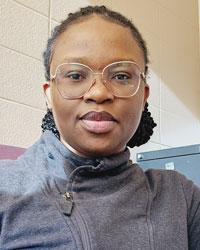
Dr. Oluwabunmi Femi-Oloye serves as Assistant Professor of Biology within the Division of Biological and Health Sciences at the University of Pittsburgh, conducting critical research on chemical impacts in aquatic ecosystems through predictive toxicology models and environmental risk assessment frameworks. Her academic credentials include: Ph.D. in Toxicology from University of Saskatchewan, Canada MTech. in Environmental Biology and Public Health from Federal University of Technology Akure, Nigeria B.Sc. (Hons) in Environmental Biology and Fisheries from Adekunle Ajasin University, Nigeria Her research integrates Ecotoxicology , Environmental Monitoring , and Predictive Toxicology to evaluate chemical risks across food chains, with particular emphasis on heavy metals, pesticide safeners, and emerging contaminants. Using zebrafish and Daphnia models alongside computational approaches, she develops frameworks for sustainable chemical regulation that protect both aquatic organisms and human health through evidence-based policy recommendations. Analysis of her 15 most recent publications reveals three dominant research thrusts: (1) Heavy metal contamination in Nigerian aquatic systems with health risk modeling, (2) Mechanistic studies on herbicide safener toxicity in aquatic environments, and (3) Innovative wastewater surveillance methodologies for pathogens including SARS-CoV-2 variants. Her work demonstrates increasing methodological sophistication from field sampling to computational modeling while maintaining focus on real-world environmental protection. No scientific awards or honors are documented in the provided materials. Information regarding student mentorship, grant funding, or collaborative research teams is not specified in the available documentation. While her laboratory infrastructure isn't detailed, her research methodology suggests integration of aquatic toxicology testing facilities, environmental chemistry instrumentation, and computational modeling resources within the university's research ecosystem.