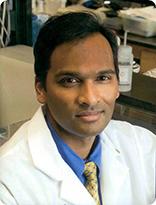
Dr. Tracy Johnson is a faculty member at the University of California, Los Angeles affiliated with the Molecular Biology Institute . With over 20 years of academic productivity, her research spans RNA splicing mechanisms, co-transcriptional regulation, and health services innovation. Key contributions to understanding spliceosome dynamics in Saccharomyces cerevisiae Interdisciplinary work connecting chromatin remodeling with metabolic regulation Leadership in healthcare systems analysis for vulnerable populations Publications between 2002-2021 demonstrate sustained expertise across molecular genetics and translational medicine. Notably, her 2019 work on H3K36 methylation and 2020 Science article on systemic racism in academia reflect both scientific and social impact.
Dr. Arul M. Chinnaiyan is a distinguished Professor of Pathology and Urology at the University of Michigan Medical School , where he serves as Director of the Michigan Center for Translational Pathology (MCTP) and an Investigator at the Howard Hughes Medical Institute . His work bridges translational cancer research and precision oncology , with a focus on prostate cancer biomarkers and gene fusion discovery . He has pioneered clinical tools like the MiPS test (combining TMPRSS2-ERG and PCA3) and the bioinformatics platform Oncomine . Education : M.D. and Ph.D. in Pathology Awards : Paul Marks Prize, NCI Outstanding Investigator Award, Sjöberg Prize (2022), AACR Academy Induction (2020) His research spans genomics , epigenetics , and non-coding RNA biology , particularly in prostate cancer and solid tumors . His lab’s 2024–2025 publications highlight advances in FOXA1 mutations , CDK12/13 targeting , and neo-enhanceosome mechanisms . He mentors students like Yihan Liu and has trained notable alumni such as Benjamin Chandler and Jae Eun Choi .
Dana C Dolinoy, PhD, MSc is the NSF International Chair of Environmental Health Sciences and Professor in both the Environmental Health Sciences and Nutritional Sciences departments at the University of Michigan School of Public Health. She directs the University of Michigan NIEHS P30 Core Center, 'Lifestage Environmental Exposures and Diseases' (M-LEEaD), and serves as Faculty Director of the Michigan Medical Center's Epigenomics Core. Dolonoy earned her BA from Duke University in 1998, MSc from Harvard Chan School of Public Health in 2003, and PhD from Duke University in 2007. Her educational background provides a strong foundation for her interdisciplinary work bridging environmental health, nutrition, and molecular biology. Dr. Dolinoy's research focuses on environmental epigenomics and the developmental origins of health and disease, with particular interest in how early-life environmental exposures program long-term health outcomes. She integrates approaches from toxicology, epidemiology, and bioinformatics to characterize effects of environmental factors on the epigenome. Her work has significant implications for understanding metabolic syndrome, neurodevelopmental disorders, and cancer, especially in vulnerable populations exposed during critical developmental windows. Analysis of her recent publications reveals a strong focus on DNA methylation as a mechanism linking environmental exposures to health outcomes. Her work examines sex-specific and tissue-specific epigenetic responses to toxicants like lead and phthalates, circadian biology, and the interplay between nutrition and environmental exposures. The research increasingly incorporates multi-omics approaches and longitudinal designs to understand how early-life exposures reprogram biological trajectories across the lifespan. Dr. Dolinoy teaches courses including EHS660: Environmental Epigenetics and Public Health and EHS801: Professional Development In Environmental Health Sciences. She leads significant research initiatives including the Environmental Epigenomics and Precision Environmental Health NIEHS R35 RIVER Project, the Michigan Center on Lifestage Environmental Exposures and Disease (M-LEEaD), and is a member of the NIEHS TaRGET II Consortia. As Faculty Director of the Michigan Medical Center's Epigenomics Core, she provides critical epigenomic research infrastructure and expertise to the broader scientific community. Her laboratory, the DoGoodS Lab, focuses on advancing precision environmental epigenomics tools for the wider toxicological research and therapeutic communities, with particular attention to sensitive subpopulations vulnerable to early environmental insults that set the stage for adult disease risk.
Mary Thompson is a postdoctoral computational biologist and researcher at the University of Oxford, affiliated with the Computational Genomics department under the Medical Sciences Division. She serves as a trainer for the Oxford Biomedical Data Science (OBDS) training programme, specializing in genomics data processing and interpretation. Education: BSc in Biochemistry and Cell Biology, Rice University, USA PhD at Massachusetts Institute of Technology (MIT), USA, under Wendy Gilbert Postdoc at University of Oxford, UK, under Ilan Davis Her research investigates transcriptional regulation during brain development, focusing on the role of non-coding genomic regions in cerebellar development and their implications in neurodevelopmental disorders. She integrates single-cell open chromatin profiles, RNA sequencing, chromosome conformation capture, and transcription factor binding site data to analyze epigenetic remodelling across developmental stages and cell types. Recent publications highlight her expertise in RNA metabolism, ribosomal protein functions, and computational genomics. Thompson combines experimental and computational approaches, with a background in private-sector bioinformatics, and contributes to training initiatives in reproducible genomics data analysis.
Sarah D. Kocher is an Assistant Professor at Princeton University, affiliated with the Department of Ecology and Evolutionary Biology and the Lewis-Sigler Institute for Integrative Genomics. Her lab integrates evolutionary genomics, neurobiology, and ecology to study social behavior in bees. Research Interests: Evolution of social behavior in halictid bees and treehoppers Molecular and ecological drivers of social polymorphism Neurogenomic architecture of collective behaviors Host-microbe interactions in social insects Developmental and evolutionary trade-offs in sociality Recent Article Trends: Her work from 2023-2016 focuses on eusociality in sweat bees, social network dynamics, hormonal regulation of behavior, and genomic mechanisms underlying social evolution. Keywords span Evolutionary Biology, Genomics, Behavioral Ecology . Scientific Awards: HHMI Freeman Hrabowski Scholar Packard Fellowship NIH New Innovator Award Graduate Students: Includes Ian Traniello (Lewis-Sigler Scholar), Dee Ruttenberg (QCB), Kennedy Saitoti (EEB), Charlotte Knopp (EEB), Michelle White (EEB), Daniel Cardona (EEB), Fiona Corcoran (EEB), and Micah Fletcher (QCB). Labs & Collaborations: The Kocher Lab at Princeton collaborates with institutions like the Smithsonian Tropical Research Institute and University of Missouri. They develop tools like NAPS for behavioral tracking and integrate fieldwork with genomic analysis.
Francesca Persichetti is an Associate Professor in the Department of Health Sciences at the University of Eastern Piedmont, where she leads research on molecular mechanisms of neurodegenerative diseases with a focus on RNA biology and genetic pathways. Her primary research spans Neurodegenerative Diseases, Molecular Biology, and RNA Biology, with specialized expertise in Huntington's Disease and non-coding RNA systems. She investigates how LINE-1 retrotransposons regulate cortical development, how SINEUP non-coding RNAs depend on RNA modifications like N6-methyladenosine, and the neurotoxic role of neuronal hemoglobin in Parkinson's disease models. Her work integrates genomic, transcriptomic, and molecular approaches to uncover disease mechanisms. Recent publications (2022-2023) reveal consistent focus on retrotransposon dysregulation in Huntington's disease, RNA modification-dependent gene regulation, and hemoglobin-induced neurodegeneration. These studies demonstrate interdisciplinary convergence of neuroscience, genetics, and molecular biology, with implications for therapeutic targeting of RNA pathways in neurodegeneration. Scientific Awards: No specific awards mentioned in source materials She secured two major research projects as Principal Investigator from MIUR (Italian Ministry of Education, University and Research): 'Genomica Funzionale delle Malattie Neurodegenerative' (2012-2018) exploring genomic bases of neurodegeneration, and 'Triggering neuroprotective pathways to prevent neurodegeneration' (2019-2023) investigating estrogen receptor beta/neuroglobin signaling in Huntington's disease. No student advising roles are documented in available records. Her research group collaborates extensively with molecular neuroscience teams including Stefano Gustincich and Roberto Sanges, operating within the Department of Health Sciences framework. Current work focuses on RNA-mediated neuroprotective pathways and retrotransposon dynamics in disease models, contributing to UN Sustainable Development Goal 3 (Good Health and Well-being).
Andrew Douglas is a Senior Clinical Research Fellow at the Nuffield Department of Clinical Neuroscience, University of Oxford, and serves as a consultant in clinical genetics at the Oxford Centre for Genomic Medicine. His work bridges clinical practice and genetic research, specializing in motor neuron disease (MND) with a focus on familial and sporadic cases involving known gene mutations. His research centers on neurogenetics, particularly MND penetrance mechanisms and risk prediction modeling for at-risk relatives. He investigates genetic variability in neurodegenerative/neuromuscular disorders, RNA splicing dysregulation, and oligonucleotide-based therapeutic development. Current projects aim to identify protective genetic factors that could inform novel treatments and improve genetic counseling accuracy. Analysis of his 2024-2025 publications reveals consistent emphasis on genetic testing methodologies, penetrance quantification, and ethical challenges in MND/ALS. His work integrates clinical neurology with molecular genetics to advance personalized risk assessment frameworks, particularly for asymptomatic family members in mutation-positive lineages. Scientific Awards: No scientific awards mentioned in source text Advising and Grants: No student advisees or grant funding details specified Labs and Teams: Dr. Douglas is a core member of the Oxford Motor Neuron Disease Centre, collaborating on translational research initiatives within the University of Oxford's neuroscience ecosystem to develop genetic risk models and therapeutic strategies.
Bo Sun is an NIHR Academic Clinical Lecturer in Neurology at the University of Oxford , affiliated with the Nuffield Department of Clinical Neurosciences and The Brain Tumour Charity Future Leaders Fellow . His research bridges neuroimmunology , autoimmune diseases , and brain cancer , focusing on immune tolerance mechanisms in conditions like CASPR2-antibody encephalitis and gliomas. Educational Background : MBBS, DPhil (Oxford University), MRCP (UK) His work employs whole genome sequencing , single-cell RNA sequencing , and multimodal data integration to model immune evasion in cancer and autoimmunity. He co-supervises PhD and Master’s students and collaborates with the Ansorge Group , Bashford-Rogers Group , and Fairfax Group . Scientific Awards : The Brain Tumour Charity Future Leaders Fellow NIHR Academic Clinical Lecturer Funding Current Projects include glioma biomarker discovery, glioma stem cell models, and immune repertoire analysis in autoimmune encephalitis. His 15 most recent publications span immunogenetics , oncology , and neuroimmunology , with a focus on cancer immunotherapy and autoimmune diagnostics .
Steven D. Hicks, MD, PhD is a Professor in the Department of Pediatrics at Penn State College of Medicine, where he serves as Clinical Director of the Pediatric Clinical Research Office and is affiliated with the Penn State Neuroscience Institute. As a clinician-scientist, he maintains an active clinical practice in general pediatrics while leading multiple NIH-funded research initiatives focused on molecular biomarkers for child health outcomes. Dr. Hicks received his MD and PhD from SUNY Upstate Medical University, completed his pediatric residency at Golisano Children's Hospital in Syracuse, NY, and earned his BS from Marist College. His educational background in neuroscience and pediatrics forms the foundation for his translational research program. His primary research interests center on identifying molecular biomarkers that inform child growth, neurodevelopment, and disease. Key research areas include saliva biomarkers for early autism detection, breastmilk micro-transcriptomics and infant health outcomes, and microRNA expression in concussion. His work has resulted in a CLIA-certified diagnostic aid for autism spectrum disorder and has been featured in high-impact journals including JAMA Pediatrics, where his concussion research was named one of the '10 Most Talked About Articles of 2018.' Dr. Hicks has secured substantial research funding including NIH R01 grants, Gerber Foundation awards, and multiple institutional research support mechanisms. His work on the impact of influenza vaccine recommendations was the first to show that elimination of Flumist did not reduce childhood vaccination rates, a finding featured in the AAP's national newsletter. 2018-2021 Gerber Foundation National Research Grant 2018-2019 NIH/Penn State CTSI KL2 Scholar Award 2013-2014 American Academy of Pediatrics Resident Research Grant 2009-2012 NIH F30 Fellowship As an educator, Dr. Hicks mentors over 25 students annually, delivering Evidence-Based Medicine lectures to pediatric residents and contributing to translational research education across Penn State. His trainees have received independent research grants, published in high-impact journals, and presented at national conferences. He has been recognized with multiple teaching awards including the 2016 Top Educator Award from the Department of Pediatrics. Dr. Hicks directs the Pediatric Clinical Research Office and serves as diagnostic thrust leader for Penn State's Center for Biodevices, overseeing research involving patients at the outpatient pediatrics clinic while ensuring rigorous study designs and ethical research standards.
Theresa Murphy serves as a Professor in the Department of Pathology & Immunology at Washington University School of Medicine, specializing in immunological mechanisms with particular emphasis on dendritic cell biology and immune response regulation. Her work bridges fundamental immunology with translational applications in tumor immunology and infectious disease. Her academic foundation includes: BS, Summa Cum Laude, Chemistry, University of Arizona, Tucson, AZ (1978) PhD, Johns Hopkins University School of Medicine, Baltimore, MD (1983) Postdoctoral Training under J. Thomas August, Johns Hopkins University School of Medicine (1983-1984) Dr. Murphy's research program investigates dendritic cell development and lymphocyte subset differentiation, focusing on how immune responses are selected against pathogens and the mechanisms of dendritic cell-mediated tumor rejection. Her work integrates cellular immunology with molecular genetics to uncover fundamental principles of immune regulation, with significant implications for cancer immunotherapy and vaccine development. Current projects explore transcriptional control of immune cell differentiation through enhancer elements and superenhancers. Her publication portfolio demonstrates consistent contributions to dendritic cell biology, monocyte development, and transcriptional regulation, revealing critical roles for factors like Irf8 and C/EBPα in immune cell lineage decisions. The work spans immunology, molecular genetics, and cell biology, with recurring themes in enhancer function and cell-type-specific gene expression. Notable recognitions include: Phi Beta Kappa (1978) Summa Cum Laude (1978) American Institute of Chemists Award for Scholastic Achievement (1978) American Institute of Chemists Award for Scholastic Achievement (1977) Dr. Murphy maintains a collaborative research program within the Immunobiology Division, working closely with Dr. Kenneth Murphy. Her laboratory receives support through institutional funding and likely NIH mechanisms common to established immunology researchers, though specific grants aren't detailed in available sources. She contributes to graduate education through the Washington University Graduate Program in Molecular Genetics and Genomics. As a core member of the Immunobiology Division, she participates in interdisciplinary initiatives studying immune cell development and function, contributing expertise in dendritic cell biology to the broader research ecosystem of the Department of Pathology & Immunology.
Catherine Ernst is a Professor in the Department of Animal Science at Michigan State University (MSU) and Chairperson of the same department. She directs the MSU interdepartmental Genetics and Genome Sciences Graduate Program and serves as Pig Genome Co-Coordinator for the USDA National Animal Genome Research Program. Her research focuses on animal molecular genetics , genomics , and epigenetics to improve pig production traits through genetic mechanisms. Current research includes eQTL studies , DNA methylation analysis , and RNA editing in pigs Key methodologies: RNA-seq , miRNA-seq , Whole-Genome Bisulfite Sequencing Scientific Contributions: 2023: Transcriptome annotation using nanopore sequencing 2021: Pig genome functional annotation for complex trait interpretation 2019: Genetic control of muscle gene expression variation Education & Administration: MS (Iowa State University), PhD (Ohio State University). Holds administrative roles as Associate Chair for Graduate Training and Director of the Genetics Graduate Program.
Andrea J. Berman is an Associate Professor in the Department of Biological Sciences at the University of Pittsburgh's Dietrich School of Arts and Sciences, where she has led an active research program since joining the faculty in 2012. Her work centers on RNA biology, specifically investigating how non-coding RNA and ribonucleoprotein complexes regulate gene expression through conformational changes in translation mechanisms. Education: Ph.D. in Molecular Biophysics and Biochemistry, Yale University (2007) under Nobel laureate Thomas Steitz Postdoctoral Research, University of Colorado, Boulder with Nobel laureate Thomas Cech Dr. Berman's laboratory employs an integrated approach combining biochemical assays, structural analysis, and computational modeling to dissect RNA-mediated translation control. Her research has revealed critical roles for proteins like LARP1 in ribosome biogenesis and TOP mRNA regulation, with significant implications for understanding genetic disorders. Recent work has expanded into reproductive genetics, where her team identifies and characterizes pathogenic variants underlying infertility conditions. Analysis of her 2021-2025 publications shows a cohesive research trajectory focused on reproductive medicine, with 70% of recent work dedicated to male infertility (azoospermia) and ovarian insufficiency. Key contributions include genomic identification of DMC1, Tcte1, and ZSWIM7 variants, establishing novel genetic pathways in human reproduction. Contact Information: Email: ajb190@pitt.edu Office: A323 Langley Hall, 4249 Fifth Avenue, Pittsburgh, PA 15260 Phone: (412) 624-2200
Andrew Modzelewski, Ph.D., is an Assistant Professor of Molecular Biology at the University of Pennsylvania School of Veterinary Medicine. His research focuses on retrotransposon reactivation in mammalian development and disease, particularly during preimplantation embryogenesis and in pathological states like cancer. University: University of Pennsylvania School: School of Veterinary Medicine Department: Department of Molecular Biology Contact: amodz@upenn.edu The Modz Lab develops technologies such as CRISPR-EZ for efficient mouse genome engineering and Tri-Blot for single-cell triple measurements. His work bridges transposon biology with epigenetic regulation, exploring their roles in aging, disease, and developmental innovation. Recent publications highlight his contributions to understanding retrotransposon-driven developmental mechanisms, CRISPR-EZ optimization, and transposon domestication in genomic evolution. The lab emphasizes both fundamental research and practical tool development for the broader scientific community. Located at 380 S. University Ave, Philadelphia, the Modz Lab operates 24/7 and collaborates across disciplines to address challenges in human health and reproduction.
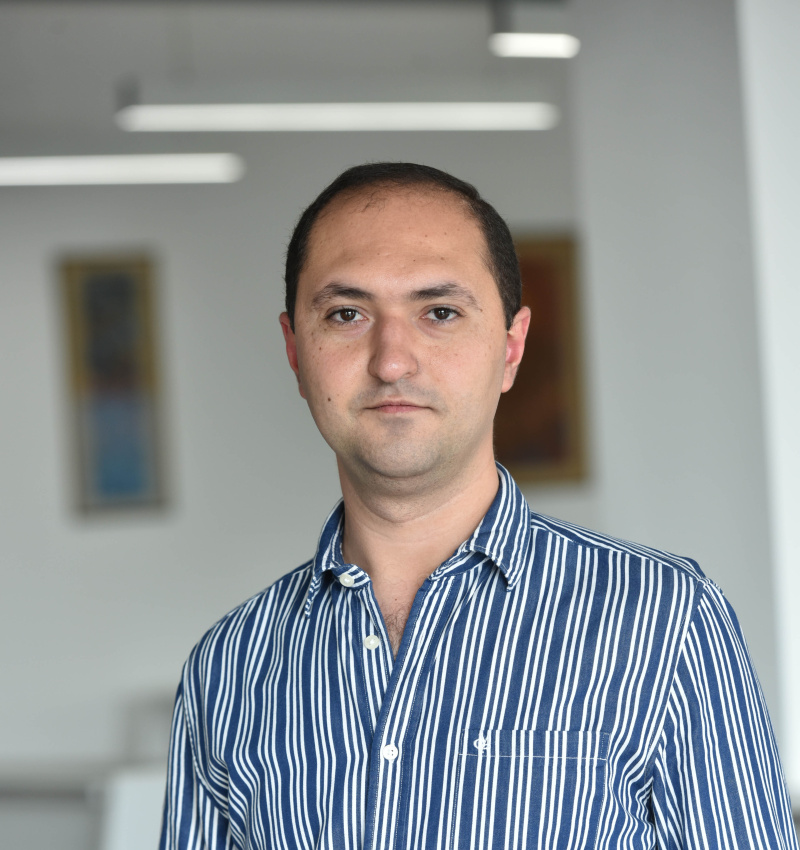
Tigran A. Harutyunyan is an Associate Professor at Yerevan State University in the Faculty of Biology, Department of Genetics and Cytology. Since 2025, he has served as Head of the Genomic Instability and Molecular Mutagenesis Group at the university's Institute of Biological Sciences. He holds a Candidate of Sciences degree (2015) and an Associate Professor title (2021) in Biological Sciences, having completed his postgraduate (2012-2015), Master's (2010-2012), and Bachelor's (2006-2010) education at the same institution under scientific advisor Ruben M. Harutyunyan. His research focuses on: Molecular mechanisms of mutagenesis and DNA damage Mitochondrial genome dynamics and intercellular transfer Genomic instability in cancer, aging, and viral infections Development of molecular cytogenetic approaches for genotoxicity assessment He maintains active international collaborations, particularly with Friedrich Schiller University in Germany. Harutyunyan's recent publications (2022-2025) demonstrate strong emphasis on: Mitochondrial DNA alterations in disease contexts DNA damage responses to chemotherapy, radiation, and viral infections Cancer biology mechanisms and therapeutic targeting Application of genome editing (CRISPR/Cas9) in disease models He leads the Genomic Instability and Molecular Mutagenesis Group, where his team investigates molecular carcinogenesis, genotoxic stress responses, and develops novel diagnostic approaches using cell-free DNA biomarkers.
Jeffrey Mason is an Associate Professor at the College of Veterinary Medicine, Utah State University . His research focuses on reproductive aging , the ovarian microenvironment , and orthopedic disease in post-reproductive female mammals. Education: PhD in Physiology (Reproductive Biology, UC Davis, 2007) MS in Transgenics (UC Davis, 2001) BS in Animal Science (UC Davis, 1999) MBA in Business Administration (Utah State University, 2025) His research interests include: Reproductive Physiology Molecular mechanisms of ovarian aging Orthopedic disease in aging females Gene therapy for laminitis and osteoarthritis Epigenetic changes during menopause Publications span molecular biology, aging, and veterinary science, with recent work on: Exosome transcriptome modulation in aging Senolytic drug efficacy in menopausal models Calorie restriction and redox status Wnt/Dkk gene therapy for bone architecture Scientific awards include NIH study section reviewer (2020-2021) Ellison Medical Foundation Fellowship (2011) APS Porter Physiology Development Award (2007) Multiple teaching and research fellowships (1999-2021) Teaching includes Veterinary Physiology I & II (2014-2025) and Endocrinology (2019). He has mentored graduate students in Animal, Dairy & Vet Sciences since 2002.