Ille S. is a researcher at the German Cancer Research Center (DKFZ) in Heidelberg, Germany, specializing in neuroscience and brain tumor research. With publications spanning from 2022 to 2025, Ille is actively contributing to the understanding of brain tumors, neurosurgery techniques, and cancer neuroscience. Ille's research focuses on several key areas in neuro-oncology: Brain tumor molecular profiling and diagnostics Neuron-cancer interactions and tumor network biology Spinal tumor surgery and reconstruction techniques Pediatric neurosurgery for eloquent brain areas Recent work demonstrates a strong trend toward understanding the complex interactions between brain tumors and neural networks, with implications for developing neuroscience-informed cancer therapies. Ille's research bridges clinical neurosurgery with fundamental neuroscience to improve diagnostic approaches and treatment strategies for brain tumor patients. Ille has collaborated with numerous researchers across multiple institutions, contributing to high-impact publications in journals such as Nature Medicine, Cancer Discovery, and Acta Neurochirurgica.
Dr. Yiqing Lu is a Senior Lecturer at Macquarie University's School of Engineering and a key researcher at the MQ Photonics Research Centre. With over 76 research outputs and 20 projects to their name, Dr. Lu has established themselves as a leading expert in nanophotonics and biomedical imaging technologies. Dr. Lu's research spans multiple cutting-edge areas in nanotechnology and photonics. Their primary focus includes developing advanced upconversion nanoparticles for biomedical imaging, creating time-gated luminescence microscopy techniques, and engineering nanoparticles for targeted drug delivery systems. Their work bridges fundamental physics with practical medical applications, particularly in cancer diagnostics and treatment. The extensive publication record of Dr. Lu demonstrates a clear trajectory from fundamental nanomaterial development toward increasingly sophisticated biomedical applications. Early work focused on establishing the basic principles of time-gated luminescence and upconversion microscopy, while more recent publications show a strong emphasis on clinical translation, particularly in cancer diagnostics and neuro-targeted therapies. Their research group has made significant contributions to super-resolution imaging, multiplexed detection systems, and nanoparticle-based theranostics. Dr. Lu has received recognition for their work including an h-index of 25 with over 4,247 citations and at least one major prize. Their research has been highlighted across multiple platforms including news outlets, social media, and academic networks. While specific grant information isn't detailed in the available text, Dr. Lu's extensive project portfolio (20 projects listed) suggests successful funding from multiple sources. Their collaborative approach is evident in the diverse range of co-authors spanning physics, engineering, biology, and medicine. The MQ Photonics Research Centre serves as Dr. Lu's primary research environment, providing state-of-the-art facilities for nanomaterial synthesis, optical characterization, and biological testing. This interdisciplinary environment fosters the translation of novel photonics technologies from bench to bedside.
Fahmida Rahman, Ph.D., is an Assistant Teaching Professor in the Department of Civil and Environmental Engineering at Rowan University's Henry M. Rowan College of Engineering. Her expertise lies in transportation engineering with focuses on safety, traffic operations, and data-driven solutions. She holds a Ph.D. from the University of Kentucky (2022), where she developed speed-based Safety Performance Functions (SPFs) for rural highways and applied machine learning for safety assessment. Education: Ph.D., Civil Engineering, University of Kentucky (2022) M.S., Civil Engineering, University of Kentucky (2019) B.S., Civil Engineering, Bangladesh University of Engineering and Technology (2016) Research Interests: Transportation safety engineering, traffic operation optimization, congestion management, big data analysis, and Intelligent Transportation Systems (ITS). She has contributed to tools like the Kentucky Road User Cost and Travel Time Savings models for the Kentucky Transportation Cabinet (KYTC). Professional Contributions: Developed SPF models using speed data, applied machine learning for crash prediction, and pioneered third-party data integration for congestion performance metrics. Her work bridges theoretical models with real-world transportation challenges. Affiliations: Member of ASCE, SWE, and ITE professional organizations.
Michael Autieri is a Professor and Director at the Lemole Center for Integrated Lymphatics and Vascular Research , Associate Director of the Cardiovascular Research Center , and holds affiliations with the Center for Metabolic Disease Research and Sol Sherry Thrombosis Research Center at Lewis Katz School of Medicine, Temple University . He earned his PhD from Hahnemann University in Philadelphia, PA. Research Focus: Regulation of vascular inflammation via endogenous anti-inflammatory cytokines (e.g., IL-19), mechanisms of atherosclerosis, restenosis, allograft vasculopathy, and therapeutic angiogenesis for peripheral vascular disease. Key Contributions: IL-19's role in macrophage polarization, cholesterol homeostasis, endothelial/smooth muscle proliferation, and mRNA stability. Recent work includes FXR1 regulation of vascular contractility, mitochondrial fission in hypertension, and neuro-lymphatic communication via CXCL12/CXCR4. Article Trends: Over 15 most recent publications, Autieri's work spans RNA biology (e.g., FXR1, ILF3), lymphatic-vascular crosstalk (e.g., IL-19, Prox1), metabolic-inflammatory syndromes (e.g., LDLRAP1, adipose dysfunction), and novel therapeutic targets (e.g., stress granules, chemokine signaling). His research integrates vascular biology , immunometabolism , and RNA regulatory networks to combat cardiovascular diseases.
Carl Allen is a Laplace Junior Chair in Machine Learning at École Normale Supérieure, Paris, working in the research group of Stéphane Mallat, Giulio Biroli and Garbiele Peyré. Previously, he was a postdoctoral fellow at ETH Zurich and completed his PhD in Machine Learning in 2021 at the University of Edinburgh under the supervision of Professors Tim Hospedales and Iain Murray. His educational background includes a BSc in Mathematics & Chemistry from the University of Southampton, an MSc in Mathematics and the Foundations of Computer Science (MFoCS) from the University of Oxford, and MScs in Artificial Intelligence and Data Science from the University of Edinburgh. Before transitioning to AI/ML research, he spent several years in Project Finance. Allen's research focuses on mathematically understanding mechanisms behind successful machine learning methods, particularly neural networks. He investigates how machine learning models exploit aspects of data distribution from a probabilistic perspective. His current topics include explaining how VAEs disentangle independent factors of data, identifying mathematical models behind self-supervised learning, and deriving probabilistic interpretations of softmax classification. His PhD work investigated neural representations of discrete objects and their relationships, with a main result explaining how word embeddings can seemingly be added and subtracted (e.g., queen ≈ king - man + woman), which received Best Paper (honorable mention) at ICML 2019. His research spans theoretical foundations of machine learning, with particular emphasis on representation learning, disentanglement, and probabilistic modeling of neural networks. His work connects mathematical principles with practical machine learning applications, aiming to develop more interpretable and reliable algorithms. Allen has received notable recognition including a Best Paper honorable mention at ICML 2019 and a research grant from the Hasler Foundation. He has delivered invited talks at prestigious institutions including Harvard Center of Mathematical Sciences & Applications and Astra-Zeneca. His collaborative work spans multiple institutions, including a notable internship at Samsung AI Centre, Cambridge, where he worked at the intersection of representation learning and logical reasoning. His research has significant implications for developing more interpretable, reliable, and theoretically grounded machine learning systems.
Mariella G. Filbin, MD, PhD is an Associate Professor of Pediatrics at Harvard Medical School and serves as Co-Director of the Brain Tumor Center and Research Director of the Pediatric Neuro-Oncology Program at Dana-Farber/Boston Children's Cancer and Blood Disorders Center. She is also an Attending Physician in the Dana-Farber/Boston Children's Blood Disorders Center, specializing in pediatric brain tumors including brain tumors, ependymoma, and glioma. Dr. Filbin received her medical and doctoral training from the Medical University of Graz in Austria. She completed her pediatric residency at Boston Children's Hospital and a fellowship in pediatric hematology/oncology at Dana-Farber/Boston Children's Cancer and Blood Disorders Center. Dr. Filbin's research focuses on pediatric brain tumors, particularly high-grade gliomas and malignant embryonal brain tumors. She combines single-cell genetics and transcriptomics with gene editing, epigenetic, stem cell, and pharmacologic methods to identify cellular states and hierarchies underlying tumorigenesis. Her work emphasizes utilizing single-cell transcriptomics to determine tumor architecture in pediatric brain tumors and exploring downstream effects of epigenetic driver mutations in DIPG and high-grade gliomas. Recent publications reveal her expertise in cellular hierarchies, immune landscapes, and therapeutic vulnerabilities in these challenging tumors. Jan Paradise Chair in Brain Cancer Research Dr. Filbin joined the faculty at Dana-Farber/Boston Children's as a pediatric neuro-oncologist in July 2017. Her research program receives funding to investigate cellular networks of tumor dependencies in pediatric brain tumors with the goal of finding new targeted therapies. She collaborates extensively with researchers across institutions to advance understanding and treatment of these challenging cancers, with numerous grants supporting her innovative approaches to studying tumor heterogeneity and identifying novel therapeutic targets. Dr. Filbin leads a research laboratory focused on pediatric neuro-oncology at Dana-Farber Cancer Institute, where her team employs cutting-edge genomic and epigenomic approaches to study tumor heterogeneity and identify novel therapeutic targets for children with brain cancer. Her lab works closely with the Brain Tumor Center and Pediatric Neuro-Oncology Program to translate basic science discoveries into clinical applications for patients.
Joke Terryn serves as a Clinical Lecturer at KU Leuven's Faculty of Medicine , affiliated with the Laboratory of Neurobiology (VIB-KU Leuven) located at ON5 Herestraat 49 in Leuven. Her research integrates clinical neurology with advanced stem cell technologies to investigate neurodegenerative mechanisms. Her research focuses on neurodegeneration , particularly frontotemporal dementia linked to progranulin (GRN) mutations, movement disorders including chorea and CANVAS syndrome, and tauopathies. She employs patient-derived induced pluripotent stem cells to model disease mechanisms and develop therapeutic strategies, with emphasis on gene expression modulation and cellular phenotypes. Analysis of her 10 most recent publications (2016-2024) reveals consistent focus on neurodegenerative disease modeling using stem cell platforms, with growing emphasis on genetic mechanisms (NKX2-1, RFC1, GRN) and therapeutic interventions. Her work bridges molecular neuroscience, clinical neurology, and regenerative medicine through collaborative projects across international consortia. As co-promoter of the active project Multidimensional translational research to improve the diagnostic work-up of adult acquired spinal cord injuries secondary to degenerative changes of the cervical spine (2021-2025), she contributes to translational neuroscience initiatives. Her teaching portfolio includes advanced courses in neurobiology of disease and neurotechnology at KU Leuven. Based at the VIB-KU Leuven Laboratory of Neurobiology, she operates within a multidisciplinary environment that combines molecular neuroscience, clinical neurology, and stem cell engineering to address fundamental mechanisms of neurodegeneration and develop novel diagnostic and therapeutic approaches.
Academic Affiliation An Goris is a full professor at the Faculty of Medicine , KU Leuven, affiliated with the Department of Neuroscience and Laboratory for Neuroimmunology . She serves on the Faculty Council of Medicine and Departmental Council of Neurosciences as a ZAP member. Research Focus Her work bridges neuroimmunology and genetic epidemiology , with specific emphasis on: Mechanistic understanding of multiple sclerosis (MS) through single-cell transcriptomics Epstein-Barr virus as a causal trigger in MS Machine learning for MS prognosis prediction Immune cell dynamics under immunomodulatory treatments CNS resilience and neuroprotection in disease progression Genetic clustering of severity markers Publications Recent work demonstrates multidisciplinary approaches combining immunology, genetics, and computational methods. Key trends include: Single-cell resolution of immune subsets in neuroinflammatory diseases Integration of AI for longitudinal disease modeling Identification of genetic loci influencing MS severity Characterization of NK cell diversity in MS Exploration of viral reactivity in MS cohorts Development of genomic biobanking infrastructure Mentorship She actively supervises research projects, including co-supervision of Swinnen S. (2024) and Masrori P. (2023). Her leadership spans multiple collaborative consortiums like MultipleMS and Belgian Genomic Biobank initiatives.
Li Li is a Research Professor at Georgia Southern University's College of Health Sciences & Kinesiology, where she has worked since 2012. Her research focuses on biomechanics of human movement, aging, running injuries, and the effects of pathologies like peripheral neuropathy, diabetes, and cerebral palsy on gait and postural control. Ph.D. in Biomechanics, University of Massachusetts Amherst (1999) M.S. in Biomechanics, Tianjin Institute of Physical Education (1988) B.S. in Physics, Peking University (1982) Her research combines biomechanical analysis with clinical rehabilitation , examining how conditions like knee osteoarthritis and cerebral palsy affect mobility. She investigates Tai Chi interventions for improving postural stability and gait efficiency , while also exploring hamstring injury mechanisms and shoelace tensile dynamics . Recent publications highlight her work on dynamic stability in chronic ankle instability, EMG normalization techniques, and ultrasensitive temperature sensing for biomedical applications. The 15 most recent articles reflect her focus on neuromuscular adaptation , age-related mobility , and sports injury prevention . Key scientific contributions include: Fellow of the American College of Sports Medicine (2003) Active Fellow of the National Academy of Kinesiology (2014) Endowed Professorship (2007) She has secured multiple grants from Origin Biomed, Inc. for clinical trials on neuropathic pain, arthritis, and back disorders. Her work aligns with UN Sustainable Development Goals for healthcare innovation and aging population support .
Univ.-Prof. Dr. med. Andreas H. Jacobs is Professor of Target Biology & Chemistry at the European Institute for Molecular Imaging (EIMI) , University of Münster, and concurrently serves as Director of the Department of Geriatrics with Neurology at the Johanniter Hospital Bonn . His research integrates multimodal molecular imaging with neuroscience and neuro-oncology to explore neurovascular dynamics and image-guided therapies. Education & Career: Since 2012: Director, Department of Geriatrics with Neurology, Johanniter Hospital Bonn Since 2009: Professor & Chairman, Target Biology & Chemistry, EIMI, University of Münster 2005–2010: Coordinator, EU-NoE Diagnostic Molecular Imaging 2006–2009: Director, Department of Neurology, Klinikum Fulda; Head, Lab for Gene Therapy & Molecular Imaging, MPI for Neurological Research, Cologne 2005–2006: Head, Clinical PET-Lab, MPI Cologne; Deputy Director, Department of Neurology, University of Cologne Research Focus: Prof. Jacobs’ work centers on multimodal molecular imaging , leveraging PET, MRI, and optical methods to interrogate the neurovascular unit in health and disease. He investigates glioma biology , stroke-related neuroinflammation , and image-guided therapeutic strategies . Key topics include TSPO-PET imaging of innate immunity, CSF-1R-mediated microglial modulation, and theranostic radiopharmaceutical development. Scientific Awards: 2010 ESMI Award – European Society for Molecular Imaging 2002 Berson-Yalow Award – Society for Nuclear Medicine & Molecular Imaging 2000 University Science Award – University of Cologne 1999 Young Research Investigators Award – MSWF Land NRW 1995 Otto Hahn Medal – Max Planck Society Grants & Leadership: Prof. Jacobs has coordinated major EU consortia and currently leads the Jacobs Lab at EIMI, fostering interdisciplinary projects that span pre-clinical models to first-in-human trials. His team develops novel PET tracers and integrates advanced imaging protocols for personalized therapy monitoring in neuro-oncology and geriatric neurology. Laboratory & Teams: The Jacobs Lab within EIMI focuses on translational imaging biomarkers, maintaining active collaborations with the Departments of Neurology and Geriatrics at Johanniter Bonn, and multiple international imaging networks.
Daniel Geschwind, M.D., Ph.D., is the Gordon and Virginia MacDonald Distinguished Chair in Human Genetics and Professor of Neurology and Psychiatry & Biobehavioral Sciences at the University of California, Los Angeles (UCLA). He serves as the founding Director of the Center for Autism Research and Treatment (CART) and Co-Director of the Center for Neurobehavioral Genetics, with additional appointments in the Tennenbaum Center for the Biology of Creativity, the Brain Research Institute, and multiple Graduate Ph.D. Program Home Areas (Bioinformatics, Neuroscience, Medical Informatics, Genetics & Genomics, Workforce Development). Education & Training: While specific degree-granting institutions are not listed in the provided text, Dr Geschwind holds both M.D. and Ph.D. degrees and completed clinical and research training that led to board certification in neurology and human genetics. Research Focus: Geschwind’s laboratory integrates large-scale human genetics, functional genomics, single-cell transcriptomics, and systems biology to understand the genetic architecture of neurodevelopmental and neurodegenerative diseases. Major themes include: Autism spectrum disorders and related neurodevelopmental conditions Frontotemporal dementia, progressive supranuclear palsy, and Alzheimer disease Gene-regulatory networks controlling neuronal identity and synaptic function Multi-omics biomarker discovery for early diagnosis and therapeutic targeting Grant Support & Leadership: He has served as Principal Investigator on numerous NIH MERIT, Autism Centers of Excellence, and foundation awards, including the Paul G. Allen Foundation Distinguished Investigator Award. His leadership roles span the UCLA ATLAS Community Health Initiative, international genetics consortia (e.g., ALLFTD, iPSYCH, PsychENCODE), and advisory boards for the National Academy of Medicine. Scientific Awards: 2022 Rhoda & Bernard Sarnat International Prize in Mental Health, National Academy of Medicine 2022 Cotzias Lecture & Award, American Academy of Neurology 2021 Gold Medal, Society of Biological Psychiatry 2015 Paul G. Allen Foundation Distinguished Investigator Award 2006–2015 NIMH MERIT Award Election to the National Academy of Medicine and American Academy of Physicians Laboratory & Teams: The Geschwind Laboratory is housed at 695 Charles E Young Drive South, Los Angeles, CA 90095. The group comprises post-doctoral fellows, graduate students, computational biologists, and clinical research coordinators working at the intersection of genomics, neuroscience, and precision medicine.
Professor Angela Morgan is the Group Leader of the Speech & Language research team at the Murdoch Children's Research Institute. Her work focuses on genetic mechanisms underlying childhood speech and language disorders, with particular expertise in neurodevelopmental conditions such as childhood apraxia of speech, stuttering, and genetic syndromes affecting communication. She holds the academic rank of Professor and serves as a Senior Principal Research Fellow. Her primary research domains include: Genomic medicine applications in speech pathology Neurogenetic bases of communication disorders Phenotypic characterization of rare genetic syndromes Development of clinical frameworks for childhood speech disorders Publications (2015-2025) demonstrate consistent focus on genetic architectures of speech disorders, neurodevelopmental trajectories, and clinical translation. Recent work emphasizes large cohort studies, genotype-phenotype correlations, and diagnostic guideline development. Article keywords frequently involve neurogenetics, epigenetic regulation, and neurorehabilitation.
Dr. Justin F. Fraser is a tenured Associate Professor of Cerebrovascular, Endovascular, and Skull Base Surgery at the University of Kentucky College of Medicine. He serves as Vice Chair of Neurosurgery , Director of Cerebrovascular Surgery , and CAST Endovascular Fellowship Director , specializing in stroke, carotid stenosis, aneurysms, and skull base tumors. His academic contributions span clinical trials (SAVER-I, STABILISER, PREMIER, FEAT) and leadership in the Standards and Guidelines Committee for the Society for Neurointerventional Surgery. Education : Princeton University (Woodrow Wilson School), Weill Cornell Medical College (MD, Neurosurgery Residency, Endovascular Fellowship) Research Focus : Neuroprotective therapies, thrombectomy biomarkers, flow diverter devices, AI in stroke detection, translational stroke research from animal to human models Clinical Trials : EMBOLISE (MMA Embolization), CITADEL (Coil Devices), ELEVATE (Pipeline Shield Technology), MAVARIC (Magnesium/Verapamil), BACTRAC (Thrombectomy Biosamples) Scientific Leadership : Published in New England Journal of Medicine , Stroke , Translational Stroke Research , and J. Neurointerventional Surgery
Eric B. Durbin holds the position of Associate Professor in Internal Medicine at the University of Kentucky. He serves in multiple leadership roles, including Director of Cancer Research Informatics and Director of the Kentucky Cancer Registry at the Markey Cancer Center and Cancer Research Priority Initiative . His work intersects biomedical informatics and cancer epidemiology , with a focus on data-driven solutions for public health. Education: Doctor of Public Health (2012) and Master of Science (1989) from the University of Kentucky Dr. Durbin's research centers on electronic cancer surveillance , natural language processing (NLP) of clinical texts , and population health informatics . His projects analyze cancer trends in Kentucky and Appalachia , addressing disparities in incidence, treatment, and outcomes for breast cancer , lung cancer , and pediatric brain tumors . He develops advanced machine learning systems for pathology report classification and clinical data mining. Recent publications highlight his methods in graph convolutional networks , uncertainty quantification for NLP, and privacy-preserving deep learning for sensitive health data. Funded by the National Cancer Institute and KY Cabinet for Health and Family Services , his grants focus on air pollution's impact on pediatric brain tumors , spatial transcriptomics , and health equity in fertility care for cancer survivors. Collaborations span institutions like MD Anderson and involve multi-site data integration for precision oncology.
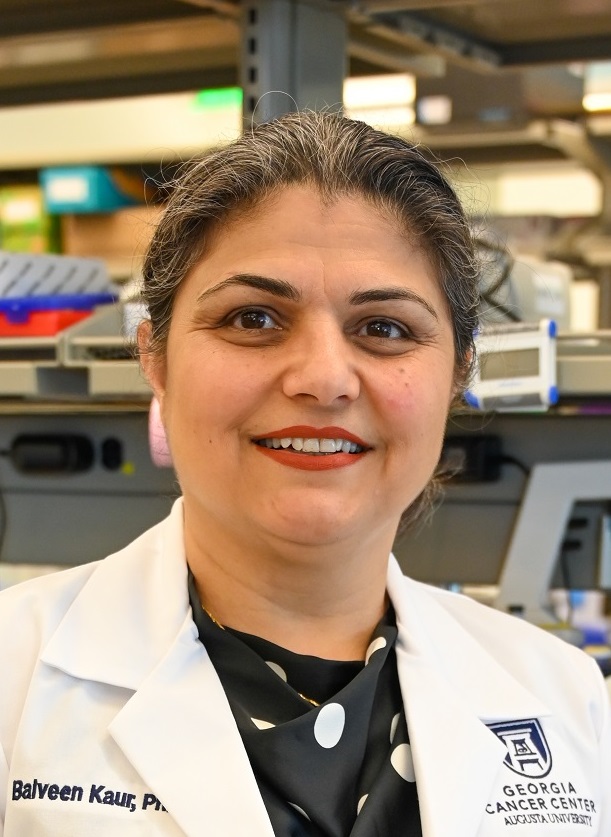
Balveen Kaur is Associate Director of Basic Science and Professor at the Medical College of Georgia , Augusta University. Her academic appointments span the Department of Pathology and Georgia Cancer Center , with a focus on oncolytic virotherapy and glioblastoma research. Ph.D. , Biomedical Sciences, Emory University (1999) B.S. , Biotechnology, University of Delhi (1990) Her research centers on oncolytic herpesvirus therapy , tumor-immune interactions, and signal transduction in glioblastoma multiforme and breast cancer brain metastasis . She investigates metabolic reprogramming, immunosuppressive pathway inhibition (e.g., IDO, IGF2-IGF1R), and the role of stromal cells in tumor progression. Her work often combines viral engineering with pharmacological and immunotherapeutic approaches to overcome treatment resistance. The 2025-2024 articles highlight her leadership in HSV-1 strain development , Notch and CD73 signaling , and multi-drug synergy for glioblastoma. Publications emphasize metabolic-immune crosstalk (reductive carboxylation, ferroptosis), bi-specific antibodies penetrating the blood-brain barrier, and targeted stromal modulation in pancreatic and ovarian cancers. These span disciplines like Virology , Cancer Biology , and Immunology , with subfields including tumor microenvironment engineering, epigenetic drug interactions, and neuro-immuno-oncology. Ande Leon and Dorothy Bloom Distinguished Chair in Cancer Research (2023) She chairs the GCC Research Retreat and MOI Career Development committee, and serves on the American Society for Cell and Gene Therapy meetings. Her work includes collaborations with UGA Cancer Center and translational applications in remote heart failure monitoring systems (TCC-HF).