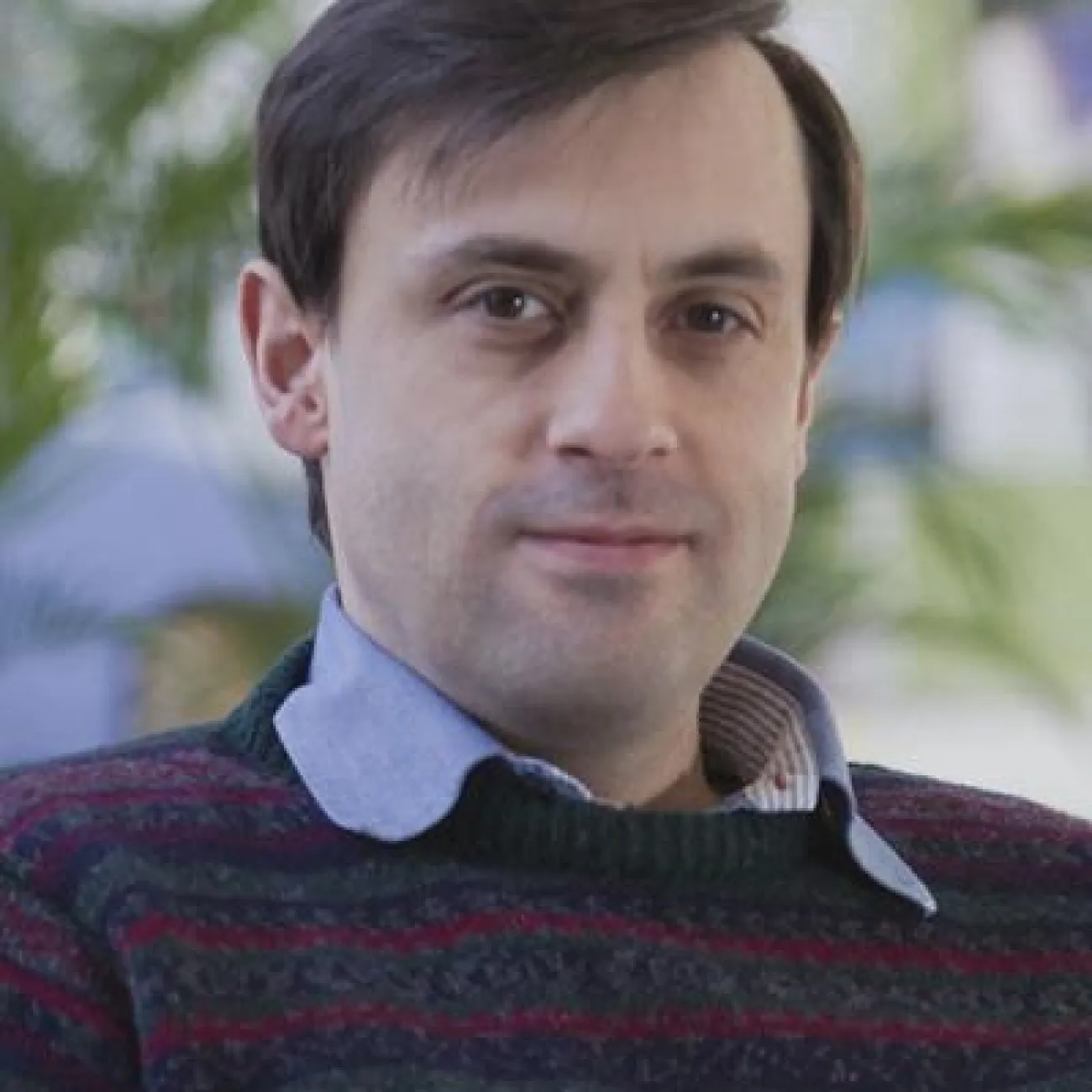
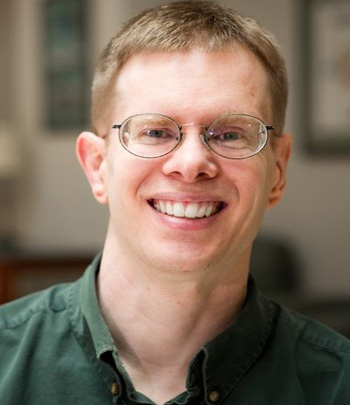
Graeme William Walter is the Disney Professor of Archaeology at the University of Cambridge and Director of the McDonald Institute for Archaeological Research. He also serves as a Professorial Fellow at St John's College, Cambridge. Previously, he held roles such as Pro-Vice-Chancellor (Resources) at the University of Leicester and Head of the School of Archaeological Studies there. His academic journey began with a BA in Classics and Archaeology from the University of Cambridge (1965-1969), followed by PhD research at St John's College, Cambridge (1969-1972). Research Interests: European and North African prehistory Origins and spread of agriculture Landscape archaeology Pastoralism and desertification processes Human dispersals and behavioral evolution Awards and Honors: 2005 Dan David Prize (Past Dimension) 2000 James R. Wiseman Book Award 1999 Fellow of the British Academy 1979 Fellow of the Society of Antiquaries of London Grants and Projects: Recipient of major grants including a €2.5M European Research Council Advanced Grant (2009-2014) for North African prehistory studies and a Leverhulme Trust grant (2014-2016) investigating resilience of Neanderthals and modern humans to climate change in SW Asia. Leadership and Affiliations: Directed the British School at Rome (1984–1988) Key figure in archaeological institutions like the McDonald Institute
Radu Iovita is an Associate Professor in the Department of Anthropology at New York University. Previously, he held positions at the University of Tübingen (until 2023) and the Leibniz Research Institute for Archaeology in Germany. His research focuses on Paleolithic archaeology, human-environmental interactions, and stone tool technology, with a specific emphasis on the Eurasian loess steppe. He leads the EU-funded PALAEOSILKROAD project in Kazakhstan, investigating human dispersals during the Late Pleistocene. His Anthrotopography lab combines microscopic analysis of tool use and remote sensing to reconstruct past landscapes. Education: PhD in Anthropology (University of Pennsylvania, 2008), MPhil in Archaeology (University of Cambridge, 2002), AB in Anthropology (Harvard University, 2001). Key grants include an ERC Starting Grant (2017–2022). Research interests span lithic technology, experimental archaeology, and geoarchaeological methods. Recent work includes discoveries of Paleolithic sites in Kazakhstan, studies on Neanderthal adhesive use, and AI-driven analysis of use-wear patterns. Collaborations involve institutions like ETH Zurich and the University of Tübingen. He is actively involved in field projects in Central Asia and lab-based experimental studies.
Dr. April Nowell is a Professor of Anthropology in the Department of Anthropology at the University of Victoria's Faculty of Social Sciences, specializing in Paleolithic archaeology, cognitive archaeology, and the archaeology of children. Currently on leave, she leads internationally recognized research projects across Europe, the Levant, Australia, and Africa while actively accepting graduate students. She earned her PhD from the University of Pennsylvania and has developed expertise in Neanderthal lifeways, Paleolithic art, and hominin life histories. Her academic journey reflects deep engagement with both theoretical frameworks and fieldwork across diverse geographical contexts. Nowell's research examines how prehistoric societies structured knowledge transmission, childhood development, and symbolic expression. Her groundbreaking work on finger flutings in Australian caves reveals children's roles in Paleolithic storytelling traditions, while her analysis of Levantine wetland ecosystems demonstrates how Pleistocene humans adapted to environmental shifts. She challenges conventional narratives about Neanderthal cognition and has pioneered methodologies for reconstructing prehistoric childhood experiences through skeletal and material evidence. Her recent publications show consistent innovation in archaeological methodology, particularly in digital documentation of rock art and interdisciplinary approaches to human development. Key trends include integrating bioarchaeological data with cognitive models, examining material culture as evidence of social learning, and analyzing environmental archives to understand human dispersal patterns. Her scientific recognition includes: 2023 EAA Book Prize for Growing Up in the Ice Age: Fossil and Archaeological Evidence of the Lived Lives of Plio-Pleistocene Children Nowell secures major research funding including Social Sciences and Humanities Research Council grants supporting her Azraq Basin project in Jordan and Koonalda Cave research in Australia. She mentors graduate students in Paleolithic theory while collaborating with Indigenous communities and international scholars on field projects spanning five continents. Her work bridges academic research and public engagement through TEDx talks and media appearances examining science communication. She directs field programs at Jordan's Azraq Basin wetlands and Australia's Koonalda Cave, working with multidisciplinary teams including geochronologists, bioarchaeologists, and Traditional Owners to investigate Pleistocene human adaptation and cultural transmission.
Gideon Hartman is an Associate Professor in the Anthropology Department at the University of Connecticut, where he conducts interdisciplinary research at the intersection of paleoenvironmental reconstruction, plant and animal eco-physiology, anthropology, and archaeology. His work primarily employs stable isotope methods to reconstruct past environments, human mobility patterns, paleodiets, and ancient economic systems. Dr. Hartman received his Ph.D. from Harvard University in 2008. His educational foundation in anthropology and archaeological science has enabled his innovative approach to stable isotope analysis. Rather than treating isotopic values as static markers, he investigates the mechanisms causing variability in stable isotope ratios as they move along foodwebs from soil and atmosphere to plants and then to animals and humans. Hartman's research program uniquely begins in the contemporary world to establish principles that can be reliably applied to archaeological settings. His work spans diverse geographical regions including the Eastern Mediterranean, Levant, Jordan Valley, and Armenian Highlands, with temporal coverage from the Middle Pleistocene to the Early Bronze Age. He has made significant contributions to understanding how environmental factors like water availability, temperature, and soil conditions affect isotopic signatures in modern ecosystems, creating robust models for archaeological interpretation. His publication record demonstrates consistent productivity in high-impact journals, with research trends showing increasing sophistication in multi-isotope approaches applied to complex archaeological questions about pastoralism, trade networks, human migration, and human-environment interactions. His work increasingly integrates zooarchaeological, archaeobotanical, and geochemical evidence to build comprehensive pictures of past societies. As director of the Stable Isotope Preparation Lab at UConn, Hartman leads a research team that processes and analyzes samples from archaeological sites worldwide. His laboratory serves as a hub for interdisciplinary collaboration between archaeologists, anthropologists, geoscientists, and biologists seeking to apply isotopic methods to their research questions. His work has been instrumental in refining methodologies for interpreting strontium, carbon, nitrogen, and oxygen isotope data in archaeological contexts, particularly regarding animal and human mobility patterns in the Eastern Mediterranean region.
Dr. Jing Fu is an Associate Professor in the Department of Mechanical & Aerospace Engineering at Monash University. He holds a PhD in nano/microfabrication processes for biomedical applications from Pennsylvania State University (2008). His research focuses on nanoengineering tools, particularly Focused Ion Beam (FIB) technology for imaging and manipulating single cells. He is a principle scientist in collaborative projects with CSIRO MCN and Australian Synchrotron, exploring nanomaterial dynamics in immune cells. His expertise spans FIB/SEM/TEM, cryogenic environments, and multidisciplinary biomedical engineering. Education: M.Eng/Ph.D., Pennsylvania State University, USA (2008). Postdoctoral Fellowship at NIH (2008–2010). Joined Monash Faculty of Engineering in 2010. Research Interests: 3D visualization of HIV viral entry, compositional mapping of mammalian cells, and FIB-driven correlative imaging. Projects include '3D Cryo-FIBSEM Imaging Facility' (2015–2017) and 'Targeting NDM-producing superbugs' (2013–2015). Current collaborations involve tooth enamel evolution studies (2025–2028). Key Contributions: Over 90 publications, including work on graphene encapsulation for APT, ion beam fabrication of nanostructures, and polymyxin antibiotic efficacy. His research aligns with UN SDGs for health and innovation. Grants & Awards: ARC and NHMRC funding for projects on superbug targeting and imaging facilities. Active in multidisciplinary teams addressing biomedical challenges.
Dr. Emma Pomeroy is an Associate Professor in the Evolution of Health, Diet and Disease at the University of Cambridge's Department of Archaeology. She is an active researcher with expertise spanning anthropology, archaeology, biological anthropology, and paleoanthropology. Her work combines human bioarchaeology with human biology and paleoanthropology, conducting research across South America, South Asia, Europe, and the Near East. Dr. Pomeroy's research focuses on understanding how past and present variation in human health, growth, and morphology is influenced by evolutionary processes including adaptation, neutral variation, and plasticity, as well as interactions with natural and social environments. Her specific interests in reproduction include the evolution and adaptation of the human pelvis, impacts of evolutionary and environmental factors on pelvic morphology and birth complications, and how early life conditions affect later growth and health which may influence birth complication risks. A significant portion of her recent work has investigated the evolutionary origins of low lean tissue mass among contemporary South Asians, which is implicated in elevated risk of type 2 diabetes and other chronic diseases. Dr. Pomeroy leads important archaeological projects including serving as the paleoanthropologist at renewed excavations at Shanidar Cave in Iraqi Kurdistan since 2016, where her team has made significant new Neanderthal discoveries. She also co-directs the Old St Bernard's Hospital Project in Gibraltar with Dr. Kevin Lane and Professor Clive Finlayson, investigating health, diet, and migration among skeletons from a 16th-17th century mariner's hospital. Her recent publications demonstrate a strong focus on human skeletal variation, Neanderthal studies, human adaptation, and the developmental origins of health and disease. Her work spans multiple geographical regions including the Americas, Europe, Mesopotamia and the Near East, and South Asia, examining periods from the Paleolithic through to contemporary populations. Dr. Pomeroy contributes to interdisciplinary research networks including Cambridge Reproduction, where she investigates the evolutionary aspects of human reproduction. Her methodological approaches integrate skeletal biology, archaeological science, and evolutionary theory to address fundamental questions about human variation and adaptation.
Rick Horan is a Professor in the Department of Agricultural, Food, and Resource Economics at Michigan State University (MSU), part of the College of Agriculture & Natural Resources. He holds a Ph.D., M.A. from Pennsylvania State University, and dual B.S. degrees from Appalachian State University. His research focuses on environmental and natural resource economics, particularly the interplay between economic and ecological systems. Key areas include endangered species management, invasive species control, wildlife disease dynamics, and agricultural pollution policy. He has published in top journals like PNAS, American Economic Review, and the American Journal of Agricultural Economics. Horan has served as Managing Editor of Resource and Energy Economics (2010–13), Associate Editor roles for American Journal of Agricultural Economics and Natural Resource Modeling , and contributed to a National Academy of Sciences report on environmental policy. His teaching includes Advanced Natural Resource Economics and Microeconomic Theory analysis. Research highlights include modeling ecological thresholds, bioeconomic approaches to species management, and integrating human behavior into epidemiological models. His work has been featured in media outlets like The Economist and Forbes. Horan’s advising and grants focus on interdisciplinary solutions for environmental challenges. His labs and research teams address complex issues like agri-environmental service coordination and sustainable land-use strategies. Current research explores policy mechanisms for balancing economic activities with ecosystem preservation.
Dr. Viola C. Schmid is a postdoctoral researcher in the Quaternary Archaeology research group at the Austrian Academy of Sciences (ÖAI) in Vienna, with additional teaching roles at the University of Tübingen and University of Vienna. She earned her master's degree in 2013 and completed a binational PhD magna cum laude in 2019 through a joint program between the Universities of Tübingen and Paris Nanterre. Her career includes research positions at the University of Geneva (2019), ÖAI (2020-2021), and Leiden University (2021-2022), before returning to ÖAI in October 2022. Her research explores prehistoric archaeology across Africa and Europe, focusing on human evolution during the Pleistocene. Key interests include: Population dynamics and knowledge transfer in hunter-gatherer societies Technological systems development in Paleolithic and Mesolithic contexts Middle and Later Stone Age site excavations Reanalysis of archaeological collections using modern methods Schmid's publications primarily investigate lithic technology evolution, site formation processes, and Middle Stone Age adaptations in Africa and Europe. Her work frequently employs experimental approaches and interdisciplinary methods to analyze raw material sourcing, tool production techniques, and cultural transitions. Research sites span South Africa (Umhlatuzana, Diepkloof), Senegal (Toumboura III), Austria (Csaterberg), and Germany (Swabian Jura caves). While no scientific awards are documented, she actively contributes to international projects like the South African Middle Stone Age research during MIS 5 and the Peuplement humain et paléoenvironnement en Afrique program. Her grants and students are not specified in available materials. At ÖAI, she collaborates within the Quaternary Archaeology research group, focusing on Pleistocene human-environment interactions. She maintains academic networks through co-authorships with researchers across Europe and Africa, particularly in lithic technology and Paleolithic site analysis.
Prof. Katerina Harvati is a Professor of Paleoanthropology at the Institute for Archaeological Sciences, Eberhard Karls University of Tübingen, and Director of the Senckenberg Centre for Human Evolution and Palaeoenvironment. She holds adjunct positions at the University of Bergen and leads interdisciplinary research on human evolution, including Neanderthal biology, modern human origins, and virtual anthropology methods. Her work integrates genetics, morphology, and environmental data to explore hominin dispersals and adaptation. Education: Ph.D. in Anthropology (City University of New York, 2001), Habilitation (University of Tübingen, 2009). Former roles include Assistant Professor at NYU (2001–2004) and Senior Researcher at the Max Planck Institute (2004–2009). Research focuses on Neanderthal paleobiology, primate evolution, and Southeast European paleoanthropology. Fieldwork in Greece has yielded key findings on Middle Pleistocene hominins and megafauna interactions. Her ERC grants include PaGE (2012–2016), CROSSROADS (2017–2022), and FIRSTSTEPS (2022–2028). Awards: Leibniz Prize (2021), Baden-Württemberg Research Prize (2014), Shanghai Archaeology Award (2023) Leadership: ESHE President, Editor-in-Chief of PaleoAnthropology , Co-director of the DFG Centre 'Words, Bones, Genes, Tools' Labs/Teams: Senckenberg Centre, Tübingen’s Archaeological Sciences Institute, and collaborations in Greece and Norway. Current projects include the MEGAPAL Survey in the Megalopolis Basin and studies on hominin-environment interactions.
Krist Vaesen is an Associate Professor in the Philosophy of Innovation at Eindhoven University of Technology (TU/e), within the Department of Philosophy & Ethics in the School of Industrial Engineering and Innovation Sciences. He is a founding member of the Eindhoven Meta-Science Center (META/e) and maintains an external position as a Research Fellow at Leiden University's Human Origins Group, Faculty of Archaeology. Dr. Vaesen earned his degrees in Applied Biology (1998) and Philosophy (2003) from the University of Leuven, Belgium, and completed his PhD at TU/e in 2008 with a dissertation on artifacts and norms. His academic career progressed from post-doctoral researcher (2008-2012) in the NWO program 'Things that make us smart' to Assistant Professor (2012), and eventually to his current Associate Professor position. He received a prestigious NWO Vidi grant in 2014 for his research on cultural evolutionary theory. Vaesen's research spans multiple interconnected domains including the philosophy of innovation, meta-science, cultural evolution, and the philosophy of scientific models. His current work focuses extensively on meta-scientific questions examining science funding practices, interdisciplinary research challenges, PhD attrition causes, academic research values, and research integrity. He is preparing a book titled 'Neophilia--why our obsession with innovation leads to bad science' addressing replication crises in science. His publication record shows consistent scholarly output, with 49 research outputs documented through 2025, appearing in high-impact journals across multiple disciplines including Proceedings of the National Academy of Sciences, Behavioral and Brain Sciences, PLoS ONE, and various philosophy and anthropology journals. His work demonstrates a clear trajectory toward increasingly meta-scientific concerns, with recent publications focusing on research values, PhD attrition, and science funding ethics. NWO Vidi Award (2013) for 'The Darwinisation of culture' Excellence grant from TU/e's Executive Board for work on the 'Things that make us smart' program Elected member of the Eindhoven Young Academy of Engineering (2018) Vaesen has supervised multiple graduate students (with 4 supervised works documented) and secured significant research funding, including his Vidi grant for the 'Darwinizing culture' project (2014-2019). He has been actively involved in science policy discussions, particularly regarding research funding reform and interdisciplinary research assessment. His work has generated substantial media attention, with 127 press/media mentions including coverage by Times Higher Education, Volkskrant, and various radio outlets. As co-founder of the Eindhoven Meta-Science Center, Vaesen plays a key role in advancing meta-scientific research at TU/e. His external position at Leiden University's Human Origins Group demonstrates his interdisciplinary reach across philosophy, anthropology, and evolutionary studies. He teaches courses including 'Metascience' (since 2024), 'Philosophy of science and technology,' and 'Research methodology for the innovation sciences,' shaping the next generation of scholars in these critical areas.
Laura Rodríguez García is a full Professor at the University of Leon in the Department of Biodiversity and Environmental Management , affiliated with the Faculty of Biological and Environmental Sciences . She specializes in Physical Anthropology and is a member of the Q-GEO Environmental Geology, Quaternary and Geodiversity research group. Her research focuses on: Hominin skeletal morphology (femora, tibiae, fibulae, clavicles) Biomechanical analysis of Middle Pleistocene human remains Evolutionary implications of bone volume and skeletal weight Dental microwear and isotope analysis for dietary reconstruction Neanderthal symbolic behavior and social complexity 3D geometric morphometrics in skeletal studies Recent publications highlight trends in: Neanderthal postcranial anatomy Human evolution in Iberia Technical innovations in skeletal maturity assessment Interdisciplinary collaborations across Europe Integration of archaeological and paleontological contexts Application of computational methods to bone analysis She collaborates with institutions like: University of Burgos Universidad Isabel I Complutense University of Madrid National Research Center on Human Evolution Melka Kunture (Ethiopia) expeditions Oldowan horizon studies
Simon Underdown is a Professor of Biological Anthropology at Oxford Brookes University, affiliated with the School of Social Sciences and the Centre for Environment and Society (CES). He leads the Human Origins and Palaeo-Environments (HOPE) Research Group. His research focuses on human-disease co-evolution, ancient DNA, and hominin evolution, with fieldwork in South America, the Middle East, and southern Africa. He holds multiple fellowships, including from the Royal Society of Biology and Royal Geographical Society. Research interests include Paleopathology, microbiome studies, and Neanderthal adaptation. Notable grants include £45,000 from the Anglo-Omani Society for DNA and Ancient Flora research in Oman (2021–2023) and £14,907 from the Society of Antiquaries for environmental studies (2019–2024). He has supervised six PhD students exploring topics like medieval skeletal health and human migration. Awards include Chartered Science Teacher status and Senior Fellow of the Higher Education Academy. His work appears in journals like Annals of Human Biology and Proceedings of the National Academy of Sciences .
William Davies is a Professor of Palaeoanthropology at the University of Southampton and currently serves as Director of Programmes for Archaeology. His research focuses on Neanderthal and early Homo sapiens behavior, mobility patterns, and ecological adaptations. He investigates how climatic frameworks influenced Paleolithic hunter-gatherer societies, particularly regarding resource inequality and technological innovation. Education Background: Career trajectory shows progression from research fellow (2001) to Lecturer (2006), Senior Lecturer (2013), and full Professor (2020). Key Projects: Led the DEPICT project (2013–2016) on Paleolithic ceramic technology and contributed to the RESET consortium (2008–2013) analyzing volcanic ash chronology. Research interests include modeling creativity and innovation in early humans, assessing Paleolithic resource acquisition inequalities, and exploring synthetic materials use. He actively supervises PhD students in archaeology, emphasizing interdisciplinary approaches combining anthropology, ecology, and experimentation. Publications highlight studies on Upper Paleolithic transitions, climatic impacts on human dispersal, and Paleolithic ceramic technology. He received a Public Engagement Prize in 2017 for outreach efforts. Grants & Awards: Leverhulme Trust (DEPICT), British Academy (PALAEOARTEAST Project). Labs/Teams: Centre for the Archaeology of Human Origins (CAHO), collaborating with institutions globally.
Richard Horan is a tenured Professor in the Department of Agricultural, Food, and Resource Economics at Michigan State University's College of Agriculture & Natural Resources. His research focuses on the intersection of economic and ecological systems, particularly in environmental economics, resource management, and infectious disease policy. Education : Ph.D. and M.A. from Pennsylvania State University; dual B.S. degrees in Agricultural Education and Business Administration from Appalachian State University. Horan's research examines coupled human-ecological systems, emphasizing: Feedback dynamics between economic and ecological processes Management of endangered species and invasive species Bioeconomics of wildlife and livestock diseases Agri-environmental policy design His recent publications address risks of animal/plant infectious diseases through trade, ecological thresholds, and market-based conservation strategies. He has served as Managing Editor of Resource and Energy Economics and Associate Editor for multiple journals. Scientific Recognition : MSU AgBioResearch Faculty Excellence Award (2014) Horan collaborates with interdisciplinary teams on projects like Risks of Animal and Plant Infectious Diseases Through Trade (Rapid Trade) , contributing policy insights to national committees including the National Academy of Sciences.
Luca Fiorenza is an Associate Professor at Monash University's Department of Anatomy & Developmental Biology, affiliated with the Monash Biomedicine Discovery Institute. He also holds an adjunct position as Senior Lecturer in Palaeoanthropology at the University of New England (Australia). His research focuses on functional morphology of the masticatory apparatus in humans and primates, particularly investigating how diet influenced human evolution. Fiorenza leads the Palaeodiet Research Lab (www.palaeodiet.org) and has published in high-impact journals like Nature , Journal of Human Evolution , and American Journal of Physical Anthropology . He has attracted over $3.1M in research funding, including multiple ARC-Discovery Projects. Research Interests : Functional morphology of the masticatory system, Neanderthal dietary adaptations, biomechanical analyses of dental structures, and the evolution of human dietary strategies. His work integrates digital anatomy, 3D modeling, and finite element analysis to explore evolutionary and ecological adaptations. Recent Research Trends : Fiorenza's 2024 publications emphasize Neanderthal dietary habits, biomechanical studies of dentition, and applications of machine learning in dental prosthetics. Earlier work includes investigations into Australopithecus diets and the functional implications of craniofacial morphology. Awards : Australia's Top Researcher (2020) Monash BDI Awards for Outstanding Achievement (2019) Grants & Funding : Four ARC-Discovery Projects totaling over $3.1M AUD, including studies on human dietary transitions and Neanderthal biomechanics. Labs & Teams : Director of the Palaeodiet Research Lab, collaborating internationally on projects involving European and Australian institutions. Active in training workshops on cranio-dental functional morphology and digital anatomy techniques.