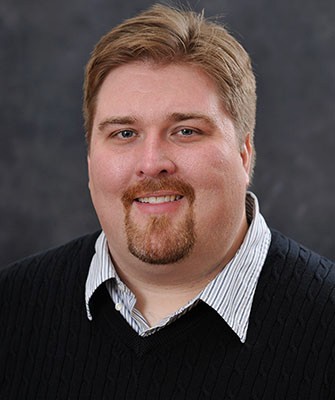
Dario Salvucci is a Professor of Computer Science and Interim Associate Dean of Academic Operations at the College of Computing & Informatics (CCI), Drexel University. He holds a PhD and MS from Carnegie Mellon University and a BSE summa cum laude from Princeton University, all in Computer Science. His academic roles reflect deep engagement in research, teaching, and leadership within computer science and cognitive science. PhD, Computer Science, Carnegie Mellon University MS, Computer Science, Carnegie Mellon University BSE, Computer Science, Princeton University, summa cum laude Dr. Salvucci's research lies at the intersection of computer science, psychology, and human factors, focusing on computational models of human cognition. His primary interests include multitasking, cognitive interruptions, driver distraction, and human-computer interaction. He is renowned for developing the threaded cognition theory , which explains how humans manage multiple tasks using cognitive threads within the ACT-R architecture. His recent book, The Multitasking Mind , synthesizes decades of research into a unified framework for understanding multitasking across concurrent, sequential, and skill acquisition contexts. His publications demonstrate a consistent focus on modeling real-world cognitive behaviors, particularly in safety-critical domains like driving. The articles show strong integration of AI, cognitive modeling, and applied human factors, with recurring themes in distraction prediction, task resumption, and cognitive workload. His scientific accomplishments have been recognized with several awards: National Science Foundation CAREER Award Drexel College of Engineering Outstanding Teaching Award Drexel CCI Faculty Leadership Award Fred Burggraf Prize (TRB) Siegel-Wolf Prize (ICCM) Fulbright-Nokia Distinguished Chair Dr. Salvucci has served on editorial boards for ACM Transactions on Computer-Human Interaction (ToCHI) , Human Factors , and Psychological Review , and on the Franklin Institute Committee on Science and the Arts. He leads research initiatives including the development of Java ACT-R , a Java-based simulation environment for cognitive modeling, and Distract-R , a system for predicting driver distraction potential of in-vehicle interfaces. His lab focuses on modeling driver behavior, interruption recovery, and cognitive workload in complex tasks.