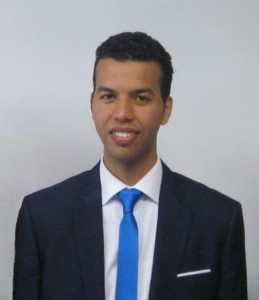
Dr Ahmed Ismail is a Lecturer in Fluid Dynamics at the School of Engineering and Materials Science, Queen Mary University of London (QMUL). He is affiliated with the Centre for Sustainable Engineering and the Centre for Intelligent Transport, where he serves as Research Seminars Coordinator. He holds leadership roles including Chair of the PGT Examination Board and leads a research group focused on microfluidics and electrohydrodynamics. He received his BSc in Mechanical Engineering from the University of Helwan, Cairo (2009), followed by an MSc (2014) and PhD (2016) in Fluid Mechanics from the University of Seville, Spain, under the FPI scholarship. After a postdoctoral year at Seville, he joined QMUL as a PDRA in 2017 and was appointed Academic Fellow and Lecturer in 2019. He is a Fellow of the Higher Education Academy (FHEA). His research centers on multiphase flows at micro-scale , including capillary jets, microdroplets, electrohydrodynamics, and micro-encapsulation . He employs high-speed imaging, dimensionless analysis, scaling laws, and numerical simulations to address industrial challenges in 2D/3D printing, additive manufacturing, and drug delivery . Keywords include Electrospray, Direct Printing, Microfluidics, Drops & Bubbles, and Capillary Jet. His recent publications reveal a strong trend in controlled droplet and jet dynamics , with applications in high-resolution printing, bio-fabrication, and microencapsulation . He develops scaling laws to predict jet breakup and droplet formation, enabling optimization of printing processes. His work bridges experimental observation with theoretical modeling, particularly in electrified jets, cavity collapse, and liquid-liquid electrospraying . Dr Ismail has secured significant research funding, including a KTP project with Innovate UK (£276,771, 2025–2027) and an EPSRC grant (£296,834, 2022–2024) on Electro-Collapse Jetting for next-generation printing technologies. KTP Archipelago 10144476 (Innovate UK, £276,771, 2025–2027) Electro-Collapse Jetting: Towards the Next Generation of Printing Technologies (EPSRC, £296,834, 2022–2024) He advises multiple PhD students working on hydrodynamic printing, droplet disintegration, droplet impact control, and electric propulsion . His lab focuses on translating fundamental fluid dynamics into sustainable engineering solutions, particularly in intelligent transport and digital manufacturing. He teaches EMS503U Applied Fluid Mechanics and mentors students in experimental and theoretical aspects of fluid dynamics.
- Fluid Dynamics
- Multiphase Flows
- Microfluidics
- +۱۲ مورد دیگر