معرفی
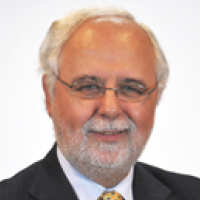
Professor Daniele Dini is a leading academic in tribology and mechanical engineering at Imperial College London's Faculty of Engineering. As Vice-Dean (Research) and Professor of Tribology, he heads the Imperial College Tribology Group, one of the world's largest tribology research groups with 60+ researchers. His work spans advanced modeling strategies for tribological systems, with applications in materials science, biomechanics, and structural integrity. Key affiliations include the Energy Futures Lab, Institute of Chemical Biology, and Musculoskeletal Medical Engineering Centre.
Education: M.Eng from Politecnico di Bari (2000), D.Phil from University of Oxford (2004). Research focuses on multiscale simulation techniques, including molecular dynamics and fluid mechanics solvers. Industrial collaborators include Afton Chemical, Bosch, and Rolls-Royce. Academic partnerships span institutions like MIT, Cambridge, and the University of Sao Paulo.
Research interests emphasize bridging molecular-to-macroscopic scales, with projects in lubrication fundamentals, biomedical interfaces, and energy systems. Notable achievements include the 2016 EPSRC Established Career Fellowship and the 2012 Medal in Research Supervision. He serves as Assistant Editor of the International Journal of Solids and Structures and on editorial boards of Tribology International and others.
Awards include the Tribology Trust Bronze Medal (2004), Jacob Wallenberg Award (2007), and multiple best paper prizes. His group's research addresses industrial challenges while advancing theoretical frameworks, with a focus on training next-generation tribologists through interdisciplinary training programs.
Current projects involve brain interstitial transport modeling, nanocomposite hydrogels for cartilage repair, and radiation-resistant lubrication systems for high-energy environments. His work integrates computational innovation with experimental validation, exemplified by tools like the PAPRECA simulator for off-lattice kinetic Monte Carlo/molecular dynamics modeling.