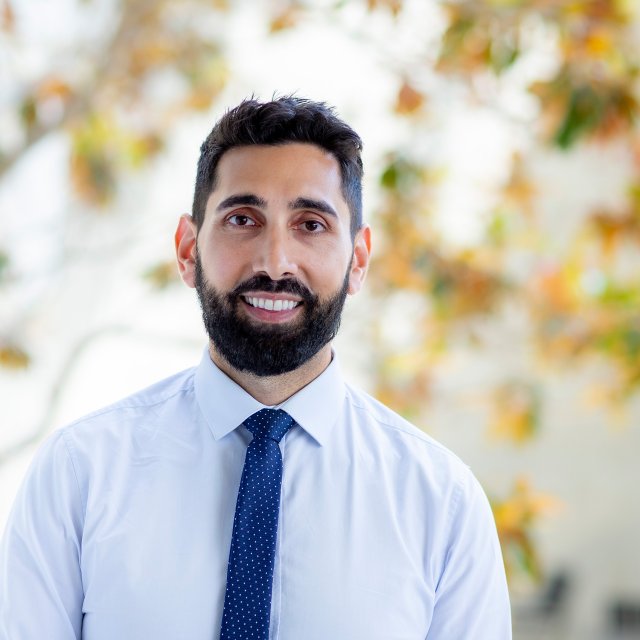
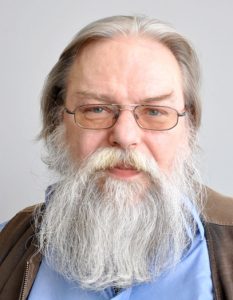
Konstantinos (Kos) Zachos is a Research Fellow at Bayes Business School, City, University of London, and serves as Chief Technology Officer (CTO) for CebAI (National Centre for Creativity enabled by AI) and JECT.AI, a university spin-out. His primary research focuses on computer science and creativity, developing digital tools to enhance creative problem-solving across sectors including journalism, sports, healthcare, and manufacturing. He holds a PhD from City, University of London (2004–2007). Employment History: Chief Technology Officer, City, University of London (Oct 2020–present) Research Fellow, City, University of London (Oct 2007–present) Research Interests: AI-driven creativity tools Information retrieval and NLP applications Design thinking for innovation Technology adoption in non-creative industries His work emphasizes practical applications, such as JECT.AI’s AI tools for journalism and CebAI’s focus on creativity enhancement. Key Projects: Designing digital tools for elite sports coaching (e.g., C&C '22) AI systems for newsroom creativity (C&C '22, Computation + Journalism 2020) Health-and-safety tools for manufacturing (CHI '17) Mobile apps for dementia care (CHI '13) Advising & Grants: Over 15 years of academic-industry collaboration Principal investigator for CebAI (funded by Research England) Experience in EU and national research grants Labs & Teams: CebAI National Centre QUEST Research Group JECT.AI Development Team
Ivan Adriyanov Nikolov is an Assistant Professor at the Department of Architecture, Design and Media Technology within Aalborg University's Technical Faculty of IT and Design. He specializes in Computer Graphics, Computer Vision, and Augmented Reality, with a focus on 3D reconstruction techniques like Structure-from-Motion (SfM). His work bridges academic research and industrial applications, particularly in wind turbine blade inspection and educational technology. His educational background includes contributions to computer science education through innovative teaching methods. He has led projects like 'Drone Application for Pioneering Reporting in Wind Turbine Blade Inspection' (2017–2019) and 'Leading Edge Roughness - Wind Turbine Blades' (2015–2019), advancing drone-based inspection and 3D modeling for wind energy sectors. Research interests include synthetic data generation, environmental monitoring datasets (e.g., BrackishMOT, DigiWeather), and improving VR/AR user experiences. He has developed tools for dynamic lighting in pixel art games and multimodal guardian systems in VR. His datasets, such as Sewer Defect Point Clouds and Wind Turbine Blade SfM Reconstructions, are publicly available for academic use. He actively contributes to educational innovation, such as flipped classroom strategies to boost programming class engagement. His interdisciplinary approach spans computer graphics, AI-driven NPC interactions, and collaborative mixed-reality games for trust-building. Labs/Teams: Member of the Computer Graphics Group and Visual Analysis and Perception team at Aalborg University. Collaborates with industry partners on drone technology and environmental surveillance systems.
Tom Elliott serves as Associate Director for Digital Programs and Senior Research Scholar at New York University, alongside his role as Adjunct Assistant Professor. He holds a BS in Computer Science and Classical Studies from Duke University (1989), an MA (1997) and PhD (2004) in Ancient History from UNC Chapel Hill. His career spans software development, military service, and academic leadership in digital humanities. Elliott specializes in digital geography, epigraphy, and ancient administrative studies. He pioneered projects like the Barrington Atlas gazetteer, co-founded the EpiDoc community for digital text encoding, and directed the Ancient World Mapping Center. His current work focuses on the Pleiades gazetteer, integrating archaeological data with open-source digital methodologies. His publications emphasize digital tools' impact on classical scholarship, including seminal works on GIS applications and digital epigraphy. He actively mentors scholars and students in computational methods, shaping the field's trajectory through collaborative initiatives like Papyri.info and IOSPE.
Dr. Armando A. Piña is an Associate Professor in the Department of Psychology at Arizona State University (ASU), leading the Courage Lab. His work focuses on child and adolescent mental health, particularly anxiety and courage development. He holds affiliations with the REACH Institute and the Institute for Social Science Research (ISSR). Dr. Piña earned his Ph.D. in Psychology from Florida International University. His research explores developmental trajectories of anxiety, preventive interventions, and leveraging technology for mental health solutions. He collaborates with schools to enhance social and emotional learning (SEL). Notable projects include the Arizona Anxiety Resilience Building Program and a multimedia initiative using storytelling for mental health interventions. Dr. Piña has served on editorial boards for journals like the Journal of Clinical Child and Adolescent Psychology and contributed to initiatives such as the Minority Fellowship Program. His work is supported by grants from NIH and SAMHSA, focusing on resilient families and closing research-practice gaps in drug abuse prevention.
Dr. Conor McKeown is a Lecturer in Digital Media at the University of Stirling's Communications, Media and Culture department. His research explores posthumanism, radical ecology, new materialism, and agential-realism within digital media and video games. He employs methods like philosophical inquiry, media archaeology, creative coding, and collaborative filmmaking to analyze how games reflect and shape human-environment interactions in an unstable world. Key research interests include the intersection of technology and ecological crisis, posthumanist ethics, and the materiality of digital media. His work challenges traditional boundaries between humans, technology, and nature, emphasizing games' potential as tools for fostering empathy and critical engagement. McKeown has published extensively on topics such as environmental game design, posthuman subjectivity in narratives like Disco Elysium, and the materiality of game mechanics. His contributions span peer-reviewed journals and critical essays, reflecting a commitment to interdisciplinary dialogue between media studies, philosophy, and environmental science.
Hayley Manalang Ko is a PhD Research Fellow affiliated with the Norwegian Dental Service Competence Centre East (TkØ) and OsloMet – Oslo Metropolitan University. Her work focuses on forensic odontology, child protection mechanisms, and healthcare professional training. She is part of the Orchid project investigating forensic examinations involving children exposed to violence/abuse, and the ILMA project developing e-learning tools for forensic interviews. Education: Master's in Forensic Psychology (Royal Holloway, University of London) and ongoing Social Sciences studies at OsloMet. Research interests span forensic psychiatry, healthcare administration, and AI applications in clinical training. Key projects include AI-driven child chatbot avatars for medical professional training and comparative studies on virtual interview environments. Publications emphasize gaps in medical/dental interview techniques, co-occurrence of dental diseases, and secondary traumatization in criminal justice roles. Dissemination activities include workshops at State Children's Homes on communication strategies during forensic examinations. Active in research groups like the Next Generation Avatar for Information-Gathering Interviews (ARGI).
Joy Y. Balta is a Professor of Anatomy and Founding Director of the Anatomy Learning Institute at Point Loma Nazarene University (PLNU). She has held academic positions at Lebanese American University (LAU), University College Cork (UCC), and The Ohio State University, where she served as Associate Professor of Anatomy and Director of Anatomical Services & Body Donation Program. Her career spans anatomy education, research on embalming techniques, and leadership in developing academic programs like Ireland's first taught MSc in Human Anatomy. Education BS in Zoology, Lebanese University MSc in Human Anatomy, University of Dundee PhD in Anatomical Sciences, University College Cork MA in Teaching and Learning in Higher Education, University College Cork Dr. Balta’s research focuses on anatomy education methodologies, embalming fluid efficacy, and the scholarship of teaching and learning. She has pioneered studies comparing Thiel and formalin embalming techniques, explored the antimicrobial properties of preservation solutions, and investigated radiological imaging effects on cadavers. Her work also addresses ethical considerations in body donation and student-centered learning environments. Scientific Awards Faculty Development Grant from Lebanese American University (LAU) Dr. Balta’s publications highlight trends in multimedia integration, UDL frameworks, and informed consent practices for body donors. She established The Balta Lab at Ohio State, mentoring students at all degree levels, and has served on organizations including the American Association for Anatomy and the Anatomical Society of Great Britain and Ireland. Her leadership in program development and commitment to medical education reform underscore her impact across institutions.
Dr Martin Leach is a Senior Lecturer at De Montfort University's School of Humanities and Performing Arts within the Faculty of Arts, Design and Humanities. He teaches anatomy, physiology, and philosophy to dance students while maintaining a research focus at the intersection of performance philosophy, dance practice, and Heideggerian thought. Education: BA in English and Drama (University of Hull, 1982), Alexander Technique Teaching Certificate (PAAT, 1989), PhD in Philosophy, Theatre and Visual Arts (DMU, 2012) His research explores the philosophical implications of dance practice through the lens of Tadeusz Kantor's theatrical concepts and F. M. Alexander's somatic principles. Recent work includes collaborations on Heideggerian applications to performance pedagogy and psychophysical training methodologies. Dr Leach's publications examine Kantor's avant-garde theatre, the mind-body relationship in dance, and technological enhancements in dance education. He has contributed to journals like Research in Dance Education and edited collections on performance philosophy. Polish government scholarship recipient (1982–1983) for theatre directing studies in Poland Active in professional associations including the Performance Philosophy International Network and PAAT Current research supervision includes Marie Hay (PhD in Dance and Philosophy) and Marguerite Galizia (PhD in Dance)
Vanja Manić-Matić is a Senior Lecturer in the Department of Romance Studies at the Faculty of Philosophy, University of Novi Sad (Serbia). With over a decade of academic experience, she specializes in French language education and francophone studies. Education French language and literature (2004) Master's in French linguistics (2009) Doctorate in Francophone studies (2017) Her research focuses on francophone studies, modern French language and linguistics, educational methodology, didactics, and translation studies. She has explored Quebec French, Swiss French, and Belgian French through multiple publications, with particular emphasis on cultural representation in language education. Her recent publications examine linguistic variations in French dialects and their pedagogical applications, highlighting Francophone cultural elements in foreign language teaching. These works span topics including Quebecois stereotypes in authentic materials, Amerindian influences in French vocabulary, and the use of multimedia in language instruction. Scientific Awards Translation scholarship from French Ministry of Culture - National Center for the Book (Paris, France), 2006 She participated in the Serbian Ministry of Education's 'Languages and Culture in Time and Space' (project 178002) and received professional training in France (Paris, Arles, Bordeaux, Montpellier) and international conferences. She has developed courses in French as a foreign language, translation techniques, and modern French methodology.
Morris Siu-Yung Jong is a Professor at The Chinese University of Hong Kong's Faculty of Education, Department of Educational Administration and Policy. With over 100 publications from 2006 to 2025, he has established himself as a leading researcher in educational technology, particularly focusing on innovative applications of virtual reality, artificial intelligence, and game-based learning in formal education settings. His work bridges theoretical frameworks with practical classroom implementations, making significant contributions to how technology enhances teaching and learning experiences. Professor Jong's research interests span multiple cutting-edge domains in educational technology. He has pioneered work in spherical video-based virtual reality (SVVR) applications for education, developing frameworks for immersive learning experiences that transform traditional classroom instruction. His research on AI in education, particularly examining ChatGPT's impact on student engagement and language learning, positions him at the forefront of understanding how emerging technologies reshape educational practices. Additionally, his extensive work on game-based learning, flipped classroom methodologies, and STEM education integration demonstrates a comprehensive approach to technology-enhanced learning across multiple educational contexts and age groups. Analysis of Professor Jong's recent publications reveals a clear progression from foundational work in game-based learning to more sophisticated applications of immersive technologies. His research increasingly focuses on AI integration in educational settings, with a significant portion of his 2023-2025 publications examining ChatGPT's educational applications. The methodological approaches in his work have evolved from basic implementation studies to more sophisticated designs incorporating hierarchical linear modeling, longitudinal analyses, and systematic reviews, demonstrating growing methodological rigor and impact across the educational technology field. Professor Jong has made substantial contributions to educational research through his extensive publication record in top-tier journals including Computers & Education, British Journal of Educational Technology, and Educational Technology & Society. His work has significantly influenced how educators implement virtual reality, AI, and game-based approaches in classrooms worldwide. His research on teacher concerns, implementation challenges, and pedagogical frameworks provides crucial insights for successful technology integration in formal educational settings. Through his supervision of numerous research projects and collaborations with scholars worldwide, Professor Jong has fostered a robust research ecosystem focused on advancing educational technology. His work on design-based research approaches has provided valuable methodological frameworks for studying technology implementation in authentic educational contexts. His recent focus on AI in education positions him as a key contributor to understanding how emerging technologies can be effectively integrated into teaching and learning processes. Professor Jong's research laboratory focuses on immersive learning environments, with particular emphasis on spherical video-based virtual reality applications. His team has developed several innovative frameworks for implementing VR in educational settings, addressing both technical and pedagogical challenges. Current projects appear to focus on AI integration with immersive technologies, exploring how generative AI can enhance virtual learning experiences and support student engagement across various subject areas.
Popescu-Belis Andrei serves as an Associate Professor at the University of Applied Sciences and Arts Western Switzerland (HES-SO), specifically within the Institute of Information and Communication Technologies (IICT) at HEIG-VD campus in Yverdon-les-Bains. His academic work spans teaching computer science fundamentals and advanced natural language processing concepts across both undergraduate and graduate programs. His research interests focus on Natural Language Processing , Machine Translation , and Human-Machine Dialogue systems, with particular emphasis on low-resource language scenarios. His work addresses challenges in speech-to-speech translation, subword tokenization, neural machine translation optimization, and creative applications like poem generation. Recent publications through 2025 demonstrate his ongoing contributions to the field, particularly in multilingual NMT training schedules and low-resource language processing pipelines. Analysis of his 15 most recent publications reveals consistent focus on practical solutions for language barriers, with increasing attention to reinforcement learning applications and creative language generation. His work on GPoeT demonstrates the intersection of traditional literary forms with modern language models, while his research on low-resource translation pipelines addresses real-world community interpreting needs. He has led significant research projects including Digital Lyric (2019-2020), a collaboration with UNIL (University of Lausanne) to develop systems for aiding poem generation for a public exhibition at Morges Castle. This project demonstrates his interdisciplinary approach bridging computational linguistics with creative applications. His academic contributions include: Development of specialized training pipelines for low-resource neural machine translation Innovative approaches to speech-to-speech translation for community interpreting Novel methods for constrained language model applications in creative writing Significant contributions to understanding subword tokenization mechanics Popescu-Belis maintains active research collaborations across institutions, as evidenced by his work with UNIL and various international conference publications. His teaching portfolio includes courses in natural language processing, data preparation, unsupervised machine learning, and computer science fundamentals, demonstrating his commitment to both theoretical and practical aspects of the field.
Henrik Engström is a Professor of Informatics at the University of Skövde, affiliated with the School of Informatics and Department of Information Technology. He holds a PhD in Computer Science from the University of Exeter. His research focuses on game development processes, serious games, and interdisciplinary collaboration in game design. Engström has led multiple projects, including the Game Tech Academy and Sweden Game Arena initiative, aiming to leverage game technology for societal challenges in health, education, and industry. He coordinates the Game Development Master's Programme and has published extensively on topics like game analytics, inclusive design, and mobile game publishing strategies. His work often bridges academia and industry, emphasizing practical applications in training simulations and healthcare. Education: PhD in Computer Science (University of Exeter) Key Projects: Sweden Game Arena, Game Hub Scandinavia, Digital Parental Support Tools Research Interests: Game design processes, serious games for health, inclusive game development, and mobile game business models Engström’s research outputs span over two decades, with notable contributions to understanding game development challenges, stress detection in games, and the application of AI in game narratives. His book Game Development Research (2020) synthesizes empirical insights from industry practices. He collaborates internationally, including with Japanese and Scandinavian institutions, to advance educational game models and industry-academia partnerships. His articles highlight trends in data-driven decision-making for indie game publishers, the psychological impact of game design on player experiences, and leveraging game jams for addressing heavy societal topics. Engström also leads grants focused on digital health tools for expecting parents and sustainable urban planning via game-based participation. Labs/Teams: Key contributor to the Sweden Game Conference and collaborator with Game Tech Academy, fostering innovation in game-based solutions for societal challenges.
Christian Berger, MA, is a faculty member at the Vienna University of Education (Pädagogische Hochschule Wien), affiliated with the Department for Media Education, Information Technology Education, and Digitality. He coordinates the Media Lab and Maker Lab and has been active in teacher training since 1992. His work focuses on integrating new media into education, media literacy, and open educational resources. Education: Master's in Applied Knowledge Management (2007). Former roles include part-time lecturer at the University of Vienna and freelance project manager. Current roles include membership in the Center for Learning Technology and Innovation (ZLI) and involvement in projects like HOORCH (educational game) and media archive development. Research interests: Media pedagogy, digital education innovation, podcasting in education, and copyright issues in schools. Active in organizing conferences like the Free Media Conference and contributing to initiatives like Medienbildung JETZT! Publications include work on audio production in classrooms, maker culture in schools, and digital literacy initiatives. He co-founded Vienna's alternative schools and has extensive experience in educational radio and podcasting through platforms like podcampus and PH.ON.Wien.
Dr. Bhargavi Goswami is a lecturer at the School of Computer Science, Queensland University of Technology (QUT), with over 14 years of teaching experience in higher education. Her expertise spans communication networks, network security, and software-defined networks (SDN), where she integrates cutting-edge research into postgraduate teaching. Previously, she served as Assistant Professor and Head of Department (HOD) at CHRIST University and Garden City College in India. Education: PhD in Computer Science from QUT; professional certifications including CCNA and CCNP from Cisco. Dr. Goswami's research focuses on communication networks and network security, with a particular emphasis on Smart Grid Communication Networks, Software Defined Networks (SDN), Cryptography, Cybersecurity, Mathematical Modeling, and Congestion Control in Data Networks. Her current work explores the intersection of Quantum Computing, Machine Learning, and Network Programming to enhance communication security and efficiency. Her 15 most recent publications highlight trends in Smart Grid , SDN , and network security . Key subfields include latency optimization , load balancing , handoff methods , Wi-Fi Mininet , and Beacon controller scalability . Dr. Goswami has led multiple funded research projects, including work on low-latency communication for Smart Grids and P4-based network policies in SDN. She holds two patents and has authored monographs in her field. Her technical certifications and industry engagement underscore her practical contributions to communication systems and network security. She emphasizes ethical technology development and societal impact in her research and teaching.
Yongliang Yang is a Senior Lecturer in the Department of Computer Science at the University of Bath, affiliated with the Centre for the Analysis of Motion, Entertainment Research & Applications (CAMERA). His research spans computer graphics, shape understanding, and computational design with applications in 3D vision and geometric processing. His primary research focuses on developing shape analysis and optimization algorithms for geometric structures, with recent work emphasizing neural radiance fields, point cloud processing, and generative adversarial networks. Key contributions include novel approaches to dynamic scene representation, facial inpainting, and surface approximation techniques. Recent publications demonstrate strong trends in neural rendering for dynamic scenes and generative image synthesis, bridging geometry processing with deep learning for practical 3D reconstruction applications. Scientific recognition includes: Computer Aided Geometric Design Most Cited Paper Award (2011) Computer Aided Geometric Design Most Cited Paper Award (2012) Dr. Yang serves as Principal Investigator for Dynamic Human Reconstruction and Editing with Neural Radiance Fields (Royal Society, 2024-2026) and is Co-Investigator on CAMERA 2.0 (EPSRC, 2020-2025) and EU Horizon 2020 projects. He has supervised 9 students and serves as Associate Editor for Computer Graphics Forum (2025-2028). He actively contributes to CAMERA's research ecosystem focused on motion capture, virtual reality, and entertainment applications, driving innovation in motion analysis and digital content creation.