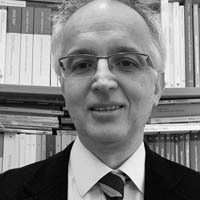
Professor Andrew Hobson is a leading academic in education at the University of Brighton, serving as Professor of Teacher Learning and Development and Head of Education Research since 2014. He holds the additional role of Associate Dean for Research and Knowledge Exchange. His expertise focuses on teacher and leader mentoring, particularly for early career professionals, with notable contributions such as the coining of 'judgementoring' and the development of the ONSIDE mentoring framework. Education: Bachelor of Arts in Politics, University of Lancaster Master of Arts in Political Philosophy, University of York Postgraduate Certificate in Education (PGCE) in Social Science, University of Birmingham PhD in Education, University of Leeds (2001) Research Interests: Professor Hobson’s work emphasizes mentoring’s impact on professional learning, well-being, and development. He critiques harmful practices like 'judgementoring' and advocates for supportive frameworks like ONSIDE. His research spans teacher induction, mentor training, and cross-professional mentoring applications. Grants & Projects: Becoming and being a teacher in the English Further Education and Training sector (2023–2024, Gatsby Charitable Foundation) Mentoring and coaching trainee and early career teachers (2022, Conceptual Review) Nature and impact of effective mentoring training (2020, Education Training Foundation) International teacher recruitment for shortage subjects (2016–2017, UK Department for Education) Labs/Teams: His work is embedded within the Education Research Excellence Group at the University of Brighton, collaborating with institutions globally to advance mentoring practices in education.
Dr. Suman Das Gupta serves as a Lecturer in Population Health and Epidemiology at the School of Agricultural, Environmental and Veterinary Sciences, Charles Sturt University in Wagga Wagga, Australia. With over 20 years of professional experience, he maintains active roles in research, teaching, and international consultancy related to veterinary epidemiology and public health. His educational background includes a Doctor of Veterinary Medicine (D.V.M.) from an unspecified institution, a Masters in Public Health (MPH) with focus on epidemiology from American International University - Bangladesh, and a PhD in Veterinary Epidemiology from the University of Queensland, Australia. His doctoral research examined factors influencing the epidemiology of avian influenza virus circulation on poultry farms in Bangladesh. Dr. Gupta's research focuses on veterinary epidemiology, zoonotic diseases, antimicrobial resistance, biosecurity, animal disease surveillance, public health, and the One Health approach. His work employs advanced epidemiological techniques including risk factor modeling, infectious disease spread modeling, Structural Equation Modeling, spatial modeling, and Multilevel random effects modeling using analytical tools such as R, STATA, SaTScan, MLwiN, MPlus, AMOS, ArcGIS Map, and NVivo. His publication record includes 40 peer-reviewed research papers, with significant recent output in 2024-2025 focusing on avian influenza, biosecurity practices in poultry farming, zoonotic disease transmission, and economic impacts of pandemics on agriculture. His research demonstrates strong alignment with UN Sustainable Development Goals, particularly in public health and agricultural sustainability. Asha Lata Dey Memories student scholarship by Bangladesh Hindu Foundation for OUTSTANDING ACADEMIC ACHIEVEMENT (1999) Nippon Foundation, Japan scholarship for OUTSTANDING ACADEMIC ACHIEVEMENT (1998) Merit Scholarship for OUTSTANDING ACADEMIC ACHIEVEMENT (1997) Summa Cum Laude Distinction (Gold Medal) for MPH program BEST School of Veterinary Science (SVS), University of Queensland HDR Paper for BEST PUBLICATION (2020) Global Talent for OUTSTANDING ACADEMIC and PROFESSIONAL ACHIEVEMENTS (2020) Dr. Gupta has extensive experience supervising PhD students as both Principal and Co-supervisor. His professional contributions include developing a web-based simulation tool for Foot-and-Mouth Disease outbreaks for veterinary education at UQ, creating epidemiological training materials for field veterinarians across the Asia-Pacific region, and conducting biosecurity training for officers at the Department of Agriculture, Fisheries and Forestry/CSU Biosecurity Training Centre. He has served as a National Consultant for the Food and Agriculture Organization of the United Nations (FAO) and STOP AI|USAID, contributing to avian influenza field research programs in Bangladesh. His research activities connect with the Gulbali Research Institute at Charles Sturt University, where he previously worked as a Research Fellow in Veterinary Epidemiology, Biosecurity and Surveillance. He has led significant initiatives including biosecurity programs across poultry value chains in Bangladesh, syndromic surveillance of livestock and poultry diseases, and numerous disease outbreak investigations for conditions including Avian Influenza, Anthrax, and Peste des petits ruminants.
Adam Loy is an Associate Professor of Statistics in the Department of Mathematics and Statistics at Carleton College. He teaches statistics courses at all levels and focuses on integrating modern computational methods and visualization into education. His research emphasizes visual inference, statistical software development (e.g., R packages like lmeresampler and qqplotr), and improving statistical education through innovative pedagogical tools. Education: B.A. in Mathematics/Statistics from Luther College (2007) M.S. in Statistics from Iowa State University (2009) Ph.D. in Statistics from Iowa State University (2013) Research Interests: Professor Loy’s work combines statistical methodology with computational and educational applications. He develops R packages for statistical diagnostics and visualization, explores non-traditional grading systems in statistics education, and applies statistical models to complex social and environmental datasets. Recent Teaching: Fall 2024: STAT 270 (Statistical Learning), STAT 294 (Directed Research) Winter 2025: MATH 240 (Probability), STAT 250, STAT 294 Spring 2025: STAT 294 Future courses include STAT 220 (Data Science) and STAT 230 (Applied Regression Analysis). Publications: Recent work focuses on classroom innovations (non-traditional grading), computational methods (bootstrap approaches for clustered data), and diagnostic tools for mixed-effects models. His articles highlight interdisciplinary applications in urban studies and environmental science. Labs/Teams: Active in R package development communities, contributing to open-source tools for statistical education and analysis.
Mee Sook Kim is an Associate Professor in the Department of Management at California State University, East Bay (CSUEB). Her research focuses on leadership dynamics, team performance, organizational behavior, and cross-cultural management. She explores topics such as leader-member exchange, knowledge sharing, virtual recruitment strategies, and the impact of leadership power on employee behavior. Her work emphasizes understanding how organizational structures and leadership practices influence team efficacy, employee satisfaction, and strategic recruitment. Notable themes include the role of social capital, cohesion, and cross-cultural differences in shaping workplace outcomes. While no scientific awards are explicitly listed, her research contributes to advancing theoretical and practical insights in human resource management and organizational systems. Dr. Kim currently holds an office at VBT 334 and can be reached via email at meesook.kim@csueastbay.edu .
Dr. Cijy Elizabeth Sunny serves as an Assistant Professor in the Department of Mathematics within Florida Gulf Coast University's College of Arts & Sciences. Her academic profile demonstrates interdisciplinary expertise spanning STEM education research, psychometrics, and quantitative methodology across multiple continents. Research Focus: Dr. Sunny specializes in developing and validating assessment tools for affective domain skills using classical test theory, item response theory, and Rasch measurement. Her work bridges STEM education research, medical education, engineering education, and human trafficking studies. She actively conducts workshops on concept mapping methodology, mixed methods research for standardized patient educators, and standard-setting for physician educators. Publication Trends: Her recent scholarly output reveals a strong emphasis on equity in STEM education (particularly for Latino/Hispanic students), hidden curriculum dynamics in engineering education, innovative assessment tools, and psychometric validation studies. Her work consistently applies rigorous quantitative and mixed methods approaches to address complex educational challenges across healthcare, engineering, and social science contexts. Academic Service: Dr. Sunny has developed specialized workshops including: Concept mapping methodology for scale development Mixed methods research for standardized patient educators Standard-setting protocols for physician educators Teaching Portfolio: She teaches across physics, statistics, mathematics, programming, research methodology, and data science disciplines, leveraging her background as an engineering physicist and psychometrician to create interdisciplinary learning experiences.
Joseph Kush is an Assistant Professor of Graduate Psychology at the Center for Assessment and Research Studies (CARS) within James Madison University's College of Health and Behavioral Studies . He joined JMU in 2022 and holds a Ph.D. in Research, Statistics, and Evaluation from the University of Virginia (2021) and a B.S. in Psychology from Syracuse University (2016). Research Interests : Moderated Nonlinear Factor Analysis Propensity Score Methods for Causal Inference Multilevel Structural Equation Modeling His work focuses on quantitative psychological and educational assessment, with recent publications addressing impulsivity interventions, educational equity, statistical modeling, and pandemic impacts on educators. Trends in his research highlight methodological rigor in integrative data analysis and equity-centered educational reform. Scientific Awards : 2024 Provost Award for Excellence in Scholarship and Research 2024 Outstanding Junior Faculty (College of Health and Behavioral Studies) Contact: kushjm@jmu.edu
Nasser BAGHERI is a Professor and Director of the Geo-Health-Lab and VIDEA Lab at the Health Research Institute, University of Canberra. His research focuses on spatial analysis, public health, and epidemiology, with emphasis on cardiovascular risks, dementia care, and the Global Burden of Disease. He leads projects addressing climate impacts on health, dementia service gaps, and pharmacist integration in aged care. Education : Not explicitly listed in the provided text. Research Interests : Spatial epidemiology, health inequalities, geographic information systems (GIS), and global health trends. Key projects include CANBREATHE (wildfire smoke health impacts) and dementia service evaluation in the Australian Capital Territory (ACT). Recent Article Trends : Recent work examines disparities in cardiovascular risks, dementia service barriers, and obesity forecasts. Spatial analysis remains a core methodology, with collaborations across Asia-Pacific and Middle Eastern regions. Grants & Projects : Active in 8 projects, including CANBREATHE (2025–2028) and dementia service mapping (2024–2026). Focus areas include mental health systems modeling and aged care innovation. Labs/Teams : Geo-Health-Lab (spatial analysis) and VIDEA Lab (interdisciplinary health research).
Ali Alhaj is a Senior Lecturer in Cyber Security and Course Leader for the BSc (Hons) Computing program at the University of Suffolk's School of Technology, Business and Arts. He joined the university in July 2020 and previously taught at the University of Portsmouth. He holds an MSc in Computer Forensics (University of South Wales, 2015) and a Bachelor's in Computer Science (2012). His teaching focuses on Cyber Security, including modules like Cyber-Physical Security, Cyber Detection, and Forensic Investigation. Research interests span digital forensics, intrusion detection, and software-defined networks (SDN). He is a Fellow of the Higher Education Academy (FHEA) and member of BCS, IEEE, and the Software Defined Networks Community. Externally, he serves as an Independent Assessor for Network Engineering and Cyber Security apprenticeship programs at multiple institutions. He supervised partnership degrees at Rushmore Business School and Unicaf between 2022–2024. His publications address Arabic text classification, SDN fault tolerance, database security policies, and game console forensics.
Matt Boulter is a Lecturer in the School of Health and Life Sciences, specializing in sport and organizational psychology. His research focuses on group dynamics, personality psychology, and their application to team effectiveness and body image disorders. He is particularly interested in how teams resolve conflicts and how narcissism influences team cohesion and mental health outcomes. Boulter has expertise in quantitative methods including multilevel modeling and Bayesian statistics, using tools like Mplus and R. Current projects include a collaboration with St. Mirren FC to develop psychosocial training curricula for youth football academies and examining conflict management strategies in sports teams. His work bridges theoretical insights with practical applications in both sports and organizational settings.
Giorgio Grimaldi is an Associate Professor of History of International Relations at Link Campus University - Rome. He holds a Research Doctorate in History of Federalism and European Unity from the University of Pavia. His career includes roles as researcher at the Centro Studi sul Federalismo (Turin), research fellowships at University of Turin, Sant’Anna School of Advanced Studies (Pisa), and University of Genova. He has served as adjunct professor at Università della Valle d’Aosta (2006-2016), University of Genova’s Department of Political Science, and eCampus University. Since 2024, he holds first-rank professor qualification in 11/A3 Contemporary History. His research focuses on European integration processes, political ecology, green parties, federalism theories, and transnational environmental policies. Key works include Federalismo, ecologia politica e partiti verdi (2005) and I Verdi italiani tra politica nazionale e proiezione europea (2020). Grimaldi coordinates the Jean Monnet Module “Europartiti, democrazia e società civile” and directs the Alizè Center for European and Transnational Historical Studies at Link University. He participates in the PRIN 2022 project on EU construction in a multipolar era (1989-2009). His writing spans EU environmental policy analysis, green parties’ transnational cooperation, and federalist responses to global environmental challenges. Recent works address eco-federalism, climate governance, and the legacy of figures like Willy Brandt and Joschka Fischer. Grimaldi actively contributes to academic journals, including De Europa and La cittadinanza europea online , and serves on editorial boards and scientific committees for European studies organizations. Teaching encompasses courses on European environmental policies, Middle Eastern countries’ institutions, and federalism. He led educational projects like Hopeurope (2013-2015) and collaborates with CesUE, a Sant’Anna School spin-off focusing on EU global governance. His research highlights intersections between political ecology, federal institutions, and sustainable development.
Pasi Peltoniemi is a Full Professor (tenured) in the Department of Electrical Engineering at Lappeenranta-Lahti University of Technology LUT. He is affiliated with the LUT School of Energy Systems, focusing on advanced research in Electrical and Electronic Engineering, Control Systems, and Power Electronics. His work emphasizes sustainable energy systems, particularly Low-Voltage Direct Current (LVDC) distribution networks and high-power converter technologies. His research spans power electronics, renewable energy integration, and grid-forming converter systems. Notable contributions include studies on multilevel inverters, SiC semiconductor applications, and energy management strategies for hybrid systems. He has pioneered LVDC distribution network designs, including fault protection, grounding schemes, and customer-end inverter optimization. Key research areas include: Advanced power electronics and converter topologies Grid stability and renewable energy integration Marine and industrial energy systems LVDC distribution infrastructure and standards His publications highlight trends in grid-forming voltage source converters, high-power charging systems, and microgrid control. Peltoniemi has contributed to international standards like LVDC rules and collaborated on projects such as the Congo Grand Inga hydroelectric evaluation. He leads research initiatives on energy storage systems, fault detection in power converters, and smart grid functionalities. His work integrates experimental validation (e.g., laboratory test setups) with theoretical models for system optimization. Labs/Teams: Active in LUT's LVDC research platform, focusing on utility network implementations and converter technology. Collaborates on projects like the On-Grid Hydrogen Production with Solar Energy in Nordic Conditions.
Luca Giommoni is a Reader in Criminology at Cardiff University's School of Social Sciences, specializing in illicit drug markets, human trafficking, and the impact of digital technologies on crime. He holds a PhD from Università Cattolica del Sacro Cuore in Milan and was a visiting scholar at the University of Maryland, College Park. His research generates over £1.5 million in funding from ESRC, EPSRC, and international bodies. Collaborations include the Social Data Science Lab and Hate Lab, focusing on online communities and social network analysis. Giommoni’s work addresses illicit markets’ evolution, cybersecurity challenges, and policy implications of global crime dynamics. Education: PhD in Criminology, Università Cattolica del Sacro Cuore, Milan (2011–2015) Visiting Scholar, University of Maryland, USA (2013–2014) MSc in Applied Social Sciences, Università Cattolica del Sacro Cuore, Milan (2009–2011) Research Interests: Illicit drug markets, human trafficking, organized crime, cybersecurity, and digital crime prevention. Recent projects include analyzing precursor regulations’ impact on drug markets, human trafficking detection via online platforms, and the Taliban ban’s effects on European drug trade. Grants & Collaborations: £1.5M+ in research income from national/international grants. Key partnerships include the Social Data Science Lab (£1.5M as Co-Investigator) and HateLab (£1.8M ESRC grant). Notable projects include 'How Online Technologies are Transforming Transnational Organized Crime' (£449,957 ESRC). Teaching: Leads postgraduate courses on international crime and criminology, including 'Researching Crime, Safety & Justice' and 'Transnational Crimes'. Supervises PhD students in illicit markets, human trafficking, and cybercrime. Labs & Teams: Active in the HateLab (cyberhate research) and Social Data Science Lab (online crime analysis). Engages in international collaborations, including the National Cyber Security Centre's Academic Centre of Excellence.
Lynn Van den Berghe is a Professor at Ghent University, focusing on Physical Education , Motivation , and Self-Determination Theory . Her research explores the dynamics of need-supportive and controlling teaching behaviors in physical education, their impact on student engagement, burnout, and motivation, and interventions to enhance pedagogical practices. Key Research Areas: Student Motivation, Teacher Behavior, Burnout, Self-Determination Theory, Physical Education Pedagogy. Publications: 15+ peer-reviewed articles and a book chapter (2012–2016), primarily examining the psychological and behavioral aspects of physical education. Collaborators: Frequently collaborates with researchers like Leen Haerens, Nathalie Aelterman, and Maarten Vansteenkiste.
António Caetano is a Full Professor at Iscte Business School , part of Iscte - Instituto Universitário de Lisboa . With a PhD in Social and Corporate Psychology, he has over 30 years of experience in organizational diagnosis and intervention, focusing on change, innovation, and leadership. Research Interests: Organizational change, skill development, performance evaluation, teamwork, entrepreneurship, culture, and leadership. Publications: Over 100 scientific papers and 18 books on organizations and human resources. Location: Edifício INDEG-ISCTE, Avenida Professor Aníbal Bettencourt, 1600-189 Lisboa. His recent work explores daily micro-events, mindfulness, teleworking, and affective dynamics in organizational settings. He has contributed to multilevel studies on leadership, mental health, and adaptive performance.
Stuti Thapa is an Assistant Professor of Industrial-Organizational Psychology at the University of Tulsa, specifically within the Department of Psychology under the Kendall College of Arts & Sciences. Her research focuses on workplace well-being, emotion dynamics, and cross-cultural approaches to organizational behavior. She holds a Ph.D. from Purdue University, alongside an M.A. and B.A. from Purdue University and St. Olaf College, respectively. Her work employs advanced methodologies such as multilevel modeling, text mining, and machine learning to study temporal variations in individual and organizational outcomes. Notable contributions include exploring personalized happiness metrics, cross-cultural linguistic differences in emotion expression, and the implications of social media on work environments. Dr. Thapa has been recognized with the John and Joyce Schaeuble Award (2023) and Joseph Tiffin Award (2023) for her quantitative research excellence. Her research interests extend to psychometrics, experience sampling methods, and the ethical evaluation of human-machine interactions in moral dilemmas. Beyond academia, she engages in creative activities like painting, crocheting, and gardening, alongside caring for her cat, Moon.






/prod01/channel_2/media/uniofsuffolk/website/content-assets/images/staff-profile-photos/technology-business-amp-arts/Ali-Alhaj-2.jpg)