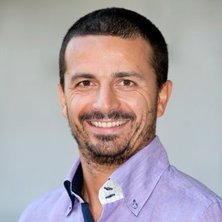
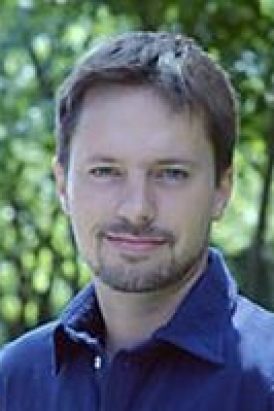
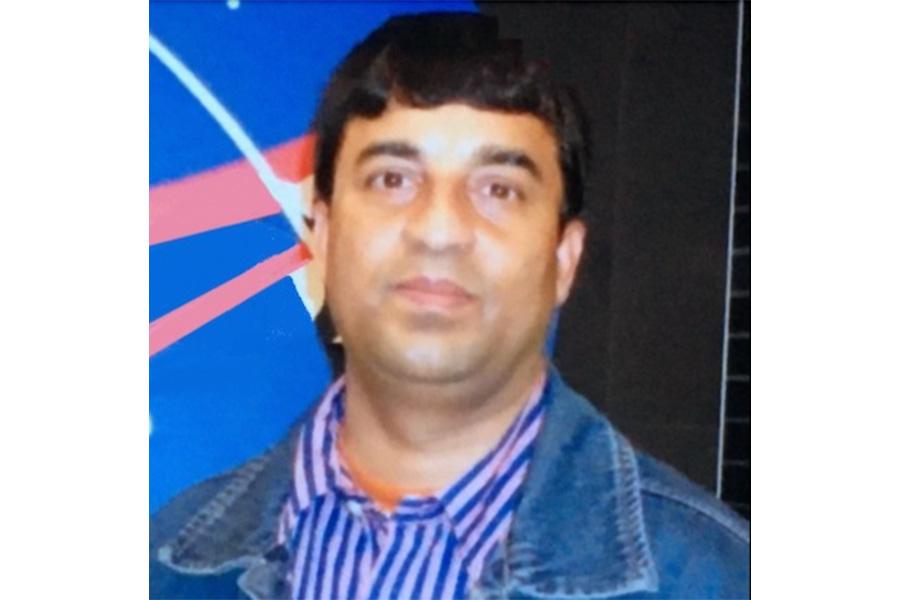
Associate Professor Antonio Peyrache is a Deputy Head of School at the School of Economics, University of Queensland, within the Faculty of Business, Economics and Law. His research focuses on applied economics, econometrics, and productivity/efficiency analysis with particular emphasis on production systems, public sector efficiency, and systemic risk modeling. He leads the Centre for Efficiency and Productivity Analysis (CEPA), driving advancements in efficiency measurement methodologies. Key research interests include judicial system efficiency, banking systemic risk, and multilevel production networks. Recent work explores homothetic production technologies and optimal organizational structures for public institutions. Featured projects include analyzing productivity in Australian horticulture and European judicial systems. His expertise spans both theoretical contributions (e.g., decomposition frameworks) and applied policy analysis (e.g., healthcare delivery efficiency). Publications span journals like European Journal of Operational Research and Omega, with a focus on operational research techniques and their policy applications. He has directed projects funded by the Asian Productivity Organization and collaborated on EU-KLEMS growth accounting initiatives. Professional roles include editorial contributions and leadership in academic productivity analysis.
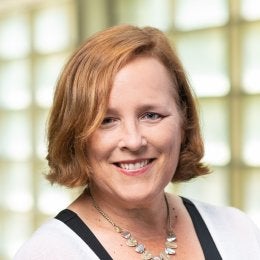
Laura M. Stapleton is Chair of the Department of Human Development and Quantitative Methodology and a Professor at the University of Maryland’s College of Education. She previously served as Interim Dean and Associate Dean for Research, Innovation, and Partnerships. Her academic roles include leadership in the NSF-funded Quantitative Research Methods Scholars Program (2019–2025) and membership on Maryland’s Accountability and Implementation Board for education reform. Education Background: Ph.D. in Measurement, Statistics, and Evaluation from the University of Maryland. Prior to academia, she worked as an economist at the Bureau of Labor Statistics and in educational research roles at the American Association of State Colleges and Universities and the University of Maryland’s institutional research department. Research focuses on complex survey data analysis, multilevel latent variable models, and mediation testing. Key interests include administrative data utilization, STEM education equity, and policy evaluation. Her work emphasizes bridging statistical rigor with practical educational challenges. Publications span methodological advancements in multilevel modeling, synthetic data strategies, and the integration of administrative datasets. Recent work addresses school-based prevention study attrition and the design effects of multilevel samples. Awards include AERA Fellowship (2023), election as President of the Society for Multivariate Experimental Psychology (2025), and recognition for mentoring and teaching excellence. She has led over $10M in grants, including NSF-funded initiatives to train early-career STEM equity researchers. Current projects include the BCSER Quantitative Research Methods Program (2022–2025) and collaborations on arts education impacts and intergroup relationship interventions. She advises on state-level longitudinal data systems and chairs the Maryland State Longitudinal Data System Center’s Research Branch (2013–2018).
Dr. Maria Bolsinova is an Assistant Professor at Tilburg University's Department of Methodology and Statistics within the Tilburg School of Social and Behavioral Sciences. Her work focuses on psychometrics, healthcare technology, and methodological advancements in educational and clinical assessments. She holds a PhD and has contributed to over 40 research outputs since 2013. Research interests include experience sampling, patient-friendly measurement designs, differential item functioning, and extreme response style correction. Her projects often involve collaborations with organizations like the OECD and Amplify Education Inc., focusing on adaptive learning systems and PISA studies. She developed a personalized missingness design to reduce patient burden in longitudinal studies, currently being implemented in the m-Path app. Consulting roles: Curriculum Associates, LLC (2024–2024); OECD (2023–present); Amplify Education Inc. (2023) Contributions to UN Sustainable Development Goals through methodological advancements in healthcare and education Dataset: 'Assessing Life Satisfaction in Everyday Life' (2023)
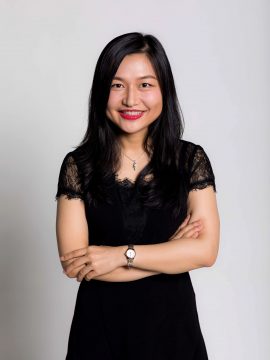
Dr. Yue Qian is a Professor of Sociology at the University of British Columbia (Faculty of Arts) , focusing on gender, family, work, and inequality in global contexts. Her research spans assortative mating, occupational segregation, and migration dynamics , with significant work on the social and mental health impacts of the COVID-19 pandemic . She has published over 60 articles in top-tier journals like Nature Human Behaviour and PNAS . PhD, The Ohio State University (2016) MA, The Ohio State University (2012) BA, Renmin University of China (2010) Her research examines how gender intersects with family, work, and population processes to shape well-being and societal inequality. Key areas include patterns of assortative mating, family/work gender inequality, and health dynamics. Recent work investigates digitalization of family life and gendered pandemic impacts . Articles show trends in cross-national family sociology , digital dating , and mental health during crises . UBC Killam Research Prize (2023) Public Engagement Award (2023) Canadian Sociological Association’s Early Investigator Award (2022) Alexis Walker Award (2019) Dean of Arts Faculty Research Award (2019) Dr. Qian mentors graduate students in knowledge production , co-authoring with them on topics like digital dating and gender adaptation in China . She actively engages with public sociology through her WeChat blog "Ms-Muses" (60,000+ subscribers) and TED-style talks viewed 3M+ times. Her work influences UN, World Bank, and WHO policy discussions.
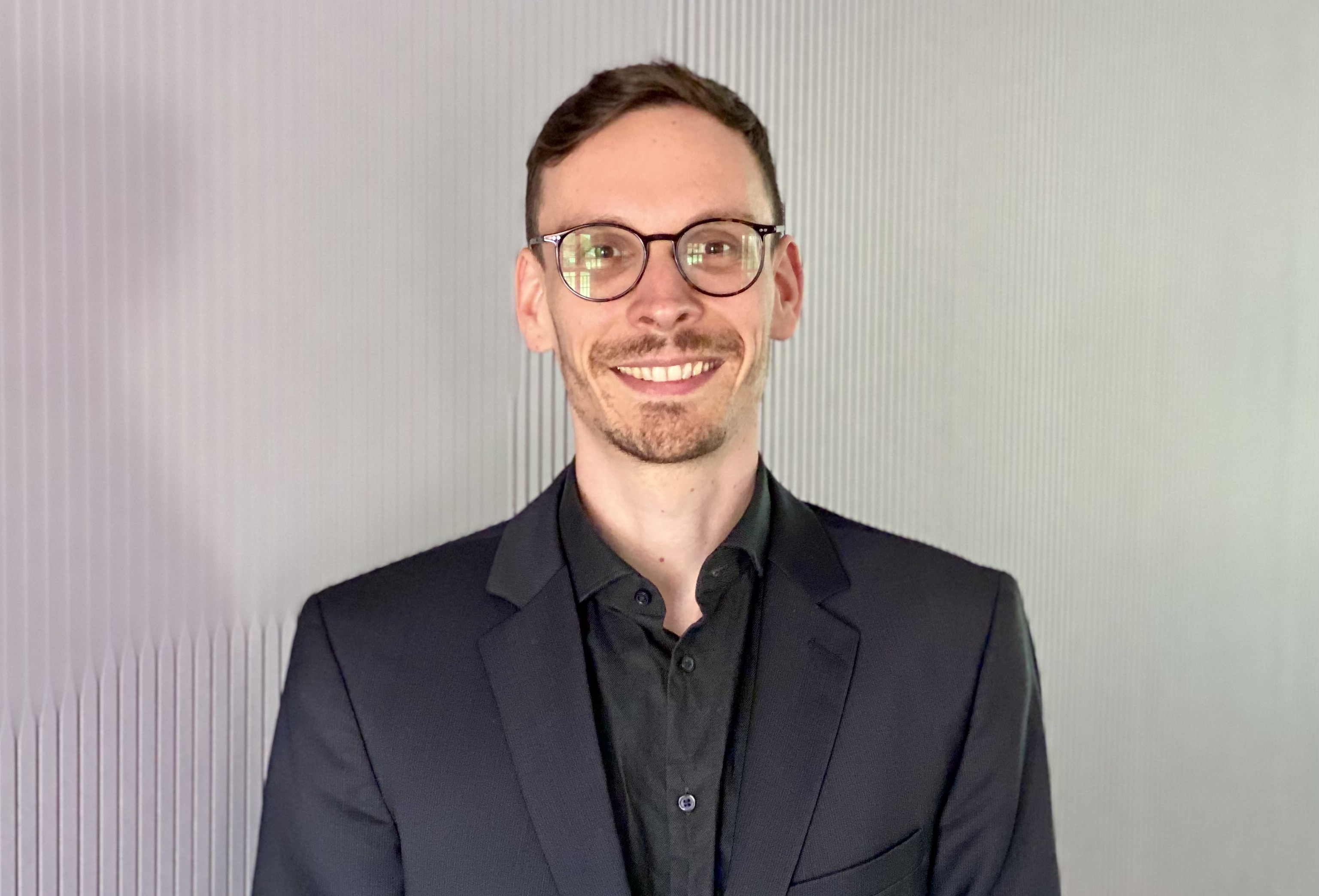
Oliver Winkler, PD Dr., is a German sociologist of education based at Martin Luther University Halle-Wittenberg (MLU). Since 2021 he heads the BMBF-funded junior research group "EDIREG" on the educational integration of refugee children and youth; in 2024 he was awarded the venia legendi and now teaches as a private lecturer in the Institute of Sociology. Parallel to this he works (2025-) as research associate at the Leibniz Institute for Educational Trajectories evaluating the federal "Startchancen" programme. Education 2004-2010: Diploma studies in Sociology, University of Leipzig & Université Pierre-Mendès-France (Grenoble) 2016: Doctorate (Dr. phil.), Martin Luther University Halle-Wittenberg 2016-2019: Fellow, College for Interdisciplinary Educational Research (CIDER) 2024: Habilitation (venia legendi), MLU – Private Lecturer Research interests Winkler investigates how social and spatial contexts produce educational inequality, with a current focus on refugee integration, transitions to vocational education, and the role of regional opportunity structures. His work combines large-scale administrative data with contextual and policy analysis to explain variation in educational participation and attainment. Recent publication trends Between 2018 and 2025 Winkler published extensively on three inter-related themes: (1) educational transitions and aspirations of refugee youth in Germany, (2) social-structural and regional determinants of participation in vocational and higher education, and (3) comparative stratification of higher-education systems. His 2025 monograph Ungleichheit und Raum synthesises findings on spatial inequality in education and labour markets. Scientific awards & honours No specific prizes or medals are mentioned in the supplied material. Advising & grants Winkler currently supervises three early-career researchers (Dr. Melanie Olczyk, Franziska Meyer, Hannah Glinka) within the EDIREG group. He has continuously acquired third-party funding, most notably the BMBF grant for EDIREG (2021-2025) and earlier DFG funding for the Franco-German project on university choice (2015-2018). Labs & teams He leads the Junior Research Group "EDIREG" hosted by the Institute of Sociology at MLU and is an associate member of the Center for School and Educational Research (ZSB) at the same university.
Thore Bergman is a Professor of Psychology and Ecology & Evolutionary Biology at the University of Michigan. He co-directs the University of Michigan Gelada Research Project in Ethiopia and the Capuchins at Taboga Project in Costa Rica. His research spans primate behavior, cognition, and communication, with fieldwork in Ethiopia, Botswana, and Mexico. Ph.D. in Evolutionary and Population Biology from Washington University Postdoctoral Fellow at University of Pennsylvania (2001-2005) His research focuses on: Social cognition and dominance hierarchies in primates Vocal communication and its evolutionary link to human language Sexual selection mechanisms in primate societies Hormone-behavior interactions through non-invasive sampling Ecological influences on social systems Recent publications emphasize methodologies like acoustic recordings, genetic sampling, and playback experiments across gelada monkeys, baboons, and howler monkeys. His work bridges cognitive evolution and behavioral ecology. Scientific recognition includes: APS Fellow Bergman advises graduate students and employs technologies ranging from hand-held computers to radio tracking. He investigates vocal repertoires, social assessment, and physiological consequences of behavior.
Robert (Rob) J. Franzese, Jr. is a Professor and Associate Chair in the Department of Political Science at the University of Michigan. He also serves as the Edie N. Goldenberg Director of the Michigan in Washington Program and Research Professor at the Center for Political Studies (CPS), Institute for Social Research. His research focuses on comparative and international political economy (C&IPE) of developed democracies, emphasizing the interplay between political and economic institutions, structures, and events on macroeconomic policymaking. Franzese is renowned for his work on spatial-econometric models of interdependence and empirical methodologies in political science. Education: PhD in Government from Harvard University (1996), A.M. in Economics and Government from Harvard (1995 and 1992), and B.A. in Economics and Government from Cornell University (1990, Phi Beta Kappa). He teaches courses on quantitative methods, comparative politics, and political economy. Key affiliations include the ICPSR Summer Program in Quantitative Methods and the Center for Political Studies. His research spans topics such as central bank independence, wage bargaining institutions, and spatial econometrics. He has authored/co-authored numerous books and articles on empirical methodology, policy analysis, and interdependence modeling. His methodological contributions include spatial econometric models, multilevel analysis, and model-based estimation for social science theory (EITM). He has advised on policy issues related to globalization, fiscal policy, and labor markets, with a focus on developed democracies. Fransese has directed the ICPSR Summer Program, which trains researchers in advanced quantitative methods. His work bridges political science and economics, emphasizing interdisciplinary approaches to understanding policymaking dynamics and spatial interdependencies.
Chr. Kavousianos is an Assistant Professor in the Department of Informatics at the University of Ioannina, Greece. He is actively engaged in research and teaching in the fields of VLSI design, testability, and low-power testing. He has been involved in major national and international research programs such as Heracleitus II, Pythagoras, and NSF-SRC (USA). Research Interests: His research focuses on advanced techniques in built-in self-test (BIST), test data compression, scan-based testing, fault tolerance, and embedded control architectures. He explores methods to reduce test data volume, power consumption during testing, and improve defect coverage in integrated circuits. Publication Trends: His recent publications (2004–2011) show a strong trend toward defect-aware testing, power-efficient test compression, and multicore SoC testing. He frequently collaborates with leading researchers, including Prof. Krishnendu Chakrabarty (Duke University). His work on multilevel Huffman coding and reseeding techniques has been highly influential, with one paper among the most accessed in 2004. Special Distinction for Excellent Academic Performance from TEE, 1996 Doctoral Scholarship 'In Memory of Professor Maritsa', 1999 Postdoctoral Scholarship from IKY, 2002 Advising and Grants: He has supervised multiple postdoctoral researchers, PhD candidates (e.g., Vasilis Tenentes, Emmanouil Kalligeros), and master’s students. He has led research projects such as 'Embedded Control Architectures' (Heracleitus II) and 'Design Techniques for Embedded Self-Control Circuits' (Pythagoras II). His international collaboration with Duke University included a postdoctoral research role in 2009. Labs and Teams: He leads a research group at the University of Ioannina with postdocs, PhD students, and visiting professors, including Prof. Krishnendu Chakrabarty. His team works on cutting-edge VLSI testing and design methodologies.
Christophe Andrieu is a Professor in Statistics within the School of Mathematics at the University of Bristol. His research bridges theoretical probability, computational statistics, and applied mathematics, with significant contributions to Markov Chain Monte Carlo methodologies and Bayesian inference frameworks. He maintains active collaborations across engineering and data science domains. His educational background includes: M.A. from List.Natnl.Scis.App.Lyon Additional M.A. (institution unspecified) Ph.D. from Paris Andrieu's research focuses on Markov Chain Monte Carlo theory , where he develops convergence guarantees and efficiency bounds for complex samplers. His work extends to non-reversible MCMC algorithms , piecewise deterministic processes , and gradient-free optimization techniques. Recent publications demonstrate innovative approaches to state-space models and numerical integration, often addressing high-dimensional statistical challenges through stochastic approximation methods. His fingerprint reveals deep specialization in Markov chain convergence analysis and computational Bayesian statistics. His 15 most recent publications (2021-2025) exhibit consistent focus on theoretical foundations of Monte Carlo methods, particularly convergence analysis of Markov chains and novel sampler designs. Key trends include the application of weak Poincaré inequalities to pseudo-marginal MCMC, development of self-organizing state-space models, and exploration of hypocoercivity in piecewise deterministic processes. The work spans both theoretical advancements and practical implementations for engineering and statistical applications. Andrieu has secured significant research funding including: COmputational Statistical INference for Engineering and Security (COSINES) (2018-2023) New Approaches to Data Science (2018-2023) He has supervised 5 research students and maintains active collaborations in computational statistics and machine learning. His network shows strong connections with probability theory and engineering research groups.
Michael W. Bauer is a Full-time Professor at the Florence School of Transnational Governance, European University Institute (EUI). He holds a Ph.D. in Social and Political Sciences from the EUI (2000) and has held academic positions at the University of Konstanz, Humboldt-Universität zu Berlin, and visiting roles at institutions across Europe. His research focuses on European and international public administration, multilevel governance, and democratic bureaucracy, with recent emphasis on populism’s impact on public administration and civil servants’ ethical responsibilities under illiberal rule. Bauer leads the Florence team in the EU-funded RADAR project. He has received the Christopher Pollitt Award (2023) and recognition for co-authoring the most downloaded Governance article (2023). His publications include works on European Commission dynamics and democratic backsliding. Bauer advises PhD students like Alexander Mesarovich and Moritz Wassum, and his research spans policy learning, regulatory governance, and transnational democracy.
Dr. Saumen Mandal is a Professor in the Department of Statistics at the University of Manitoba, Faculty of Science. He holds a PhD from the University of Glasgow, UK, and MSc/BSc (Gold Medal) from the University of Calcutta, India. His research focuses on optimal experimental design, biostatistics, data science, shrinkage estimation, and constrained optimization. He has received numerous teaching awards including the Dr. and Mrs. H.H. Saunderson Award for Excellence in Teaching, Students Choice Best Professor Award, and multiple Merit Awards. He is also a P.Stat. designee from the Statistical Society of Canada. Education: PhD (Statistics), University of Glasgow, UK MSc (Statistics), University of Calcutta, India (First Class First, Gold Medal) BSc Honours (Statistics), University of Calcutta, India Research Interests: Optimal design theory and applications Biostatistical methods for clinical trials and healthcare data Data science and machine learning techniques Shrinkage estimation and model selection Linear models and goodness-of-fit testing Publications span topics like optimal regression designs, response-adaptive clinical trial methods, and statistical models for healthcare data. His work emphasizes practical applications in medicine and data-driven decision making. Awards include: Teaching Excellence Awards (2005-2007) Merit Awards for Teaching and Research (2010-2019) Faculty of Science Innovation in Teaching Award (2020) He advises graduate students in statistics and contributes to research teams in biostatistics and data science. His office is temporarily located at 256 Parker Building during construction.
Professor Dino Sejdinovic is a faculty member in the School of Computer and Mathematical Sciences at the University of Adelaide, part of the Faculty of Sciences, Engineering and Technology. Previously, he held positions as Lecturer and Associate Professor at the University of Oxford's Department of Statistics (2014–2022). His academic qualifications include a PhD in Electrical and Electronic Engineering from the University of Bristol (2009) and a Diplom in Mathematics and Theoretical Computer Science from the University of Sarajevo (2006). His research focuses on the intersection of statistical methodology and machine learning, encompassing large-scale nonparametric methods, robust machine learning, multiresolution data fusion, and measures of dependence. He has contributed to kernel methods, Bayesian inference, causal discovery, and applications in climate science, quantum computing, and social science data analysis. Education: PhD in Electrical and Electronic Engineering, University of Bristol (2009) Diplom in Mathematics and Theoretical Computer Science, University of Sarajevo (2006) Sejdinovic's work emphasizes bridging theoretical foundations with practical applications, such as cloud type classification using vision transformers and machine learning-driven quantum device optimization. His recent publications explore topics like kernel-based causal inference, Bayesian neural networks, and uncertainty quantification in statistical models. Advising and grants: Eligible to supervise Masters and PhD students in machine learning and statistics, though specific grants or student advisees are not explicitly listed in the provided texts.
Willem Leterme is a Professor of High Voltage Technology at RWTH Aachen University, specializing in advanced power systems engineering. His research focuses on high-voltage direct current (HVDC) grids, fault protection mechanisms, and grid integration challenges. His work addresses critical issues such as DC fault mitigation, converter control strategies, and system resilience under fault conditions. He leads projects on HVDC grid protection algorithms, cable aging analysis, and interoperability solutions for multi-vendor systems. Key research themes include: DC grid protection and fault detection Modular multilevel converter (MMC) control High-frequency insulation testing Renewable energy grid integration Recent studies (2023-2025) emphasize: Advanced DC fault response modeling Hybrid AC/DC grid stability Multi-terminal HVDC interoperability Transformer insulation under harmonic stresses Publications highlight contributions to protection system design, DC cable testing methodologies, and grid-forming wind turbine applications. He collaborates on EU-funded initiatives for HVDC infrastructure development and standardization efforts.
Jan van den Brakel is an Extraordinary Professor of Survey Methodology at Maastricht University and a Senior Statistician at Statistics Netherlands. He holds a position in the Department of Quantitative Economics within the School of Business and Economics. His primary affiliation is with the methodology department at Statistics Netherlands, where he focuses on advancing statistical methods for official statistics. **Research Interests:** Professor van den Brakel specializes in survey methodology, with a focus on mixed-mode surveys, time series modeling, small area estimation, and discontinuity analysis. He explores topics such as sampling techniques, variance estimation, and the integration of non-probability data sources (e.g., social media) into official statistics. His work addresses challenges in labor force surveys, health surveys, and the impact of technological changes like tablet-based data collection. **Key Projects:** Current projects include mixed-frequency time series modeling for short-term statistics, accuracy assessments of non-probability web panels, and modeling discontinuities in official surveys. He has contributed to high-impact studies, such as analyzing mobility patterns during the pandemic and improving unemployment rate estimation using Bayesian models. **Awards:** His 2013 paper on factorial designs in probability samples was honored as the best journal paper by Survey Methodology in 2014. He is a member of the Advisory Committee on Statistical Methods at Statistics Canada, reflecting his international leadership in statistical methodology. **Professional Roles:** In addition to his academic role, he collaborates extensively with national statistical offices, advising on methodological challenges. His work bridges theory and practice, ensuring statistical methods are robust and applicable to real-world data collection and analysis.
Susan Freeman is a Professor of International Business at the Business School of the University of South Australia (UniSA). She is actively involved in research and supervision within the UniSA Business academic unit, with a strong focus on international entrepreneurship, SME internationalization, and global strategy. Her work frequently appears in top-tier journals such as International Business Review , Global Strategy Journal , and Scandinavian Journal of Management . Her research interests span a broad range of topics including international business strategies, subsidiary autonomy in multinational enterprises, value creation in global value chains, high-performance work systems, and the dynamics of social networks in firm internationalization. She has contributed significantly to the understanding of how SMEs from diverse contexts—such as Brazil, India, and Australia—navigate international markets and develop competitive strategies. The recent publications of Professor Freeman reflect a strong trend toward conceptual and systematic reviews that integrate theoretical frameworks like the attention-based view, resource-based view, and dynamic capabilities. Her work often explores paradoxes and tensions in international management, such as coopetition at the supranational level and the balance between autonomy and control in multinational subsidiaries. She also contributes to policy-relevant research, particularly in how governments can better support foreign subsidiaries through after-care services and tailored investment promotion. Internationalization through social networks: a systematic review and future research agenda (2024) Paradoxical tensions at multiple levels: a model of unbalanced supranational coopetition (2024) High-performance work systems in public service units (2024) Are all cats grey in the dark? A new taxonomy of internationalizing SMEs (2024) Developing successful assumed autonomy-based initiatives (2023) Professor Freeman has received recognition through citations in Web of Science and Scopus, with several of her articles cited over 10 times. She has collaborated with researchers from institutions in France, Iceland, China, and the UK, indicating a strong international research network. While specific grants are mentioned in some publications (e.g., Watanabe Trust Fund, Letterstedtska Fund, HI NIAS), detailed grant histories are not fully elaborated in the provided texts. She serves as a Research Degree Supervisor at UniSA and has contributed to edited volumes and book chapters on SME internationalization and growth frontiers in international business. Her work bridges academic theory with practical implications for managers and policymakers, particularly in the areas of export strategy, organizational design in MNEs, and support mechanisms for growing firms.