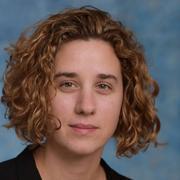
Ayala Arad is a Full Professor at the Coller School of Management, Tel Aviv University. She serves as the Head of the Solomon Lew Center for Consumer Behavior and Director of the Interactive Decision Making Lab. She earned her PhD in Economics from Tel Aviv University in 2011 and completed postdoctoral research at the University of California, Berkeley (2011-2013). Her research investigates bounded rationality in individual and strategic decision-making through experimental methods. Key domains include: Psychology and economics Behavioral game theory Experimental microeconomics Cognitive aspects of choice under uncertainty Design of incentive systems Her publications demonstrate a consistent focus on developing behavioral models of decision-making, with recent work examining team-based reasoning, communication effects, and multidimensional strategic interactions. Research frequently employs controlled experiments to test theoretical predictions. She leads the Interactive Decision Making Lab, specializing in experimental studies of strategic behavior and consumer choice.
Nicola Neretti is an Associate Professor of Molecular Biology, Cell Biology, and Biochemistry at Brown University and serves as Associate Director for the Center on the Biology of Aging. He is affiliated with the Center for Computational Molecular Biology (CCMB) and leads the Neretti Lab, which combines genomics and computational biology to study the biology of aging and age-associated diseases. His educational background includes: PhD in Computational Biology from Brown University (2001) MS from Brown University (1999) Dr. Neretti's research focuses on the application of high throughput techniques such as RNA-seq to study changes in transcriptional networks caused by genetic and environmental interventions that extend lifespan. His work integrates computational methods with experimental biology to detect age-associated chromatin changes and activation of transposable elements. He develops computational tools to analyze 3D chromosome structure and has made significant contributions to understanding the role of genomic instability in aging. Analysis of Dr. Neretti's recent publications reveals a strong focus on cellular senescence, chromatin remodeling, and transposable element activation in aging. His work spans multiple model organisms and human tissues, with an increasing emphasis on single-cell and spatial transcriptomics approaches. A consistent theme across his publications is the connection between genomic instability, particularly through transposable element activation, and age-related inflammation. Dr. Neretti teaches several courses at Brown University: BIOL 2010 - Quantitative Approaches to Biology BIOL 2010B - Introduction to Data Science in Molecular Biology BIOL 2350 - The Biology of Aging The Neretti Lab has developed several important software tools for genomic analysis: SIMBA3D: Statistical method for inferring 3D chromosome structure from single-cell Hi-C data GINOM: Statistical framework for assessing interval overlap of multiple genomic features RepEnrich: Method to estimate repetitive element enrichment using high-throughput sequencing data CORaL: Software for comparing expression profiles across experiments FISH-MDS: Multidimensional scaling for chromosome structure inference with FISH constraints
Cosimo Arnesano serves as an Assistant Professor of Clinical Data Sciences and Operations at the University of Southern California's Marshall School of Business. He holds dual Ph.D. degrees in Energy and Environmental Engineering and Biomedical Engineering, complemented by an MBA specializing in business analytics and operations/supply chain optimization. His industry background includes strategic roles at ThermoFisher Scientific (Strategy Manager, 3 years) and Zeiss Microscopy (Account Manager, 1.5 years). Education Ph.D. in Energy and Environmental Engineering Ph.D. in Biomedical Engineering MBA with concentrations in Business Analytics and Operations/Supply Chain Optimization Research Interests Dr. Arnesano's expertise spans analytics, artificial intelligence, corporate strategy, healthcare analytics, machine learning, operations management, statistics, and stochastic modeling. His work bridges biomedical imaging techniques with business applications, focusing on data-driven solutions for healthcare operations and business process optimization. He develops analytical models for classification, clustering, and association problems while leveraging third-party big data to enhance business insights and decision-making. Publication Trends His 15 most recent publications (2012-2022) reveal an interdisciplinary trajectory from biomedical imaging methodology to clinical applications. Early works (2012-2016) established innovations in fluorescence lifetime imaging and digital signal processing, while recent research (2017-2022) applies these techniques to cancer metabolism, stem cell tracking, and retinal organoid characterization. A consistent thread involves developing non-invasive optical biomarkers for real-time cellular analysis, directly informing his business analytics focus on operational efficiency and healthcare optimization. Teaching and Operations Undergraduate: Applied Business Statistics (BUAD-310), Basics of Project and Operations Management (BUAD-315) Graduate: Spreadsheet Modeling (DSO-427), Business Decision Modeling (DSO-536), Blended Data Business Analytics (DSO-528)
Professor Andreas Antoniades of the School of Global Studies at the University of Sussex is a leading scholar in Global Political Economy and Environmental Sustainability . He serves as Director of Admissions and Recruitment at his school and as Fellow of the Sussex Sustainability Research Programme (SSRP) , where he leads the project Financial Crises and Environmental Sustainability . His academic journey includes a PhD from the London School of Economics (LSE), MA from the University of Warwick, and BA from the University of Athens. Education: BA in Political Science and International Relations, University of Athens MA in International Political Economy, University of Warwick PhD in International Relations, London School of Economics His research explores the intersections of financial crises, debt dynamics, and environmental sustainability , with a focus on SDG interactions and post-crisis recovery frameworks . Recent work examines air pollution trends during crises , deforestation patterns , and equitable policy partnerships . Key scientific recognitions include the LSE Teaching Prize , scholarships from the Onassis Public Benefit Foundation and Bodossaki Foundation , and a ISA Catalytic Research Grant (shared). Notable leadership roles span editorial boards of Millennium and Studies for Ethnicity and Nationalism , as well as co-organizing international research networks.
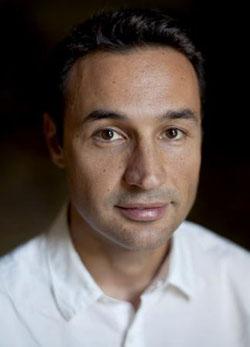
Anton Dignös is a professor at the Free University of Bozen-Bolzano , specializing in temporal databases , time series analysis , and database systems . His research focuses on efficient query processing for interval data, temporal joins, and schema design, with significant contributions to in-memory and time series databases. Key research areas include: Temporal Data Management : Advanced techniques for interval and duration queries. Time Series Analytics : Machine learning integration and pattern detection. Schema Optimization : Automated design and tuning of database schemas. Visual Analytics : Tools for period data comparison and correlation analysis. His work spans collaborations with researchers like Johann Gamper and Michael H. Böhlen , addressing challenges in healthcare systems, industrial applications, and financial data analytics. Notable contributions include algorithms for temporal anti-joins , range-duration queries , and machine learning-based anomaly detection .
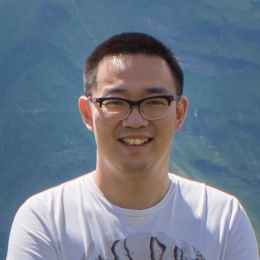
Hongyi Xu is a researcher and principal investigator at the Department of Chemistry, Stockholm University , specializing in electron crystallography for structure determination of materials and biomolecules. He completed his PhD in Materials Engineering at the University of Queensland (2013) with the Dean’s Award for Research Excellence and John Simmons Prize for Best Thesis , followed by a postdoc at SU (2014–2016) under Prof. Xiaodong Zou. Education BEng (Hons) in Mechatronics, University of Queensland (2009) PhD in Materials Engineering, University of Queensland (2013) Current Role Principal Investigator, Stockholm University (2018–Now) Lecturer for Electron Crystallography (2022–Now) Guest Lecturer for Bioanalytical Chemistry and Experimental Chemistry Methods (2020–Now) Research Focus : Development of MicroED and 3D electron diffraction methods for solving structures of submicron/nanocrystals from proteins to pharmaceuticals. Key projects include: Charge state analysis in metalloenzymes Fragment-based drug design via high-throughput MicroED Multidimensional toolkit for modern electron microscopy Cryo-EM applications (SPA, cryo-ET, MicroED) Scientific Contributions : Solved over 180 novel structures (2018–2023) using MicroED, including first protein structures and protein-inhibitor binding studies. Collaborated with 25+ international groups to establish 3D ED facilities. Scientific Awards : Wenner-Gren Postdoc Fellowship (2014–2016) Young Scientist Lecturer Award (2019) Consultant, IUCr Commission on Electron Crystallography (2021–Now) Grants : Secured 6 competitive projects totaling ~SEK 18.6M, including a Swedish Research Council Starting Grant (2018–2021) and European Commission NanED ITN (2021–2025). Supervision : Mentored 1 postdoc (main), 3 postdocs (co), 2 PhD students (main), and 4 PhD students (co) at SU. Alumni include researchers at UCLA, Karolinska Institute, and Rosalind Franklin Institute.
Polina Obolenskaya is a Research Fellow at City St George's, University of London, specializing in sociology and social policy. She holds a PhD in Sociology and an MSc in Social Research Methods and Statistics from City University, along with a BA in Economics and Sociology from the University of York. PhD in Sociology, City University MSc in Social Research Methods and Statistics, City University BA in Economics and Sociology, University of York Her research focuses on social and economic inequalities, the impact of violence and abuse on health, and policy analysis in education, healthcare, and poverty reduction. She has worked on significant projects such as Violence, Health and Society and Social Policies and Distributional Outcomes in a Changing Britain , utilizing national surveys and administrative datasets to assess policy impacts. Recent projects include evaluating the Growing Up in England (GUIE) dataset for Gypsy, Roma, and Traveller communities and analyzing the Conservative government's social policy records from 2015 to 2020. Her work extends to improving violence measurement in the Crime Survey for England and Wales (CSEW) and exploring gendered data gaps in violent crime statistics. Polina has contributed to numerous research papers and reports, often in collaboration with institutions like the London School of Economics and Political Science (LSE) and the Royal National Institute of Blind People. Her publications span topics from educational disparities to adult social care policies and the broader structural changes in UK inequality post-financial crisis.
Adrien Doerig is a Visiting Professor in the Department of Education and Psychology at Freie Universität Berlin, where he leads research in the Cognitive Computational Neuroscience Lab. He is also affiliated with the Bernstein Center for Computational Neuroscience. His work bridges cognitive science, computational modeling, and neural mechanisms of perception. Doerig's research focuses on the intersection of computational neuroscience and artificial intelligence, with particular emphasis on visual perception, consciousness, and the development of biologically plausible neural network models. His work explores how the brain processes visual information, with special attention to phenomena like crowding, feature integration, and the temporal dynamics of perception. He has made significant contributions to understanding the limitations of convolutional neural networks for modeling human vision and has pioneered work on topographic neural networks that better capture cortical organization. A key trend in Doerig's recent publications is the exploration of connections between language models and visual processing in the brain. His groundbreaking 2025 Nature Machine Intelligence paper demonstrated that large language model representations align closely with visual representations in the human brain, opening new avenues for using language-based AI in modeling biological visual processing. His work consistently challenges existing paradigms while developing more biologically plausible computational frameworks. Doerig teaches a wide range of courses including Master's in Cognitive Neuroscience, Probability and statistical modeling (both theoretical and practical with focus on ANNs and neuroimaging), Introduction to programming, Applied computational cognitive neuroscience, and specialized courses on vision, language, affective & social neuroscience, and consciousness. He also supervises graduate students through the Cognitive Computational Neuroscience Lab, which includes postdocs, predocs, master's students, and interns working on cutting-edge research questions at the intersection of cognitive science and machine learning.
Mohammad Habibi serves as an Assistant Professor in the Department of Mechanical and Manufacturing Engineering at Tennessee State University's College of Engineering. His office is located in IND 103, with contact available via phone (615-963-5248) or email (mhabibi@tnstate.edu). Dr. Habibi's academic credentials include: Ph.D. in CISE (Robotics & Computer Integrated Manufacturing), Tennessee State University, 2014 M.S. in CISE (Systems Engineering), Tennessee State University, 2003 B.S. in Electrical Engineering, Z. H. College of Engineering and Technology, Aligarh Muslim University, India, 1989 His research program centers on three interconnected domains: Cyber-Physical Systems implementation in infrastructure, intelligent manufacturing processes integrating mechatronics, and advanced materials engineering to combat thermal degradation. This work manifests in practical applications spanning surveillance analytics, robotics, and sustainable manufacturing systems, with publications demonstrating consistent interdisciplinary contributions across engineering and computer science. Publication trends reveal an evolution from foundational visual analytics research (2011-2014) focused on surveillance data exploitation to recent theoretical advances in stochastic control (2019) and educational innovation (2018). His 11 documented publications span power systems engineering, robotics, and data science, reflecting a career-long commitment to solving complex engineering problems through computational methods. No scientific awards are documented in the provided materials. Dr. Habibi actively mentors students through capstone projects involving AI-driven manufacturing monitoring, digital twin development, and UAV applications. His teaching portfolio covers core mechanical engineering subjects including mechatronics, manufacturing processes, and materials engineering, with courses designed to bridge theoretical concepts and industrial applications using platforms like LEGO-EV3 and Proteus simulation. Though no formal lab structure is documented, his research manifests through student-led projects in cyber-physical systems and intelligent manufacturing, utilizing robotics platforms, microcontroller systems, and simulation environments to address real-world challenges in infrastructure monitoring and industrial automation.
Katharina Auer-Zotlöterer is an Associate Professor at the University of Vienna's Faculty of Business, Economics & Statistics, where she has held a tenured position since 2019. She is affiliated with the Institute for Marketing and International Business and maintains her office at Oskar-Morgenstern-Platz 1, 1090 Vienna. Her academic journey includes previous appointments as Associate Professor (2006-08), Adjunct Professor at Université Libre de Bruxelles (2003-06), and Visiting Professor at University of Salzburg (2012). She also served as Swarovski Crystal Professor in Multi-cultural Brand Research at University of Innsbruck (2009). Dr. Auer-Zotlöterer completed her studies in International Business Administration at University of Vienna and Ecole Superieure de Commerce de Paris (ESCP) between 1991-96. She earned her Doctoral Degree in Social and Economic Sciences from University of Vienna in 2000, followed by her habilitation in 2006. Her international academic experience includes a FWF-funded Erwin-Schrödinger Grant research project at University of St. Gallen (2001-02), Visiting Researcher position at University of Otago (2005), and Guest Lecturer at University of North Florida (2006). Her research focuses on Marketing & Consumer Behavior with emphasis on Transformative Consumer Research. She investigates (Internal & External) Customer Wellbeing & Quality-of-Life over the Life Course, Balancing Needs in Consumers' Various Life Domains, and Work-Life Balance & Employer Branding Across Generations using Mixed Research Methods. Her work particularly explores senior consumer behavior ('Best Agers'), gender issues in marketing, and the integration of qualitative and quantitative research approaches. Her publication record shows consistent scholarly output from 2008-2025, with recent work examining women's career barriers in aviation, digital customer journeys in cultural institutions, and the Strauss family's historical marketing significance. Her research demonstrates an evolution from traditional consumer behavior studies toward more contemporary issues like voice commerce, digital transformation, and gender equality in professional fields. ERC Starting Grant Evaluation Panel Member (2023) As an active educator, Dr. Auer-Zotlöterer teaches courses including Masterarbeitskonversatorium, Building Blocks of Marketing: Consumer Behavior (MA), and ABWL Marketing I. Her international academic service includes participation in evaluation panels for prestigious funding bodies, demonstrating recognition of her expertise in the field. While specific grant information isn't detailed in the provided materials, her ERC panel membership suggests involvement in high-level research funding decisions. Within the Institute for Marketing and International Business, she collaborates with colleagues including Martin Eisend, Heribert Reisinger, and others on various research projects. Her work often involves interdisciplinary approaches, connecting marketing with psychology, sociology, and business ethics perspectives to understand complex consumer phenomena across different life stages and demographic segments.
Prof. Zofia Wodniecka-Chlipalska is a distinguished faculty member at Jagiellonian University's Institute of Psychology within the Faculty of Philosophy. Her research spans bilingualism, cognitive neuroscience, and psycholinguistics, focusing on language control mechanisms and cross-linguistic influences. She leads the Laboratory of Language Psychology and Bilingualism 'LangUsta', overseeing critical studies on bilingual children's language processing and neural adaptations. Key Research Areas: Bilingual language control, social biases in multilingual contexts, lexical access, neuropsychological mechanisms of second language acquisition. Recent Trends: 2025 articles explore neural efficiency in bilingual environments, vocabulary dynamics in Polish-English children, and motivation-driven prejudice reduction.
Professor Zbyszko Królikowski is a faculty member at Poznań University of Technology, where he works in the Faculty of Computer Science and Telecommunications, specifically in the Institute of Computer Science. He holds the academic title of Professor (indicated by "prof. dr hab. inż.") and has been actively contributing to the field of computer science, particularly in database systems and data warehousing. His scientific work spans multiple disciplines, with 75% focus on Computer and Information Sciences and 25% on Information and Communication Technology. Professor Królikowski has established himself as an expert in data warehousing, having authored a comprehensive monograph titled "Data warehouses: logical and physical data structures" published in 2007. His research interests primarily revolve around database systems, with specific focus on: Data warehousing and OLAP analysis Logical and physical data structures for databases Sequential data analysis Materialized views and query optimization Database performance evaluation Evolution of data warehouse systems Professor Królikowski has maintained an active research profile with publications spanning nearly two decades, from the early 2000s to 2021. His work shows a consistent focus on database technologies, evolving from traditional relational database systems to more contemporary approaches including in-memory architectures and graph databases. Analysis of his publication trends reveals a progression from theoretical database modeling to practical applications in production planning and modern database technologies. He has contributed to the academic community not only through his publications but also by supervising doctoral research. Notably, he supervised Mikołaj Morzy's dissertation on "Advanced database structures supporting effective association discovery" in 2004 and has served as a reviewer for numerous other doctoral dissertations in related fields. Professor Królikowski has collaborated extensively with other researchers in the database community, particularly with scholars from Poznań University of Technology including Tadeusz Morzy, Bartosz Bębel, and Robert Wrembel. These collaborations have resulted in numerous joint publications that have contributed significantly to the field of data warehousing and database systems.
Dr. Margot Metz is a Researcher at Tilburg University's Tilburg School of Social and Behavioral Sciences, specifically affiliated with the Tranzo department. Her work focuses on developing and validating patient-centered measurement tools for recovery and positive health in mental healthcare and general populations. Dr. Metz's research centers on recovery measurement and positive health concepts. She has made significant contributions to the validation and application of the Individual Recovery Outcomes Counter (I.ROC) in Dutch mental healthcare settings and developed the PH22 questionnaire for measuring self-reported positive health. Her work bridges psychometric rigor with practical clinical application, creating instruments that facilitate patient-professional dialogue while providing valid measurement of multidimensional health perspectives. Her recent publications demonstrate a consistent focus on measurement validation, with multiple 2024-2025 papers examining the structural and construct validity of recovery and positive health instruments across different populations. The research shows strong methodological expertise in factor analysis and validation techniques applied to large datasets from both clinical and general population samples. Dr. Metz actively engages in collaborative research, frequently working with interdisciplinary teams across Tranzo and mental healthcare organizations. Her work on the James Lind Alliance Priority Setting Partnership demonstrates her commitment to incorporating patient perspectives in research agenda setting, particularly for medically unexplained symptoms. In terms of advising and research support, Dr. Metz appears to collaborate extensively with colleagues at Tranzo and mental healthcare organizations, supervising or co-supervising research projects that involve large-scale data collection across multiple mental health care institutions in the Netherlands. Her research has practical implications for how recovery is measured and understood in contemporary mental healthcare. Her laboratory or research group appears to focus on measurement development and validation in mental health and positive health domains, though specific lab name isn't mentioned in available materials. The research group likely involves collaboration between psychometricians, mental health clinicians, and implementation scientists working to bridge measurement science with clinical practice.
Senior Lecturer Fredrik Bengtsson is affiliated with Luleå University of Technology, where he works in the Department of Computer Science, Electrical and Space Engineering. His research focuses on Dependable Communication and Computation Systems within the Computer Science division. His research interests include: Algorithms for aggregate information extraction from sequences Computational theory and data structures Range-sum computation in multidimensional arrays k maximum sum subsequences problem Efficient algorithms for information extraction Dr. Bengtsson's work has applications in several important areas including large databases and DNA sequence segmentation. His research contributes to the development of efficient computational methods for data analysis, with particular emphasis on optimizing query performance and pattern recognition in sequential data. His notable publications include his 2007 doctoral thesis 'Algorithms for aggregate information extraction from sequences' and several related papers on computing maximum-scoring segments and ranking k maximum sums, which demonstrate his expertise in developing theoretically sound and practically applicable algorithmic solutions. As a Senior Lecturer and Recognised University Teacher, Dr. Bengtsson is involved in teaching and mentoring students in computer science and related fields, contributing to both research and education at Luleå University of Technology.
Prof. Dr. Ralph Ernstorfer is a leading physicist holding dual appointments at the Technical University Berlin (Professor, Institute for Optics and Atomic Physics) and the Fritz Haber Institute of the Max Planck Society (Group Leader, Department of Physical Chemistry). His career includes tenure as a Max Planck Research Group leader (2010–2017) and W2 scientist (2017–2021) at FHI. He specializes in ultrafast dynamics of quantum materials, with affiliations spanning TU Berlin, Max Planck Institutes, and international collaborations. His research explores electron-phonon interactions, topological materials, and surface dynamics using advanced spectroscopic methods. Key themes include: Ultrafast electron and lattice dynamics in 2D systems (e.g., bismuthene, black phosphorus) Singlet fission mechanisms in organic semiconductors Non-equilibrium phenomena in ferromagnets and ferroelectrics Development of time-resolved photoemission techniques Recent publications (2019–2025) demonstrate prolific output in high-impact journals, focusing on momentum-resolved spectroscopy, phonon scattering, and computational materials science. His lab pioneers methodologies for studying energy flow in solids at femtosecond timescales. Prof. Ernstorfer advises researchers at the Fritz Haber Institute and TU Berlin, though specific student names are not listed. His group maintains active instrumentation development for ultrafast experiments, including momentum microscopes and spectral analysis tools.